
BuddhistCatholicContemplativeEvangelicalGeneral ChristianHinduJewishLatter-day SaintMuslimNew VisionsProgressive Christian
Beliefs
- Buddhist
- Catholic
- Contemplative
- Evangelical
- General Christian
- Hindu
- Jewish
- Latter-day Saint
- More Voices
- Muslim
- New Visions
- Pagan
- Progressive Christian
Topics
- Religion News
- Food and Religion
- Sports and Religion
- Religious Art
- Religious Music and Entertainment
- Religious Events
- History and Religion
- Style and Religion
- Politics and Religion
- Women in Religion
- Recreation Outdoors and Religion
- Business Finance and Religion
- Careers Workplace and Religion
- Education and Religion
- Family Parenting and Religion
- Health Fitness and Religion
- Home and Religion
- Relationships and Religion
- Technology and Religion
- Travel and Religion
Columnists
- Buddhist Columnists
- Business Finance and Religion Columnists
- Careers Workplace and Religion Columnists
- Catholic Columnists
- Contemplative Columnists
- Education and Religion Columnists
- Evangelists Columnists
- Family Parenting and Religion Columnists
- General Christian Columnists
- Health Fitness and Religion Columnists
- Hindu Columnists
- History and Religion Columnists
- Home and Religion Columnists
- Jewish Columnists
- More Voices Columnists
- Latter Day Columnists
- Muslim Columnists
- New Visions Columnists
- Nonreligious Columnists
- Pagan Columnists
- Politics and Religion Columnists
- Progressive Columnists
- Recreation Outdoors and Religion Columnists
- Relationships and Religion Columnists
- Religion News Columnists
- Religious Art Columnists
- Religious Events Columnists
- Religious Music and Entertainment Columnists
- Sports and Religion Columnists
- Style and Religion Columnists
- Technology and Religion Columnists
- Travel and Religion Columnists
- Women in Religion Columnists
Resource Library
- 2026 Calendar
- Library of World Religions
- The 100 Most Holy Places on Earth
- Patheos Answers
- Podcasts
- Videos
- Faith Leaders Database
- Anglican Episcopalian
- Bahai
- Baptist
- Buddhism
- Christianity
- Confucianism
- Eastern Orthodoxy
- Hinduism
- Holiness and Pentecostal
- ISKCON
- Islam
- Judaism
- Lutheran
- Methodist
- The Church of Jesus Christ of Latter-day Saints
- New Age
- Paganism
- Presbytarian and Reformed
- Protestantism
- Religion Behind the Scenes
- Roman Catholic
- Scientology
- Shia Islam
- Sikhism
- Sufism
- Sunni Islam
- Taoism
- Zen
- See all religions
Research Tools
 Ad-Free & Subscriber Log-In Subscription Support
Ad-Free & Subscriber Log-In Subscription Support
Follow Patheos 

- Trending:
- Forgiveness
- |
- Marriage
- |
- Consciousness
- |
- Death Penalty
- |
- Election
- |
- Halloween
 The Mormon Politico
- Home
- Latter-day Saint
- Religion News
- The Mormons Who Tortured and the Perils of “Patriotism”
The Mormons Who Tortured and the Perils of “Patriotism”
Last updated on: August 9, 2017 at 12:57 pm by Gary A.
The Mormons Who Tortured and the Perils of “Patriotism” 2017-08-09T12:57:32-04:00 Gary A.
Patheos Explore the world's faith through different perspectives on religion and spirituality! Patheos has the views of the prevalent religions and spiritualities of the world.
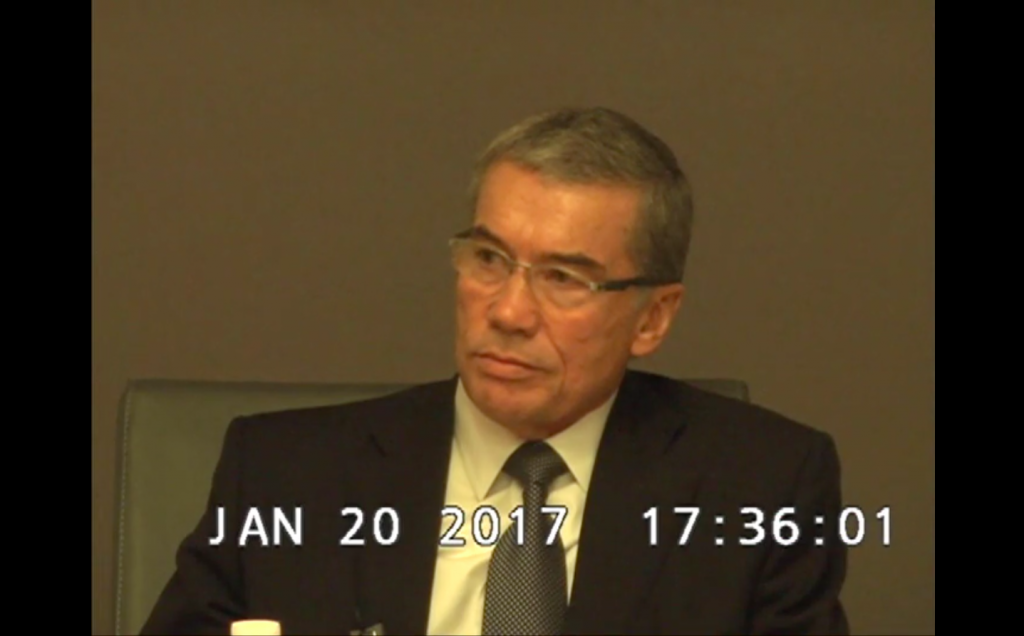
Bruce Jessen during his deposition for the suit alleging he approved torture tactics.
A Mormon congregation got a new leader.
A week later he was gone.
Next month, lawyers from the ACLU will try to prove that he perpetrated a systematic campaign of torture.
On October 14, 2012, Spokane-area Mormon leaders selected Bruce Jessen, a former Air Force officer and a principal in the company Mitchell, Jessen and Associates, to serve as a bishop (the equivalent of a Protestant pastor or a Catholic priest) for the Spokane 6th Ward (a ward is a Mormon term for a congregation). Shortly thereafter, he was immersed in controversy as various media sources highlighted that he and his previous business partner, James Mitchell, had designed and executed the CIA’s “enhanced interrogation” program, a system for torturing alleged terrorists. This unwelcome attention eventually led Jessen to resign as bishop barely a week into what is usually a three to six year commitment.
Now, almost five years later, Jessen isn’t just facing negative media attention and his ouster from the clergy. Rather, he’s being called to account for his crimes. On September 5, a federal court in Washington State will begin a trial in which victims of Jessen’s torture, represented by the ACLU, will sue him under the Alien Tort Statute. While Jessen will not face jail time, his victims may be able to force him to pay them damages for the staggering physical, psychological, and emotional abuse he helped perpetrate.
And what was the abuse that Jessen helped inflict? It’s a laundry list of excruciating torments. People subjected to his tactics were waterboarded, a technique that can cause convulsions or death and of which writer Christopher Hitchens stated “if waterboarding does not constitute torture, then there is no such thing as torture.” They were victims of hypothermia – one CIA detainee actually froze to death in his cell. Others were forced to undergo “rectal feeding,” in which liquids were forcibly injected into their anuses.
These horrendous abuses fly in the face of Mormon scripture and sacred promises that LDS members make. In the Book of Mormon, a writer laments the actions of soldiers who tortured women to death. In various contexts, Mormons pledge to forego actions that are “unholy and impure.” What could be more unholy and impure than torturing another human being?
If Jessen’s campaign of torture defies Mormon doctrine, is certainly should have disqualified him from being a bishop. The LDS Church Handbook recommends that bishops meet the requirements expressed in 1 Timothy 3:7, which states that bishops “must have a good report of them which are without.” Certainly, being known as someone who designed and implemented the CIA’s torture program is hardly a “good report.”
So Jessen’s torture runs contrary to Church doctrine and should have rendered him unqualified to be a bishop. But why did he engage in torture in the first place?
Perhaps the burden of “patriotism” is to blame.
For much of the LDS Church’s early history, government leaders viewed it with suspicion. Its leaders were arrested, the governor of Missouri called for its adherents to be “exterminated,” and President James Buchanan event sent an army detachment to subdue a nonexistent Mormon rebellion in Utah. These government-sponsored persecutions intensified after Congress passed anti-polygamy legislation like the Edmunds-Tucker Act, which allowed the federal government to seize Church property, disenfranchise Mormon voters, and dissolve Church corporations. Only after the Church committed to ending polygamy were such actions reversed.
This history of Church-State animosity left its mark on Mormons – they feared that they would be viewed not as loyal Americans, but as subversives intent on undermining the established order. To counter such views, Mormons and Church leadership embraced the trappings of Americanism, playing up doctrines that celebrated the U.S. Constitution and the Founding Fathers, encouraging military service, and fiercely denouncing communism (despite early Mormonism’s communitarian practices). What may have begun as a way to ingratiate the Church with the authorities evolved over time into a fierce, unwavering expression of patriotism among a large proportion of Latter-day Saints.
It’s that unflinching patriotism that may have led Jessen astray. Possessed of an intense dedication to advancing the interests of the United States, it may have been easy for him to overlook his religious and moral qualms when justifying torture. In effect, he may have, like many Americans, engaged in a sort of nationalist idolatry, deifying the U.S. government and its tactics. Once an ideology, even one as laudable as Americanism, is endowed with godlike importance, a person can convince himself that he is in the right even when his actions stray drastically from acceptable human behavior – and even if his actions are torture.
Jessen’s horrifying violations of basic human rights can serve as a lesson for me and other Mormons. Too often, partly out of their faith’s history of wanting to “prove” its loyalty to country, Mormons exalt patriotism and service to country as some sort of holy “calling.” But in a world with governments run by fallible people, people who are more than willing to dispense with basic human decency for political expediency, adopting such a “crusader” attitude to following orders can be dangerous. While we may fear being saddled with the label of being “unpatriotic,” it’s worse to live with a conscience marred by human rights abuses. Just ask Bruce Jessen as he faces a jury next month.
The Church of Jesus Christ of Latter-day Saints
Previous Post

July 7, 2017
The One-Marshmallow Presidency
Next Post

August 9, 2017 Hands Off That Red Button: Mormon Views of Nuclear Weapons
Browse Our Archives
Select a Category Book of Mormon Brigham Young BYU Donald Trump General Conference Hillary Clinton Islam LDS Mormon nationalism Nuclear weapons Philosophy Politics Racism Romney The Church of Jesus Christ of Latter-day Saints Uncategorized War
Select a Month February 2018 December 2017 October 2017 September 2017 August 2017 July 2017
Follow Us!
TAKE THE
Religious Wisdom Quiz
According to Jesus, what should you do if someone asks you to go one mile with them?
Select your answer to see how you score.
Refuse Go two miles Go halfway Demand payment
Related posts from The Mormon Politico

"I should have told her to divorce him":...

Remind me why Mormons hang out with the...


The Evening Redness in Alabama: Roy Moore and...
TRENDING AT PATHEOS Latter-day Saint

Did Prayer Cure His Cancer? Or Was It...
At 4 AM one morning, Joshua W. Brown’s wife awoke to a...

8 Ways a Near-Death Experience Rewires the Soul
Does Consciousness Survive Physical Death? After 50 Years of Research, Dr. Raymond...

Holy Longing: What Our Restlessness Is Telling Us
“One can find so many pains when the rain is falling.” -John...

What this is NOT about. This blog is definitely not about...

Who said the Israelites were God’s chosen? That’s right, they did. Who...

The Spirit World Is the Real World: God...
A Monk’s Wisdom on Body and Spirit I sit with Brother Martin...
view all Latter-day Saint blogs
Ad-Free & Subscriber Log-In Subscription Support
- About Us
- 2026 Calendar
- Videos
- Podcasts
- Library of World Religions
- Faith In Media Tracker
- Advertise With Us
- Write for Us
- Privacy Policy
- Terms of Service
- Do Not Sell My Data
- Contact Us
- Radiant Digital
- Manage Newsletter Subscriptions
- Unsubscribe From Notifications
- Sitemap
Copyright 2008-2026, Patheos. All rights reserved.
Subscription Support Ad-Free & Subscriber Log-In
Follow Patheos