
BuddhistCatholicContemplativeEvangelicalGeneral ChristianHinduJewishLatter-day SaintMuslimNew VisionsProgressive Christian
Beliefs
- Buddhist
- Catholic
- Contemplative
- Evangelical
- General Christian
- Hindu
- Jewish
- Latter-day Saint
- More Voices
- Muslim
- New Visions
- Pagan
- Progressive Christian
Topics
- Religion News
- Food and Religion
- Sports and Religion
- Religious Art
- Religious Music and Entertainment
- Religious Events
- History and Religion
- Style and Religion
- Politics and Religion
- Women in Religion
- Recreation Outdoors and Religion
- Business Finance and Religion
- Careers Workplace and Religion
- Education and Religion
- Family Parenting and Religion
- Health Fitness and Religion
- Home and Religion
- Relationships and Religion
- Technology and Religion
- Travel and Religion
Columnists
- Buddhist Columnists
- Business Finance and Religion Columnists
- Careers Workplace and Religion Columnists
- Catholic Columnists
- Contemplative Columnists
- Education and Religion Columnists
- Evangelists Columnists
- Family Parenting and Religion Columnists
- General Christian Columnists
- Health Fitness and Religion Columnists
- Hindu Columnists
- History and Religion Columnists
- Home and Religion Columnists
- Jewish Columnists
- More Voices Columnists
- Latter Day Columnists
- Muslim Columnists
- New Visions Columnists
- Nonreligious Columnists
- Pagan Columnists
- Politics and Religion Columnists
- Progressive Columnists
- Recreation Outdoors and Religion Columnists
- Relationships and Religion Columnists
- Religion News Columnists
- Religious Art Columnists
- Religious Events Columnists
- Religious Music and Entertainment Columnists
- Sports and Religion Columnists
- Style and Religion Columnists
- Technology and Religion Columnists
- Travel and Religion Columnists
- Women in Religion Columnists
Resource Library
- 2026 Calendar
- Library of World Religions
- The 100 Most Holy Places on Earth
- Patheos Answers
- Podcasts
- Videos
- Faith Leaders Database
- Anglican Episcopalian
- Bahai
- Baptist
- Buddhism
- Christianity
- Confucianism
- Eastern Orthodoxy
- Hinduism
- Holiness and Pentecostal
- ISKCON
- Islam
- Judaism
- Lutheran
- Methodist
- The Church of Jesus Christ of Latter-day Saints
- New Age
- Paganism
- Presbytarian and Reformed
- Protestantism
- Religion Behind the Scenes
- Roman Catholic
- Scientology
- Shia Islam
- Sikhism
- Sufism
- Sunni Islam
- Taoism
- Zen
- See all religions
Research Tools
 Ad-Free & Subscriber Log-In Subscription Support
Ad-Free & Subscriber Log-In Subscription Support
Follow Patheos 

- Trending:
- Forgiveness
- |
- Marriage
- |
- Consciousness
- |
- Death Penalty
- |
- Election
- |
- Halloween
 The Witching Hour
- Home
- Pagan
- Why Real Witches Are Going to Love (or Maybe Hate) The Love Witch
Why Real Witches Are Going to Love (or Maybe Hate) The Love Witch
Last updated on: November 11, 2016 at 5:24 am by Peg Aloi
Why Real Witches Are Going to Love (or Maybe Hate) The Love Witch 2016-11-11T05:24:18+00:00 Peg Aloi
Patheos Explore the world's faith through different perspectives on religion and spirituality! Patheos has the views of the prevalent religions and spiritualities of the world.
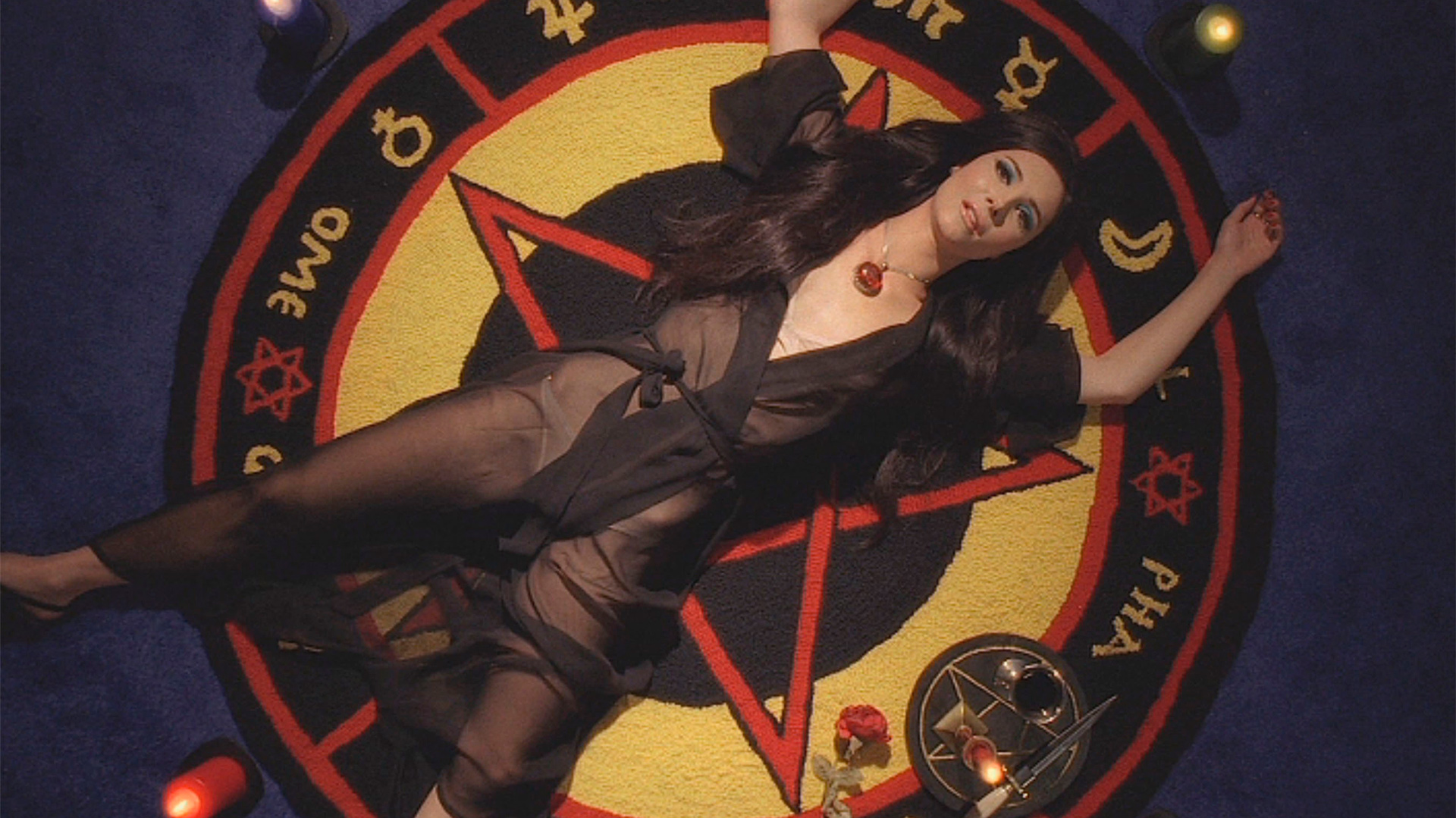
Samantha Robinson as Elaine in THE LOVE WITCH (oscilloscope.net)
Witches are a hot topic lately, as savvy political essayists have shown. But the witch’s popularity in media has exploded since 1999’s The Blair Witch Project; though it’s a shame the latest reboot in the franchise is so ham-fisted and awful. Both Hollywood and indie efforts have been exploring pagan and occult narratives in provocative new ways (see The Sisterhood of Night, or Kill List, or even American Horror Story: Coven.)
But what about real witches? Should we embrace cinema’s repulsive hags and murdering seductresses as facets of a complex female archetype? Or should we demand more sensitive renderings? Robert Eggers’ The Witch had its detractors, but savvy viewers (many witches among them) praised its cunning tropes and artful cinema craft. Social media relished its wrong-headed haters and gave Black Phillip his own hashtags.
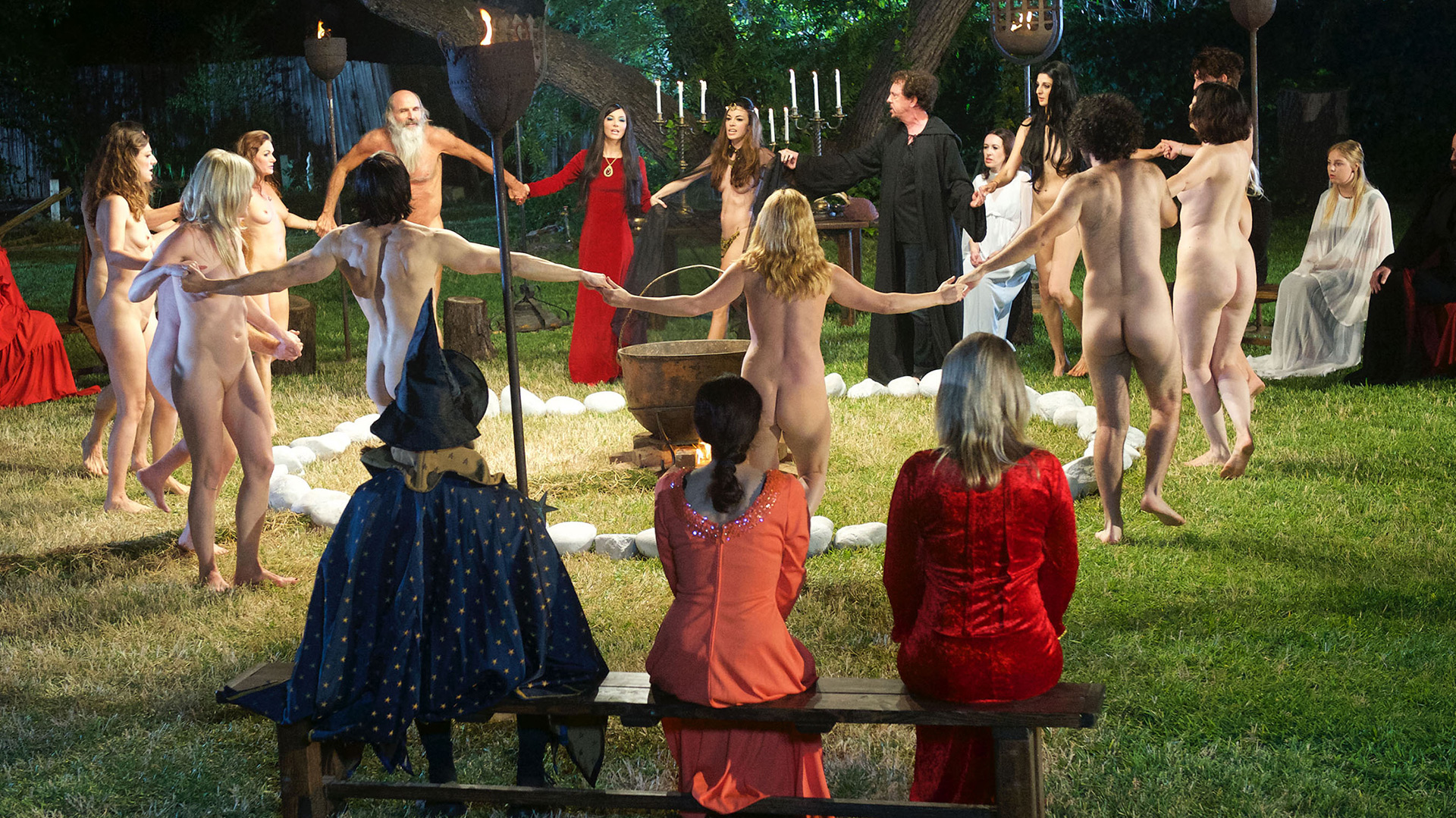
Ritual scene from THE LOVE WITCH (Oscilloscope.net)
Ah, witches and our satanic orgies and bestiality and penchant for ritual sacrifice! Some of the best loved movies about witches tend to portray them/us as insatiable at best, psychotic at worst. The Witch is your fantasy and your nightmare and she terrifies and excites you. She may be ugly or beautiful, scary or sexy, but she is never not evil. Think Rosemary’s Baby (devil-worshiping witches live right next door! They’ll steal your newborn and gaslight you about everything), or The Wicker Man (human sacrifice, maypole dancing, sex sex sex!). Even more contemporary portrayals that borrow from Wicca (like 1996’s The Craft, or 1998’s Practical Magic) are moralistic tales of the dangers of occult dabbling.
Ask witches about cinema’s most damning stereotypes and they’ll inevitably describe titillating tropes involving sex and murder. Love spells, sex magic, and ritual murder are all present in The Love Witch, opening November 11th (check here to see if it will play in your city soon) . Anna Biller’s lush, candy-colored homage to trashy 1970s thrillers and Technicolor melodramas is chockablock with delicious horror references and sly nods to feminist texts like 1975’s The Stepford Wives and 1988’s The Accused. But the film is likely to generate controversy among pagan viewers.
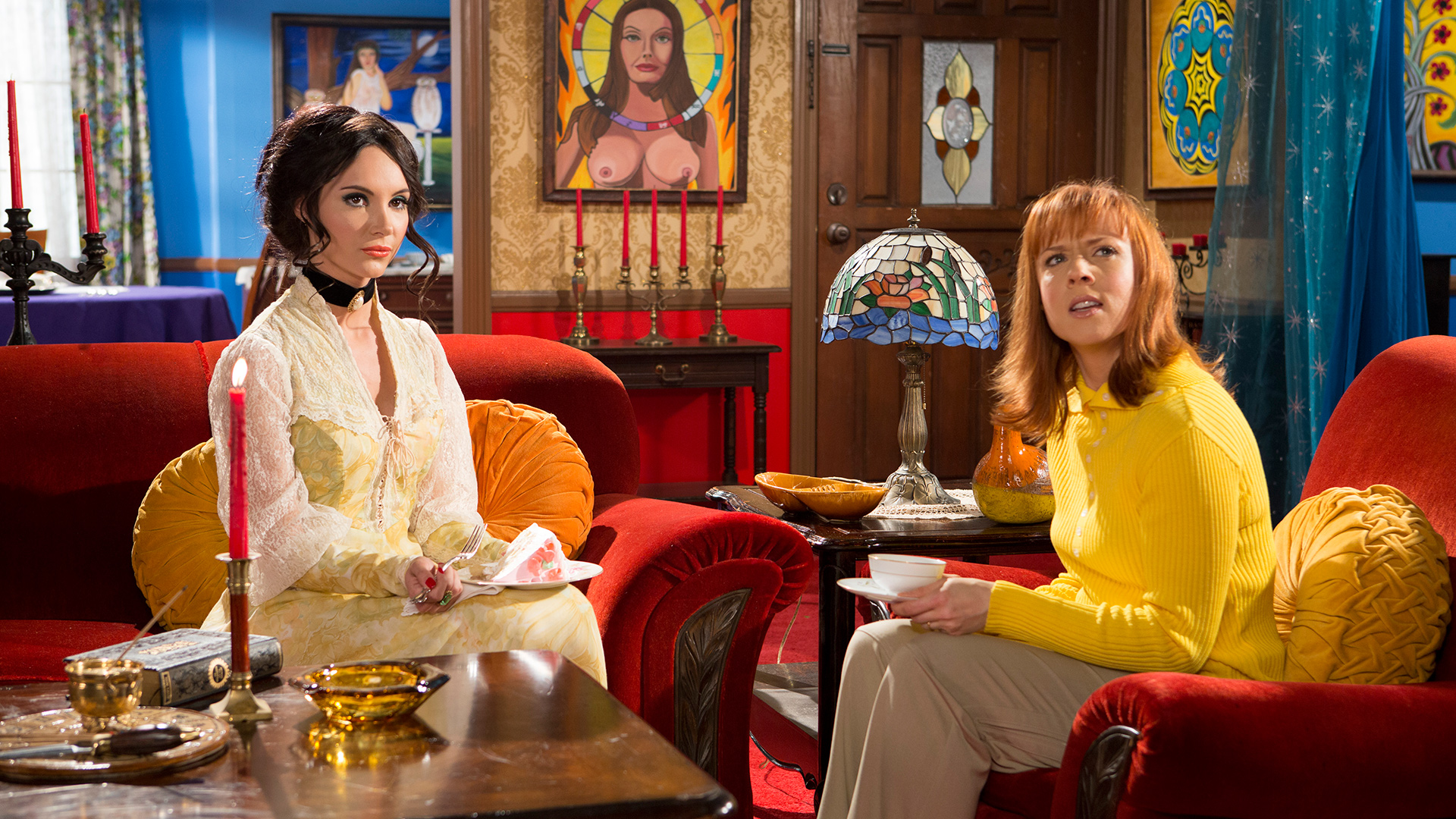
Elaine and friend Trish (Laura Waddell) in THE LOVE WITCH (Oscilloscope.net)
The protagonist Elaine, a foxy raven-haired artist, uses witchcraft, exotic dancing and herbal potions to attract a perfect man. All the authentic trappings and insider details of Wicca are there, and some of it is a bit unnerving: in a scene not unlike the dream sequence where the devil impregnates Rosemary Woodhouse, Elaine recalls her coven initation with her creepy high priest writhing on top of her. Some dialogue is lifted directly from Wiccan liturgy. Elaine also uses magic in selfish, vengeful ways, which is generally frowned upon in Wicca. And the film is steeped in retro imagery that makes modern witchcraft look both dreamy and silly: rainbows, unicorns, Gunne Sax gowns and shimmery, tacky ritual robes.
A pagan friend I watched the film with was shocked and called it “irresponsible and potentially damaging.” His concern is not unreasonable; the film’s portrayal of witches could easily be misinterpreted by viewers whose understanding of modern witchcraft is grounded in horror film imagery.
I asked Biller whether she thought real witches might take offense at the film’s negative stereotypes (even within a satirical framework).

Witches having cocktails! (Oscilloscope.net)
“I considered the pagan community very heavily in making this film,” she said. “For me the witch is such a powerful figure full of contradictions; so this film is a kind of litmus test depending on who is viewing it. Does Elaine represent someone oppressed by the patriarchy? Or is she someone who embodies evil and wreaks havoc? There are so few witch movies that really explore the implications of what witches are; there is so much misunderstanding.” And what about Elaine’s high priest who seems obsessed with sex? “Any time you have a man in power you create the possibility for this dynamic. I think we’ve all seen these kinds of men in the pagan community; this is based in my own experience.” But the manipulative love spells? The killings? “Originally the action built to an even darker climax than the one you see, and I let that drama fall flat on purpose, because I didn’t want Elaine to be purely evil. Ultimately she’s been beaten down by having all these male fantasies projected onto her, so she becomes cruel and manipulative.”
I agree with Biller’s assessment of some predatory personalities in the pagan community. The film also portrays characters who, in another nod to vintage horror, try to drive the witches out of town with torches and pitchforks. One need only view a certain presidential candidate’s recent campaign rallies to imagine how easily such a scenario might play out.
It remains to be seen how the pagan community (at least a million strong in the United States) will respond to this unusual, kitschy film. Or if those predisposed to fear or hate witches will exploit it as part of a larger battle cry. Elaine’s struggle for love is often campy, yet also reflects rather incisively the larger paradigm shift sought by the pagan movement. I mean: How can we heal the planet in the name of the Great Goddess if we can’t even find a decent boyfriend? How can we smash the patriarchy unless we use our womanly wiles to do it?
Stay tuned for my complete review, and my full interview with filmmaker Anna Biller!
Previous Post

November 6, 2016
Hillary Clinton is Not a Witch...or is She?
Next Post
December 20, 2016 Yuletide Movie Watching: Beyond the Basics
Browse Our Archives
Select a Category American Horror Story: COVEN American Horror Story: FREAKSHOW Beltane Faery magic News & Reviews occult pagan festivals Paganism Review Reviews ritual Sabbats Samhain Satanic Panic Tuesday Muse News & Reviews TV Uncategorized Wheel of the Year witches in film witches on TV
Select a Month February 2017 January 2017 December 2016 November 2016 October 2016 September 2016 July 2016 April 2016 March 2016 February 2016 January 2016 December 2015 October 2015 August 2015 July 2015 June 2015 May 2015 April 2015 March 2015 February 2015 January 2015 November 2014 October 2014 August 2014 July 2014 May 2014 April 2014 March 2014 February 2014 January 2014 December 2013 November 2013 October 2013 September 2013 August 2013 July 2013 June 2013 May 2013 April 2013 November 2012 October 2012 September 2012 August 2012 June 2012 May 2012 April 2012 March 2012 February 2012 January 2012 December 2011 November 2011 October 2011 September 2011 August 2011 June 2011 May 2011 April 2011 March 2011 February 2011 January 2011 December 2010 November 2010 October 2010
TAKE THE
Religious Wisdom Quiz
This chapter in Psalms declares the blessed man who meditates on God's law day and night is like a tree planted by streams. What is its number?
Select your answer to see how you score.
Psalm 119 Psalm 23 Psalm 1 Psalm 100
Related posts from The Witching Hour
The Man Who Put a Spell on Trump:...
Witchery and the Women's March

Hillary Clinton is Not a Witch...or is She?

Connecticut School Cancels Hallowe'en, Citing "Respect for Religious...
TRENDING AT PATHEOS Pagan

I was recently chatting with someone on Instagram. She asked me what...

While there are many people who share their results, the end of...

On July 23, I saw Christopher Nolan's The Odyssey which is Homer’s...

As I write this two big events have just finished up. One...

Restoring the Watershed of Divine Love
Perhaps cooperation is not something we manufacture through legislation, ideology, or moral...

Many UUs don’t pray because of bad experiences in a previous religion,...
view all Pagan blogs
Ad-Free & Subscriber Log-In Subscription Support
- About Us
- 2026 Calendar
- Videos
- Podcasts
- Library of World Religions
- Faith In Media Tracker
- Advertise With Us
- Write for Us
- Privacy Policy
- Terms of Service
- Do Not Sell My Data
- Contact Us
- Radiant Digital
- Manage Newsletter Subscriptions
- Unsubscribe From Notifications
- Sitemap
Copyright 2008-2026, Patheos. All rights reserved.
Subscription Support Ad-Free & Subscriber Log-In
Follow Patheos