
BuddhistCatholicContemplativeEvangelicalGeneral ChristianHinduJewishLatter-day SaintMuslimNew VisionsProgressive Christian
Beliefs
- Buddhist
- Catholic
- Contemplative
- Evangelical
- General Christian
- Hindu
- Jewish
- Latter-day Saint
- More Voices
- Muslim
- New Visions
- Pagan
- Progressive Christian
Topics
- Religion News
- Food and Religion
- Sports and Religion
- Religious Art
- Religious Music and Entertainment
- Religious Events
- History and Religion
- Style and Religion
- Politics and Religion
- Women in Religion
- Recreation Outdoors and Religion
- Business Finance and Religion
- Careers Workplace and Religion
- Education and Religion
- Family Parenting and Religion
- Health Fitness and Religion
- Home and Religion
- Relationships and Religion
- Technology and Religion
- Travel and Religion
Columnists
- Buddhist Columnists
- Business Finance and Religion Columnists
- Careers Workplace and Religion Columnists
- Catholic Columnists
- Contemplative Columnists
- Education and Religion Columnists
- Evangelists Columnists
- Family Parenting and Religion Columnists
- General Christian Columnists
- Health Fitness and Religion Columnists
- Hindu Columnists
- History and Religion Columnists
- Home and Religion Columnists
- Jewish Columnists
- More Voices Columnists
- Latter Day Columnists
- Muslim Columnists
- New Visions Columnists
- Nonreligious Columnists
- Pagan Columnists
- Politics and Religion Columnists
- Progressive Columnists
- Recreation Outdoors and Religion Columnists
- Relationships and Religion Columnists
- Religion News Columnists
- Religious Art Columnists
- Religious Events Columnists
- Religious Music and Entertainment Columnists
- Sports and Religion Columnists
- Style and Religion Columnists
- Technology and Religion Columnists
- Travel and Religion Columnists
- Women in Religion Columnists
Resource Library
- 2026 Calendar
- Library of World Religions
- The 100 Most Holy Places on Earth
- Patheos Answers
- Podcasts
- Videos
- Faith Leaders Database
- Anglican Episcopalian
- Bahai
- Baptist
- Buddhism
- Christianity
- Confucianism
- Eastern Orthodoxy
- Hinduism
- Holiness and Pentecostal
- ISKCON
- Islam
- Judaism
- Lutheran
- Methodist
- The Church of Jesus Christ of Latter-day Saints
- New Age
- Paganism
- Presbytarian and Reformed
- Protestantism
- Religion Behind the Scenes
- Roman Catholic
- Scientology
- Shia Islam
- Sikhism
- Sufism
- Sunni Islam
- Taoism
- Zen
- See all religions
Research Tools
 Ad-Free & Subscriber Log-In Subscription Support
Ad-Free & Subscriber Log-In Subscription Support
Follow Patheos 

- Trending:
- Forgiveness
- |
- Marriage
- |
- Consciousness
- |
- Death Penalty
- |
- Election
- |
- Halloween
 The Liturgical Theologian
- Home
- Evangelical
- Liturgy and God’s Redeeming Work
Liturgy and God’s Redeeming Work
Last updated on: October 11, 2015 at 3:02 pm by Porter Case Taylor
Liturgy and God’s Redeeming Work 2015-10-11T15:02:13-05:00 Porter Case Taylor
Patheos Explore the world's faith through different perspectives on religion and spirituality! Patheos has the views of the prevalent religions and spiritualities of the world.
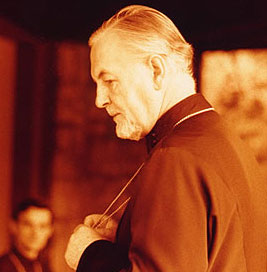
This post is part of an ongoing series entitled, “Sunday with Schmemann.” If you have not yet read some of Fr. Alexander Schmemann’s works you can begin with my inaugural post here. Over the last few weeks I have been re-working my way through Schmemann’s classic, Introduction to Liturgical Theology.
In chapter 2 of Introduction to Liturgical Theology, Fr. Alexander Schmemann examines the problem of the Ordo in the firs centuries of the early Church. In particular, he writes about the reliance of Christian liturgical worship upon the Church’s Jewish roots and the centrality and coherence of the Eucharist in the liturgy of time.
Of significance is the Christian view of time. Do we believe time to be fulfilled, transcended, escaped, or entered into more deeply when we gather together for corporate worship and Eucharist. Here is what I think:
In the liturgy generally, and the Eucharist specifically, time does not cease. To suggest that it does is to suggest that time is not part of God’s redeeming work. Rather, a new dimension of time is introduced—brought crashing into our time—and that is God’s time. A holy understanding of past, present, and future and of their convergence in the celebration of the Eucharist, is the basis for our theology of time and the necessary defense against a renunciation of time.
Just as Christ’s Kingdom is both in the world and for the world, so too is our understanding of time one in which we see redemption, eschatological anticipation, and fullness in Christ.
With reference to the origins of Christian worship within the interpretatio judaica, Fr. Schmemann quotes a great number of liturgiologists. Oesterley writes:
“No one studying the pre-Christian forms of Hebrew worship and the prayer of the Church can fail to notice the similarity of atmosphere or fail to see that both are cast in the same form…In spite of all the differences they are undoubtedly one and the same type of worship.” P. 55
The Swedish liturgiologist Brillioth and the Englishman Dugmore concur, “The attempts to derive the Sacraments directly from the pagan mysteries are now regarded as one of the distortions of historical scholarship, a symptom of a childhood illness which is common to all youthful sciences.” (Y. Brillioth) “We can and must conclude that from the days of the Apostles the synagogue worship was the norm for Christian worship.” (C. W. Dugmore) p. 56-57
While the content of Christian worship was dramatically and forever changed by the cross and resurrection, the form of our worship dates back to both the Temple and synagogue. To miss this is to miss our incorporation into Jesse’s branch entirely. Schmemann puts it brilliantly:
“But for this reason also the newness of Christianity could not be felt and experienced in any other way than in relation to the old, that which it was fulfilling and consummating, to that which it was renewing. The Church is the New Israel, Judaism renewed in the Messiah and spread through all mankind; it is the renewed Covenant of God with His people…It is rather the inevitable liturgical expression of that relationship between the Old and New Covenants outside of which the preaching of the Christ-Messiah is impossible. Just as the New Testament does not replace the Old, but fulfills and completes it, so also the new cult, if it is to be the cult of the New Covenant, does not replace or abolish the old, but appears as its necessary fulfillment.” P. 60-63
Our faith and our worship are embedded, enmeshed, and engrained in the story of YHWH and Israel which has come to fulfillment through Jesus, the Faithful Israelite. To be a Christian is to be committed to and part of this corporate memory and to celebrate all that God has accomplished by, through, in, with, and for His people. Anything short of this will always result in the belief that the Church has someone superseded or replaced Israel rather than being grafted into her covenant family through the person, work, life, death, resurrection, and exaltation of the Christ-Messiah.
Previous Post

September 27, 2015
"The Problem of the Ordo"
Next Post

October 29, 2015 The Real Legacy of the English Reformation
Browse Our Archives
Select a Category Ascension Asceticism Ash Wednesday Baptism Book Review Church Calendar Creation Care Discipleship Dissertation Easter Eastern Orthodox Eastertide Ecclesiology English Reformation Eucharist Exodus Feast Day Flash Essay Fridays With Fr. Kavanagh Good Friday Guest Post Holy Lent Holy Saturday Kavanagh Language Lessons Lectionary Preaching Liturgical Sense Liturgical Theology Liturgy Maundy Thursday New Testament Studies Ordinary Time Palm Sunday Patriarch Pentecost PhD Poetry Pope Francis Proper Preface Recovery Reflections Reformation Resource Round-Up Ressourcement Resurrection Roman Catholic Church Sacraments Saint Schmemann Sermon Sermon Notes Sobriety St. Mark Sundays With Schmemann The Eucharistic Life The Work of Research Transfiguration Uncategorized Weekend Reading
Select a Month July 2017 June 2017 May 2017 April 2017 March 2017 February 2017 September 2016 August 2016 July 2016 June 2016 April 2016 March 2016 February 2016 January 2016 December 2015 November 2015 October 2015 September 2015 August 2015 July 2015 June 2015 May 2015 April 2015 March 2015 February 2015
Follow Us!
TAKE THE
Religious Wisdom Quiz
Which woman was the judge and prophetess who led Israel?
Select your answer to see how you score.
Jael Deborah Esther Miriam
Related posts from The Liturgical Theologian
Reflections on Communion in One Kind

Your Guide to Weekend Reading: July 8

Your Guide to Weekend Reading - July 1
TRENDING AT PATHEOS Evangelical

The REST of Your Life: A Creative Wrestles...
This week I had a conversation with a good friend from church....

How the author of the world's best hymn...
I've been working with John Newton for a while now. This makes...

Long before this Lectio Divina, Psalm 130 - the song - started...

What About the Trees? Another Living Parable
After I finished writing the last article about falling leaves as a...

Why Classical Education Is a Conversation, Not a...
Come and Read: Joy in Classical Education When I was a little...

Cornell University has received a great deal of negative publicity and intense...
view all Evangelical blogs
Ad-Free & Subscriber Log-In Subscription Support
- About Us
- 2026 Calendar
- Videos
- Podcasts
- Library of World Religions
- Faith In Media Tracker
- Advertise With Us
- Write for Us
- Privacy Policy
- Terms of Service
- Do Not Sell My Data
- Contact Us
- Radiant Digital
- Manage Newsletter Subscriptions
- Unsubscribe From Notifications
- Sitemap
Copyright 2008-2026, Patheos. All rights reserved.
Subscription Support Ad-Free & Subscriber Log-In
Follow Patheos