
BuddhistCatholicContemplativeEvangelicalGeneral ChristianHinduJewishLatter-day SaintMuslimNew VisionsProgressive Christian
Beliefs
- Buddhist
- Catholic
- Contemplative
- Evangelical
- General Christian
- Hindu
- Jewish
- Latter-day Saint
- More Voices
- Muslim
- New Visions
- Pagan
- Progressive Christian
Topics
- Religion News
- Food and Religion
- Sports and Religion
- Religious Art
- Religious Music and Entertainment
- Religious Events
- History and Religion
- Style and Religion
- Politics and Religion
- Women in Religion
- Recreation Outdoors and Religion
- Business Finance and Religion
- Careers Workplace and Religion
- Education and Religion
- Family Parenting and Religion
- Health Fitness and Religion
- Home and Religion
- Relationships and Religion
- Technology and Religion
- Travel and Religion
Columnists
- Buddhist Columnists
- Business Finance and Religion Columnists
- Careers Workplace and Religion Columnists
- Catholic Columnists
- Contemplative Columnists
- Education and Religion Columnists
- Evangelists Columnists
- Family Parenting and Religion Columnists
- General Christian Columnists
- Health Fitness and Religion Columnists
- Hindu Columnists
- History and Religion Columnists
- Home and Religion Columnists
- Jewish Columnists
- More Voices Columnists
- Latter Day Columnists
- Muslim Columnists
- New Visions Columnists
- Nonreligious Columnists
- Pagan Columnists
- Politics and Religion Columnists
- Progressive Columnists
- Recreation Outdoors and Religion Columnists
- Relationships and Religion Columnists
- Religion News Columnists
- Religious Art Columnists
- Religious Events Columnists
- Religious Music and Entertainment Columnists
- Sports and Religion Columnists
- Style and Religion Columnists
- Technology and Religion Columnists
- Travel and Religion Columnists
- Women in Religion Columnists
Resource Library
- 2026 Calendar
- Library of World Religions
- The 100 Most Holy Places on Earth
- Patheos Answers
- Podcasts
- Videos
- Faith Leaders Database
- Anglican Episcopalian
- Bahai
- Baptist
- Buddhism
- Christianity
- Confucianism
- Eastern Orthodoxy
- Hinduism
- Holiness and Pentecostal
- ISKCON
- Islam
- Judaism
- Lutheran
- Methodist
- The Church of Jesus Christ of Latter-day Saints
- New Age
- Paganism
- Presbytarian and Reformed
- Protestantism
- Religion Behind the Scenes
- Roman Catholic
- Scientology
- Shia Islam
- Sikhism
- Sufism
- Sunni Islam
- Taoism
- Zen
- See all religions
Research Tools
 Ad-Free & Subscriber Log-In Subscription Support
Ad-Free & Subscriber Log-In Subscription Support
Follow Patheos 

- Trending:
- Forgiveness
- |
- Marriage
- |
- Consciousness
- |
- Death Penalty
- |
- Election
- |
- Halloween
 The Liturgical Theologian
- Home
- Evangelical
- A Pope for All People
A Pope for All People
Last updated on: September 18, 2015 at 8:52 pm by Porter Case Taylor
A Pope for All People 2015-09-18T20:52:35-05:00 Porter Case Taylor
Patheos Explore the world's faith through different perspectives on religion and spirituality! Patheos has the views of the prevalent religions and spiritualities of the world.
Disclaimer: I am not Catholic and I am not trying to convert you to the Catholic Church. I am also not anti-Catholic or anti-Roman. I am an Anglican priest and part of the one holy catholic and apostolic church…and so are you!
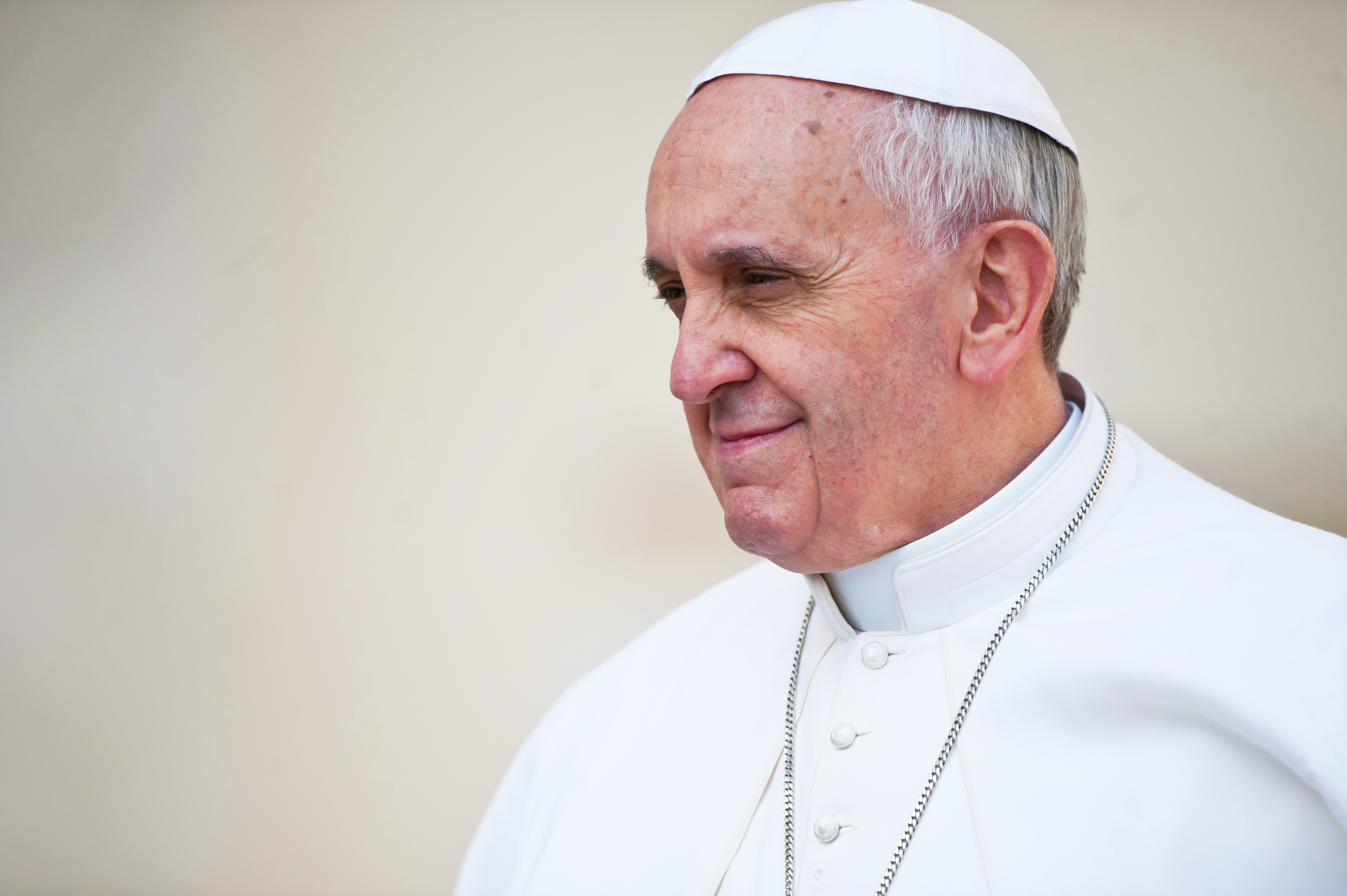
Let’s be honest, very little has been left unsaid leading up to Pope Francis’ first visit to the United States beginning Tuesday, September 22. It is quite evident that Pope Francis’ papal visit is a big deal. A man of the people, a priest of humble background, and a pontiff committed to “cleaning house” in the Vatican, Pope Francis has a restored high regard for the papacy from many corners of the world. Pizza boxes in Philadelphia welcome him and show his face, app developers have created “Papal emojis,” he will be speaking to Congress, and his encyclical Laudato si has been praised, scorned, celebrated, and dismissed by politicians, religious leaders, and scientists. What makes this pope “different”? Why is Pope Francis such a big deal? And, why am I so looking forward to his visit to America?
To answer those questions, I’d like to briefly view the first 18 months of Pope Francis’ papacy through the lenses of ecumenism, humility, pastoral ministry, and Christian ethics.
First, Pope Francis’ visit to the United States is important based on his ongoing ecumenical efforts. In a papal letter from August, Pope Francis announced that the Roman Catholic Church would be joining Ecumenical Patriarch Bartholomew I of Constantinople and the Eastern Orthodox Church in observing a Day of Prayer for the Care of Creation. The letter similarly encouraged Christians of other traditions/denominations to join in the act of praying as well. The very fact that Patheos is hosting so many blog posts on the “Public Square” page or that other non-Catholic, religious outlets are excitedly anticipating his visit is proof that this is no ordinary papal visit because Pope Francis is no ordinary pope.
Second, perhaps the most emphasized characteristic of the Argentinian pontiff is his humility. Cardinal Bergoglio adopted the papal name “Francis” for the first time in the history of the papacy. Based on St. Francis of Assisi, the name bears the same humility as the religious order from which it is derived. Vows of poverty, a commitment to serving the poor, and a love for all creatures and creation are traditional marks of Franciscan spirituality. Pope Francis sits on the same level as those with whom he is speaking, he has taken up simple residence in the Vatican, and he prefers simple clericals rather than ornate. In a time—particularly in the West—when the Church is viewed with skepticism or indifference at best and violent hatred at worst, Pope Francis’ humble spirit is an example to everyone. The Church has lately been accused of great atrocities, arrogance, and an obsession with power but this pope seems to be setting a much different example, one that we should consider following.
Third, much of the world has fallen in love with Pope Francis due to his own love for neighbors, strangers, and creation alike. We remember when he confessed his sins in public to a priest in St. Peter’s Basilica during Lent in 2014. We remember how he washed the feet of a young Muslim woman in 2013. We see his love of and commitment to creation care in Laudato si. Recently, he announced that priests will be ready to grant absolution for abortion in the Year of Divine Mercy, rather than reserving that right for bishops alone. Even more recently, he has encouraged parishes to offer asylum to refugees. The pope will have more opportunities to show the world what Christian-love-in-action looks like.
Finally, Pope Francis offers an example of consistent Christian ethics apart from and regardless of political convictions or affiliations. Rowan Williams, the former Archbishop of Canterbury (2002-2012), wrote a brilliant article for New Statesman focusing on the politics of Pope Francis while also offering insightful and succinct commentary and background. It can and should be read here. Echoing William’s sentiment, it’s pure laziness to suggest that Pope Francis is “liberal” and that his predecessors (Popes Benedict XVI and John Paul II) were “conservative.” There is far more to Pope Francis’ views, far more depth and consistency than realized by many, and we should instead be celebrating his moral theology and ethics rather than questioning his right to speak about creation care. His ethics appropriately delve into abortion, creation care, economics, same-sex marriage, and much more.
As we collectively move toward the Roman Catholic Church’s Year of Divine Mercy, what would it look like for all Christians to demonstrate a stronger commitment to ecumenism, humility, pastoral care, and Christian ethics? How can we follow the strong example of Pope Francis in our daily lives, in the life of our parishes, and in the church catholic?
This pope faces an uphill battle in child abuse scandals, possible corruption within the Vatican, evangelism, and fostering more ecumenical relationships. He will likely be misunderstood or misconstrued by many, but make no mistake: his visit to America is important. I am not a Roman Catholic but I am proud of Pope Francis as a Christian and I look forward to his visit and his continuing papal ministry.
Habemus Papam. Habemus Papam indeed, and I am thankful that we have such a pope for such a time as this.
Previous Post
September 15, 2015
The Eucharist and the Communion of the Saints
Next Post
September 18, 2015 Fridays with Fr. Kavanagh
Browse Our Archives
Select a Category Ascension Asceticism Ash Wednesday Baptism Book Review Church Calendar Creation Care Discipleship Dissertation Easter Eastern Orthodox Eastertide Ecclesiology English Reformation Eucharist Exodus Feast Day Flash Essay Fridays With Fr. Kavanagh Good Friday Guest Post Holy Lent Holy Saturday Kavanagh Language Lessons Lectionary Preaching Liturgical Sense Liturgical Theology Liturgy Maundy Thursday New Testament Studies Ordinary Time Palm Sunday Patriarch Pentecost PhD Poetry Pope Francis Proper Preface Recovery Reflections Reformation Resource Round-Up Ressourcement Resurrection Roman Catholic Church Sacraments Saint Schmemann Sermon Sermon Notes Sobriety St. Mark Sundays With Schmemann The Eucharistic Life The Work of Research Transfiguration Uncategorized Weekend Reading
Select a Month July 2017 June 2017 May 2017 April 2017 March 2017 February 2017 September 2016 August 2016 July 2016 June 2016 April 2016 March 2016 February 2016 January 2016 December 2015 November 2015 October 2015 September 2015 August 2015 July 2015 June 2015 May 2015 April 2015 March 2015 February 2015
Follow Us!
TAKE THE
Religious Wisdom Quiz
What is the Christian teaching about truth-telling?
Select your answer to see how you score.
Lie if necessary Flatter often Say nothing Speak the truth
Related posts from The Liturgical Theologian
Your Guide to Weekend Reading - July 1

Apprenticeship and Discipleship

In Defense of "We Just" Prayers...Partially
TRENDING AT PATHEOS Evangelical

How the author of the world's best hymn...
I've been working with John Newton for a while now. This makes...

Long before this Lectio Divina, Psalm 130 - the song - started...

What About the Trees? Another Living Parable
After I finished writing the last article about falling leaves as a...

Why Classical Education Is a Conversation, Not a...
Come and Read: Joy in Classical Education When I was a little...

Falling Leaves: A Living Parable on Letting Go
I’ve spent the vast majority of my life in the southeast corner...

Cornell University has received a great deal of negative publicity and intense...
view all Evangelical blogs
Ad-Free & Subscriber Log-In Subscription Support
- About Us
- 2026 Calendar
- Videos
- Podcasts
- Library of World Religions
- Faith In Media Tracker
- Advertise With Us
- Write for Us
- Privacy Policy
- Terms of Service
- Do Not Sell My Data
- Contact Us
- Radiant Digital
- Manage Newsletter Subscriptions
- Unsubscribe From Notifications
- Sitemap
Copyright 2008-2026, Patheos. All rights reserved.
Subscription Support Ad-Free & Subscriber Log-In
Follow Patheos