
BuddhistCatholicContemplativeEvangelicalGeneral ChristianHinduJewishLatter-day SaintMuslimNew VisionsProgressive Christian
Beliefs
- Buddhist
- Catholic
- Contemplative
- Evangelical
- General Christian
- Hindu
- Jewish
- Latter-day Saint
- More Voices
- Muslim
- New Visions
- Pagan
- Progressive Christian
Topics
- Religion News
- Food and Religion
- Sports and Religion
- Religious Art
- Religious Music and Entertainment
- Religious Events
- History and Religion
- Style and Religion
- Politics and Religion
- Women in Religion
- Recreation Outdoors and Religion
- Business Finance and Religion
- Careers Workplace and Religion
- Education and Religion
- Family Parenting and Religion
- Health Fitness and Religion
- Home and Religion
- Relationships and Religion
- Technology and Religion
- Travel and Religion
Columnists
- Buddhist Columnists
- Business Finance and Religion Columnists
- Careers Workplace and Religion Columnists
- Catholic Columnists
- Contemplative Columnists
- Education and Religion Columnists
- Evangelists Columnists
- Family Parenting and Religion Columnists
- General Christian Columnists
- Health Fitness and Religion Columnists
- Hindu Columnists
- History and Religion Columnists
- Home and Religion Columnists
- Jewish Columnists
- More Voices Columnists
- Latter Day Columnists
- Muslim Columnists
- New Visions Columnists
- Nonreligious Columnists
- Pagan Columnists
- Politics and Religion Columnists
- Progressive Columnists
- Recreation Outdoors and Religion Columnists
- Relationships and Religion Columnists
- Religion News Columnists
- Religious Art Columnists
- Religious Events Columnists
- Religious Music and Entertainment Columnists
- Sports and Religion Columnists
- Style and Religion Columnists
- Technology and Religion Columnists
- Travel and Religion Columnists
- Women in Religion Columnists
Resource Library
- 2026 Calendar
- Library of World Religions
- The 100 Most Holy Places on Earth
- Patheos Answers
- Podcasts
- Videos
- Faith Leaders Database
- Anglican Episcopalian
- Bahai
- Baptist
- Buddhism
- Christianity
- Confucianism
- Eastern Orthodoxy
- Hinduism
- Holiness and Pentecostal
- ISKCON
- Islam
- Judaism
- Lutheran
- Methodist
- The Church of Jesus Christ of Latter-day Saints
- New Age
- Paganism
- Presbytarian and Reformed
- Protestantism
- Religion Behind the Scenes
- Roman Catholic
- Scientology
- Shia Islam
- Sikhism
- Sufism
- Sunni Islam
- Taoism
- Zen
- See all religions
Research Tools
 Ad-Free & Subscriber Log-In Subscription Support
Ad-Free & Subscriber Log-In Subscription Support
Follow Patheos 

- Trending:
- Forgiveness
- |
- Marriage
- |
- Consciousness
- |
- Death Penalty
- |
- Election
- |
- Halloween
 The Liturgical Theologian
- Home
- Evangelical
- Fridays with Fr. Kavanagh
Fridays with Fr. Kavanagh
Last updated on: September 11, 2015 at 8:08 am by Porter Case Taylor
Fridays with Fr. Kavanagh 2015-09-11T08:08:08-05:00 Porter Case Taylor
Patheos Explore the world's faith through different perspectives on religion and spirituality! Patheos has the views of the prevalent religions and spiritualities of the world.
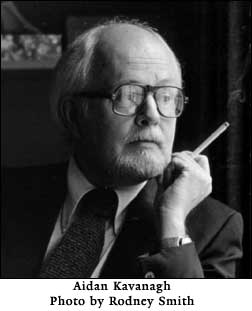
Fr. Aidan Kavanagh was a professor at Notre Dame and Yale, a Benedictine monk, and one of the world’s leading scholars in liturgical studies and liturgical theology. Kavanagh died in 2006 at the age of 77 and a beautiful obituary published by Yale can be read here. Amongst many other accolades, he was the first Roman Catholic to serve as the Dean of Yale Divinity School (1989-1990) and his works have profoundly influenced my thinking and research.
Fr. Kavanagh is perhaps most known for his book, On Liturgical Theology, his vast and prolific writing corpus, and his research on the sacraments of initiation (Baptism, Confirmation, and Eucharist), liturgical studies, and a pioneer in liturgical theology alongside Fr. Alexander Schmemann.
When last we left Fr. Kavanagh in chapter 1 of On Liturgical Theology, he had been writing on the centrality and primacy of liturgy within the life of the church. He then moves into a lengthy conversation about the life of the academician and the growing chasm between parish and academe, between faith and theology. Kavanagh points out that originally theology was highly pastoral and located within the life of the parish or catechetical school rather than the universities. He writes:
“Only three ‘world class’ theologians during the first five or six centuries were not episcopal pastors: Tertullian, Origen, and Jerome. The inference that can be drawn from this is that theology was then regarded as a necessarily and intimately pastoral task, something regularly done by servants of the community, done live and in its solemn if often rowdy presence. The theology we today call patristic was thus a profoundly pastoral theology in its ambience, purpose, and execution,” (p. 18).
Many ecumenical thinkers, writers, and theologians today are engaging in a ressourcement or return to biblical and patristic sources, reengaging with the texts and beliefs of the early church as normative for faith and discipleship. That’s a very thin definition of ressourcement but look what Fr. Kavanagh says about such a return: it is a return to pastoral theology, to something done in, with, and through the church. We should all strive to be theologians in service of the church!
Fr. Kavanagh, like other liturgical theologians, believed liturgy to be normative for both the church and the world. Further, liturgy becomes the “vortex of entanglement” of God, church, and the world. “For Christian worship in its integrity is nothing if not both worldly and ecclesial…The possibility that liturgical worship, an endeavor both worldly and ecclesial, it itself fundamental to and constitutive of the faithful community and also of the ways in which that community reflects upon itself theologically,” (p. 21-22).
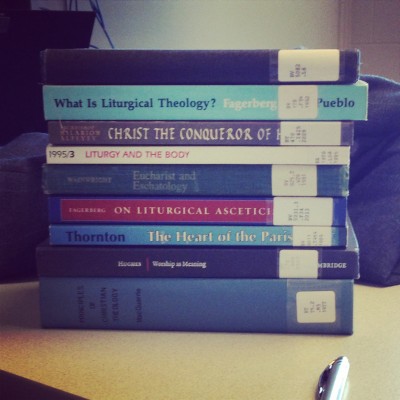
I’ll leave you with this little gem and offer no comment, it’s that good. I tweeted this quote earlier and may have started a Twitter-war between friends! “Christian asceticism, like the prospect of hanging, concentrates the mind and clears the head,” (p. 12). Anyone interested in asceticism should read David Fagerberg’s, On Liturgical Asceticism.
Next week we shall turn our attention to chapter 2, “The World.”
Previous Post
September 6, 2015
Sundays with Schmemann
Next Post
September 13, 2015 Sundays with Schmemann
Browse Our Archives
Select a Category Ascension Asceticism Ash Wednesday Baptism Book Review Church Calendar Creation Care Discipleship Dissertation Easter Eastern Orthodox Eastertide Ecclesiology English Reformation Eucharist Exodus Feast Day Flash Essay Fridays With Fr. Kavanagh Good Friday Guest Post Holy Lent Holy Saturday Kavanagh Language Lessons Lectionary Preaching Liturgical Sense Liturgical Theology Liturgy Maundy Thursday New Testament Studies Ordinary Time Palm Sunday Patriarch Pentecost PhD Poetry Pope Francis Proper Preface Recovery Reflections Reformation Resource Round-Up Ressourcement Resurrection Roman Catholic Church Sacraments Saint Schmemann Sermon Sermon Notes Sobriety St. Mark Sundays With Schmemann The Eucharistic Life The Work of Research Transfiguration Uncategorized Weekend Reading
Select a Month July 2017 June 2017 May 2017 April 2017 March 2017 February 2017 September 2016 August 2016 July 2016 June 2016 April 2016 March 2016 February 2016 January 2016 December 2015 November 2015 October 2015 September 2015 August 2015 July 2015 June 2015 May 2015 April 2015 March 2015 February 2015
Follow Us!
TAKE THE
Religious Wisdom Quiz
True or False: Paul's first missionary journey was with Silas.
Select your answer to see how you score.
FALSE TRUE
Related posts from The Liturgical Theologian
Reflections on Communion in One Kind

Your Guide to Weekend Reading: July 8
Your Guide to Weekend Reading - July 1
TRENDING AT PATHEOS Evangelical

The REST of Your Life: A Creative Wrestles...
This week I had a conversation with a good friend from church....

How the author of the world's best hymn...
I've been working with John Newton for a while now. This makes...

Long before this Lectio Divina, Psalm 130 - the song - started...

What About the Trees? Another Living Parable
After I finished writing the last article about falling leaves as a...

Why Classical Education Is a Conversation, Not a...
Come and Read: Joy in Classical Education When I was a little...

Cornell University has received a great deal of negative publicity and intense...
view all Evangelical blogs
Ad-Free & Subscriber Log-In Subscription Support
- About Us
- 2026 Calendar
- Videos
- Podcasts
- Library of World Religions
- Faith In Media Tracker
- Advertise With Us
- Write for Us
- Privacy Policy
- Terms of Service
- Do Not Sell My Data
- Contact Us
- Radiant Digital
- Manage Newsletter Subscriptions
- Unsubscribe From Notifications
- Sitemap
Copyright 2008-2026, Patheos. All rights reserved.
Subscription Support Ad-Free & Subscriber Log-In
Follow Patheos