
BuddhistCatholicContemplativeEvangelicalGeneral ChristianHinduJewishLatter-day SaintMuslimNew VisionsProgressive Christian
Beliefs
- Buddhist
- Catholic
- Contemplative
- Evangelical
- General Christian
- Hindu
- Jewish
- Latter-day Saint
- More Voices
- Muslim
- New Visions
- Pagan
- Progressive Christian
Topics
- Religion News
- Food and Religion
- Sports and Religion
- Religious Art
- Religious Music and Entertainment
- Religious Events
- History and Religion
- Style and Religion
- Politics and Religion
- Women in Religion
- Recreation Outdoors and Religion
- Business Finance and Religion
- Careers Workplace and Religion
- Education and Religion
- Family Parenting and Religion
- Health Fitness and Religion
- Home and Religion
- Relationships and Religion
- Technology and Religion
- Travel and Religion
Columnists
- Buddhist Columnists
- Business Finance and Religion Columnists
- Careers Workplace and Religion Columnists
- Catholic Columnists
- Contemplative Columnists
- Education and Religion Columnists
- Evangelists Columnists
- Family Parenting and Religion Columnists
- General Christian Columnists
- Health Fitness and Religion Columnists
- Hindu Columnists
- History and Religion Columnists
- Home and Religion Columnists
- Jewish Columnists
- More Voices Columnists
- Latter Day Columnists
- Muslim Columnists
- New Visions Columnists
- Nonreligious Columnists
- Pagan Columnists
- Politics and Religion Columnists
- Progressive Columnists
- Recreation Outdoors and Religion Columnists
- Relationships and Religion Columnists
- Religion News Columnists
- Religious Art Columnists
- Religious Events Columnists
- Religious Music and Entertainment Columnists
- Sports and Religion Columnists
- Style and Religion Columnists
- Technology and Religion Columnists
- Travel and Religion Columnists
- Women in Religion Columnists
Resource Library
- 2026 Calendar
- Library of World Religions
- The 100 Most Holy Places on Earth
- Patheos Answers
- Podcasts
- Videos
- Faith Leaders Database
- Anglican Episcopalian
- Bahai
- Baptist
- Buddhism
- Christianity
- Confucianism
- Eastern Orthodoxy
- Hinduism
- Holiness and Pentecostal
- ISKCON
- Islam
- Judaism
- Lutheran
- Methodist
- The Church of Jesus Christ of Latter-day Saints
- New Age
- Paganism
- Presbytarian and Reformed
- Protestantism
- Religion Behind the Scenes
- Roman Catholic
- Scientology
- Shia Islam
- Sikhism
- Sufism
- Sunni Islam
- Taoism
- Zen
- See all religions
Research Tools
 Ad-Free & Subscriber Log-In Subscription Support
Ad-Free & Subscriber Log-In Subscription Support
Follow Patheos 

- Trending:
- Forgiveness
- |
- Marriage
- |
- Consciousness
- |
- Death Penalty
- |
- Election
- |
- Halloween
 The Liturgical Theologian
- Home
- Evangelical
- Sundays with Schmemann
Sundays with Schmemann
Last updated on: September 6, 2015 at 2:48 pm by Porter Case Taylor
Sundays with Schmemann 2015-09-06T14:48:51-05:00 Porter Case Taylor
Patheos Explore the world's faith through different perspectives on religion and spirituality! Patheos has the views of the prevalent religions and spiritualities of the world.

My work has been very heavily influenced by Fr. Alexander Schmemann and I think he has a great deal to say on the subjects of liturgy, sacraments, and the church.
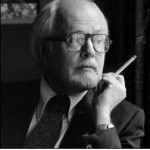
For those of you who may not know him: Fr. Schmemann was a priest of Russian descent in the Orthodox Church committed to liturgical theology and renewal. After a teaching period in Paris (1946-1951), he joined the faculty at St. Vladimir’s Seminary in New York where he remained until his death in 1983. Married to Juliana, he was awarded the title of Protopresbyter, the highest accolade available for a married priest in the Orthodox tradition. His writings cover the liturgical life of Orthodox Christianity and call people to a deeper understanding of and participation in the church’s worship and sacraments. I don’t think it is a stretch to claim that Fr. Schmemann is to liturgical studies/theology what N. T. Wright is to New Testament studies.
I am currently embarking on a new reading, researching, and writing project that will occupy a great deal of time. The overall goal of the project is to read through the important texts related to liturgical theology. Most of my time will be occupied by the writings of Schmemann, Kavanagh, Fagerberg, and Lathrop; the fruit of this reading will be seen through my blog posts, particularly “Sundays with Schmemann” and “Fridays with Fr. Kavanagh.”
Today’s content comes directly from Schmemann’s important work, Introduction to Liturgical Theology. In attempting to define the nature and work of liturgical theology, Schmemann writes:
“As its name indicates, liturgical theology is the elucidation of the meaning of worship…If liturgical theology stems from an understanding of worship as the public act of the Church, then its final goal will be to clarify and explain the connection between this act and the Church, i.e. to explain how the Church expresses and fulfills herself in this act.” – Schmemann, Introduction to Liturgical Theology, p. 17.
For Schmemann, the Church realizes that which she already is in the midst of the Eucharist. The Eucharist is the sacrament of the kingdom, the sacrament of sacraments, and through it she (the Church) shows the world the way the world was meant to be done. In worship, and therefore through the liturgy, the church gathers together for the corporate praise of Almighty God. She is fed by His word, the Word made flesh, and flesh and blood of the Word in sacramental mystery and revelation. A proper and robust understanding of worship’s words, gestures, forms, and meanings should therefore be taken as an utter priority within both the church and the academy. Fr. Schmemann felt so strongly about the importance of liturgical theology that he wrote, “Without liturgical theology our understanding of the Church’s faith and doctrine is bound to be incomplete,” (p. 19).
This can get confusing for some, as the purpose of research turns toward historical liturgical development and study rather than to theology. What is needed is a proper definition of terms and the goals in academic research. “Historical liturgics establishes the structures and their development, liturgical theology discovers their meaning: such is the general methodological principle of the task,” (p. 22).
In essence, we are arguing that the forms, patterns, and development of the church’s liturgy over the course of 2,000 is highly important but is incomplete. To really understand the meaning of her worship, to truly take seriously the Church’s theology-and-faith-in-motion, we ought to pay attention to the words she uses to praise God, in their liturgical context, and toward a specific end.
“From the establishment and interpretation of the basic structures of worship to an explanation of every possibly element, and then to an orderly theological synthesis of all this data–such a task is the method which liturgical theology uses to carry out its task, to translate what is expressed by the language of worship–its structures, its ceremonies, its texts and its whole ‘spirit’–into the language of theology, to make the liturgical experience of the Church again one of the life-giving sources of the knowledge of God,” (p. 23).
Such is the task of liturgical theology. Such is the goal of this blog. Such is my commitment to academic research and writing. I hope you stay along for the journey!
Previous Post
September 4, 2015
Fridays With Fr. Kavanagh
Next Post
September 11, 2015 Fridays with Fr. Kavanagh
Browse Our Archives
Select a Category Ascension Asceticism Ash Wednesday Baptism Book Review Church Calendar Creation Care Discipleship Dissertation Easter Eastern Orthodox Eastertide Ecclesiology English Reformation Eucharist Exodus Feast Day Flash Essay Fridays With Fr. Kavanagh Good Friday Guest Post Holy Lent Holy Saturday Kavanagh Language Lessons Lectionary Preaching Liturgical Sense Liturgical Theology Liturgy Maundy Thursday New Testament Studies Ordinary Time Palm Sunday Patriarch Pentecost PhD Poetry Pope Francis Proper Preface Recovery Reflections Reformation Resource Round-Up Ressourcement Resurrection Roman Catholic Church Sacraments Saint Schmemann Sermon Sermon Notes Sobriety St. Mark Sundays With Schmemann The Eucharistic Life The Work of Research Transfiguration Uncategorized Weekend Reading
Select a Month July 2017 June 2017 May 2017 April 2017 March 2017 February 2017 September 2016 August 2016 July 2016 June 2016 April 2016 March 2016 February 2016 January 2016 December 2015 November 2015 October 2015 September 2015 August 2015 July 2015 June 2015 May 2015 April 2015 March 2015 February 2015
Follow Us!
TAKE THE
Religious Wisdom Quiz
True or False: Ezekiel saw a vision of a valley of dry bones that came to life.
Select your answer to see how you score.
FALSE TRUE
Related posts from The Liturgical Theologian
Reflections on Communion in One Kind

Your Guide to Weekend Reading: July 8
Your Guide to Weekend Reading - July 1
TRENDING AT PATHEOS Evangelical

The REST of Your Life: A Creative Wrestles...
This week I had a conversation with a good friend from church....

How the author of the world's best hymn...
I've been working with John Newton for a while now. This makes...

Long before this Lectio Divina, Psalm 130 - the song - started...

What About the Trees? Another Living Parable
After I finished writing the last article about falling leaves as a...

Why Classical Education Is a Conversation, Not a...
Come and Read: Joy in Classical Education When I was a little...

Cornell University has received a great deal of negative publicity and intense...
view all Evangelical blogs
Ad-Free & Subscriber Log-In Subscription Support
- About Us
- 2026 Calendar
- Videos
- Podcasts
- Library of World Religions
- Faith In Media Tracker
- Advertise With Us
- Write for Us
- Privacy Policy
- Terms of Service
- Do Not Sell My Data
- Contact Us
- Radiant Digital
- Manage Newsletter Subscriptions
- Unsubscribe From Notifications
- Sitemap
Copyright 2008-2026, Patheos. All rights reserved.
Subscription Support Ad-Free & Subscriber Log-In
Follow Patheos