
BuddhistCatholicContemplativeEvangelicalGeneral ChristianHinduJewishLatter-day SaintMuslimNew VisionsProgressive Christian
Beliefs
- Buddhist
- Catholic
- Contemplative
- Evangelical
- General Christian
- Hindu
- Jewish
- Latter-day Saint
- More Voices
- Muslim
- New Visions
- Pagan
- Progressive Christian
Topics
- Religion News
- Food and Religion
- Sports and Religion
- Religious Art
- Religious Music and Entertainment
- Religious Events
- History and Religion
- Style and Religion
- Politics and Religion
- Women in Religion
- Recreation Outdoors and Religion
- Business Finance and Religion
- Careers Workplace and Religion
- Education and Religion
- Family Parenting and Religion
- Health Fitness and Religion
- Home and Religion
- Relationships and Religion
- Technology and Religion
- Travel and Religion
Columnists
- Buddhist Columnists
- Business Finance and Religion Columnists
- Careers Workplace and Religion Columnists
- Catholic Columnists
- Contemplative Columnists
- Education and Religion Columnists
- Evangelists Columnists
- Family Parenting and Religion Columnists
- General Christian Columnists
- Health Fitness and Religion Columnists
- Hindu Columnists
- History and Religion Columnists
- Home and Religion Columnists
- Jewish Columnists
- More Voices Columnists
- Latter Day Columnists
- Muslim Columnists
- New Visions Columnists
- Nonreligious Columnists
- Pagan Columnists
- Politics and Religion Columnists
- Progressive Columnists
- Recreation Outdoors and Religion Columnists
- Relationships and Religion Columnists
- Religion News Columnists
- Religious Art Columnists
- Religious Events Columnists
- Religious Music and Entertainment Columnists
- Sports and Religion Columnists
- Style and Religion Columnists
- Technology and Religion Columnists
- Travel and Religion Columnists
- Women in Religion Columnists
Resource Library
- 2026 Calendar
- Library of World Religions
- The 100 Most Holy Places on Earth
- Patheos Answers
- Podcasts
- Videos
- Faith Leaders Database
- Anglican Episcopalian
- Bahai
- Baptist
- Buddhism
- Christianity
- Confucianism
- Eastern Orthodoxy
- Hinduism
- Holiness and Pentecostal
- ISKCON
- Islam
- Judaism
- Lutheran
- Methodist
- The Church of Jesus Christ of Latter-day Saints
- New Age
- Paganism
- Presbytarian and Reformed
- Protestantism
- Religion Behind the Scenes
- Roman Catholic
- Scientology
- Shia Islam
- Sikhism
- Sufism
- Sunni Islam
- Taoism
- Zen
- See all religions
Research Tools
 Ad-Free & Subscriber Log-In Subscription Support
Ad-Free & Subscriber Log-In Subscription Support
Follow Patheos 

- Trending:
- Forgiveness
- |
- Marriage
- |
- Consciousness
- |
- Death Penalty
- |
- Election
- |
- Halloween
 The Liturgical Theologian
- Home
- Evangelical
- Sundays With Schmemann
Sundays With Schmemann
Last updated on: August 16, 2015 at 6:38 am by Porter Case Taylor
Sundays With Schmemann 2015-08-16T06:38:39-05:00 Porter Case Taylor
Patheos Explore the world's faith through different perspectives on religion and spirituality! Patheos has the views of the prevalent religions and spiritualities of the world.

My work has been very heavily influenced by Fr. Alexander Schmemann and I think he has a great deal to say on the subjects of liturgy, sacraments, and the church.
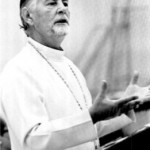
For those of you who may not know him: Fr. Schmemann was a priest of Russian descent in the Orthodox Church committed to liturgical theology and renewal. After a teaching period in Paris (1946-1951), he joined the faculty at St. Vladimir’s Seminary in New York where he remained until his death in 1983. Married to Juliana, he was awarded the title of Protopresbyter, the highest accolade available for a married priest in the Orthodox tradition. His writings cover the liturgical life of Orthodox Christianity and call people to a deeper understanding of and participation in the church’s worship and sacraments. I don’t think it is a stretch to claim that Fr. Schmemann is to liturgical studies/theology what N. T. Wright is to New Testament studies.
Yesterday was a beautiful juxtaposition of numerous Marian views within the Christian church. Roman Catholics and some Anglo-Catholics celebrated the Feast of the Assumption of Mary, other Anglicans celebrated the Feast of St. Mary, the Virgin and our Orthodox brothers and sisters are still in the midst of their Dormition fast (ending August 28 with the Feast of the Dormition). As I was sitting in the chair getting a tattoo from an Orthodox iconographer, I was reminded of Fr. Schmemann’s words in Great Lent regarding fasting and feasting. Bear in mind that the overall context for these quotes is in relation to the journey toward Lent. I offer them to you below…
“Every time the Church celebrates the Eucharist, she is ‘at home’–in heaven; she is ascending where Christ has ascended in order to make us ‘eat and drink at his table in His Kingdom…” – Fr. Schmemann, Great Lent, 47.
On feasting and fasting in Lent, he writes:
“As the sacraments and the celebration of the Kingdom, as the feast of the Church, it is incompatible with fast and is not celebrating during Lent; as the grace and the power of the Kingdom which are at work in the world, as our supplier of the ‘essential food’ and the weapon of our spiritual fight, it is at the very center of the fast, it is indeed the heavenly manna that keeps us alive on our journey through the desert of Lent.” – p. 48-49
He goes on to describe two different kinds of fasting:
“There are indeed two ways or modes of fasting rooted both in Scripture and Tradition, and which correspond to two distinct needs or states of man. The first one can be termed total fast for it consists of total abstinence from food and drink. One can define the second one as ascetical fast for it consists mainly in abstinence from certain foods and in substantial reduction of the dietary regimen…The Church has set apart four periods for this ascetical fast: the seasons before Easter, Christmas, the Feast of SS. Peter and Paul, and the Dormition of the Mother of God.” – P. 49, 51.
Fr. Schmemann suggests that the goal of the total fast is preparation for feast whereas the goal of the ascetical fast is “to liberate man from the unlawful tyranny of the flesh” (p. 50). Don’t we need both elements in our lives? As believers, I think it is essential that we prepare for the Feast of feasts (the Eucharist) and other major feasts within the church through total fasting. I also believe that periodic ascetical fasts can help train our passions and form us as people of the Spirit.
“The Eucharist as always the end of preparation and fulfillment of expectation; and the days of total abstinence and fast being the most intense expressions of the Church as preparation, they are ‘crowned’ with evening Communion.” – P. 53.
I could go on like this forever, but I’ll leave you with one more quote about the the significance of our lives and actions in both fasting and feasting, in preparation, expectation and fulfillment:
“Every word I say, every act I perform, every though passing through my mind becomes important, unique, irreversible, and either each is ‘in line’ with my expectation of Christ is in opposition to it…Our whole life becomes that which it was made by Christ’s coming into this world–ascension to Him, or running away from Him into darkness and destruction.” – P. 54.
Previous Post
August 9, 2015
Sundays With Schmemann
Next Post
August 23, 2015 Sundays With Schmemann
Browse Our Archives
Select a Category Ascension Asceticism Ash Wednesday Baptism Book Review Church Calendar Creation Care Discipleship Dissertation Easter Eastern Orthodox Eastertide Ecclesiology English Reformation Eucharist Exodus Feast Day Flash Essay Fridays With Fr. Kavanagh Good Friday Guest Post Holy Lent Holy Saturday Kavanagh Language Lessons Lectionary Preaching Liturgical Sense Liturgical Theology Liturgy Maundy Thursday New Testament Studies Ordinary Time Palm Sunday Patriarch Pentecost PhD Poetry Pope Francis Proper Preface Recovery Reflections Reformation Resource Round-Up Ressourcement Resurrection Roman Catholic Church Sacraments Saint Schmemann Sermon Sermon Notes Sobriety St. Mark Sundays With Schmemann The Eucharistic Life The Work of Research Transfiguration Uncategorized Weekend Reading
Select a Month July 2017 June 2017 May 2017 April 2017 March 2017 February 2017 September 2016 August 2016 July 2016 June 2016 April 2016 March 2016 February 2016 January 2016 December 2015 November 2015 October 2015 September 2015 August 2015 July 2015 June 2015 May 2015 April 2015 March 2015 February 2015
Follow Us!
TAKE THE
Religious Wisdom Quiz
True or False: Ezekiel saw a vision of a valley of dry bones that came to life.
Select your answer to see how you score.
FALSE TRUE
Related posts from The Liturgical Theologian
Reflections on Communion in One Kind
Your Guide to Weekend Reading - July 1
TRENDING AT PATHEOS Evangelical

The REST of Your Life: A Creative Wrestles...
This week I had a conversation with a good friend from church....

How the author of the world's best hymn...
I've been working with John Newton for a while now. This makes...

Long before this Lectio Divina, Psalm 130 - the song - started...

What About the Trees? Another Living Parable
After I finished writing the last article about falling leaves as a...

Why Classical Education Is a Conversation, Not a...
Come and Read: Joy in Classical Education When I was a little...

Cornell University has received a great deal of negative publicity and intense...
view all Evangelical blogs
Ad-Free & Subscriber Log-In Subscription Support
- About Us
- 2026 Calendar
- Videos
- Podcasts
- Library of World Religions
- Faith In Media Tracker
- Advertise With Us
- Write for Us
- Privacy Policy
- Terms of Service
- Do Not Sell My Data
- Contact Us
- Radiant Digital
- Manage Newsletter Subscriptions
- Unsubscribe From Notifications
- Sitemap
Copyright 2008-2026, Patheos. All rights reserved.
Subscription Support Ad-Free & Subscriber Log-In
Follow Patheos