
BuddhistCatholicContemplativeEvangelicalGeneral ChristianHinduJewishLatter-day SaintMuslimNew VisionsProgressive Christian
Beliefs
- Buddhist
- Catholic
- Contemplative
- Evangelical
- General Christian
- Hindu
- Jewish
- Latter-day Saint
- More Voices
- Muslim
- New Visions
- Pagan
- Progressive Christian
Topics
- Religion News
- Food and Religion
- Sports and Religion
- Religious Art
- Religious Music and Entertainment
- Religious Events
- History and Religion
- Style and Religion
- Politics and Religion
- Women in Religion
- Recreation Outdoors and Religion
- Business Finance and Religion
- Careers Workplace and Religion
- Education and Religion
- Family Parenting and Religion
- Health Fitness and Religion
- Home and Religion
- Relationships and Religion
- Technology and Religion
- Travel and Religion
Columnists
- Buddhist Columnists
- Business Finance and Religion Columnists
- Careers Workplace and Religion Columnists
- Catholic Columnists
- Contemplative Columnists
- Education and Religion Columnists
- Evangelists Columnists
- Family Parenting and Religion Columnists
- General Christian Columnists
- Health Fitness and Religion Columnists
- Hindu Columnists
- History and Religion Columnists
- Home and Religion Columnists
- Jewish Columnists
- More Voices Columnists
- Latter Day Columnists
- Muslim Columnists
- New Visions Columnists
- Nonreligious Columnists
- Pagan Columnists
- Politics and Religion Columnists
- Progressive Columnists
- Recreation Outdoors and Religion Columnists
- Relationships and Religion Columnists
- Religion News Columnists
- Religious Art Columnists
- Religious Events Columnists
- Religious Music and Entertainment Columnists
- Sports and Religion Columnists
- Style and Religion Columnists
- Technology and Religion Columnists
- Travel and Religion Columnists
- Women in Religion Columnists
Resource Library
- 2026 Calendar
- Library of World Religions
- The 100 Most Holy Places on Earth
- Patheos Answers
- Podcasts
- Videos
- Faith Leaders Database
- Anglican Episcopalian
- Bahai
- Baptist
- Buddhism
- Christianity
- Confucianism
- Eastern Orthodoxy
- Hinduism
- Holiness and Pentecostal
- ISKCON
- Islam
- Judaism
- Lutheran
- Methodist
- The Church of Jesus Christ of Latter-day Saints
- New Age
- Paganism
- Presbytarian and Reformed
- Protestantism
- Religion Behind the Scenes
- Roman Catholic
- Scientology
- Shia Islam
- Sikhism
- Sufism
- Sunni Islam
- Taoism
- Zen
- See all religions
Research Tools
 Ad-Free & Subscriber Log-In Subscription Support
Ad-Free & Subscriber Log-In Subscription Support
Follow Patheos 

- Trending:
- Forgiveness
- |
- Marriage
- |
- Consciousness
- |
- Death Penalty
- |
- Election
- |
- Halloween
 The Liturgical Theologian
- Home
- Evangelical
- Provision for the Pilgrim People – Sermon Notes for Pentecost 11/Proper 14
Provision for the Pilgrim People – Sermon Notes for Pentecost 11/Proper 14
Last updated on: August 5, 2015 at 3:44 pm by Porter Case Taylor
Provision for the Pilgrim People – Sermon Notes for Pentecost 11/Proper 14 2015-08-05T15:44:27-05:00 Porter Case Taylor
Patheos Explore the world's faith through different perspectives on religion and spirituality! Patheos has the views of the prevalent religions and spiritualities of the world.
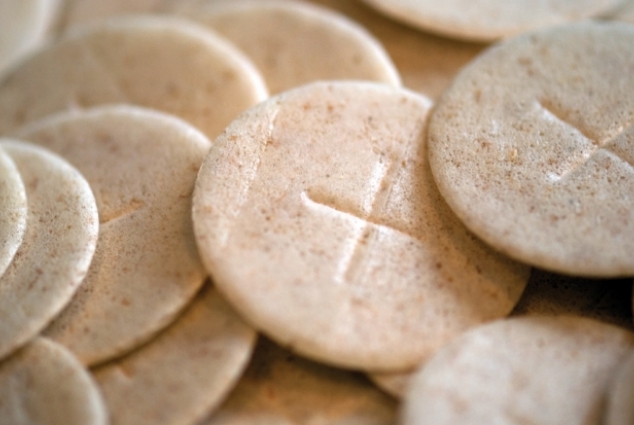
If you’re new to my Sermon Notes, you can read about why I prepare them here. They aren’t just for preachers, they’re for everyone!
Thesis
We are called to do the will of the Father but we need the strength of the Spirit and the nourishment of the bread of life to be about our work. The lessons this week speak to the provision of God for kingdom ministry. To be the pilgrim people of God we need the bread of God and the seal of the Spirit.
Analysis
Collect
Grant to us, Lord, we pray, the spirit to think and do always those things that are right, that we, who cannot exist without you, may by you be enabled to live according to your will; through Jesus Christ our Lord, who lives and reigns with you and the Holy Spirit, one God, for ever and ever. Amen.
We have to be enabled to do God’s will. All from God is gift and we need that gift of grace to respond, follow, and minister in His name and to His glory. Notice the connection here between thoughts and actions: we need to think AND do those things that are right. Our faith is not merely mental nor is it purely practical or ethical—it is the whole of our beings with which we are called to have faith and we can only have said faith through the power of the Spirit.
Old Testament – 1 Kings 19:4-8
Our vignette from 1 Kings makes very little sense without reading chapter 18 and the rest of chapter 19. In fact, it is always a good principle to read a little before and after any given passage in Scripture in order to understand the context better. The gospel evangelists constantly quote the Old Testament as they tell their stories and I would challenge you to open your Bibles to those quotes in their original setting for a deeper, more robust understanding.
Elijah is on the run. In chapter 18 he met the prophets of Baal at Mt. Carmel and there they were destroyed. 800 prophets were killed that day after YHWH, the God of Israel sent holy fire down upon Elijah’s altar and Baal’s. Jezebel has now heard about this from Ahab and has sent word to Elijah that she will make sure he is added to the number of dead prophets. His life is at risk.
Even more than that, Elijah has been the sole prophet in Israel for a great time now and is tired from the ministry. Tired and all alone, he asks God to let him die. It is during his slumber that an angel speaks to him and attends to his needs. He is given food for his 40-day journey to Mt. Horeb. Even in the midst of solitude, silence, fear, depression, and feelings of abandonment and reject—perhaps especially in the midst of these—God ministers to his faithful servant and miraculously provides food.
Being the good readers of the Bible that we are, our minds should have immediately been captivated by the revelation in verse 8 that Elijah is to embark on a 40-day (and night) journey toward a mountain. That single reference—so easily overlooked—combines two of Israel’s most important “encounter motifs.” Israel often encountered the LORD during a period of 40 days (or years) and atop a mountain. We should automatically expect the activity at Mt. Horeb to be significant.
If we read ahead a little then we discover that it is on Mt. Horeb that the LORD passes by Elijah. It is not in the wind, the earthquake, or the fire but in the whisper. And in the whisper it is revealed to Elijah that he will anoint 3 people: a new King of Judah, a new King of Israel, and his own prophetic successor: Elisha. Elijah has been the sole prophet, the forerunner, the one who was to prepare Israel for the coming judgment, and now there is hope on the horizon because he is to anoint Elisha to carry on after him and YHWH has promised 7,000 faithful. It will still be several hundred years before the birth of Messiah, but 1 Kings 19 is a lone bright spot on the otherwise dark pages of this period in Israel’s history: there is hope, YHWH is on the move.
Not to look for Jesus in the Old Testament, but our minds should move immediately to the Synoptic accounts of Jesus’ temptation in the wilderness: he was alone for 40 days and after overcoming temptation the angels can and attended to him.
Psalm 34:1-8
This portion of Psalm 34 pairs perfectly with our pericope from 1 Kings 19. Elijah was in trouble, he was afflicted with thoughts of failure and giving up, and yet the LORD answered his cries, met him in his time of greatest need, and ministered to him through angels. Elijah was delivered. The praise of YHWH had been on his lips before this passage and afterward he would begin to exalt the name of the LORD together with Elisha. It is not that Psalm 34 was written because of Elijah’s experience but the connection points thematically are too obvious to miss.
In terms of preaching on this passage I would encourage you to use this as an object lesson or memory activity for your people: when have you been in a time of great need or trial? How has the Lord answered your cry? It may well be that you have folks who have either never been in a trial or who have been there and haven’t experienced the Lord’s deliverance yet. Either way, this is a Psalm of deep and abiding hope that always points toward faithful gospel proclamation despite circumstances. Offer this hope to those in need and call all under your care to exalt the Lord together and to has his praise on their lips.
Ultimately we “taste and see that the LORD is good,” every week when we celebrate the Eucharist as his church. In partaking the bread and wine, the body and blood, we are remembering in a very active and tangible sense the mighty and delivering acts of God.
Epistle – Ephesians 4:25-5:2
Last week we transitioned from Paul’s first major argument in Ephesians to his second. The entirety of Ephesians is geared toward understanding that in Christ there is only one church: Jew and Gentile are now one under the Lordship of Christ. This week we look into what it means to be imitators of Christ, for as we are subject to his reign and rule we are to embody his love. Our passage gives several bullet points as to what it means to be in the body—this could be considered a body politic as it outlines the expectations placed on those who are free in Christ. To be free in Christ doesn’t mean to be free to sin but to be servant to one another (we’ll get to that in a few weeks).
There shall be no falsehood in the body because we are all members of the same body with Christ as the head. We are to be truth-tellers to neighbors and strangers because Christ is the Truth. We bear witness to the Truth through our lives, words, and deeds and we also tell the truth as a fulfillment of our covenant promise in the Ten Commandments.
In the body there may be anger but we are called to two things: not allowing ourselves to sin in our anger and not allowing the sun to go down on our anger. The bottom line here is that we need to deal with our sinful tendencies as the crop up and not allow them to master us. I’m reminded of YHWH’s words to Cain in Genesis 4 when He said, “Sin is crouching at your door; it desires to have you, but you must master it.” Anger in and of itself is not bad, wrong or sinful…it is what we decide to do with and in our anger that leads us toward sinfulness. People of Christ will confess their anger and seek reconciliation instead of hatred.
In Christ we are transformed and our old ways must be put to death: thieves shall no longer steal, we are to work honestly, no unwholesome talk should come out of our mouths, and we shall not grieve the Holy Spirit. Do you see what Paul is doing here? He is building up the ways that we are to live out our Christian faith and in Christ we are called to a higher standard of living. We are called to glorify God in all that we do.
We have been sealed with the Holy Spirit as a promised, a deposit that God will make good on his covenant promises to his people through the final work of Jesus Christ and the consummation of his kingdom. As such, we are to begin living as citizens of the kingdom now, in the present, in anticipation. This is the main concept of N. T. Wright’s After You Believe. Part of living as a citizen of the kingdom means no slander, wrath, anger, or malice. We are to be kind, forgiving, and tenderhearted. This is the concept of Stanley Hauerwas’ The Peaceable Kingdom.
How does Paul end? By telling the Ephesians to smell good! They are to smell like the fragrant offering Christ. YHWH describes the type of offering he desires in the Old Testament. It is not the fat of a calf or bull but the broken and contrite heart. We are to offer ourselves unto the Lord in worship (Romans 12) just as Christ offered himself for the life of the world (John 6).
Gospel – John 6:35, 41-51
It’s tough preaching through the same chapter of Scripture for 5 weeks, especially when the same theme is laced throughout. Being a reader of Alexander Schmemann, I cannot help but read this passage and think immediately of his book, For the Life of the World. There is a line during the Eucharistic Prayer in the Divine Liturgy of St. John Chrysostom that reads, “On the night He was betrayed, or rather gave Himself up for the life of the world.” This beautiful line connects the meal in John 6 with the crucifixion at the end of the gospel account.
There are many out there who will claim that John 6 should not be read as a text pointing to or including the Eucharist. I am not of that opinion. I think there is a reason that John only records the washing of the disciples’ feet in John 13 and chooses instead to locate Jesus’ Eucharistic words (to some extent) here in John 6. To read John well is to connect John 6 (feeding miracle), 13 (washing feet), and 19 (crucifixion). These three passages are inextricably linked through Jesus’ words. See below in “Liturgical Considerations” for another connection between the bread of life, the crucifixion, and resurrection via Suzanne Toolan.
I have included the link to my sermon notes for Maundy Thursday here. In this post I explored my concretely the idea that Jesus gave himself up for the life of the world. I think it would serve as a good focus for another week in preaching through John 6.
Jesus offers some extremely important commentary on the connection between the Father and the Son in this passage. It would be easy to miss what Jesus is doing here by focusing on the bread of life or the questions about his paternal heritage. That’s precisely the point though! While the crowd points to Joseph, our Lord points to the Almighty Father and says to know one is to know the other. This Christological revelation is of the utmost importance: Jesus does the will of the Father, feeds with the Father’s food, and is about the Father’s ministry. As we are invited to partake of the bread and share it with others, we need to do so with the knowledge that it is not our bread or our ministry but the Father’s through the Son by the Spirit.
Liturgical Considerations
As mentioned above, I would encourage you to include verses 36-40 in your gospel lesson if for no other reason than for maintaining the flow and authenticity of the narrative. There is no reason for us to skip over these 5 verses just to get to the rest of the story; they are meaty and rich and will require some unpacking, but they are part of John’s story nonetheless.
Suzanne Toolan composed a hymn based on this passage from John 6 and Jesus’ words to Mary and Martha in John 11. It is a beautiful theological combination of Jesus’ self-offering as the bread of life and his true nature as the resurrection and the life. It is often used on the Feast Day of Corpus Christi and during funerals as a powerful proclamation of the Gospel, but its most appropriate setting (in my opinion) is in connection with the Eucharist. I have copied the link for it here and commend it to you for either your sermon planning and/or worship on Sunday.
Finally, even though we are now 3 weeks into this 5-week journey through John 6, I think it would be appropriate to alter your Eucharistic prayer (particularly if you have “options” available to you) and use a different form. For instance, if you have been using Eucharistic Prayer A from Rite II in the 1979 BCP then perhaps you can use Prayer B or D for this series. I suggest this because the gospel material is so rich that a change in the Eucharistic prayer may aid in teaching and formation.
Synthesis
Our thoughts and actions must align with the will of the Father. To do the Father’s will is to follow the example of the Son’s fragrant offering. What would it look like for you, for your family, or for your church to become a fragrant oblation to Almighty God? What would it look like for us to give of ourselves to the glory of God for the life of the world? May we give the bread of heaven to all whom we meet through our words and deeds; may we live as Kingdom citizens here in the present; may we be the pilgrim people of God who are nourished by the Son and in turn bless the world with the same nourishment.
Previous Post
August 2, 2015
Sundays with Schmemann
Next Post
August 6, 2015 Live Like You Were Living - A Transfiguration Sermon
Browse Our Archives
Select a Category Ascension Asceticism Ash Wednesday Baptism Book Review Church Calendar Creation Care Discipleship Dissertation Easter Eastern Orthodox Eastertide Ecclesiology English Reformation Eucharist Exodus Feast Day Flash Essay Fridays With Fr. Kavanagh Good Friday Guest Post Holy Lent Holy Saturday Kavanagh Language Lessons Lectionary Preaching Liturgical Sense Liturgical Theology Liturgy Maundy Thursday New Testament Studies Ordinary Time Palm Sunday Patriarch Pentecost PhD Poetry Pope Francis Proper Preface Recovery Reflections Reformation Resource Round-Up Ressourcement Resurrection Roman Catholic Church Sacraments Saint Schmemann Sermon Sermon Notes Sobriety St. Mark Sundays With Schmemann The Eucharistic Life The Work of Research Transfiguration Uncategorized Weekend Reading
Select a Month July 2017 June 2017 May 2017 April 2017 March 2017 February 2017 September 2016 August 2016 July 2016 June 2016 April 2016 March 2016 February 2016 January 2016 December 2015 November 2015 October 2015 September 2015 August 2015 July 2015 June 2015 May 2015 April 2015 March 2015 February 2015
Follow Us!
TAKE THE
Religious Wisdom Quiz
What did the Israelites take from the Egyptians as they left?
Select your answer to see how you score.
Tablets Chariots Incense Gold and silver
Related posts from The Liturgical Theologian
Reflections on Communion in One Kind

Your Guide to Weekend Reading - July 1

Apprenticeship and Discipleship
TRENDING AT PATHEOS Evangelical

The REST of Your Life: A Creative Wrestles...
This week I had a conversation with a good friend from church....

How the author of the world's best hymn...
I've been working with John Newton for a while now. This makes...

Long before this Lectio Divina, Psalm 130 - the song - started...

What About the Trees? Another Living Parable
After I finished writing the last article about falling leaves as a...

Why Classical Education Is a Conversation, Not a...
Come and Read: Joy in Classical Education When I was a little...

Cornell University has received a great deal of negative publicity and intense...
view all Evangelical blogs
Ad-Free & Subscriber Log-In Subscription Support
- About Us
- 2026 Calendar
- Videos
- Podcasts
- Library of World Religions
- Faith In Media Tracker
- Advertise With Us
- Write for Us
- Privacy Policy
- Terms of Service
- Do Not Sell My Data
- Contact Us
- Radiant Digital
- Manage Newsletter Subscriptions
- Unsubscribe From Notifications
- Sitemap
Copyright 2008-2026, Patheos. All rights reserved.
Subscription Support Ad-Free & Subscriber Log-In
Follow Patheos