
BuddhistCatholicContemplativeEvangelicalGeneral ChristianHinduJewishLatter-day SaintMuslimNew VisionsProgressive Christian
Beliefs
- Buddhist
- Catholic
- Contemplative
- Evangelical
- General Christian
- Hindu
- Jewish
- Latter-day Saint
- More Voices
- Muslim
- New Visions
- Pagan
- Progressive Christian
Topics
- Religion News
- Food and Religion
- Sports and Religion
- Religious Art
- Religious Music and Entertainment
- Religious Events
- History and Religion
- Style and Religion
- Politics and Religion
- Women in Religion
- Recreation Outdoors and Religion
- Business Finance and Religion
- Careers Workplace and Religion
- Education and Religion
- Family Parenting and Religion
- Health Fitness and Religion
- Home and Religion
- Relationships and Religion
- Technology and Religion
- Travel and Religion
Columnists
- Buddhist Columnists
- Business Finance and Religion Columnists
- Careers Workplace and Religion Columnists
- Catholic Columnists
- Contemplative Columnists
- Education and Religion Columnists
- Evangelists Columnists
- Family Parenting and Religion Columnists
- General Christian Columnists
- Health Fitness and Religion Columnists
- Hindu Columnists
- History and Religion Columnists
- Home and Religion Columnists
- Jewish Columnists
- More Voices Columnists
- Latter Day Columnists
- Muslim Columnists
- New Visions Columnists
- Nonreligious Columnists
- Pagan Columnists
- Politics and Religion Columnists
- Progressive Columnists
- Recreation Outdoors and Religion Columnists
- Relationships and Religion Columnists
- Religion News Columnists
- Religious Art Columnists
- Religious Events Columnists
- Religious Music and Entertainment Columnists
- Sports and Religion Columnists
- Style and Religion Columnists
- Technology and Religion Columnists
- Travel and Religion Columnists
- Women in Religion Columnists
Resource Library
- 2026 Calendar
- Library of World Religions
- The 100 Most Holy Places on Earth
- Patheos Answers
- Podcasts
- Videos
- Faith Leaders Database
- Anglican Episcopalian
- Bahai
- Baptist
- Buddhism
- Christianity
- Confucianism
- Eastern Orthodoxy
- Hinduism
- Holiness and Pentecostal
- ISKCON
- Islam
- Judaism
- Lutheran
- Methodist
- The Church of Jesus Christ of Latter-day Saints
- New Age
- Paganism
- Presbytarian and Reformed
- Protestantism
- Religion Behind the Scenes
- Roman Catholic
- Scientology
- Shia Islam
- Sikhism
- Sufism
- Sunni Islam
- Taoism
- Zen
- See all religions
Research Tools
 Ad-Free & Subscriber Log-In Subscription Support
Ad-Free & Subscriber Log-In Subscription Support
Follow Patheos 

- Trending:
- Forgiveness
- |
- Marriage
- |
- Consciousness
- |
- Death Penalty
- |
- Election
- |
- Halloween
 The Liturgical Theologian
- Home
- Evangelical
- Arriving At Amen: A Book Review
Arriving At Amen: A Book Review
Last updated on: May 31, 2015 at 6:10 am by Porter Case Taylor
Arriving At Amen: A Book Review 2015-05-31T06:10:32-05:00 Porter Case Taylor
Patheos Explore the world's faith through different perspectives on religion and spirituality! Patheos has the views of the prevalent religions and spiritualities of the world.
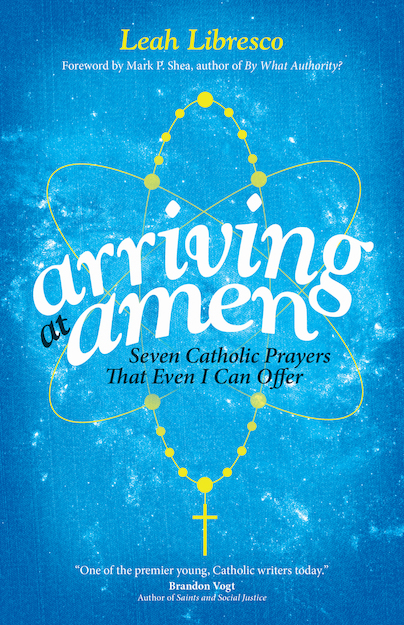
I have only been a Patheos blogger for a month but when the opportunity came knocking to review a book I jumped at it quickly. My level of excitement was high when I learned that Arriving at Amen: Seven Catholic Prayers That Even I Can Offer by fellow Patheos blogger, Leah Libresco, was one of the options. As if the book’s title, cover, and content weren’t enough to entice me, Libresco uses Inspector Javert from Les Miserables as a powerful analogy throughout her introduction. Little did Libresco know—and why would she?!—that I grew up memorizing every word to the three-hour musical!
For those who don’t yet know the author, Leah Libresco is a well-known atheist-turned-Catholic writer and blogger. You can read more of Leah’s writing over on her blog, Unequally Yoked. While Arriving at Amen is about the prayers that have been meaningful to her, the book is equally about her conversion experience in being pursued by the Good (i.e. God). Leah recounts the story of a debate she had with a Christian friend during which she stated, “I don’t know, I guess morality just loves me or something,” (xxviii). Leah had been pursuing justice and morality just as Javert had done in the book: for the sake of justice and morality. However, she soon discovered that, “Morality wasn’t just a rulebook but some kind of agent…If morality reached out to me, it had to be offering itself as a gift: it wanted good for me, not from me,” (xxix).
Leah does a wonderful job of weaving personal anecdotes and moving word-images while describing the prayers of Petition, Confession, Examen, the Rosary, the Divine Office, Lectio Divina, and the Mass. Admittedly I found it difficult to relate to Leah’s story of conversion. I cannot remember a time when I wasn’t in church or when I didn’t “know” God. If Leah was arriving at “Amen” then I had to read through the lens of someone who had arrived there already. That people from either side of the journey can read this book is one of the many reasons I am commending it to you!
One does not need to have been an atheist or agnostic to enjoy Arriving at Amen. Those who have grown up in the church and have always said these prayers will be challenged to pay attention to the words and meanings of their petitions and worship on a regular basis. Leah’s chapter on Confession was especially meaningful because it forced me to be more aware of my own sins and to really grapple with the consequences (spiritual and emotional) of my actions rather than simply sweeping them under the rug.
Likewise, one does not need to be a Catholic to enjoy the depth of Leah’s reflections. I found this book to be an invitation to deeper awareness and authenticity in prayer, whatever that prayer may be. I often had whole phrases and lines from the Book of Common Prayer in mind while reading this book. Personally, perhaps the most profound paragraph in the book is the concluding section of Leah’s introduction. She writes:
But all those first, awkward, improvisational prayers were still a long way away on that night before Palm Sunday. That night, after I let go of my faulty premise and welcomed Christ into my heart, my Lutheran friend suggested we pray the Divine Office in celebration. It was the first of many times that I would rely on traditional Christian practices to teach me the rules of the new world I had found myself in and, little by little, open my heart to grace,” (xxxi).
Leah hits a home run with that statement: prayer does indeed teach us the rules of the new world in which we live, the rules of the language game that we are now playing. In praying, both privately and corporately, we are taught words about God (theology) and offer those words back to Him in praise and adoration (worship). In prayer we learn what we can (and cannot) say about the triune God and the regular repetition of such prayers forms us as a prayerful people. Whether you’re just arriving or have already arrived at amen, if you desire to be a person of petition, confession, self-examination, Scripture or the Eucharist then this is a book for you!
This post is part of Patheos’s Book Club. Click on the link to read other reviews, to read an excerpt, or to order the book.
Previous Post

May 29, 2015
Resource Round-Up for Weekend Reading
Next Post
June 1, 2015 Blessed Be God: Father, Son And Holy Spirit.
Browse Our Archives
Select a Category Ascension Asceticism Ash Wednesday Baptism Book Review Church Calendar Creation Care Discipleship Dissertation Easter Eastern Orthodox Eastertide Ecclesiology English Reformation Eucharist Exodus Feast Day Flash Essay Fridays With Fr. Kavanagh Good Friday Guest Post Holy Lent Holy Saturday Kavanagh Language Lessons Lectionary Preaching Liturgical Sense Liturgical Theology Liturgy Maundy Thursday New Testament Studies Ordinary Time Palm Sunday Patriarch Pentecost PhD Poetry Pope Francis Proper Preface Recovery Reflections Reformation Resource Round-Up Ressourcement Resurrection Roman Catholic Church Sacraments Saint Schmemann Sermon Sermon Notes Sobriety St. Mark Sundays With Schmemann The Eucharistic Life The Work of Research Transfiguration Uncategorized Weekend Reading
Select a Month July 2017 June 2017 May 2017 April 2017 March 2017 February 2017 September 2016 August 2016 July 2016 June 2016 April 2016 March 2016 February 2016 January 2016 December 2015 November 2015 October 2015 September 2015 August 2015 July 2015 June 2015 May 2015 April 2015 March 2015 February 2015
Follow Us!
TAKE THE
Religious Wisdom Quiz
What does God question Job about, showing His wisdom in creation?
Select your answer to see how you score.
Animals and nature Kingdoms Battles Religious rituals
Related posts from The Liturgical Theologian
Reflections on Communion in One Kind

Your Guide to Weekend Reading: July 8

Your Guide to Weekend Reading - July 1
TRENDING AT PATHEOS Evangelical

The REST of Your Life: A Creative Wrestles...
This week I had a conversation with a good friend from church....

How the author of the world's best hymn...
I've been working with John Newton for a while now. This makes...

Long before this Lectio Divina, Psalm 130 - the song - started...

What About the Trees? Another Living Parable
After I finished writing the last article about falling leaves as a...

Why Classical Education Is a Conversation, Not a...
Come and Read: Joy in Classical Education When I was a little...

Cornell University has received a great deal of negative publicity and intense...
view all Evangelical blogs
Ad-Free & Subscriber Log-In Subscription Support
- About Us
- 2026 Calendar
- Videos
- Podcasts
- Library of World Religions
- Faith In Media Tracker
- Advertise With Us
- Write for Us
- Privacy Policy
- Terms of Service
- Do Not Sell My Data
- Contact Us
- Radiant Digital
- Manage Newsletter Subscriptions
- Unsubscribe From Notifications
- Sitemap
Copyright 2008-2026, Patheos. All rights reserved.
Subscription Support Ad-Free & Subscriber Log-In
Follow Patheos