
BuddhistCatholicContemplativeEvangelicalGeneral ChristianHinduJewishLatter-day SaintMuslimNew VisionsProgressive Christian
Beliefs
- Buddhist
- Catholic
- Contemplative
- Evangelical
- General Christian
- Hindu
- Jewish
- Latter-day Saint
- More Voices
- Muslim
- New Visions
- Pagan
- Progressive Christian
Topics
- Religion News
- Food and Religion
- Sports and Religion
- Religious Art
- Religious Music and Entertainment
- Religious Events
- History and Religion
- Style and Religion
- Politics and Religion
- Women in Religion
- Recreation Outdoors and Religion
- Business Finance and Religion
- Careers Workplace and Religion
- Education and Religion
- Family Parenting and Religion
- Health Fitness and Religion
- Home and Religion
- Relationships and Religion
- Technology and Religion
- Travel and Religion
Columnists
- Buddhist Columnists
- Business Finance and Religion Columnists
- Careers Workplace and Religion Columnists
- Catholic Columnists
- Contemplative Columnists
- Education and Religion Columnists
- Evangelists Columnists
- Family Parenting and Religion Columnists
- General Christian Columnists
- Health Fitness and Religion Columnists
- Hindu Columnists
- History and Religion Columnists
- Home and Religion Columnists
- Jewish Columnists
- More Voices Columnists
- Latter Day Columnists
- Muslim Columnists
- New Visions Columnists
- Nonreligious Columnists
- Pagan Columnists
- Politics and Religion Columnists
- Progressive Columnists
- Recreation Outdoors and Religion Columnists
- Relationships and Religion Columnists
- Religion News Columnists
- Religious Art Columnists
- Religious Events Columnists
- Religious Music and Entertainment Columnists
- Sports and Religion Columnists
- Style and Religion Columnists
- Technology and Religion Columnists
- Travel and Religion Columnists
- Women in Religion Columnists
Resource Library
- 2026 Calendar
- Library of World Religions
- The 100 Most Holy Places on Earth
- Patheos Answers
- Podcasts
- Videos
- Faith Leaders Database
- Anglican Episcopalian
- Bahai
- Baptist
- Buddhism
- Christianity
- Confucianism
- Eastern Orthodoxy
- Hinduism
- Holiness and Pentecostal
- ISKCON
- Islam
- Judaism
- Lutheran
- Methodist
- The Church of Jesus Christ of Latter-day Saints
- New Age
- Paganism
- Presbytarian and Reformed
- Protestantism
- Religion Behind the Scenes
- Roman Catholic
- Scientology
- Shia Islam
- Sikhism
- Sufism
- Sunni Islam
- Taoism
- Zen
- See all religions
Research Tools
 Ad-Free & Subscriber Log-In Subscription Support
Follow Patheos 

- Trending:
- Advent
- |
- Forgiveness
- |
- Thanksgiving
- |
- Election
- |
- Seasonal Holidays
- |
- Marriage

- Home
- Catholic
- Politics and Religion
- The Road We Have Not Walked: From Knowing to Walking Faith
The Road We Have Not Walked: From Knowing to Walking Faith
Last updated on: September 11, 2026 at 1:12 pm by Dennis Knapp
The Road We Have Not Walked: From Knowing to Walking Faith 2026-09-11T13:12:53-06:00 Dennis Knapp
Patheos Explore the world's faith through different perspectives on religion and spirituality! Patheos has the views of the prevalent religions and spiritualities of the world.

Image provided by guest writer.
Guest writer: Pilgrim.
The Question That Justifies Itself
A scholar of the law once stood up to test our Lord. He did well at first. He named the Shema without hesitation. He added the command to love one’s neighbour as though it had always belonged beside it. Luke tells us Jesus approved the answer: “You have answered correctly; do this, and you will live” (Luke 10:28).
And then, he asked the question that undoes him: “And who is my neighbour?” (Luke 10:29).
A recent USCCB formation document for clergy on “Formation on Faithful Citizenship” ends with this same scholar. He is not a man lacking information. He has the central commandments correctly on his lips, and Christ tells him so. His trouble is not that knowledge has failed him. It’s that his knowledge has been recruited to serve the self. Luke names the mechanism. He asks: “wishing to justify himself” (Luke 10:29). His question is born of self-defence, a way of using true propositions to hold a line rather than to cross one. Jesus does not give him a better definition. Instead, He tells him a story that makes the very act of defining one’s neighbour beside the point. He ends not with a proposition to affirm but with an imperative to walk: “Go and do likewise” (Luke 10:37).
The scholar of the law’s stance is the real subject of the USCCB formation document. It offers dioceses a three-to-five-hour formation day and a condensed one-hour session to help priests and deacons “form and engage Catholics” in what the American bishops call “faithful citizenship.” Its stated worry is that Catholics increasingly let partisan commitments dictate their theology instead of letting the Gospel form their political judgement. It names this condition memorably: “a politics in search of a moral justification.”
There’s an irony at the centre of this project. A document built to stop politics from forming the faithful is itself, necessarily, an exercise in forming the faithful for politics. It can’t escape the very category it’s worried about. Does its own formation work any differently? That’s a harder question than the document supposes.
The Circle
The most striking phrase in the guide is not one of the five principles of Catholic Social Teaching (common good, universal destination of goods, subsidiarity, solidarity, and social justice) or its three foundational principles (the human person as image of the Trinity, equal human dignity, the supreme value of human rights). It appears almost in passing in the section on what the bishops call “boutique ecclesiology.” The Internet, and now artificial intelligence, they observe, has made it possible for a person to begin with a set of political or cultural convictions already formed and then go shopping for a church experience that ratifies them. The result, they write, is that people remain trapped in a “hermeneutic circle,” accepting as true only what confirms what they already believe.
It is a sharp diagnosis, and one whose implications reach further than the document pursues. Travel round a circle and you arrive nowhere but the point at which you started, only now reassured that the starting point was correct all along. This is the particular cruelty of an algorithmic age. It does not merely give people what they want. It gives them the appearance of having tested what they want and found it confirmed. The scholar of the law’s question, “who is my neighbour,” is a small, ancient version of the same circle. A boundary drawn exactly where his existing loves already sit, then called knowledge.
We can see the same mechanism in the ordinary religious life of the developed world. A Catholic today, without much effort, can find a website, a commentator, or even a priest who will confirm almost any position he already holds on almost any contested question in Catholic political and moral life. The confirmation does not feel like evasion. It feels like study. He has read the arguments, weighed the sources, and found they agree with him, and that agreement becomes evidence that he was right to begin with.
That is precisely the danger of the circle. A person can possess moral language, encounter an inconvenient reality, and even recognise its seriousness, yet arrange the meaning of what he has encountered around a conclusion already reached. The problem is no longer lack of information. It’s that the self has become the measure by which information is permitted to have meaning.
The Road
The document then turns to a different kind of journey. It cites the disciples on the road to Emmaus, whose hearts burn as the risen Lord walks with them and opens the Scriptures (Luke 24:32). It cites the long central section of Luke’s Gospel, the journey narrative of Christ toward Jerusalem and His own Passion, gathering meaning as He goes, some ten times the length of Mark’s account of it and five times Matthew’s. It comments, almost as an aside, that the road between Jericho and Jerusalem on which the Samaritan finds the wounded man never once leaves Judean territory. Geographically it does not go anywhere near Samaria. And yet it is there, on a road that belongs entirely to the scholar’s own people, that true neighbourliness turns out to be to a stranger.
Scripture itself gives a strikingly different image. Not the circle but the road. The shape that takes you somewhere you did not intend to go, past people you did not intend to meet, toward an ending you did not choose. If the disease is a “hermeneutic circle,” and the image Scripture keeps reaching for is a road, then we need to ask whether the way Catholics receive their formation on citizenship is itself a road, or a circle in disguise.
When the Cure Repeats the Disease
Here the question moves from what the bishops say to what their document does. They have diagnosed the disease correctly. They have not quite described the mechanism by which their proposed cure keeps that disease from reproducing itself.
The formation day that follows the diagnosis of “boutique ecclesiology” offers a cultural survey, a history of Catholic Social Teaching from Leo XIII to the present, three theological foundations, five governing principles, and ten strategies for preaching, interspersed with prayer and discussion. It is careful and theologically serious, and the day is plainly not meant to be a lecture.
But recognising that formation requires more than information is not the same as asking what actually makes something formative rather than informative, and it’s here that the document goes quiet just when the question becomes interesting. Information can be transmitted in an afternoon and taken home in good faith. Conversion is a different event altogether, and what the document lacks is not more content but a theory of conversion: an account of what actually turns information into a changed person, rather than a better-informed one.
A man can leave five hours of careful teaching able to explain the common good, subsidiarity, and solidarity, and rise the following Sunday to vote, argue, and love his actual neighbour exactly as he did the week before, having upgraded the vocabulary in which he justifies himself.
We do not need to assume bad faith here. Political convictions do not have to be consciously manufactured to serve our interests; we arrive at many of them sincerely, because they explain our experience and make the world intelligible from where we are standing. The danger is that we become skilled at finding truths that cost us nothing and ask us to keep loving exactly what we already love.
The document itself brushes against this danger when it observes that modern communications have made the Church’s teaching more accessible than at any point in history, even as the same technology fragments Catholics into smaller and smaller ideological cells. It calls this a paradox and moves on. The age that has made Catholic teaching easiest to find may be the very age in which a Catholic is least likely to encounter teaching capable of correcting him, because he can now curate his encounter with the Magisterium as easily as he curates his news feed.
Information abundance, on its own, does not produce formation. It can produce a more sophisticated act of self-confirmation, dressed in sounder footnotes and sources.
The bishops have not missed this. They call the five principles criteria for discernment, an examination of conscience rather than a codex of rules to be applied mechanically. That instinct is correct. If boutique religion is dangerous because it lets a person consume a curated version of the faith that confirms what he believed going in, then any formation, as theologically sound as it may be, remains vulnerable to the same failure the moment its content is received rather than its direction walked.
Naming a principle a criterion for discernment does not explain how a person comes to discern rather than recite it. The five principles are not wrong. But five principles, however earnestly held, may remain a circle.
The Homily That Refuses Both Escapes
To their credit, the bishops sense this danger when they turn in the document’s third session to preaching. They name two temptations that pull in opposite directions and warn against both.
The first temptation is “avoidance”: the priest who steers around any topic that might unsettle the congregation, treating Mass as a sanctuary from the news cycle. The second is what they call “aggrandisement,” in which the homily becomes a kind of local political broadcast, the Gospel reduced to a running commentary on the latest headlines.
Both these temptations are versions of the circle. The avoidant priest circles endlessly around safe, uncontroversial ground, never approaching anything that might actually convert a listener. The aggrandising priest circles just as surely around the news cycle itself, mistaking urgency for depth, and ends by discipling his congregation into a political tribe, right or left, rather than into Christ.
Between these two warnings, the document offers ten concrete strategies for actually doing this well. These are good, serious tools, the kind a careful scholar of the law would recognise and approve. And that is exactly the risk. A priest can master every one of the ten and still preach like the man in Luke 10: fluent in the text, precise about the history, and still deliver a homily that never once turns a listener around. A method does not certify a preacher any more than a formation day certifies a parishioner. He is subject to the same question as everyone else, and no document can settle it for him.
The first of the ten preaching strategies, tellingly, is the one the rest of the document keeps returning to without saying so: the Incarnation is everything.
The document insists that the homily remains liturgical before anything else, an act embedded in the Eucharistic sacrifice rather than a substitute, and it says, quoting Pope Francis, that preaching should guide the assembly toward “a life-changing communion with Christ in the Eucharist.” That sentence already contains the answer to the question the rest of the document fails to land on. What it implies is not a sequence of stages but a single movement. Christ, encountered in the Word, sets the heart burning. In the breaking of the bread, He is recognised. Communion with Him sends the disciples back out, toward the poor and toward the whole Church. It describes a person being moved, not a list of things to know.
The weakness is not that this insight is absent from the document. It’s that the bishops do not draw out what it would mean for their own account of formation if they took it as seriously as they believe.
If you take that sequence at its word, it is Emmaus again, this time set inside the Mass rather than on the Jericho Road. Two disciples are walking away from Jerusalem in the wrong direction, having drawn the wrong conclusion from events they witnessed. A stranger joins them, opens the Scriptures, and reorders their perception before he ever touches their facts, until “were not our hearts burning within us” becomes the only honest response (Luke 24:32). Only then do they recognise Him in the breaking of the bread, and only then do they get up, at night, and walk the seven miles back the way they came.
If faithful citizenship is going to mean anything more than an improved political vocabulary, then this is the shape it will have to take: an encounter that turns a person around mid-journey and sends him back the way he came. Faithful citizenship, on this account, is not a subject to be covered. It is a fruit that appears, if it appears at all, further down the road than any single homily or any single formation day can promise to take a person.
What the Scholar Still Needed
Which returns us, as it must, to the man who began this essay. He had the central commandments correctly on his lips, and Christ confirmed this without irony. He wanted an answer that would let him stop, not one that would send him somewhere. Our Lord’s response is worth noticing for what it withholds as much as for what it gives. He does not offer a revised definition of neighbour with the Samaritan now included in the list. He tells a story instead, and ends by handing the question back, transformed: not “who is my neighbour” but “which of these three was neighbour to the man who fell among robbers.” And then the two words that turn theology into a road: “Go and do likewise.”
A circle asks to be understood. A road asks to be walked. The document under discussion is, at its best, aware of this distinction, which is why it ends its formation day here, with the Samaritan and the imperative rather than with a summary slide of the five principles. But an ending is not the same as an answer to the danger the bishops themselves diagnosed: that a person can curate a whole religious experience which never once requires him to meet anyone he did not already choose to meet.
Changed While Walking
The deeper crisis this document hints at is not that Catholics have picked the wrong political tribe, real as that danger is. It is that the Church cannot assume her own formation is automatically exempt from the very disease she has just diagnosed in everyone else. Information delivered, however sound, is not yet the conversion it was meant to produce. A man can hold excellent principles and still, like the scholar of the law, be standing exactly where he started, asking a clever question to avoid the far harder work of getting up and walking down a road he never intended to take, toward a neighbour he did not choose, carrying oil and wine he would rather have kept for himself.
Faith before politics, then, is anthropological before it is chronological, not a matter of getting the sequence right, faith first, politics second, as though it were a matter of which folder to open first on a desk. It means entering public life as someone whose perception, loves, and judgements Christ is still turning around. The disciples on the Emmaus Road are not perfected before they walk. They are changed while walking.
Perception was Emmaus. Love was the Samaritan. Judgement is what faithful citizenship asks of us now. None of the three arrives by information alone. The bishops correctly warn us against the circle. They point rightly toward the road. But their information, however accurate, does not make a traveller, and that is the harder question their own document leaves open.
The bishops’ own conclusion notices something worth more reflection. The scholar’s encounter with Christ takes place during His journey toward Jerusalem. Before that journey is finished, Christ Himself is walking toward a fate worse than that of the man left half dead in the parable. Who will attend to the suffering Christ, the document asks. It is the same question, turned all the way round. We are still, each of us, standing on the road between Jerusalem and Jericho, and the man in the ditch, our neighbour, is still waiting to find out what we do next.
Notes
Thank you!
If you liked this article, please leave your comments below. I am very interested in your opinion on this topic.
Read The Latin Right’s other writing here.
Please visit my Facebook page and IM your questions (and follow my page) or topics for articles you would like covered.
Politics and Religion
Previous Post
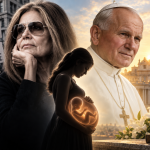
September 6, 2026
Gloria Steinem, John Paul II, and Two Visions of Freedom
Next Post

September 13, 2026 Lindsay Clancy: Sympathy and Systematic Victimhood
Recent Comments
"You sort of reference it above, but Christianity is a relatively flexible religion, able to ..."
The West’s Christian Moral Inheritance: A ..."
""In a book called The Ancient Civilizations of Peru you read that 'The Inca state ..."
The West’s Christian Moral Inheritance: A ..."
""Do the things other people want to do with your body. Don't make your own ..."
Why Is Abortion a Lost Cause ..."
"Actually there is a perfectly pure solution. Don’t kill your children. Don’t engage in procreative ..."
Why Is Abortion a Lost Cause ..."
Browse Our Archives
Select a Category Abortion Arius Atheists Catholic Apologetics Catholic Culture Catholic History Catholic Humor Catholic Poetry Catholic Politics Catholic Theology Dr. James White Faith Alone Joe Heschmeyer Kamala Harris Martin Luther Pope Francis Preborn Children President Biden Science and Catholicism Sola Scriptura Synod of Synodality Trinity
Select a Month November 2026 October 2026 September 2026 August 2026 July 2026 June 2026 May 2026 April 2026 March 2026 February 2026 January 2026 December 2025 November 2025 October 2025 September 2025 August 2025 July 2025 June 2025 May 2025 April 2025 March 2025 February 2025 January 2025 December 2024 November 2024 October 2024 September 2024 August 2024 July 2024 June 2024 May 2024 April 2024 March 2024 February 2024 January 2024 December 2023 November 2023 October 2023 September 2023 August 2023 July 2023 June 2023 May 2023 April 2023 March 2023 February 2023 January 2023 December 2022 November 2022 October 2022 September 2022 August 2022 July 2022 June 2022 May 2022 April 2022 March 2022 February 2022 January 2022 December 2021 November 2021
Follow Us!
TAKE THE
Religious Wisdom Quiz
Which major prophet book is directly after Isaiah?
Select your answer to see how you score.
Daniel Ezekiel Jeremiah Lamentations
Related posts from The Latin Right
The West's Christian Moral Inheritance: A Legacy Denied
Pope Leo in Lima: The Speech That Inconveniences...

Culture Wars: A Lesson In Selective Moral Legitimacy
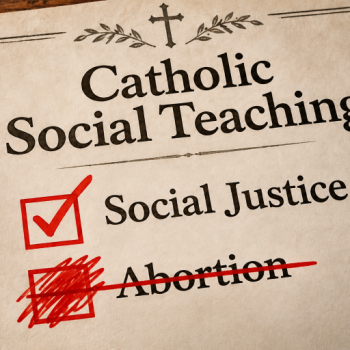
Why Is Abortion a Lost Cause but Social...
TRENDING AT PATHEOS Catholic

In 1939, President Franklin D. Roosevelt moved Thanksgiving from November 30 to...

Reasons for Restraint: Ricardo Gonzalez, Florida and Dec...
The Morning of January 3 I begin with the dead. On the...

I published this column for Thanksgiving 2012 in the Deseret News....

For many years, Catholicism has been caught up in division over the...

'Statements of Faith' never get shorter
Nothing demonstrates a conservative commitment to faith and faithfulness like a "statement...

Michele's Reviews - Future Grace by John Piper
In God's Place, at God's Pace, by Future Grace Impatience is...
view all Catholic blogs
What Are Your Thoughts?leave a comment
Ad-Free & Subscriber Log-In Subscription Support
- About Us
- 2026 Calendar
- Videos
- Podcasts
- Library of World Religions
- Faith In Media Tracker
- Advertise With Us
- Write for Us
- Privacy Policy
- Terms of Service
- Do Not Sell My Data
- Contact Us
- Radiant Digital
- Manage Newsletter Subscriptions
- Unsubscribe From Notifications
- Sitemap
Copyright 2008-2026, Patheos, part of the Radiant Digital network of media brands. All rights reserved.
Subscription Support Ad-Free & Subscriber Log-In
Follow Patheos