
BuddhistCatholicContemplativeEvangelicalGeneral ChristianHinduJewishLatter-day SaintMuslimNew VisionsProgressive Christian
Beliefs
- Buddhist
- Catholic
- Contemplative
- Evangelical
- General Christian
- Hindu
- Jewish
- Latter-day Saint
- More Voices
- Muslim
- New Visions
- Pagan
- Progressive Christian
Topics
- Religion News
- Food and Religion
- Sports and Religion
- Religious Art
- Religious Music and Entertainment
- Religious Events
- History and Religion
- Style and Religion
- Politics and Religion
- Women in Religion
- Recreation Outdoors and Religion
- Business Finance and Religion
- Careers Workplace and Religion
- Education and Religion
- Family Parenting and Religion
- Health Fitness and Religion
- Home and Religion
- Relationships and Religion
- Technology and Religion
- Travel and Religion
Columnists
- Buddhist Columnists
- Business Finance and Religion Columnists
- Careers Workplace and Religion Columnists
- Catholic Columnists
- Contemplative Columnists
- Education and Religion Columnists
- Evangelists Columnists
- Family Parenting and Religion Columnists
- General Christian Columnists
- Health Fitness and Religion Columnists
- Hindu Columnists
- History and Religion Columnists
- Home and Religion Columnists
- Jewish Columnists
- More Voices Columnists
- Latter Day Columnists
- Muslim Columnists
- New Visions Columnists
- Nonreligious Columnists
- Pagan Columnists
- Politics and Religion Columnists
- Progressive Columnists
- Recreation Outdoors and Religion Columnists
- Relationships and Religion Columnists
- Religion News Columnists
- Religious Art Columnists
- Religious Events Columnists
- Religious Music and Entertainment Columnists
- Sports and Religion Columnists
- Style and Religion Columnists
- Technology and Religion Columnists
- Travel and Religion Columnists
- Women in Religion Columnists
Resource Library
- 2026 Calendar
- Library of World Religions
- The 100 Most Holy Places on Earth
- Patheos Answers
- Podcasts
- Videos
- Faith Leaders Database
- Anglican Episcopalian
- Bahai
- Baptist
- Buddhism
- Christianity
- Confucianism
- Eastern Orthodoxy
- Hinduism
- Holiness and Pentecostal
- ISKCON
- Islam
- Judaism
- Lutheran
- Methodist
- The Church of Jesus Christ of Latter-day Saints
- New Age
- Paganism
- Presbytarian and Reformed
- Protestantism
- Religion Behind the Scenes
- Roman Catholic
- Scientology
- Shia Islam
- Sikhism
- Sufism
- Sunni Islam
- Taoism
- Zen
- See all religions
Research Tools
 Ad-Free & Subscriber Log-In Subscription Support
Follow Patheos 

- Trending:
- Advent
- |
- Forgiveness
- |
- Thanksgiving
- |
- Election
- |
- Seasonal Holidays
- |
- Marriage

- Home
- Catholic
- Family, Parenting and Religion
- How Do We Determine What Falls Under “The Common Good”?
How Do We Determine What Falls Under “The Common Good”?
Last updated on: August 21, 2026 at 6:36 pm by Dennis Knapp
How Do We Determine What Falls Under “The Common Good”? 2026-08-21T18:36:24-06:00 Dennis Knapp
Patheos Explore the world's faith through different perspectives on religion and spirituality! Patheos has the views of the prevalent religions and spiritualities of the world.

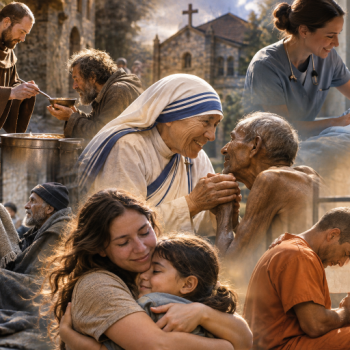
Image created using AI by author.
In a previous article, I addressed Henry Karlson’s claims about the dangers of Christian Nationalism. In that article, Karlson warns that Christianity risks becoming corrupt when Christians confuse loyalty to a political leader with loyalty to Christ. I countered that Christians do not cease to be Christians when they enter the public square or the voting booth. I also argued that some Christians, mostly progressive Christians, see no problem with advancing their own views of Christian justice in the public square, including concerns about poverty, equality, multiculturalism, and DEI (diversity, equity, and inclusion).
In response, Karlson posted—though he does not identify me by name—the article Why Government Should Not Enforce All Christian Morals (emphasis added). To avoid any claim that I have misrepresented Karlson’s position, allow me to quote him directly. He states:
They say if the state must enforce some kind of morality, it is their duty to make sure it enforces the fullness of all Christian morality. This mistake comes from the way they do not understand the limited domain of the government; it is not meant to enforce morality as a whole, but rather, those moral positions which are connected with the common good, and with the common good, the dignity of every human person. That is, government is meant to look after the welfare of its people, making sure they do not suffer undo harm (such as through violent crime, abuse, or theft), it is fine to point out there are moral reasons for this, but it is wrong to then say that government should embrace all other moral concerns and the acts they promote or deny. The state is meant to promote religious liberty, and with it, the freedom for people to decide for themselves how they live, so long as their actions do not directly threaten to harm or unjustly impede the freedom and dignity of others. (Emphasis added)
Karlson connects this “common good” to social concerns such as inequality and distributive justice. He writes that if there is to be “distributive justice,” government “must possess some power and authority which it can and will use to make sure justice is preserved in society, and to make sure such justice is promoted for the good of all.” Conversely, he does not appear to regard issues related to sexuality as matters of the common good because they “reflect non-political concerns” involving “two consenting adults” in their bedroom.
Now, some points of agreement. First, I agree that government should not attempt to enforce every Christian moral teaching. Second, Christianity distinguishes between sin and crime, moral obligation and civil obligation, and what Christians ought to do and what government ought to compel. However, Karlson seems to place social and distributive justice firmly within government’s proper sphere of concern while characterizing sexuality and many “culture war” questions as non-political concerns.
That distinction raises the central question of this article: How do we determine which moral questions actually implicate the common good?
Karlson cannot simply classify social-justice questions as matters of the common good while treating sexual and culture-war questions as essentially private. Marriage, family, abortion, sexual behavior, and related questions can have consequences that extend far beyond individual choices. Recognizing those consequences does not mean that government should prohibit every immoral act. It does mean, however, that we need a principled standard for determining what belongs to the common good rather than assuming in advance that one category of moral concerns is public while another is private.
What Do We Mean by “The Common Good”?
The Catechism of the Catholic Church defines the common good as the social conditions that allow people, individually and collectively, to attain their fulfillment more fully and easily. It states:
1906 By common good is to be understood ‘the sum total of social conditions which allow people, either as groups or as individuals, to reach their fulfillment more fully and more easily.’ The common good concerns the life of all. It calls for prudence from each, and even more from those who exercise the office of authority.
Yes, the common good concerns such things as food, clothing, health, work, education, culture, and “the right to establish a family” (CCC 1908). But the Catechism does not reduce the common good to material prosperity or aggregate economic outcomes. Rather, the common good “is always oriented towards the progress of persons” (CCC 1912).
Therefore, the common good cannot simply mean whatever benefits the greatest number, whatever government chooses to promote, or whatever contemporary progressives label “social justice.” It encompasses the conditions necessary for genuine human flourishing, which raises the very question at issue.
Again, we must ask Karlson: What principle determines whether a particular moral question belongs within this category?
Three Questions We Must Keep Separate
As we proceed, we must answer three questions concerning the government’s interest in promoting the common good:
- Does the behavior or institution affect the common good?
- If so, does government possess a legitimate interest in it?
- If government possesses a legitimate interest, what action—if any—may it justly take?
An affirmative answer to Question 1 does not automatically justify criminal prohibition under Question 3. Not everything that affects the common good should be prohibited. But something need not warrant prohibition for it to affect the common good. Legitimate authority must pursue the common good through morally legitimate means while respecting fundamental rights and freedoms.
With this framework in place, let’s examine three issues that Karlson excludes from the common good but that can affect people far beyond the individuals directly involved: abortion, promiscuity, and marriage.
Abortion: When a “Culture War” Question Becomes a Rights Question
Abortion provides the clearest example because its public significance ultimately turns on the status of the unborn child. Does the unborn child possess human dignity and the right to life? If unborn children possess such rights, abortion necessarily concerns several criteria commonly associated with the common good: the protection of vulnerable human beings, competing rights, justice, and the government’s responsibility to protect innocent life.
If unborn children possess rights as human beings, reducing or even eliminating abortion would necessarily concern justice and the common good. Finally, if unborn children do not possess such rights, the argument changes fundamentally. Therefore, we cannot simply remove abortion from political consideration by classifying it as a “culture-war” or “private reproductive” issue.
So, does whether abortion concerns the common good depend upon whether the unborn child actually possesses rights? If so, we must answer the substantive anthropological question rather than bypass it with an appeal to “the culture wars.”
Sexual Promiscuity: Can Private Behavior Have Public Consequences?
Consider two hypothetical societies.
In the first, sexual relationships occur only within mutually faithful, lifelong partnerships. The second consists of extensive, overlapping sexual networks involving multiple partners. We do not have to rely solely upon Christian moral theology to recognize that these patterns would produce different public-health consequences. Which of these two societies would face the greater risk of adverse public-health outcomes?
Whatever one thinks government should do about sexual promiscuity, it is difficult to maintain that sexual behavior has no implications for the common good. The CDC itself identifies having multiple sexual partners as an STI risk factor and long-term mutual monogamy with an uninfected partner as a means of avoiding STI transmission. The consequences are not merely medical. According to the CDC, sexually transmitted infections acquired in the United States in 2018 alone will generate an estimated $15.9 billion in direct lifetime medical costs. That estimate does not include prevention costs, lost productivity, or other nonmedical costs.
If economic costs imposed upon society help make poverty, healthcare, and other social questions matters of the common good, why would billions of dollars in medical costs associated with sexually transmitted infections have no relevance to the common good?
Marriage: Private Relationship or Public Institution?
Finally, marriage itself provides an especially important test because government already recognizes and regulates it. Civil marriage creates legal realities involving parental presumptions, inheritance, property, taxation, medical decisions, benefits, and support obligations. Historically, marriage also connects sexual relationships with family formation and responsibility for children. It structures the lives of tens of millions of children and adults. If marriage were purely private, why would government recognize and regulate it at all?
Furthermore, social-science research repeatedly finds associations between family structure and child outcomes. A major review of the literature in the Journal of Marriage and Family notes that children who experience parental divorce tend to exhibit poorer outcomes across multiple measures of well-being than children who remain in stable, two-biological-parent married families. Family structure and family stability therefore have enough empirical relevance to children’s well-being to constitute major subjects of social-scientific and public-policy research.
None of this establishes what marriage policies government should adopt. It establishes the narrower point at issue: marriage and family structure cannot simply be dismissed as purely private matters with no relevance to the common good.
Final Thoughts: Who Decides What Belongs to the Common Good?
To conclude, allow me to restate that I agree with Karlson that government ought not to enforce all Christian morality. However, this agreement does not tell us which particular moral questions government may legitimately address. As a Christian, I can reject government enforcement of every Christian moral teaching while also rejecting the assumption that government must treat contested sexual and familial questions as inherently private simply because contemporary culture categorizes them that way.
In fact, the evidence shows that sexual behavior can significantly affect public health. Furthermore, sexual activity can create children and parental obligations, which often exist within marriages that government has a vested interest in recognizing and regulating. In this way, marriage functions as both a personal and civil institution, one in which family structure and stability correspond with the well-being of children. Finally, abortion raises the fundamental question of whether the unborn possess rights that society and government have an obligation to protect.
None of these propositions, by themselves, tells us exactly what government ought to do. But before deciding that poverty and inequality belong to the common good while abortion, marriage, family, and sexual behavior belong to the private sphere, we first need a principled explanation of what makes something part of the common good.
So, what is that principle—and are we applying it consistently to both “social justice” and “culture war” questions?
Thank you!
If you liked this article, please leave your comments below. I am very interested in your opinion on this topic.
Read The Latin Right’s other writing here.
Please visit my Facebook page and IM your questions (and follow my page) or topics for articles you would like covered.
Progressive Christian
Family, Parenting and Religion
Previous Post

August 20, 2026
Echoes of the Logos: On Charlie Brown and Grace
Next Post

August 26, 2026 Whose Vision of Human Flourishing Reflects The Common Good?
Recent Comments
""All men are created equal." That I think is a key sentiment, and it's not ..."
The West’s Christian Moral Inheritance: A ..."
"I think it will be retained within the culture, but the importance will rise and ..."
The West’s Christian Moral Inheritance: A ..."
"Interesting that you interpret Christianity's moral influence on Western civilization through a racial lens. Christianity ..."
The West’s Christian Moral Inheritance: A ..."
"Thank you for carrying the white man's burden."
The West’s Christian Moral Inheritance: A ..."
Browse Our Archives
Select a Category Abortion Arius Atheists Catholic Apologetics Catholic Culture Catholic History Catholic Humor Catholic Poetry Catholic Politics Catholic Theology Dr. James White Faith Alone Joe Heschmeyer Kamala Harris Martin Luther Pope Francis Preborn Children President Biden Science and Catholicism Sola Scriptura Synod of Synodality Trinity
Select a Month November 2026 October 2026 September 2026 August 2026 July 2026 June 2026 May 2026 April 2026 March 2026 February 2026 January 2026 December 2025 November 2025 October 2025 September 2025 August 2025 July 2025 June 2025 May 2025 April 2025 March 2025 February 2025 January 2025 December 2024 November 2024 October 2024 September 2024 August 2024 July 2024 June 2024 May 2024 April 2024 March 2024 February 2024 January 2024 December 2023 November 2023 October 2023 September 2023 August 2023 July 2023 June 2023 May 2023 April 2023 March 2023 February 2023 January 2023 December 2022 November 2022 October 2022 September 2022 August 2022 July 2022 June 2022 May 2022 April 2022 March 2022 February 2022 January 2022 December 2021 November 2021
Follow Us!
TAKE THE
Religious Wisdom Quiz
What language was the New Testament originally written in?
Select your answer to see how you score.
Aramaic Latin Greek Hebrew
Related posts from The Latin Right
The West's Christian Moral Inheritance: A Legacy Denied

Pope Leo in Lima: The Speech That Inconveniences...
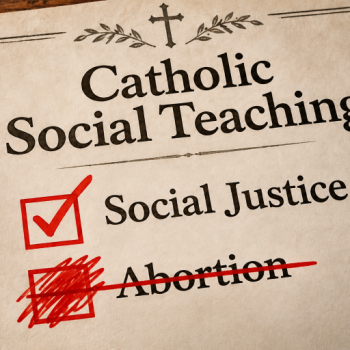
Why Is Abortion a Lost Cause but Social...
TRENDING AT PATHEOS Catholic

God and the Contingency of This World
The great Catholic philosopher Aquinas and the great Lutheran philosopher Leibniz developed...

Pope Francis and The Devil – A Pagan...
According to his private diaries, Pope Francis saw visions of the devil...

Rock N' Roll-- Morphing into/for a New Generation...
Well, should we be grateful, or is rock n' roll just dead? ...

Ansley Gordon Brings Faith and Fresh Stories to...
For screenwriter and actress Ansley Gordon, Christmas has always been about more...

Chris Pratt on Veterans, Faith, “The Way of...
For Chris Pratt, service is not something that ends when a person...

Chapter 5, Sarah: The Quest for Safety in...
Open and Relational Theology & Social Psychology About this series: This series...
view all Catholic blogs
What Are Your Thoughts?leave a comment
Ad-Free & Subscriber Log-In Subscription Support
- About Us
- 2026 Calendar
- Videos
- Podcasts
- Library of World Religions
- Faith In Media Tracker
- Advertise With Us
- Write for Us
- Privacy Policy
- Terms of Service
- Do Not Sell My Data
- Contact Us
- Radiant Digital
- Manage Newsletter Subscriptions
- Unsubscribe From Notifications
- Sitemap
Copyright 2008-2026, Patheos, part of the Radiant Digital network of media brands. All rights reserved.
Subscription Support Ad-Free & Subscriber Log-In
Follow Patheos