
BuddhistCatholicContemplativeEvangelicalGeneral ChristianHinduJewishLatter-day SaintMuslimNew VisionsProgressive Christian
Beliefs
- Buddhist
- Catholic
- Contemplative
- Evangelical
- General Christian
- Hindu
- Jewish
- Latter-day Saint
- More Voices
- Muslim
- New Visions
- Pagan
- Progressive Christian
Topics
- Religion News
- Food and Religion
- Sports and Religion
- Religious Art
- Religious Music and Entertainment
- Religious Events
- History and Religion
- Style and Religion
- Politics and Religion
- Women in Religion
- Recreation Outdoors and Religion
- Business Finance and Religion
- Careers Workplace and Religion
- Education and Religion
- Family Parenting and Religion
- Health Fitness and Religion
- Home and Religion
- Relationships and Religion
- Technology and Religion
- Travel and Religion
Columnists
- Buddhist Columnists
- Business Finance and Religion Columnists
- Careers Workplace and Religion Columnists
- Catholic Columnists
- Contemplative Columnists
- Education and Religion Columnists
- Evangelists Columnists
- Family Parenting and Religion Columnists
- General Christian Columnists
- Health Fitness and Religion Columnists
- Hindu Columnists
- History and Religion Columnists
- Home and Religion Columnists
- Jewish Columnists
- More Voices Columnists
- Latter Day Columnists
- Muslim Columnists
- New Visions Columnists
- Nonreligious Columnists
- Pagan Columnists
- Politics and Religion Columnists
- Progressive Columnists
- Recreation Outdoors and Religion Columnists
- Relationships and Religion Columnists
- Religion News Columnists
- Religious Art Columnists
- Religious Events Columnists
- Religious Music and Entertainment Columnists
- Sports and Religion Columnists
- Style and Religion Columnists
- Technology and Religion Columnists
- Travel and Religion Columnists
- Women in Religion Columnists
Resource Library
- 2026 Calendar
- Library of World Religions
- The 100 Most Holy Places on Earth
- Patheos Answers
- Podcasts
- Videos
- Faith Leaders Database
- Anglican Episcopalian
- Bahai
- Baptist
- Buddhism
- Christianity
- Confucianism
- Eastern Orthodoxy
- Hinduism
- Holiness and Pentecostal
- ISKCON
- Islam
- Judaism
- Lutheran
- Methodist
- The Church of Jesus Christ of Latter-day Saints
- New Age
- Paganism
- Presbytarian and Reformed
- Protestantism
- Religion Behind the Scenes
- Roman Catholic
- Scientology
- Shia Islam
- Sikhism
- Sufism
- Sunni Islam
- Taoism
- Zen
- See all religions
Research Tools
 Ad-Free & Subscriber Log-In Subscription Support
Follow Patheos 

- Trending:
- Advent
- |
- Forgiveness
- |
- Thanksgiving
- |
- Election
- |
- Seasonal Holidays
- |
- Marriage

- Home
- Catholic
- History and Religion
- Echoes of the Logos: On Charlie Brown and Grace
Echoes of the Logos: On Charlie Brown and Grace
Last updated on: August 20, 2026 at 12:12 pm by Dennis Knapp
Echoes of the Logos: On Charlie Brown and Grace 2026-08-20T12:12:23-06:00 Dennis Knapp
Patheos Explore the world's faith through different perspectives on religion and spirituality! Patheos has the views of the prevalent religions and spiritualities of the world.

Image Provided by Guest Author.
Guest writer: Pilgrim.
“The Evangelium has not abrogated legends; it has hallowed them.” (J.R.R. Tolkien, On Fairy-Stories)
Preface
A reader, capcrisis, objected when I altered a Peanuts strip to illustrate one of my arguments. He called it “a defacing of the original strip” and recommended Robert L. Short’s The Gospel According to Peanuts. He was entirely right about the first, and the second turned out to be the sort of gift only a correction can give.
The irony was sharper than the rebuke. I had spent two essays arguing that God works through real freedom, yet I had forced a comic strip to say what I wanted it to say.
This essay is an attempt to do the opposite: to let the strip speak for itself.
Two Readers, One Strip
Charles Schulz drew the same handful of disasters for fifty years. A boy runs at a football his friend, Lucy, is about to snatch away. A beagle climbs onto a doghouse roof and imagines himself into a dogfight he always loses. Nothing is resolved. Nobody learns the lesson. Next October, Charlie Brown runs at the ball again. Next skirmish, Snoopy is back over the trenches, cursing the Red Baron he has never seen and never beaten.
In 1965, a young seminary-trained writer, Robert L. Short, looked at that pattern and published The Gospel According to Peanuts, and returned to it three years later with a sequel, The Parables of Peanuts. Short’s claim was more interesting than a smuggled catechism. Schulz had drawn a world so honestly human that the Gospel kept showing up in it anyway, uninvited. Six decades later, Arindam Basu’s 2025 paper, The Philosophical Beagle, looked at that pattern through Albert Camus and reached a starker conclusion. On his account, meaning is generated by the act of trying itself, with no promise standing behind it.
Both readers bring a different picture of the world to those panels. Does one picture explain more of what is actually there?
What Short Saw
Short trained as an artist before he trained as a minister, and it shows in how closely he looks at the drawings before he says anything theological about them. He did not ask whether four panels about a dog and daydreams were religious. He asked what they revealed. That small shift in posture contains the whole method, closer to what the Church Fathers called a sacramental imagination than to a preacher hunting for sermon illustrations.
The football gag is where the argument earns its title. Lucy holds the ball. Charlie Brown, against every memory of the previous autumn, runs at it anyway. At the last instant she pulls it away, and he lands on his back staring at the sky. Short reads this as something like Law without Gospel: perpetual demand, perpetual fall, the promise of solid ground withdrawn at the moment of contact. Charlie Brown suffers for trying, not for wrongdoing, and that inversion is what makes the gag both theological and funny.
Schulz never draws the moment of impact. The strip cuts straight from Charlie Brown airborne to Charlie Brown down, lying on his back, hat off, feet still pointing toward the sky he had been running to a moment before. His eyes are two dots looking straight up rather than at Lucy, who has already turned to walk away without triumph or apology. Schulz draws the fall with the spare, unhurried line he uses for everything else. A crueller cartoonist would have sharpened the line or given Lucy a victorious grin. Schulz never does. That restraint is the tenderness.
Lucy herself is the harder character to love, and the more revealing one. Short saw in her something close to a portrait of sin: the ordinary habit of covering fear with confidence, cruelty as armour rather than malice. Yet Schulz never draws her as a monster, only as a child, and that is what keeps the strip from curdling into cynicism. That diagnosis extends across the cast: pride, vanity, small selfish acts passed off as reasonable. Lucy’s five-cent psychiatric booth is the perfect emblem: counsel dispensed with total confidence by someone with no more authority to give it than the patient has to need it. That the price never changes and the advice rarely helps is the joke and the diagnosis at once.
Short does something similar with Linus. His blanket becomes less a comfort than a small, manageable substitute for the larger thing it represents: a possessed object doing the work a received grace was meant to do. Short does not mock this. He sees it as an honest picture of how religion often functions, and gives the pattern its plain theological name: idolatry, worship redirected toward what can be gripped rather than what must be trusted. Three years later, he would give the theme its own chapter title: “Where your blanket is, there will your heart be also.” Yet on the night that mattered most, this Linus stood alone beneath a spotlight and recited Luke’s Nativity. It is a small moment, but it points beyond itself, toward a Word Schulz did not have to invent because it was already there to be found.
Why It Should Not Surprise Us
Why do stories with no interest in preaching keep bumping into the shape of the Gospel?
If Christ is the Logos through whom all things were made, then no story that tells the truth about being human can entirely avoid Him, because there is nowhere else for a genuinely human story to come from.
Justin Martyr spoke of the logos spermatikos, the seed of the Word scattered through pagan philosophy long before the philosophers had heard of Christ. Not because Plato was secretly a Christian, but because minds made in the image of the Logos keep stumbling upon fragments of His truth. Hans Urs von Balthasar made a related point about beauty; it can help prepare the soul to receive truth before argument arrives. A comic strip can sometimes do theological work a treatise cannot.
Schulz need not have been surreptitiously encoding doctrine into a beagle’s daydreams for any of this to hold. Artists often depict a world that already belongs to Christ, whether they know it or not, and truthful stories inevitably bear traces of their true owner. Short measured the strip against Scripture, not Scripture against the strip. That is what keeps this exercise from becoming a hunt for hidden Christian meanings in every cartoon.
What Basu Saw
Basu’s paper is not about theology at all. It reads Snoopy through existentialism and, without knowing it, lands on a beat close to the one Short found in Charlie Brown. The Red Baron is never drawn, an unseen and permanent enemy standing in for fate, chance, or simply an indifferent universe. Snoopy is shot down. He always is. He retreats to what he imagines as a French café, in reality the roof of his own doghouse, and goes back up. Basu calls this a Sisyphean structure, borrowing the term from Camus. Sisyphus, condemned by the gods to push an immense boulder up a hill only for it to roll back down every time it neared the top, repeating this action for eternity. On this reading, the point is not that Snoopy will win. It is that he keeps climbing back into the plane when he knows he won’t.
It is a serious reading of the pattern Short saw, but notice what it has to leave out. Camus’s Sisyphus is instructive precisely because his hill offers no tenderness. There is only the weight, the slope, and the repetition. Snoopy’s hill is not like that. He is never condemned for losing, and is drawn, defeat after defeat, with the affection Schulz gives him in victory. An existentialist reading can value that tenderness. What it struggles to explain is why it belongs so naturally to the world Schulz keeps drawing.
Camus does not simply say the climb is enough; he says “one must imagine Sisyphus happy.” Is Snoopy happy in the going back up? He does not trudge to the roof resigned to another defeat. He bounds there, ears up before the goggles are even on, with an exuberance that feels less like defiance than delight. This is the face of one who already knows, somehow, that the story turns. Camus can explain joy won through revolt. The harder task is explaining a joy that seems already at home in the world, as though goodness preceded the climb and survived every defeat. Snoopy’s happiness is something he keeps rediscovering.
A mind that follows its own evidence far enough keeps arriving, without intending to, at the same seed Justin Martyr had named. What is arriving here feels like Christian joy and tenderness wearing existentialist dress. Whether a reader who does not want it named that way will grant the label is a separate question, and one the strip was never going to settle on its own. That is a claim resting on trust as much as on proof, and I would rather leave it under-argued than argue the proof to force it.
The Man Who Drew Both
It would be tidy to say that one of these readings is simply correct and the other a misreading forced onto material that cannot support it. Schulz’s own life will not permit that tidiness.
His mother died of cancer in February 1943, within days of his induction into the Army. “The three years I spent in the army taught me all I needed to know about loneliness,” he wrote later. “My sympathy for the loneliness that all of us experience is dropped heavily upon poor Charlie Brown.” He came home unmoored from the church in which he had been raised, but the same pastor who had preached his mother’s funeral sought him out and invited him back. Schulz accepted and went on to spend the better part of a decade teaching Sunday school in Minnesota and California.
He also insisted, against real institutional pressure, that A Charlie Brown Christmas quote Luke’s Nativity when it aired on CBS in December 1965. Television executives had feared that viewers would switch off. “If we don’t do it, who will?” Schulz asked.
This is the Schulz that Short first encountered. Three years later, when Short published a sequel, The Parables of Peanuts, with chapters bluntly titled “Savior?! Who needs a savior?” and “Slip-ups, doghouses, and free psychiatric help,” Schulz’s blessing was unambiguous: “A real delight from beginning to end. I could not possibly be more pleased.”
From Discovery to Explanation
Short’s method changes between the two books, and the change is worth tracing. At first, it looks like exactly the kind of forcing this essay has been arguing against.
The Gospel According to Peanuts found Christ latent in the strip and let the reader do the finding. The Parables of Peanuts states more than it discovers, walking up to doctrines the first book had gestured towards, most pointedly on judgment and damnation. A question left half-formed in 1965 is now addressed head-on, with enough conviction to call certain preachers of hellfire “vulture-evangelists.”
A sequel can presume that the reader has been won and no longer needs to be coaxed. The strip itself never made that trade. Schulz kept his convictions inside the storytelling to the end. He never once let a character step outside a panel to announce what it meant.
Short himself supplies the frame for his own shift. In that book, he asks why Jesus taught in parables rather than simply saying what He meant, and answers that a listener too certain of himself, a “strong man” guarding his own house, cannot be argued out of his defences by a frontal approach. The door has to be found some other way.
But Jesus did not only speak in parables. Mark records Him doing something very like what Short would do: explaining plainly, but only to those who had stayed after the crowd had left. The explanation was never offered to onlookers keeping their distance, only to the few who had drawn near enough to ask.
Read against that pattern, Short’s sequel, written for readers who had bought the first book, is not so much a lapse from the discipline as its second movement.
What Schulz Never Unlearned
As he aged, Schulz grew wary of denominational argument and increasingly reluctant to make strong claims beyond what he considered essential.
What looks at first like a rupture was, looking back, more of a loosening. It coincided with the failure of his first marriage and a private affair, in the middle of which he stopped feeling that he could lead a Bible study. He never quite returned to church life afterwards. This was the fraying of a faith that had been open and searching for decades.
He had said, in a 1985 interview, “I think the best theology is no theology.” Fifteen years later, in an interview not long before he died in 2000, he named the thing outright: “The term that best describes me now is ‘secular humanist.'” According to his widow, he remained deeply fascinated by religious questions and retained a highly personal sense of the sacred.
What did not change was the comic strip.
Charlie Brown never stopped hoping. Forgiveness never stopped mattering. Pride never became admirable, and Lucy’s cruelty never curdled into something the strip endorsed.
Long after explicit convictions have become uncertain, they continue to shape what a writer instinctively finds admirable, pitiable, or beautiful. A man who had grown wary of certainty, and who had not always lived by what he once taught, kept drawing a world whose moral grammar he had learned somewhere else and apparently never unlearned.
Whatever Schulz came to call himself, the way of seeing people that Christianity had given him outlasted both his confidence in its doctrines and, for a season, his own fidelity to them.
The Doghouse and the Gift
The doghouse is where the two readings of Short and Basu come closest together.
Snoopy never sleeps inside his doghouse. He sleeps on the roof and never explains why. Yet whenever the interior is glimpsed, it is absurdly larger than the outside, complete with paintings, a pool table, and a library. An existentialist can read this as self-authorship in miniature: existence precedes essence, and Snoopy creates whatever identity the moment requires.
The doghouse grows large the way water became wine: the ordinary things of creation can disclose more than their surfaces promise, because a world spoken into being by the Logos is never only what it looks like from outside. Snoopy does not command the doghouse to be more than it is. He is the one who notices what it had been all along.
Three years on, in the sequel’s boldest chapter, Short named Snoopy outright: not a mascot for persistence but a small, four-legged picture of grace. Loyal without being asked. Free in a world of anxious children. He breaks into the strip’s ordinary cruelties much the way grace is supposed to break into anything. It is the boldest claim either book makes, and the strip does not obviously refuse it.
The Limits of the Echo
Short shows that decency and hope keep turning up in a strip with no interest in preaching. A reader can point those patterns in almost any direction. The strip proves nothing. It simply leaves the reader with something to notice.
But that may be nearer the truth than it first appears. Grace, on the Christian account, is rarely announced. It is present in bread, in a stranger on a road who turns out to be more than a stranger: always available, never coercive.
You cannot be argued into a gift.
Short and Basu can look at the same evidence and remain unconvinced by one another. Grace, offered rather than imposed, was always going to look like that from the outside.
Getting Up Again
Schulz kept drawing a moral world he could no longer fully account for. He had given Snoopy a doghouse whose inside exceeded its outside.
Is imagination constructing reality, or remembering something already there, an echo we hear?
Return, then, to Peanuts, not because it proves anything, but because it keeps doing the same small thing, strip after strip, for seventy years. Charlie Brown keeps getting up. Linus keeps hoping. Lucy occasionally softens. Snoopy keeps imagining himself into other lives and is never condemned for it, only loved through it. Readers have recognised themselves in that pattern, often without quite knowing why.
Tolkien wrote that the Gospel does not abolish the old legends; “it has hallowed them”. He meant this above all of the fairy tale’s oldest embarrassment, the ending too happy to be believed, the turn no story earns, and every child demands anyway. Easter did not invent that hope. It gave it a date. What is hallowed here is an ordinary defeat, honestly told, revealing itself to contain more than defeat.
Charlie Brown does not preach the Gospel. He echoes it, or does something closer than an echo, since what is real in him was never merely borrowed. Camus would say the getting up is all there is, and that it is enough. Yet the strip keeps hinting at something more: a tenderness the world seems already to have made room for, lingering long after its creator had ceased to be certain how to name it. If the Logos really is the light that enlightens everyone who comes into the world, we should expect such echoes wherever human beings tell the truth about themselves.
Whether any reader hears them is not something this essay can settle, and that is as it should be. A theology that alters the evidence, or leans on it harder than it will bear, has conceded its case before making it. In Gospel, Short altered nothing. He looked, waited, and let the strip speak to a crowd that had not yet drawn near. Parables came three years later, for readers who had. That was its second movement, not a lapse in the discipline.
This essay has no way of knowing which reader it is addressing, so it keeps to the first movement, the harder one, where an invitation can be declined without having failed. To watch Charlie Brown get up again is to glimpse what I think the strip has been showing all along: grace does not need to announce itself before we can recognise its shape.
References
Robert L. Short, The Gospel According to Peanuts (John Knox Press, 1965).
Robert L. Short, The Parables of Peanuts (Harper & Row, 1968).
Charles M. Schulz, My Life With Charlie Brown (University Press of Mississippi, 2010).
J.R.R. Tolkien, On Fairy-Stories (1947).
Albert Camus, The Myth of Sisyphus (1942).
Stephen J. Lind, A Charlie Brown Religion: Exploring the Spiritual Life and Work of Charles M. Schulz (University Press of Mississippi, 2015).
David Michaelis, Schulz and Peanuts: A Biography (HarperCollins, 2007).
Tim Challies, A Charlie Brown Religion (Book review) (2015).
Thank you!
If you liked this article, please leave your comments below. I am very interested in your opinion on this topic.
Read The Latin Right’s other writing here.
Please visit my Facebook page and IM your questions (and follow my page) or topics for articles you would like covered.
History and Religion
Previous Post

August 17, 2026
Fighting Over the Rhetorical Woman
Next Post

August 21, 2026 How Do We Determine What Falls Under “The Common Good”?
Recent Comments
"I think you're confusing the truth of Christianity's theological claims with its historical influence on ..."
The West’s Christian Moral Inheritance: A ..."
"Interestingly, a lament on a completely different subject very effectively captures the self-deluding component of ..."
The West’s Christian Moral Inheritance: A ..."
"Glad to see your spellcheck is working."
Why Is Abortion a Lost Cause ..."
"Not trying at all. It’s simply common sense. You’re holding two inconsistent positions. Out here ..."
Why Is Abortion a Lost Cause ..."
Browse Our Archives
Select a Category Abortion Arius Atheists Catholic Apologetics Catholic Culture Catholic History Catholic Humor Catholic Poetry Catholic Politics Catholic Theology Dr. James White Faith Alone Joe Heschmeyer Kamala Harris Martin Luther Pope Francis Preborn Children President Biden Science and Catholicism Sola Scriptura Synod of Synodality Trinity
Select a Month November 2026 October 2026 September 2026 August 2026 July 2026 June 2026 May 2026 April 2026 March 2026 February 2026 January 2026 December 2025 November 2025 October 2025 September 2025 August 2025 July 2025 June 2025 May 2025 April 2025 March 2025 February 2025 January 2025 December 2024 November 2024 October 2024 September 2024 August 2024 July 2024 June 2024 May 2024 April 2024 March 2024 February 2024 January 2024 December 2023 November 2023 October 2023 September 2023 August 2023 July 2023 June 2023 May 2023 April 2023 March 2023 February 2023 January 2023 December 2022 November 2022 October 2022 September 2022 August 2022 July 2022 June 2022 May 2022 April 2022 March 2022 February 2022 January 2022 December 2021 November 2021
Follow Us!
TAKE THE
Religious Wisdom Quiz
In Jude, what are believers told to build themselves up in?
Select your answer to see how you score.
The fear of the Lord Christian community Their most holy faith The knowledge of God
Related posts from The Latin Right

The West's Christian Moral Inheritance: A Legacy Denied

Pope Leo in Lima: The Speech That Inconveniences...

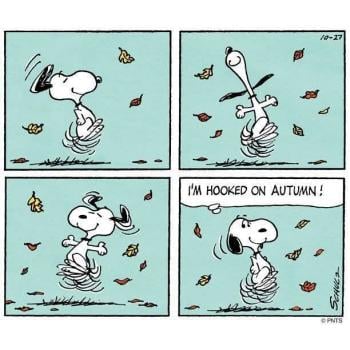
Snoopy and the Gift of an Ordinary Afternoon
TRENDING AT PATHEOS Catholic

Thanksgiving as a Way of Life: A Christian...
Each year, Thanksgiving brings families and friends together to share meals, stories,...

Two Women Doctors Who Went Against the Current
Women physicians who transformed healthcare for "Indians" “I shall have an advantage...

Reading Culture Through Scripture, Not the Other Way...
A Radix Teleology and Faith Before Seeing: Essentialism “For we also have...
Thy Word is Truth: The Bible Vindicated by...
My 59th book, completed on 9 November 2026; 204 pages. *****...

Adventurous Lectionary -1st. Sunday of Advent - November...
The Adventurous Lectionary - The First Sunday of Advent – November 29,...

Will Islam become the world's biggest religion by 2035? Congo will replace...
view all Catholic blogs
What Are Your Thoughts?leave a comment
Ad-Free & Subscriber Log-In Subscription Support
- About Us
- 2026 Calendar
- Videos
- Podcasts
- Library of World Religions
- Faith In Media Tracker
- Advertise With Us
- Write for Us
- Privacy Policy
- Terms of Service
- Do Not Sell My Data
- Contact Us
- Radiant Digital
- Manage Newsletter Subscriptions
- Unsubscribe From Notifications
- Sitemap
Copyright 2008-2026, Patheos, part of the Radiant Digital network of media brands. All rights reserved.
Subscription Support Ad-Free & Subscriber Log-In
Follow Patheos