
BuddhistCatholicContemplativeEvangelicalGeneral ChristianHinduJewishLatter-day SaintMuslimNew VisionsProgressive Christian
Beliefs
- Buddhist
- Catholic
- Contemplative
- Evangelical
- General Christian
- Hindu
- Jewish
- Latter-day Saint
- More Voices
- Muslim
- New Visions
- Pagan
- Progressive Christian
Topics
- Religion News
- Food and Religion
- Sports and Religion
- Religious Art
- Religious Music and Entertainment
- Religious Events
- History and Religion
- Style and Religion
- Politics and Religion
- Women in Religion
- Recreation Outdoors and Religion
- Business Finance and Religion
- Careers Workplace and Religion
- Education and Religion
- Family Parenting and Religion
- Health Fitness and Religion
- Home and Religion
- Relationships and Religion
- Technology and Religion
- Travel and Religion
Columnists
- Buddhist Columnists
- Business Finance and Religion Columnists
- Careers Workplace and Religion Columnists
- Catholic Columnists
- Contemplative Columnists
- Education and Religion Columnists
- Evangelists Columnists
- Family Parenting and Religion Columnists
- General Christian Columnists
- Health Fitness and Religion Columnists
- Hindu Columnists
- History and Religion Columnists
- Home and Religion Columnists
- Jewish Columnists
- More Voices Columnists
- Latter Day Columnists
- Muslim Columnists
- New Visions Columnists
- Nonreligious Columnists
- Pagan Columnists
- Politics and Religion Columnists
- Progressive Columnists
- Recreation Outdoors and Religion Columnists
- Relationships and Religion Columnists
- Religion News Columnists
- Religious Art Columnists
- Religious Events Columnists
- Religious Music and Entertainment Columnists
- Sports and Religion Columnists
- Style and Religion Columnists
- Technology and Religion Columnists
- Travel and Religion Columnists
- Women in Religion Columnists
Resource Library
- 2026 Calendar
- Library of World Religions
- The 100 Most Holy Places on Earth
- Patheos Answers
- Podcasts
- Videos
- Faith Leaders Database
- Anglican Episcopalian
- Bahai
- Baptist
- Buddhism
- Christianity
- Confucianism
- Eastern Orthodoxy
- Hinduism
- Holiness and Pentecostal
- ISKCON
- Islam
- Judaism
- Lutheran
- Methodist
- The Church of Jesus Christ of Latter-day Saints
- New Age
- Paganism
- Presbytarian and Reformed
- Protestantism
- Religion Behind the Scenes
- Roman Catholic
- Scientology
- Shia Islam
- Sikhism
- Sufism
- Sunni Islam
- Taoism
- Zen
- See all religions
Research Tools
 Ad-Free & Subscriber Log-In Subscription Support
Follow Patheos 

- Trending:
- Advent
- |
- Forgiveness
- |
- Thanksgiving
- |
- Election
- |
- Seasonal Holidays
- |
- Marriage

- Home
- Catholic
- The Seamless Garment: Is It Actually Catholic?
The Seamless Garment: Is It Actually Catholic?
Last updated on: January 27, 2026 at 2:11 pm by Dennis Knapp
The Seamless Garment: Is It Actually Catholic? 2026-01-27T14:11:22-06:00 Dennis Knapp
Patheos Explore the world's faith through different perspectives on religion and spirituality! Patheos has the views of the prevalent religions and spiritualities of the world.

AI image provided by Pilgrim.
Guest writer: Pilgrim.
Introduction
Recent discussions among Catholics have exposed a credibility problem rooted less in conclusions than in inconsistent moral reasoning. One form of this inconsistency is particularly damaging: selective urgency on prudential matters whilst being less vocal on intrinsic moral evils. The other is its inverse: urgency on intrinsic moral evils and the downplaying of prudential issues.
This essay examines the theological framework often blamed for such confusion (the Seamless Garment) and asks whether it has been misunderstood rather than misapplied.
Contrary appeals to the dignity of human life, the authority of law, and the demands of justice are being invoked simultaneously and selectively across debates over abortion, immigration enforcement, and public order. These contradictions reveal a problem beneath the surface of Catholic political engagement: not necessarily disagreement over moral conclusions, but inconsistency in the principles used to reach them.
The metaphor of the “Seamless Garment,” or “consistent ethic of life,” sits at the heart of this debate. Is it authentic Catholic teaching, or a rhetorical device that muddies moral clarity? The answer depends on understanding what it means and what it does not.
What It Actually Is
The Seamless Garment was coined in 1971 and popularized by Cardinal Joseph Bernardin in 1983. The core idea is simple: the same moral logic behind opposing abortion should extend to all life issues: euthanasia, capital punishment, war, immigration, poverty, and social injustice. The name comes from John 19:23, where Roman soldiers refuse to tear Christ’s seamless robe because cutting it up would destroy it.
Critics immediately attacked this as dangerous moral flattening. If all life issues are part of one garment, doesn’t that put abortion (the direct killing of innocent human life) on the same level as debates over tax policy or immigration?
But this criticism misses the point. The Seamless Garment doesn’t claim all issues have equal weight. Cardinal Bernardin explicitly rejected this, saying in 1988:
I know that some people on the left have used the consistent ethic to give the impression that the abortion issue is not all that important anymore… That’s a misuse of the consistent ethic, and I deplore it.
The framework isn’t claiming equality of importance. It’s demanding consistency of logic. The arguments we use against abortion (human dignity, the inviolability of innocent life, rights flowing from God rather than the state) must be applied coherently across all threats to human dignity. If dignity matters for the unborn, it matters for everyone. Otherwise, “pro-life” becomes merely a political brand.
Abortion’s Unique Gravity Stands
Nothing about this framework minimizes abortion’s unique gravity. The scale is staggering: millions of lives lost in the U.S. since 1973, hundreds of millions worldwide. No other category of intentional killing comes close. Beyond the scale, abortion has normalized the idea that human value depends on being wanted, developed enough, or socially useful. It has severed the connection between sex, procreation, and responsibility in ways that echo through our entire culture.
The Seamless Garment doesn’t dispute any of this. What it insists is that unique gravity doesn’t mean unique principles. The arguments that make abortion gravely wrong (human dignity, the inviolability of innocent life, and rejecting utilitarian calculations about human worth) aren’t arguments that only apply to abortion. They’re Catholic principles that must govern how we think about all threats to human life and dignity. Abortion’s scale and cultural centrality make it a priority for action and emphasis, not a moral island severed from the framework that gives our opposition its force.
The Problem of Selective Arguments
The strength of the Seamless Garment becomes clear when you examine what happens without it. Consider these common contradictions:
Legal Arguments. Pro-life advocates argue that restrictive abortion laws deter abortion and shape culture. Yet some of these same people dismiss gun control by saying laws don’t work: people who want guns will get them anyway. This is precisely the pro-choice argument that abortion restrictions are futile. The argument gets deployed or discarded based on political convenience, not principle.
Source of Rights. The pro-life movement correctly says human rights come from inherent dignity, not from the state. Yet when discussing immigration, some pro-lifers treat “the law” as the measure of morality, as if legal status determines how we should treat vulnerable people. “An unjust law is no law at all” applies to abortion restrictions, but gets abandoned for immigration enforcement.
To be clear: there’s a coherent position that acknowledges both inherent dignity regardless of legal status and legitimate state authority to establish immigration laws. The problem isn’t supporting border enforcement whilst insisting on humane treatment: that’s perfectly consistent with Catholic teaching. The problem emerges when “illegal” becomes a category that justifies indifference to suffering, or when enforcement is pursued through means that violate human dignity. The inconsistency appears when pro-lifers who rightly insist that unjust laws don’t bind conscience suddenly treat immigration law as absolute moral authority, or when dehumanizing rhetoric replaces principled discussion of legitimate enforcement.
Welcoming Life. Pro-life rhetoric says society must be restructured to welcome every conceived child, that every pregnancy is a blessing requiring comprehensive support. Yet this welcoming posture often vanishes when discussing immigrants and refugees, who suddenly become burdens, threats to prosperity, or drains on resources. The logic used to defend one vulnerable population gets reversed to exclude another.
Hearts Versus Laws. Some progressive Catholics say we should focus on “changing hearts” and “reducing demand” for abortion rather than pursuing legal restrictions. Yet these same voices demand immediate legal action on capital punishment, immigration reform, and economic justice. Somehow, certain offences against human dignity require legislation, whilst abortion needs only cultural transformation.
These contradictions don’t strengthen pro-life witness. They expose it to the charge of being a political tool rather than a principled position. When arguments get deployed selectively based on partisan alignment, opponents notice and use them to discredit the entire pro-life position.
The problem goes deeper than hypocrisy. Consistency constrains not just what conclusions we reach but how we argue for them. If we defend abortion restrictions because law has teaching power, that prohibition teaches society what’s wrong and shapes culture, we can’t then reject this principle wholesale for other issues. Either law has formative cultural power, or it doesn’t. The Seamless Garment says we can’t selectively invoke or dismiss these principles based on political convenience.
Doctrine Isn’t a Buffet
This debate is ultimately about the nature of Catholic doctrine itself. Catholic doctrine stands or falls as a whole. Catholicism isn’t a buffet where you pick appealing teachings and reject uncomfortable ones. Consistent application of principle is what distinguishes Catholic moral theology from political ideology.
Both progressive and conservative Catholics fall into similar traps when they abandon the Seamless Garment. Progressive Catholics invoke Church authority on social justice whilst dismissing magisterial teaching on abortion, contraception, and sexual ethics. Conservative Catholics defend doctrinal authority on life issues whilst claiming “prudential judgement” lets them ignore Catholic social teaching on immigration, capital punishment, and economic justice.
Both approaches fragment Catholic teaching according to political preference. Both require elaborate explanations for why the Pope, bishops, and Catechism don’t really mean what they clearly state on certain issues. Both produce Catholics who spend as much energy explaining away Church teaching as defending it.
What’s happening, diagnostically, is the displacement of doctrine by political identity. When Catholics are more comfortable with partisan talking points than papal encyclicals, when they spend more energy defending political coalitions than defending Church teaching, doctrine has ceased to be formative and has become merely decorative. It gets invoked when convenient, dismissed as “prudential” when uncomfortable, and subjected to the same cost-benefit analysis that governs all political positioning. This isn’t a problem unique to one side of the spectrum. It’s the standing temptation of political engagement itself: to baptize our partisan preferences rather than be transformed by Catholic truth.
The Seamless Garment offers a way out. It doesn’t require equal time for every issue or claim that all moral questions have identical gravity. It requires that the principles informing Catholic moral teaching be applied consistently. A Catholic who embraces the Seamless Garment can simply follow the Church: defending the unborn because that’s what the Church teaches, then defending migrants because that’s also what the Church teaches, without requiring tortured explanations or selective invocations of authority.
This doesn’t mean the practical challenges disappear. Catholic voters still face imperfect choices between candidates and parties that align with Church teaching in different ways. One party may be better on abortion but worse on immigration and capital punishment; another may align with Catholic social teaching but support abortion rights. The Seamless Garment doesn’t automatically resolve these dilemmas or tell you which lever to pull in the voting booth. What it does is change the framework for making those decisions. Rather than asking “which issue matters most politically,” it asks “how do I prioritize whilst maintaining consistency of principle?” Rather than allowing partisan loyalty to determine which Church teachings we take seriously, it makes the integrity of Catholic witness itself a non-negotiable constraint on our political choices.
Addressing Real Concerns
Critics raise legitimate concerns. The concept has been abused. Some Catholics have used “consistent life ethic” language to deflect from abortion advocacy, suggesting that concern for other issues somehow excuses inaction on abortion itself. Others have invoked the Seamless Garment to place prudential policy disputes on the same moral level as intrinsic evils, creating genuine confusion about moral priorities.
These abuses are real and damaging. But as the principle states, abusus non tollit usum: abuse does not preclude proper use. Consider an analogy: the concept of mercy has been grotesquely abused in contemporary Catholicism, used to justify doctrinal indifferentism and moral laxity. This doesn’t mean mercy itself is problematic or that the Church should abandon talk of divine mercy. It means we must be more precise about what mercy actually requires, distinguishing authentic mercy from its counterfeits.
The same applies here. When Cardinal Bernardin warned against using the consistent ethic to minimize abortion, he wasn’t repudiating his framework. He was insisting that it be properly understood. The Seamless Garment requires that opposition to abortion be rooted in comprehensive respect for human dignity, which means that same dignity must inform how we approach other threats to human life and flourishing.
Moreover, the Church herself has decisively affirmed this comprehensive approach. The Catechism teaches that “the inalienable right to life of every innocent human individual is a constitutive element of a civil society and its legislation,” and immediately connects this to protection of “the more vulnerable.” Pope Francis has been explicit: defending life requires attention to “health, education, and job opportunities” throughout life, not just at conception and natural death.
Priorities and Prudential Judgement
Does acknowledging that some moral issues are graver than others conflict with the Seamless Garment? Not at all. The Church clearly teaches that abortion and euthanasia are intrinsically evil: acts that can never be justified under any circumstances. War and capital punishment, whilst sometimes gravely wrong, aren’t intrinsically evil in the same way; there can be legitimate diversity of opinion about their application in specific cases.
This distinction is real and important. When we move from intrinsic evils to prudential judgements, we’re not abandoning principle; we’re applying it to situations where reasonable people can disagree about optimal outcomes. Two Catholics could both deeply respect migrants’ inherent dignity whilst reaching different conclusions about ideal immigration levels, enforcement mechanisms, or border security measures. These disagreements don’t map neatly onto the abortion debate, where the direct killing of innocent human life leaves no room for legitimate disagreement about the act itself.
But here’s what the distinction doesn’t mean: it doesn’t give license to selective moral concern. The fact that abortion is intrinsically evil whilst immigration policy involves prudential judgement doesn’t mean Catholics can invoke human dignity to oppose abortion whilst dismissing that dignity in how we treat migrants. The principle of human dignity doesn’t cease applying simply because a question involves prudential elements.
The Seamless Garment requires more nuance in application than its critics sometimes acknowledge. It’s not claiming that debates over immigration quotas carry the same moral weight as abortion. It insists that even in prudential matters, human dignity remains the governing framework. We can disagree about policy details whilst remaining united in rejecting any approach that treats migrants as less than fully human, that ignores their suffering, or that reduces them to political abstractions rather than persons bearing God’s image.
Actually, the Church’s comprehensive approach strengthens the pro-life position by demonstrating moral consistency. The Church doesn’t say: “The death penalty is less evil than abortion, so executing criminals is acceptable.” Rather: “If even the guilty criminal’s life must be respected, how much more must we defend the innocent unborn child?” This comprehensive defence of life places the burden of inconsistency on those who defend some human lives whilst devaluing others.
As one commentator observes, this approach has increased the Church’s moral credibility: when pro-life advocacy is rooted in comprehensive human dignity, it exposes the contradictions of those who oppose capital punishment whilst supporting legal abortion, or who champion immigrant rights whilst defending abortion as reproductive freedom. The spotlight shifts from our contradictions to theirs.
A Both/And Approach
The Seamless Garment doesn’t pit legal advocacy against cultural transformation or demand equal attention to all issues. It insists on moral consistency whilst recognizing that different situations require different responses and emphasis. This means:
Pro-life Catholics can and should prioritize abortion as uniquely grave because of the number of lives lost and its status as an intrinsic evil, whilst also advocating for refugees, opposing unjust war, supporting healthcare access, and working against capital punishment. The urgency of abortion doesn’t excuse indifference to other threats against human dignity.
Pro-life Catholics can pursue both legislative restrictions and efforts to address the social and economic factors that lead women to choose abortion. It’s not either/or but both/and. Culture shapes law, but law also shapes culture. Abandoning either front weakens the entire effort.
Pro-life Catholics can recognize that immigration policy involves prudential judgements about numbers, procedures, and enforcement whilst insisting that such judgements be made within the framework of human dignity. Prudential judgement isn’t a blank cheque to ignore magisterial teaching or treat vulnerable persons as mere policy problems.
Pro-life Catholics can engage substantively with the Church’s social teaching on economics, healthcare, and labor without claiming these issues carry the same moral weight as abortion. Consistency of principle doesn’t mean equality of emphasis.
The key is maintaining consistency in moral reasoning whilst recognizing appropriate distinctions in gravity, urgency, and application. This is precisely what the Seamless Garment, properly understood, enables.
Why This Matters
The alternative to the Seamless Garment isn’t a purer pro-life witness but a fragmented one that ultimately cannot withstand political realignment, cultural change, or internal contradiction.
When pro-life advocacy becomes tethered to partisan political alignment rather than comprehensive Catholic principle, it makes the defense of the unborn contingent on the fortunes of particular political movements. If today’s pro-life coalition fractures or realigns, what happens to the unborn? If the political cost-benefit analysis shifts, does the value of foetal life shift with it?
The Seamless Garment grounds pro-life witness in something more durable: the integral unity of Catholic doctrine, which transcends political movements and cultural fashions.
Moreover, rejecting the Seamless Garment creates a credibility problem that cripples evangelization. When the broader culture observes Catholics invoking human dignity to oppose abortion whilst dismissing it elsewhere, or claiming laws don’t work in one context whilst demanding them in another, they reasonably conclude that pro-life advocacy is not principled moral witness but partisan political advocacy cloaked in religious language.
This perception may be unfair to many individual pro-life advocates who genuinely believe in comprehensive human dignity. But it becomes inevitable when the public face of pro-life Catholicism appears selectively concerned with human life depending on political alignment. The Seamless Garment addresses this by insisting that defense of the unborn be visibly connected to defense of human dignity across the board.
Conclusion
The Seamless Garment can be misused, and has been. But the solution isn’t to tear the garment, but to wear it properly. The metaphor itself offers guidance: when the soldiers at Calvary faced Christ’s seamless robe, they recognized that dividing it would destroy it. The same applies to Catholic moral teaching and pro-life advocacy.
We can prioritize abortion as uniquely grave and urgent whilst maintaining consistency of moral principle. We can focus resources and attention on ending abortion whilst refusing to invoke arguments against abortion that we then contradict when addressing other issues. We can be uncompromising in defense of the unborn whilst being equally uncompromising in submitting to the Church’s full teaching.
The alternative (selectively applied moral reasoning, partisan alignment masquerading as principle, Catholic teaching treated as a menu of options) doesn’t strengthen pro-life witness. It undermines the very foundations on which that witness stands.
The Seamless Garment is the Catholic position. Not because it makes all issues equally important. Not because it excuses inaction on abortion. But because it insists that defense of the unborn be grounded in principles we’re willing to apply consistently, in a doctrinal framework we refuse to fragment, and in submission to a Church whose teaching we cannot pick and choose.
The question is not whether the Seamless Garment can be abused: it can. The question is whether we will allow that abuse to drive us towards an alternative that fractures Catholic witness and makes defense of the unborn contingent on political convenience rather than rooted in unchanging truth.
The soldiers knew better than to tear Christ’s robe. Perhaps we should as well.
Thank you!
If you liked this article, please leave your comments below. I am very interested in your opinion on this topic.
Read The Latin Right’s other writing here.
Please visit my Facebook page and IM your questions (and follow my page) or topics for articles you would like covered.
Previous Post

January 23, 2026
Cardinal Issue: Selective Urgency & Problematic Credibility
Next Post

January 28, 2026 The Danger of Enraged Imprudence
Recent Comments
"I once had an discussion with someone who was adamant that immigrants to the U.S. ..."
The West’s Christian Moral Inheritance: A ..."
""If some things were different, other things would be otherwise," said the Griffin to the ..."
The West’s Christian Moral Inheritance: A ..."
"Can we look forward to the orans decision in the Portland, Oregan diocese continuing "Christianity's ..."
The West’s Christian Moral Inheritance: A ..."
"And again, your attempt to be clever reveals your denial of the humanity of the ..."
Why Is Abortion a Lost Cause ..."
Browse Our Archives
Select a Category Abortion Arius Atheists Catholic Apologetics Catholic Culture Catholic History Catholic Humor Catholic Poetry Catholic Politics Catholic Theology Dr. James White Faith Alone Joe Heschmeyer Kamala Harris Martin Luther Pope Francis Preborn Children President Biden Science and Catholicism Sola Scriptura Synod of Synodality Trinity
Select a Month November 2026 October 2026 September 2026 August 2026 July 2026 June 2026 May 2026 April 2026 March 2026 February 2026 January 2026 December 2025 November 2025 October 2025 September 2025 August 2025 July 2025 June 2025 May 2025 April 2025 March 2025 February 2025 January 2025 December 2024 November 2024 October 2024 September 2024 August 2024 July 2024 June 2024 May 2024 April 2024 March 2024 February 2024 January 2024 December 2023 November 2023 October 2023 September 2023 August 2023 July 2023 June 2023 May 2023 April 2023 March 2023 February 2023 January 2023 December 2022 November 2022 October 2022 September 2022 August 2022 July 2022 June 2022 May 2022 April 2022 March 2022 February 2022 January 2022 December 2021 November 2021
Follow Us!
TAKE THE
Religious Wisdom Quiz
What did Jesus feed the 5,000 with?
Select your answer to see how you score.
Figs and water Loaves and fish Bread and wine Manna and honey
Related posts from The Latin Right
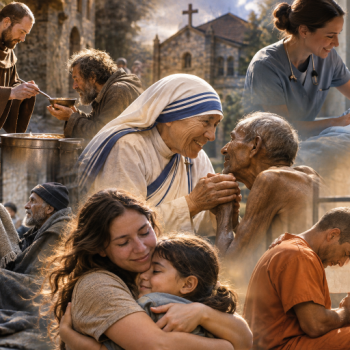
The West's Christian Moral Inheritance: A Legacy Denied
Pope Leo in Lima: The Speech That Inconveniences...

Culture Wars: A Lesson In Selective Moral Legitimacy
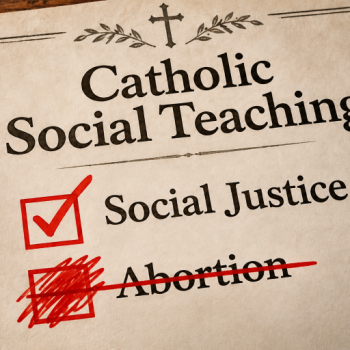
Why Is Abortion a Lost Cause but Social...
TRENDING AT PATHEOS Catholic

Belief and Disbelief in Christ's Presence in Holy...
A study found that only 29% of Catholics believe that the bread...

Blue Christmas: Making Room for Grief at Church
A Blue Christmas service makes room for grief, remembrance, and hope. Explore...

We Can Trust That God Will Use Our...
A Jesus-loving young friend who is going through deep suffering sent me...

Everything is worship for Quakers. The Quakers emphasize contemplation, equality, pacifism and...

Happy Thanksgiving! I published this Thanksgiving column back in 2017 in...

More Than a Meal: A Messianic Thanksgiving
A Messianic Thanksgiving What if Thanksgiving became more than a meal to...
view all Catholic blogs
What Are Your Thoughts?leave a comment
Ad-Free & Subscriber Log-In Subscription Support
- About Us
- 2026 Calendar
- Videos
- Podcasts
- Library of World Religions
- Faith In Media Tracker
- Advertise With Us
- Write for Us
- Privacy Policy
- Terms of Service
- Do Not Sell My Data
- Contact Us
- Radiant Digital
- Manage Newsletter Subscriptions
- Unsubscribe From Notifications
- Sitemap
Copyright 2008-2026, Patheos, part of the Radiant Digital network of media brands. All rights reserved.
Subscription Support Ad-Free & Subscriber Log-In
Follow Patheos