
BuddhistCatholicContemplativeEvangelicalGeneral ChristianHinduJewishLatter-day SaintMuslimNew VisionsProgressive Christian
Beliefs
- Buddhist
- Catholic
- Contemplative
- Evangelical
- General Christian
- Hindu
- Jewish
- Latter-day Saint
- More Voices
- Muslim
- New Visions
- Pagan
- Progressive Christian
Topics
- Religion News
- Food and Religion
- Sports and Religion
- Religious Art
- Religious Music and Entertainment
- Religious Events
- History and Religion
- Style and Religion
- Politics and Religion
- Women in Religion
- Recreation Outdoors and Religion
- Business Finance and Religion
- Careers Workplace and Religion
- Education and Religion
- Family Parenting and Religion
- Health Fitness and Religion
- Home and Religion
- Relationships and Religion
- Technology and Religion
- Travel and Religion
Columnists
- Buddhist Columnists
- Business Finance and Religion Columnists
- Careers Workplace and Religion Columnists
- Catholic Columnists
- Contemplative Columnists
- Education and Religion Columnists
- Evangelists Columnists
- Family Parenting and Religion Columnists
- General Christian Columnists
- Health Fitness and Religion Columnists
- Hindu Columnists
- History and Religion Columnists
- Home and Religion Columnists
- Jewish Columnists
- More Voices Columnists
- Latter Day Columnists
- Muslim Columnists
- New Visions Columnists
- Nonreligious Columnists
- Pagan Columnists
- Politics and Religion Columnists
- Progressive Columnists
- Recreation Outdoors and Religion Columnists
- Relationships and Religion Columnists
- Religion News Columnists
- Religious Art Columnists
- Religious Events Columnists
- Religious Music and Entertainment Columnists
- Sports and Religion Columnists
- Style and Religion Columnists
- Technology and Religion Columnists
- Travel and Religion Columnists
- Women in Religion Columnists
Resource Library
- 2026 Calendar
- Library of World Religions
- The 100 Most Holy Places on Earth
- Patheos Answers
- Podcasts
- Videos
- Faith Leaders Database
- Anglican Episcopalian
- Bahai
- Baptist
- Buddhism
- Christianity
- Confucianism
- Eastern Orthodoxy
- Hinduism
- Holiness and Pentecostal
- ISKCON
- Islam
- Judaism
- Lutheran
- Methodist
- The Church of Jesus Christ of Latter-day Saints
- New Age
- Paganism
- Presbytarian and Reformed
- Protestantism
- Religion Behind the Scenes
- Roman Catholic
- Scientology
- Shia Islam
- Sikhism
- Sufism
- Sunni Islam
- Taoism
- Zen
- See all religions
Research Tools
 Ad-Free & Subscriber Log-In Subscription Support
Ad-Free & Subscriber Log-In Subscription Support
Follow Patheos 

- Trending:
- Forgiveness
- |
- Marriage
- |
- Consciousness
- |
- Death Penalty
- |
- Election
- |
- Halloween

- Home
- Catholic
- Politics and Religion
- Reflections on Paths Through the Wilderness: Guest Writer
Reflections on Paths Through the Wilderness: Guest Writer
Last updated on: October 2, 2025 at 12:50 pm by Dennis Knapp
Reflections on Paths Through the Wilderness: Guest Writer 2025-10-02T12:50:38-06:00 Dennis Knapp
Patheos Explore the world's faith through different perspectives on religion and spirituality! Patheos has the views of the prevalent religions and spiritualities of the world.
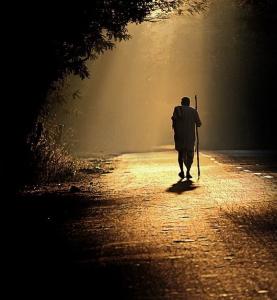 Guest writer: Pilgrim
An old man’s thoughts on the choices facing the faithful.
Introduction
“You are the salt of the earth… You are the light of the world. A city set on a hill cannot be hidden. Nor do they light a lamp and then put it under a bushel basket” (Matthew 5:13-15).
In my lifetime, I’ve witnessed sincere Christians explore distinct paths through cultural hostility or indifference.
So, I find myself turning to three images that Jesus gave us – salt, light, and a city on a hill – as I watch His people wrestle with how to live in an increasingly secular and chaotic age. Salt must mingle with what it preserves, yet, in doing so, it can lose its savour. Light must shine in the dark, yet it can be hidden under a bushel, or burn so fiercely that it blinds. A city on a hill cannot hide; it is set inescapably before the watching world, for glory or for shame.
Together, these metaphors sketch the paradox of Christian presence in the world.
The Three Paths
The Way of Authority
Some Christians, surveying the cultural crisis in the West, conclude that being a “city on a hill” means seizing the high ground – literally and figuratively. They hear in Jesus’ words a summons to visible, institutional Christianity, which determines society’s laws and customs.
Modern Forms:
- Evangelical Dominionism: “Christians should exercise dominion over all spheres – politics, education, media, law. The city must govern the valley.”
- Catholic Integralism: “Civil authority should be influenced by and subordinated to spiritual authority. The city on the hill must guide the valley to an explicitly Catholic order.”
This takes seriously the “cannot be hidden” of Jesus’s teaching. Why build a city and be powerless? Christians have the truth about human flourishing, so shouldn’t that truth determine the shape of public policy?
I understand this hunger. When I witness children adrift in confusion, families fractured, and truth trampled underfoot, something deep within me yearns for a city mighty enough to shelter and shepherd. Surely visibility calls for authority?
But I have seen how the hunger for institutional power corrodes witness. When the city towers as fortress rather than sanctuary, it is visible indeed – but for the wrong reasons. Can a kingdom of love be built by the arm of force?
The Way of Preservation
Other Christians hear “city on a hill” and conclude that visibility need not mean power. Rather, it means building luminous communities whose quiet holiness cannot be ignored. It means building beautiful, authentic Christian communities that serve as beacons of hope in a darkening world.
Modern Forms:
- A Smaller Church: A purified, humble Church – a visible but small city whose light shines more clearly when stripped of worldly ambition, that sustains its dwellers and draws people through its radiance.
Here, visibility flows not from scale or might, but from beauty, distinctiveness, and holiness. A constellation of lamps in a forgotten village may pierce the darkness more surely than the diffused glow of a sprawling metropolis.
Yet wisdom shimmers in this path. Monasteries that draw pilgrims from the earth’s corners, parishes celebrated for beautiful liturgy and mercy, homes that burn bright with welcome – these incarnate the way of preservation. Their walls are not ramparts, but hearthstones.
Yet I wonder: did Jesus envision His city as primarily a dwelling for the convinced? Can a lamp fulfil its purpose if it shines only for those already gathered in its glow? Can such a city offer refuge to those still wandering in the valley below?
The Way of Engagement
A third way envisions the “city on a hill” as sanctuary and summons. Its gates stand forever open; its lamps burn through the long watches for every wandering soul.
Such a city attracts because it offers radical hospitality, recognizing neighbors – even secular ones or those of different faiths – as fellow image-bearers seeking truth. It works for the common good without making politics its idol. It opens doors, sets tables, and calls the lost home.
This missionary response captures all three metaphors: it preserves like salt, illumines like light, and stands as a visible city that threatens no one, it invites all.
This way whispers closest to the Gospel’s heart: intricate, humble, unadorned by worldly glory. It promises not conquest, but companionship; not dominion, but communion.
Yet even here, shadows gather. Can distinctiveness survive with gates flung wide? A city that embraces all must guard against tastelessness – luminous perhaps, but bland, its salt dissolved in a flood of endless accommodation.
Living the Tension
Through the years, I’ve come to see that each path captures something essential about Christian discipleship, but each casts its own shadow. The question isn’t which path is perfect, but how to learn from all three while avoiding their pitfalls.
The Christians who stir my soul weave together threads from every path:
- The conviction of those who seek authority – tempered by humility, not domination.
- The authenticity of those who preserve – tempered by openness, not withdrawal.
- The charity of those who engage – tempered by fidelity, not compromise.
They know that to be salt and light requires courage and tenderness, clarity and compassion – iron wrapped in velvet, truth spoken in love.
Closing Reflection
Jesus called his followers to be salt and light in the world. He never promised His followers this would be simple or safe. Salt that preserves risks losing flavor; light that shines risks being snuffed or scorned. But hidden salt and shuttered lamps, an “invisible Christianity,” serves no one. We are called to offer hope to a world desperate for truth.
The path forward may not lie in choosing one way but in learning to walk all three in season: standing firm when truth lies trampled, building beauty when the world grows grey, reaching out when neighbors wander lost. Perhaps in this season, the Body of Christ needs many pilgrims on many paths, their diverse gifts woven into one witness.
Theological Postscript: The Paths Ahead
For those interested in understanding the theological foundations beneath these reflections, the Church’s recent teaching provides helpful guidance on when different approaches might be appropriate.
The Conciliar Foundation
The Second Vatican Council recognized that Christians must discern how to live Jesus’ call to be salt, light, and city contextually. The Council described the Church as “existing in the world” yet summoned to “carry forward the work of Christ,” bringing the Gospel’s “healing and elevating impact on human dignity” to society.
Crucially, the Council called for discernment. The Church must “read the signs of the times and interpret them in the light of the Gospel,” applying principles of subsidiarity and enculturation. This means the Church should “foster and take to herself, insofar as they are good, the ability, resources, and customs of each people.”
This pastoral vision supports all three paths we’ve explored. The choice between them is a matter of prudential judgment, not doctrine. The Council affirms that the Church’s influence flows not from “external dominion exercised by merely human means,” but through faith and charity that adapts to local needs and possibilities [1].
Papal Perspectives on Engagement
Recent popes have emphasized different aspects of this discernment process, their teaching reflecting the three paths.
John Paul II stressed that Christian authority must serve human dignity rather than seek power for its own sake. He warned against strategies that pursue influence as an end in itself [2]. His guidance to American bishops emphasized “the Church’s mission in the social order must respect human dignity and religious freedom” [3]. This provides qualified support for the Way of Authority when exercised through Gospel ethics rather than simply seeking worldly power.
Benedict XVI offered prophetic caution about institutional influence, anticipating a Church that might become “smaller” in cultural influence but more spiritually authentic in witness [4]. He insisted, “the Church’s deepest nature is expressed in her three-fold responsibility of proclaiming the word of God, celebrating the sacraments, and exercising the ministry of charity” [5]. His warning against institutional approaches that lose spiritual focus reflects the wisdom of the Way of Preservation when cultural engagement risks either persecution, dismissal or corrupting Christian testimony.
Pope Francis emphasized that the Church must be missionary, joyful, and relational, critiquing both aggressive secularism and a Church that overly identifies with political power [6]. He taught that Christian apostolic work is about dialogue: “approaching, speaking, listening, looking at, coming to know and understand one another, and to find common ground” [7].
These papal teachings converge on a key insight: the need for prudential assessment of local circumstances, adopting different aspects of Christian presence while maintaining unity on fundamental Gospel principles.
Discernment in Practice
Pilgrims must carry different tools for shifting terrain. Sometimes we need the shepherd’s staff of authority to guide others to safety. Sometimes we need the steady flame of witness to hold back encroaching darkness. Sometimes we need the open hand of hospitality to welcome the stranger home.
Rather than prescribing one path, the Church’s wisdom lies in helping local communities discern which approach, or creative combinations of each, best serves their missionary calling. The Church’s emphasis on synodality provides a concrete framework for this discernment, allowing communities to prayerfully consider their response while maintaining communion with the universal Church.
In post-Christian Western societies with strong democratic traditions, the Way of Engagement may offer the most fruitful approach. In cultures where Christian institutions retain significant influence, the Way of Authority might be more appropriate. In societies experiencing rapid secularization or active hostility toward faith, the Way of Preservation may be the wisest choice for sustaining Gospel witness across generations.
Wisdom for the Journey
The Preacher reminds us that “to everything there is a season, and a time for every purpose under heaven” (Ecclesiastes 3:1).
What is constant is the call to authentic presence: maintaining Christian distinctiveness while supporting the human community; proclaiming truth while embodying love; and being visible witnesses to hope that comes from Christ alone. The specific expression may vary, but this fundamental calling endures across all times, places, and seasons.
Some seasons call for clarity from those in authority, not to dominate, but to serve the common good. Other seasons demand the patient work of preservation, building communities of beauty and virtue that can weather storms, waiting to draw seekers by their light. Still other seasons require the open-hearted engagement of those who cross boundaries to find common ground with neighbors.
In our complex world, the universal Church’s role is not to prescribe identical responses everywhere for all times but to provide principles for genuine discernment in local communities that choose their path in service to the Gospel’s transforming power.
What I’ve learned is this: the most compelling Christians embody elements from all three ways. They understand that there is a time for the conviction of those who seek authority, but without the will to dominate. A time for the authenticity of those who preserve, but without complete withdrawal. A time for the charity of those who engage, but without losing their distinctiveness.
Pilgrims must prepare for every terrain on the journey toward the City of God. The landscape shifts, as do the seasons, but our destination remains fixed—the Eternal City, where all our labors find their rest, where earthly cities fade before something infinitely greater.
“I do not ask that you take them out of the world but that you keep them from the evil one. They do not belong to the world any more than I belong to the world. Consecrate them in the truth. Your word is truth. As you sent me into the world, so I sent them into the world.” (John 17: 15-18)
Footnotes
- Second Vatican Council, Gaudium et Spes (Pastoral Constitution on the Church in the Modern World), (1965), 22.
- John Paul II, Centesimus Annus (The Hundredth Year), (1991), 24.
- John Paul II, Fides et Ratio (On the Relationship between Faith and Reason), (1998), 1.
- Benedict XVI, Spe Salvi (On Christian Hope), (2007), 22–25
- Benedict XVI, Caritas in Veritate (Charity in Truth), (2009), 1.
- Francis, Evangelii Gaudium (The Joy of the Gospel), (2013). 47.
- Francis, Fratelli Tutti, (Fraternity and Social Friendship, 2020).
Thank you!
If you liked this article, please leave your comments below. I am very interested in your opinion on this topic.
Read The Latin Right’s other writing here.
Please visit my Facebook page and IM your questions (and follow my page) or topics for articles you would like covered.
Politics and Religion
Previous Post
September 27, 2025
Saving the Lost Boys of the West
Next Post

October 7, 2025 Radical Empathy for Some, Radical Accountability for Others
Recent Comments
"My honest take? I think St John Paul II was adamant that on his watch, ..."
Amoris Laetitia Deserves a Better Defence
""It's reasonable to ask what those claims mean in practice."It is. And I've laid out ..."
Amoris Laetitia Deserves a Better Defence
"I've said what I said, Peter. Read the words. If you don't have anything new ..."
Amoris Laetitia Deserves a Better Defence
"I don't expect you to decide who should be admitted to the sacraments. I'm asking ..."
Amoris Laetitia Deserves a Better Defence
Browse Our Archives
Select a Category Abortion Arius Atheists Catholic Apologetics Catholic Culture Catholic History Catholic Humor Catholic Poetry Catholic Politics Catholic Theology Dr. James White Faith Alone Joe Heschmeyer Kamala Harris Martin Luther Pope Francis Preborn Children President Biden Science and Catholicism Sola Scriptura Synod of Synodality Trinity
Select a Month October 2026 September 2026 August 2026 July 2026 June 2026 May 2026 April 2026 March 2026 February 2026 January 2026 December 2025 November 2025 October 2025 September 2025 August 2025 July 2025 June 2025 May 2025 April 2025 March 2025 February 2025 January 2025 December 2024 November 2024 October 2024 September 2024 August 2024 July 2024 June 2024 May 2024 April 2024 March 2024 February 2024 January 2024 December 2023 November 2023 October 2023 September 2023 August 2023 July 2023 June 2023 May 2023 April 2023 March 2023 February 2023 January 2023 December 2022 November 2022 October 2022 September 2022 August 2022 July 2022 June 2022 May 2022 April 2022 March 2022 February 2022 January 2022 December 2021 November 2021
Follow Us!
TAKE THE
Religious Wisdom Quiz
What message did Jeremiah send to the exiles in Babylon to encourage them?
Select your answer to see how you score.
Build houses and seek the city's good Fast and do not marry Return and revolt Pray for Judah only
Related posts from The Latin Right

Amoris Laetitia Deserves a Better Defence

Rich Man, Poor Man: Altruism and Agency

The Order We Did Not Make: The World...

The Poor Have Rights—and Responsibilities
TRENDING AT PATHEOS Catholic

The Sermon on the Mount, Part I: Matthew...
The Sermon on the Mount, Part I (Matthew 4:12-5:12) St. Matthew moves...

What's up from Crossway: Reviewing some of their latest A few weeks...

Janie Learns the Way of the Cross: A...
Teaching children about Jesus' Passion can be challenging. Many parents and educators...

Looking For Good Catholic Writing - October 2026
He alone extends the heavens, and he walks upon the waves of...

In "Irreplaceable," our book on vocation and technology, Trevor Sutton and I...

I was strolling through the top floor of the brand new Parthenon...
view all Catholic blogs
What Are Your Thoughts?leave a comment
Ad-Free & Subscriber Log-In Subscription Support
- About Us
- 2026 Calendar
- Videos
- Podcasts
- Library of World Religions
- Faith In Media Tracker
- Advertise With Us
- Write for Us
- Privacy Policy
- Terms of Service
- Do Not Sell My Data
- Contact Us
- Radiant Digital
- Manage Newsletter Subscriptions
- Unsubscribe From Notifications
- Sitemap
Copyright 2008-2026, Patheos. All rights reserved.
Subscription Support Ad-Free & Subscriber Log-In
Follow Patheos