
BuddhistCatholicContemplativeEvangelicalGeneral ChristianHinduJewishLatter-day SaintMuslimNew VisionsProgressive Christian
Beliefs
- Buddhist
- Catholic
- Contemplative
- Evangelical
- General Christian
- Hindu
- Jewish
- Latter-day Saint
- More Voices
- Muslim
- New Visions
- Pagan
- Progressive Christian
Topics
- Religion News
- Food and Religion
- Sports and Religion
- Religious Art
- Religious Music and Entertainment
- Religious Events
- History and Religion
- Style and Religion
- Politics and Religion
- Women in Religion
- Recreation Outdoors and Religion
- Business Finance and Religion
- Careers Workplace and Religion
- Education and Religion
- Family Parenting and Religion
- Health Fitness and Religion
- Home and Religion
- Relationships and Religion
- Technology and Religion
- Travel and Religion
Columnists
- Buddhist Columnists
- Business Finance and Religion Columnists
- Careers Workplace and Religion Columnists
- Catholic Columnists
- Contemplative Columnists
- Education and Religion Columnists
- Evangelists Columnists
- Family Parenting and Religion Columnists
- General Christian Columnists
- Health Fitness and Religion Columnists
- Hindu Columnists
- History and Religion Columnists
- Home and Religion Columnists
- Jewish Columnists
- More Voices Columnists
- Latter Day Columnists
- Muslim Columnists
- New Visions Columnists
- Nonreligious Columnists
- Pagan Columnists
- Politics and Religion Columnists
- Progressive Columnists
- Recreation Outdoors and Religion Columnists
- Relationships and Religion Columnists
- Religion News Columnists
- Religious Art Columnists
- Religious Events Columnists
- Religious Music and Entertainment Columnists
- Sports and Religion Columnists
- Style and Religion Columnists
- Technology and Religion Columnists
- Travel and Religion Columnists
- Women in Religion Columnists
Resource Library
- 2026 Calendar
- Library of World Religions
- The 100 Most Holy Places on Earth
- Patheos Answers
- Podcasts
- Videos
- Faith Leaders Database
- Anglican Episcopalian
- Bahai
- Baptist
- Buddhism
- Christianity
- Confucianism
- Eastern Orthodoxy
- Hinduism
- Holiness and Pentecostal
- ISKCON
- Islam
- Judaism
- Lutheran
- Methodist
- The Church of Jesus Christ of Latter-day Saints
- New Age
- Paganism
- Presbytarian and Reformed
- Protestantism
- Religion Behind the Scenes
- Roman Catholic
- Scientology
- Shia Islam
- Sikhism
- Sufism
- Sunni Islam
- Taoism
- Zen
- See all religions
Research Tools
 Ad-Free & Subscriber Log-In Subscription Support
Ad-Free & Subscriber Log-In Subscription Support
Follow Patheos 

- Trending:
- Forgiveness
- |
- Marriage
- |
- Consciousness
- |
- Death Penalty
- |
- Election
- |
- Halloween

- Home
- Catholic
- Politics and Religion
- When Mercy Meets Truth: A Guide from Sin to Grace
When Mercy Meets Truth: A Guide from Sin to Grace
Last updated on: September 11, 2025 at 7:32 am by Dennis Knapp
When Mercy Meets Truth: A Guide from Sin to Grace 2025-09-11T07:32:24-06:00 Dennis Knapp
Patheos Explore the world's faith through different perspectives on religion and spirituality! Patheos has the views of the prevalent religions and spiritualities of the world.
 Guest writer: Pilgrim
Introduction
From the beginning, the Church has proclaimed the Good News of salvation in Christ. This Gospel message is one of mercy and a call from sin to conversion.
Sin is not only the breaking of rules. It is a rupture in our relationship with God, with neighbor, and with ourselves. It distorts freedom and needs God’s healing grace. This understanding, drawn from Scripture, the Fathers, and the Magisterium, is the heart of Catholic moral theology.
Alongside the teaching on sin is an emphasis on mercy and an understanding of personal culpability. While moral law does not change, personal responsibility can be lessened by ignorance, weakness, or coercion. Balancing truth and responsibility has always shaped Catholic thought. In recent years, this balancing has become sharply debated, especially since Pope Francis’s Amoris Laetitia.
This essay explores how the Church seeks to uphold moral law while also exercising pastoral mercy. Drawing on the Catechism, John Paul II, Benedict XVI, Ignatian spirituality, and Pope Francis, it argues that pastoral guidance must lead the faithful to holiness without weakening moral truth. By careful discernment and applying the law of gradualness, the Church can welcome sinners to the Eucharist while fostering true conversion. The sacraments of Reconciliation and Eucharist, where mercy and truth meet, both heal and transform, offering a faithful witness to the world.
The Catholic Doctrine of Sin and Moral Culpability
The Catechism of the Catholic Church defines sin as “an offense against reason, truth, and right conscience; it is failure in genuine love for God and neighbour caused by a perverse attachment to certain goods.” Sin can take the form of “an utterance, a deed, or a desire contrary to the eternal law.”
Sin has two main dimensions:
- Against God: It is “an offense against God” that turns the heart from His love.
- Against Human Nature: It “wounds the nature of man and injures human solidarity,” harming dignity and community.
The Church also distinguishes sin by gravity and origin:
- Mortal and Venial Sin: Mortal sin destroys charity in the soul. It requires grave matter, full knowledge, and deliberate consent. Venial sin weakens charity and inclines a person to further sin.
- Original Sin: Humanity inherits from Adam and Eve a wounded nature without original holiness. This introduces disordered desire and division.
Sin ultimately arises from the misuse of freedom: “The root of sin is in the heart of man, in his free will.” It may be committed in thought, word, deed, or omission.
For a sin to be mortal, three conditions must all be met:
- Grave Matter: The act seriously violates divine law.
- Full Knowledge: The sinner knows it is wrong and recognises its gravity.
- Deliberate Consent: The act is freely chosen. Without real freedom, culpability is reduced.
Catholic theology also distinguishes:
- Material sin: An objectively wrong act.
- Formal sin: An act freely chosen with knowledge of its sinfulness.
Culpability may be reduced by:
- Invincible ignorance
- Immaturity or habituation.
- Psychological disturbance.
- Emotional pressure or fear.
- Social circumstances.
Yet, sins committed under disordered passions may still carry responsibility, even if the will is partly eclipsed [1].
Sin wounds both the person and the Church’s communion. Mortal sin destroys charity. While moral law is unchanging, responsibility may be lessened by ignorance, weakness, or coercion. God’s mercy is always offered through the sacraments of Reconciliation and the Eucharist.
Ignatius of Loyola provides another lens for understanding moral struggle. He taught that discernment requires self-examination, prayer, and aligning the conscience with God’s will. This means resisting disordered attachments that cloud judgment [2]. His method shows how mitigating factors can be identified and addressed, while still guiding the soul toward conversion and union with Christ.
For example, someone may fall into objectively sinful acts. Yet, through catechesis, prayer, discipline, and effort, cooperating with grace, they can detach from disordered desires and gradually live according to God’s law.
Modern Pastoral Challenges: Amoris Laetitia
These questions are urgent in contemporary Catholic life in a secular culture. For many, the challenges include contraception, same-sex relationships, and irregular relationships, such as divorce and civil remarriage.
Chapter 8 of Amoris Laetitia suggests that, in some cases, those in irregular relationships may receive absolution and approach the Eucharist. Yet the document is less clear about the degree of conversion expected. Pope Francis avoided detail and appealed to local discernment, urging pastors to accompany the faithful with patience and to help them seek God’s will in complex situations, leaving it open to widely different interpretations [3].
Critics fear this may lead to relativism and inconsistent application. Cardinal Müller has argued that pastoral exceptions risk undermining the reality of mortal sin [4]. The Church has always required confession and a firm purpose of amendment before receiving the Eucharist where there is awareness of mortal sin [5]. St. Paul warned: “Anyone who eats and drinks without discerning the body eats and drinks judgment upon himself” [6]. This debate then turns on the line between material and formal grave sin.
Still, Amoris Laetitia can be read in continuity with tradition. Those approaching the Eucharist should be:
- Aligning their conscience with Church teaching.
- Genuinely striving toward conversion.
- Actively resisting sin, not persisting obstinately in it, or readily succumbing to it.
John Paul II stressed that those in irregular unions are called to moral formation, self-mastery, and fidelity to God’s law. For example, a person in a second marriage, knowing that sexual relations contradict indissolubility, might choose chastity. This is an application of the “law of gradualness.” By practicing restraint, prayer, and virtue, aided by the sacraments, they can grow in holiness. This is reflected in the teaching of Familiaris Consortio, which urges conscience formation and conversion so that grace and freedom can cooperate [7].
Ignatian discernment also offers guidance in this process. In the Spiritual Exercises, retreatants examine attachments and motives to align their choices with God’s law for His greater glory. Applied today, this means careful reflection, prayer, and honesty about desires that cloud judgment.
In practice, discernment distinguishes between:
- Reduced culpability, where people struggle sincerely with weakness or social pressures.
- Persistence in sin, where conversion is absent and the will yields readily to disordered desires.
Used this way, Ignatian discernment allows pastors to accompany the faithful with both mercy and truth [8].
John Paul II, Benedict XVI, and the Defense of Moral Clarity
John Paul II consistently affirmed the objective moral order. In Veritatis Splendor, he taught that conscience must be guided by divine law as proposed by the Magisterium. Moral absolutes cannot be changed by circumstances. Even in complex situations, moral law remains the standard. Pastoral care must support sinners without weakening the truth [9].
Benedict XVI, in Sacramentum Caritatis, stressed the link between the Eucharist and Reconciliation. Conversion must come before a worthy reception of Christ [10]. He also insisted that catechesis must form awareness of sin while fostering trust in God’s mercy.
In 2019, Benedict warned that moral theology risks collapse if conscience is separated from objective truth [11]. Both popes make clear: mercy must serve truth, and accompaniment cannot mean accommodation.
Mercy, Truth, and the Eucharist
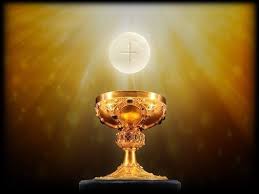
At the center of this discussion is the Eucharist. It signifies and brings communion with Christ and His Body, the Church. Receiving it unworthily falsifies this reality.
Aquinas taught that receiving in mortal sin is sacrilegious. It breaks the unity and charity signified by the sacrament [12]. Ignatius’ principles echo this. The faithful must examine attachments and align the heart with God’s will. Only then does participation reflect true conversion.
Pastoral care must unite mercy and truth. It must also call people to conversion while also respecting the objectivity of sin.
The law of gradualness helps here. Growth in holiness is a process, not an instant act. People may not fully live the moral law at once. Yet they can genuinely strive toward holiness by:
- Prayer and self-denial.
- Developing habits of virtue.
- Deepening conscience formation.
- Resisting obstinate sin.
Pastoral care can walk with them in this process [13]. This way, the Church preserves both mercy and sacramental integrity. The Eucharist then remains a true encounter with Christ, not a casual or contradictory act.
Conclusion
The doctrine of sin and culpability is not about condemnation. It is about hope. Naming sin protects dignity and shows human weakness. Proclaiming mercy announces the possibility of new life.
The pastoral challenge is not just about rules. It is about guiding souls to holiness. True mercy heals and transforms. It does not excuse sin. Moral truth, meanwhile, protects dignity and safeguards the sacraments.
The Eucharist shows this union. It calls the faithful to conversion and participation in divine life. Pastoral care must accompany those striving for virtue, respecting truth while nurturing growth. This is how the Church bears witness to mercy and to truth together.
The Eucharist embodies this union. It is both a gift and a demand. It welcomes sinners, but also calls them to holiness. To receive it worthily requires conversion; it also empowers that conversion. Amoris Laetitia, read with Ignatian discernment, Aquinas’s clarity, and the teaching of John Paul II and Benedict XVI, calls for accompaniment that leads not to comfort in sin but to conversion in Christ. This is a mercy that heals and a truth that frees [14].
The Church, in this way, offers a witness to the world: a community that neither compromises moral law nor withholds mercy. It invites all to share in the transforming grace of Christ in the Eucharist.
Footnotes
- Catechism of the Catholic Church, §§403-406, 1735-6, 1849, 1850, 1857, 1860–63, 1871.
- St. Ignatius of Loyola, Spiritual Exercises, §§169–189, trans. Louis J. Puhl.
- Pope Francis, Amoris Laetitia (2016), §§296 301–02, 305.
- Gerhard Ludwig Müller, “Manifesto of Faith,” Catholic News Agency, February 8, 2019.
- Council of Trent, Decree on the Eucharist, Session XIII, Canon 11 (1551).
- 1 Corinthians 11:29 (RSV).
- Pope John Paul II, Familiaris Consortio (1981), §§79; 84–86.
- St. Ignatius of Loyola, Spiritual Exercises, §§313–336.
- John Paul II, Veritatis Splendor (1993), §§54–55.
- Benedict XVI, Sacramentum Caritatis (2007), §20.
- Benedict XVI, “The Church and the Scandal of Sexual Abuse” (April 2019),
- Thomas Aquinas, Summa Theologiae, III, q.80, a.2, 4, 7.
- Catechism of the Catholic Church, §§1805–1806, 1825, 1878.
- St. Ignatius of Loyola, Spiritual Exercises, §§169–189.
Thank you!
If you liked this article, please leave your comments below. I am very interested in your opinion on this topic.
Read The Latin Right’s other writing here.
Please visit my Facebook page and IM your questions (and follow my page) or topics for articles you would like covered.
General Christian
Politics and Religion
Previous Post
September 6, 2025
"Pastoral” Deniability in Progressive Catholicism
Next Post

September 11, 2025 For Charlie… Reflections on a Courageous Life Cut Short
Recent Comments
"I agree that St John Paul II did not equivocate. He was insistent that the ..."
Amoris Laetitia Deserves a Better Defence
"Not a different answer.Peter, you have an occasional problem with the truth. Mike Lewis pointed ..."
Amoris Laetitia Deserves a Better Defence
"So, no answer."
Amoris Laetitia Deserves a Better Defence
"Thanks, Mike, but the history points in a different direction to the one you suggest.John ..."
Amoris Laetitia Deserves a Better Defence
Browse Our Archives
Select a Category Abortion Arius Atheists Catholic Apologetics Catholic Culture Catholic History Catholic Humor Catholic Poetry Catholic Politics Catholic Theology Dr. James White Faith Alone Joe Heschmeyer Kamala Harris Martin Luther Pope Francis Preborn Children President Biden Science and Catholicism Sola Scriptura Synod of Synodality Trinity
Select a Month October 2026 September 2026 August 2026 July 2026 June 2026 May 2026 April 2026 March 2026 February 2026 January 2026 December 2025 November 2025 October 2025 September 2025 August 2025 July 2025 June 2025 May 2025 April 2025 March 2025 February 2025 January 2025 December 2024 November 2024 October 2024 September 2024 August 2024 July 2024 June 2024 May 2024 April 2024 March 2024 February 2024 January 2024 December 2023 November 2023 October 2023 September 2023 August 2023 July 2023 June 2023 May 2023 April 2023 March 2023 February 2023 January 2023 December 2022 November 2022 October 2022 September 2022 August 2022 July 2022 June 2022 May 2022 April 2022 March 2022 February 2022 January 2022 December 2021 November 2021
Follow Us!
TAKE THE
Religious Wisdom Quiz
The light shines in the darkness, and the darkness has not ____ it.
Select your answer to see how you score.
Accepted Understood Comprehended Extinguished
Related posts from The Latin Right

Amoris Laetitia Deserves a Better Defence

Rich Man, Poor Man: Altruism and Agency

The Order We Did Not Make: The World...

The Poor Have Rights—and Responsibilities
TRENDING AT PATHEOS Catholic

Swimfan: Forgotten Aughts Pleasures
This is a recovery effort. In 2002, My Big Fat Greek Wedding...

Top Three Anti-Catholic Lies About Catholicism
This is my initial transcript for the video, "THE 3 WORST...

Pope Leo Celebrates Mass for Nurses & Docs...
I don't have any idea how he did it, but Pope Leo...

The Sermon on the Mount, Part I: Matthew...
The Sermon on the Mount, Part I (Matthew 4:12-5:12) St. Matthew moves...

What's up from Crossway: Reviewing some of their latest A few weeks...

Janie Learns the Way of the Cross: A...
Teaching children about Jesus' Passion can be challenging. Many parents and educators...
view all Catholic blogs
What Are Your Thoughts?leave a comment
Ad-Free & Subscriber Log-In Subscription Support
- About Us
- 2026 Calendar
- Videos
- Podcasts
- Library of World Religions
- Faith In Media Tracker
- Advertise With Us
- Write for Us
- Privacy Policy
- Terms of Service
- Do Not Sell My Data
- Contact Us
- Radiant Digital
- Manage Newsletter Subscriptions
- Unsubscribe From Notifications
- Sitemap
Copyright 2008-2026, Patheos. All rights reserved.
Subscription Support Ad-Free & Subscriber Log-In
Follow Patheos