
BuddhistCatholicContemplativeEvangelicalGeneral ChristianHinduJewishLatter-day SaintMuslimNew VisionsProgressive Christian
Beliefs
- Buddhist
- Catholic
- Contemplative
- Evangelical
- General Christian
- Hindu
- Jewish
- Latter-day Saint
- More Voices
- Muslim
- New Visions
- Pagan
- Progressive Christian
Topics
- Religion News
- Food and Religion
- Sports and Religion
- Religious Art
- Religious Music and Entertainment
- Religious Events
- History and Religion
- Style and Religion
- Politics and Religion
- Women in Religion
- Recreation Outdoors and Religion
- Business Finance and Religion
- Careers Workplace and Religion
- Education and Religion
- Family Parenting and Religion
- Health Fitness and Religion
- Home and Religion
- Relationships and Religion
- Technology and Religion
- Travel and Religion
Columnists
- Buddhist Columnists
- Business Finance and Religion Columnists
- Careers Workplace and Religion Columnists
- Catholic Columnists
- Contemplative Columnists
- Education and Religion Columnists
- Evangelists Columnists
- Family Parenting and Religion Columnists
- General Christian Columnists
- Health Fitness and Religion Columnists
- Hindu Columnists
- History and Religion Columnists
- Home and Religion Columnists
- Jewish Columnists
- More Voices Columnists
- Latter Day Columnists
- Muslim Columnists
- New Visions Columnists
- Nonreligious Columnists
- Pagan Columnists
- Politics and Religion Columnists
- Progressive Columnists
- Recreation Outdoors and Religion Columnists
- Relationships and Religion Columnists
- Religion News Columnists
- Religious Art Columnists
- Religious Events Columnists
- Religious Music and Entertainment Columnists
- Sports and Religion Columnists
- Style and Religion Columnists
- Technology and Religion Columnists
- Travel and Religion Columnists
- Women in Religion Columnists
Resource Library
- 2026 Calendar
- Library of World Religions
- The 100 Most Holy Places on Earth
- Patheos Answers
- Podcasts
- Videos
- Faith Leaders Database
- Anglican Episcopalian
- Bahai
- Baptist
- Buddhism
- Christianity
- Confucianism
- Eastern Orthodoxy
- Hinduism
- Holiness and Pentecostal
- ISKCON
- Islam
- Judaism
- Lutheran
- Methodist
- The Church of Jesus Christ of Latter-day Saints
- New Age
- Paganism
- Presbytarian and Reformed
- Protestantism
- Religion Behind the Scenes
- Roman Catholic
- Scientology
- Shia Islam
- Sikhism
- Sufism
- Sunni Islam
- Taoism
- Zen
- See all religions
Research Tools
 Ad-Free & Subscriber Log-In Subscription Support
Ad-Free & Subscriber Log-In Subscription Support
Follow Patheos 

- Trending:
- Forgiveness
- |
- Marriage
- |
- Consciousness
- |
- Death Penalty
- |
- Election
- |
- Halloween

- Home
- Catholic
- History and Religion
- Questions That Don’t Have Easy Answers (Guest Writer)
Questions That Don’t Have Easy Answers (Guest Writer)
Last updated on: September 15, 2025 at 4:05 pm by Dennis Knapp
Questions That Don’t Have Easy Answers (Guest Writer) 2025-09-15T16:05:40-06:00 Dennis Knapp
Patheos Explore the world's faith through different perspectives on religion and spirituality! Patheos has the views of the prevalent religions and spiritualities of the world.
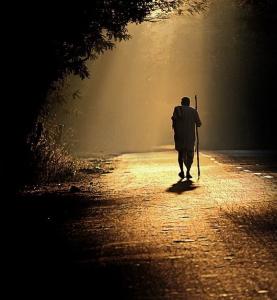 Guest writer: Pilgrim
An old man’s thoughts on why members of the Church need more wisdom and less certainty.
Introduction
As I near the end of my earthly pilgrimage, I find myself thinking more about questions than answers. This surprises me. I expected that after decades of faith, prayer, and study, things would be clearer. Instead, they’ve become more complex. Perhaps that’s exactly as it should be.
The Question That Started It All
Months ago, I found myself wondering about something that seemed simple at first: Should faithful Catholics engage with our increasingly secular culture, or should we withdraw into our own communities to preserve authentic faith?
Part of what triggered writing this reflection today was the shocking assassination of Charlie Kirk, the Evangelical conservative commentator. I didn’t agree with his rhetoric, which was often sharp and divisive. However, the violence of his death and the heated exchanges that surrounded his public witness before and after this murder shook me. It brought home in a visceral way how fragile our common life has become, and how easily the culture of argument can slip into a culture of violence.
It’s a pressing question. We see children confused about basic truths of human nature. We see marriage redefined, life devalued, and family structures crumbling. The culture seems hostile to everything Christians hold dear. So what do we do? Fight back, or build our own ark?
I thought this was a straightforward question with a clear Catholic answer.
I was wrong.
When Simple Questions Reveal Complex Realities
The more I explored this question, the more layers I discovered. It turns out that faithful, orthodox Catholics, people who love the Church and want to serve God, disagree profoundly about how to respond to our cultural moment.
Some point to the abolitionists who ended slavery through political engagement. “If Christians had withdrawn from society then,” they argue, “millions would have remained in chains.” They believe we have a moral obligation to fight for truth in the public square, to protect the vulnerable, and to work for laws that reflect natural law and human dignity.
Others point to the early Christians who built a new civilization by focusing on authentic community rather than political power. “The culture wars have failed,” they say. “Fifty years of political engagement haven’t stopped the sexual revolution or protected the family. Maybe it’s time to build something new from the ground up.”
Both sides make compelling arguments. Both can quote Scripture, Church teaching, and historical precedent. Both are motivated by genuine love for God and neighbor.
This confused me. How could faithful Catholics look at the same situation and reach such different conclusions?
The Deeper Problem: Vatican II’s Unfinished Business
As I dug deeper, I began to understand that our current divisions trace back to something that happened in my lifetime: the Second Vatican Council. As a young adult, I remember the excitement and the confusion of those years, the hope and the disappointment that followed.
Vatican II was supposed to help the Church engage the modern world without compromising essential truths. It was a pastoral Council not defining new dogmas, but finding new ways to present eternal truths. The intention was beautiful. To open windows, to dialogue with contemporary culture, to show that Catholicism could speak to modern hearts and minds.
But something went wrong in the implementation. Or perhaps it would be more accurate to say that the implementation was never completed.
Instead of a creative synthesis between tradition and modernity, we got polarization. Instead of faithful engagement with contemporary questions, we got a Catholic civil war that’s been raging for sixty years. Go on Catholic social media and you’ll see what I mean. Faithful Catholics attacking each other with a viciousness that would make secular politicians blush.
The Missing Synthesis
Looking back, it’s clear that Popes John Paul II and Benedict XVI were trying to complete Vatican II’s work. They understood that the Council’s insights needed to be integrated with Catholic tradition, not played off against it. They showed us how to be fully Catholic and genuinely engage with modernity.
John Paul II gave us a vision of human dignity that was rooted in the Gospel but spoke to contemporary concerns about freedom and fulfilment. Benedict XVI showed us how authentic liturgy and serious theology could engage modern questions without compromising Catholic identity. Both demonstrated that you didn’t have to choose between faithfulness and relevance.
The synthesis is still a work in progress. It always will be. Pope Francis invites us to discern together, offering a pastoral accompaniment that asks us to listen before we answer. The intention is good. to create space for dialogue and mercy. But the result of his pontificate was sometimes more confusion than clarity. Important questions got answered with “dialogue” or “discern” rather than clear guidance.
Why Certainty Isn’t Always Wisdom
Here’s what I’ve learned as an old man. The demand for immediate certainty is often the enemy of genuine wisdom.
Don’t misunderstand me. There are absolute truths, and the Church must proclaim them clearly. The reality of God; the divinity of Christ; the meaning of the Eucharist; and the dignity of human life from conception to natural death. These aren’t matters for debate or development. Yet the way we live and acclaim these truths in a world of AI, social media, and new ideologies demands patient discernment.
But how do we apply these truths in complex cultural situations? How do we balance competing goods like religious freedom and moral witness in pluralistic societies? How do we respond to unprecedented challenges like social media, artificial intelligence, abortion, same-sex marriage, or gender ideology? These require careful thought, not quick answers.
The problem is that our current Catholic media ecosystem rewards quick answers and tribal loyalty rather than patient thinking. If you read The Remnant, you get one set of certainties. If you read America Magazine, you get a different set. Both serve their audiences what they want to hear rather than challenging them to think more deeply.
Meanwhile, ordinary Catholics in the pews, people trying to raise faithful children, live Christian lives in secular workplaces, and make sense of Church teaching in complicated situations, feel caught in the middle. They’re told they have to choose sides in battles they don’t fully understand.
What I Wish I Could Tell Younger Catholics
If I could sit down with younger Catholics who are struggling with these questions, here’s what I’d want to tell them:
First, don’t let anyone force you into false choices. You don’t have to choose between loving tradition and engaging modernity. You don’t have to choose between doctrinal orthodoxy and pastoral mercy. You don’t have to choose between personal holiness and social justice. The Church is big enough for all of these goods, and the tension between them is often creative rather than destructive.
Second, be suspicious of anyone offering simple solutions to complex problems. Whether they’re promising that the right political strategy will save Christian civilization, or that the right pastoral approach will heal all divisions, they’re probably oversimplifying. Real life is messier than ideological frameworks suggest.
Third, learn to sit with uncertainty without losing faith. Some questions don’t have clear answers yet. Some tensions can’t be resolved immediately. That doesn’t mean truth doesn’t exist or that the Church has no guidance to offer. It means that faithful discipleship sometimes requires patience and intellectual humility.
Fourth, focus on what you can control. Instead of getting consumed by Church politics or culture wars, focus on growing in holiness, loving your family well, serving your community, and bearing witness to Christ in your own circumstances. A family dinner each week, where we ask how the Gospel shapes our work, can be a small way to hold many goods together. The Kingdom of God advances through countless small acts of faithfulness, not just through grand strategies.
The Wisdom of Complexity
I used to think that maturity meant having all the answers. Now I think it means asking better questions and being comfortable with complexity.
This doesn’t mean relativism. There are still right and wrong answers. It means recognizing that many of our contemporary challenges don’t fit neatly into pre-existing categories. The early Christians didn’t have a blueprint for how to respond to Roman persecution. Medieval Christians didn’t have a manual for how to engage Islamic philosophy. Or later, there was no script for sixteenth-century Catholics on how to respond to the Protestant Reformation. Nineteenth-century Catholics didn’t have clear guidance on how to respond to democratic revolutions.
Each generation of Christians has had to figure out how to live faithfully in their particular time and place with the gifts and graces God has given them. That requires both fidelity to eternal truths and creative wisdom about how to apply those truths in new situations.
Hope for the Future
Despite all the confusion and division, I remain hopeful about the Catholic Church. I’ve lived long enough and read enough history to see that periods of crisis often precede periods of renewal. The chaos after Vatican II may be the labor pains of something new and beautiful being born.
I see signs of hope in young Catholics who refuse to be confined by the old battles. I see it in families building authentic Christian culture in their homes. I see it in parishes finding creative ways to engage their communities. I see it in scholars working quietly to develop genuine synthesis between faith and contemporary thought.
Most importantly, I see it in the ordinary Catholics who keep showing up at Mass, trying to live faithfully despite all the confusion. They may not understand all the theological debates or political strategies, but they know that Christ is present in the Eucharist and that following Him is worth any amount of uncertainty or complexity.
A Final Word
As I approach the end of my earthly journey, I’m grateful for the questions as much as the answers. The complexity I once found frustrating now strikes me as a sign of the Church’s vitality. A dead institution would have no internal tensions or debates. A living one, especially one trying to proclaim eternal truths in a rapidly changing world, will necessarily struggle with difficult questions.
My prayer for the Church is that we learn to struggle well: with charity rather than venom; with humility rather than arrogance; with patience rather than haste. The world is watching how we handle our disagreements. If we can model faithful dialogue in the face of complex challenges, we might help our secular neighbors learn how to do the same.
The pilgrimage continues, and the path ahead may be uncertain. But the destination remains clear: the City of God, where all our questions will find their answers and all our complex struggles will be resolved in the perfect harmony of divine truth and love. Until then, may we walk together with wisdom, humility, and hope. Pilgrims on the way to the City of God.
Postscript: Theological Note
As I was writing these reflections, I realized how much of what I’ve stumbled toward in my old age was already said by the Church herself by the Church Fathers, at Vatican II, and in the teaching of the popes since then. Far from calling for withdrawal, the Council and later popes consistently emphasize that the pilgrim Church must walk in history, engaging culture without being absorbed by it. As St Augustine recognized, the Church is a pilgrim walking toward the City of God, longing for eternal peace but working for earthly peace in the meantime. He writes that the heavenly city “while it sojourns on earth … calls citizens out of all nations, and gathers together a society of pilgrims …” and that the pilgrim City “possesses this peace by faith … while it sojourns on earth, though it has already received the promise of redemption” (City of God 20.17) [1].
- Gaudium et Spes tells us plainly that “the Church lives in a constant tension between the old and the new, a source of growth,” and that Christians are to “work with all men in building a more human world” while holding fast to the truth of Christ. It also reminds us that the Gospel both draws from and renews human culture (See: 57, 58, 62 ) [2].
- Christus Dominus asks bishops to present Catholic teaching “adapted to the needs of the times” while guarding the deposit of faith (See: 13) [3]. That balance, fidelity without rigidity, adaptability without compromise, is exactly the kind of wisdom I’ve been longing for.
- In Centesimus Annus (See: 49–51), John Paul II highlights solidarity, the renewal of culture, and the primacy of inner conversion as the heart of the Church’s witness [4].
- In Ecclesia in Europa (See: 97), he reminds us that Christians, though on pilgrimage toward the heavenly city, are also called to help make this world more human and more just [5].
- John Paul II in Fides et Ratio insisted that the Church’s mission is a diakonia of truth, walking with all people in the search for wisdom, stressing the harmony between faith and reason. Benedict XVI, in Spe Salvi, spoke of hope that keeps us steady as we labor in this world. In Caritas in Veritate he reminded us that truth and love must walk together. In Deus Caritas Est he showed how charity unites faith with practical witness. [See: 6–9].
- This all echoes what Pope Francis wrote in Gaudete et Exsultate (1): that holiness is lived in everyday faithfulness, not in tribal battles [See: 10].
Taken together, these voices confirm that the call for humility, discernment, and “integrated witness” isn’t only my personal conviction. It’s deeply Catholic. The pilgrim path I’ve tried to describe is the very one the Church herself has marked out for us: not to retreat into safe certainties, not to surrender to confusion, but to be faithful, patiently engage with the world God has given us to love. To propose, not impose the Christian Gospel.
Ours is a post-Christian, secular age, increasingly hostile to truth and blind to God. The temptation is either to retreat into our enclaves, to fight culture with culture, or to accommodate the world. But the Gospel points us to another way: we are called to discern, not to divide; to speak the truth in love. We are pilgrims, not strangers in this world, longing for the heavenly city.
Lord Jesus, grant us the grace to be patient pilgrims, faithful to your unchanging Word, yet wise enough to listen to the cries of our time. Help us to build, not walls, but bridges of charity, that those who see us may glimpse the hope of your City.
References
- Augustine, City of God Book 20 ch, 17
- Gaudium et Spes (Pastoral Constitution on the Church in the Modern World), 57, 58, 62.
- Christus Dominus (Decree on the Pastoral Office of Bishops), 13.
- John Paul II, Centesimus Annus (1991), 49–51.
- John Paul II, Ecclesia in Europa (2003), 97.
- John Paul II, Fides et Ratio (1998), 2.
- Benedict XVI, Spe Salvi (2007), 22.
- Benedict XVI, Caritas in Veritate (2009), 9.
- Benedict XVI, Deus Caritas Est (2005), 1.
- Francis, Gaudete et Exsultate (2018), 1.
Thank you!
If you liked this article, please leave your comments below. I am very interested in your opinion on this topic.
Read The Latin Right’s other writing here.
Please visit my Facebook page and IM your questions (and follow my page) or topics for articles you would like covered.
History and Religion
Previous Post

September 11, 2025
For Charlie… Reflections on a Courageous Life Cut Short
Next Post
September 20, 2025 Dear Protestants: Why Should I Agree with You?
Recent Comments
"I agree that St John Paul II did not equivocate. He was insistent that the ..."
Amoris Laetitia Deserves a Better Defence
"Not a different answer.Peter, you have an occasional problem with the truth. Mike Lewis pointed ..."
Amoris Laetitia Deserves a Better Defence
"So, no answer."
Amoris Laetitia Deserves a Better Defence
"Thanks, Mike, but the history points in a different direction to the one you suggest.John ..."
Amoris Laetitia Deserves a Better Defence
Browse Our Archives
Select a Category Abortion Arius Atheists Catholic Apologetics Catholic Culture Catholic History Catholic Humor Catholic Poetry Catholic Politics Catholic Theology Dr. James White Faith Alone Joe Heschmeyer Kamala Harris Martin Luther Pope Francis Preborn Children President Biden Science and Catholicism Sola Scriptura Synod of Synodality Trinity
Select a Month October 2026 September 2026 August 2026 July 2026 June 2026 May 2026 April 2026 March 2026 February 2026 January 2026 December 2025 November 2025 October 2025 September 2025 August 2025 July 2025 June 2025 May 2025 April 2025 March 2025 February 2025 January 2025 December 2024 November 2024 October 2024 September 2024 August 2024 July 2024 June 2024 May 2024 April 2024 March 2024 February 2024 January 2024 December 2023 November 2023 October 2023 September 2023 August 2023 July 2023 June 2023 May 2023 April 2023 March 2023 February 2023 January 2023 December 2022 November 2022 October 2022 September 2022 August 2022 July 2022 June 2022 May 2022 April 2022 March 2022 February 2022 January 2022 December 2021 November 2021
Follow Us!
TAKE THE
Religious Wisdom Quiz
How long did the judges rule before kings?
Select your answer to see how you score.
200 years Approximately 350 years 400 years 300 years
Related posts from The Latin Right

Amoris Laetitia Deserves a Better Defence

Rich Man, Poor Man: Altruism and Agency

The Order We Did Not Make: The World...

The Poor Have Rights—and Responsibilities
TRENDING AT PATHEOS Catholic

Archdiocese Hosts Military Marriage Retreat in Germany
RASTATT, Germany — The transient military lifestyle, with its frequent deployments and...

Nearly every morning, I make the drive to Detroit with my high-school-age...

The Real AI Story Is Adoption Without Trust
Artificial intelligence has crossed a political threshold. It is no longer a...

A new article, written by Jeff Lindsay and Gale L. Pooley,...

Swimfan: Forgotten Aughts Pleasures
This is a recovery effort. In 2002, My Big Fat Greek Wedding...

Top Three Anti-Catholic Lies About Catholicism
This is my initial transcript for the video, "THE 3 WORST...
view all Catholic blogs
What Are Your Thoughts?leave a comment
Ad-Free & Subscriber Log-In Subscription Support
- About Us
- 2026 Calendar
- Videos
- Podcasts
- Library of World Religions
- Faith In Media Tracker
- Advertise With Us
- Write for Us
- Privacy Policy
- Terms of Service
- Do Not Sell My Data
- Contact Us
- Radiant Digital
- Manage Newsletter Subscriptions
- Unsubscribe From Notifications
- Sitemap
Copyright 2008-2026, Patheos. All rights reserved.
Subscription Support Ad-Free & Subscriber Log-In
Follow Patheos