
BuddhistCatholicContemplativeEvangelicalGeneral ChristianHinduJewishLatter-day SaintMuslimNew VisionsProgressive Christian
Beliefs
- Buddhist
- Catholic
- Contemplative
- Evangelical
- General Christian
- Hindu
- Jewish
- Latter-day Saint
- More Voices
- Muslim
- New Visions
- Pagan
- Progressive Christian
Topics
- Religion News
- Food and Religion
- Sports and Religion
- Religious Art
- Religious Music and Entertainment
- Religious Events
- History and Religion
- Style and Religion
- Politics and Religion
- Women in Religion
- Recreation Outdoors and Religion
- Business Finance and Religion
- Careers Workplace and Religion
- Education and Religion
- Family Parenting and Religion
- Health Fitness and Religion
- Home and Religion
- Relationships and Religion
- Technology and Religion
- Travel and Religion
Columnists
- Buddhist Columnists
- Business Finance and Religion Columnists
- Careers Workplace and Religion Columnists
- Catholic Columnists
- Contemplative Columnists
- Education and Religion Columnists
- Evangelists Columnists
- Family Parenting and Religion Columnists
- General Christian Columnists
- Health Fitness and Religion Columnists
- Hindu Columnists
- History and Religion Columnists
- Home and Religion Columnists
- Jewish Columnists
- More Voices Columnists
- Latter Day Columnists
- Muslim Columnists
- New Visions Columnists
- Nonreligious Columnists
- Pagan Columnists
- Politics and Religion Columnists
- Progressive Columnists
- Recreation Outdoors and Religion Columnists
- Relationships and Religion Columnists
- Religion News Columnists
- Religious Art Columnists
- Religious Events Columnists
- Religious Music and Entertainment Columnists
- Sports and Religion Columnists
- Style and Religion Columnists
- Technology and Religion Columnists
- Travel and Religion Columnists
- Women in Religion Columnists
Resource Library
- 2026 Calendar
- Library of World Religions
- The 100 Most Holy Places on Earth
- Patheos Answers
- Podcasts
- Videos
- Faith Leaders Database
- Anglican Episcopalian
- Bahai
- Baptist
- Buddhism
- Christianity
- Confucianism
- Eastern Orthodoxy
- Hinduism
- Holiness and Pentecostal
- ISKCON
- Islam
- Judaism
- Lutheran
- Methodist
- The Church of Jesus Christ of Latter-day Saints
- New Age
- Paganism
- Presbytarian and Reformed
- Protestantism
- Religion Behind the Scenes
- Roman Catholic
- Scientology
- Shia Islam
- Sikhism
- Sufism
- Sunni Islam
- Taoism
- Zen
- See all religions
Research Tools
 Ad-Free & Subscriber Log-In Subscription Support
Ad-Free & Subscriber Log-In Subscription Support
Follow Patheos 

- Trending:
- Forgiveness
- |
- Marriage
- |
- Consciousness
- |
- Death Penalty
- |
- Election
- |
- Halloween

- Home
- Catholic
- Women in Religion
- Difference Without Domination: The Answer to Gender War
Difference Without Domination: The Answer to Gender War
Last updated on: July 4, 2025 at 6:35 pm by Dennis Knapp
Difference Without Domination: The Answer to Gender War 2025-07-04T18:35:06-06:00 Dennis Knapp
Patheos Explore the world's faith through different perspectives on religion and spirituality! Patheos has the views of the prevalent religions and spiritualities of the world.
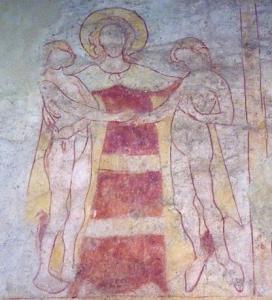 Guest writer: Pilgrim
Introduction
Modern feminism, in its many forms, has brought attention to the injustices women have historically endured—political exclusion, domestic exploitation, and cultural marginalization. Yet as feminism evolved into more radical, postmodern expressions, it advanced visions of womanhood and equality that oppose the Catholic understanding of the human person.
While the Church at times failed in its practice, her doctrine offers a deeply rooted anthropology: one that affirms the equal dignity of man and woman while embracing their distinct vocations. Catholic tradition does not see sexual difference as a cause of oppression but as part of a divine design—wounded by sin, yet restored in Christ. Through Scripture and the thought of figures like St. Edith Stein, Sr. Prudence Allen, Alice von Hildebrand, and St. John Paul II, the Church has developed a vision of woman that reclaims her original vocation, recognizes the wounds of sin, and offers a path of redemption.
Creation and Equal Dignity
Genesis affirms man and woman are created together in God’s image: “God created man in His own image… male and female He created them” (Genesis 1:27). [1] From the beginning, their dignity is equal and their relationship is one of mutual gift. Pope John Paul II wrote: “From the very beginning, man and woman are seen as equal in dignity; their relationship is one of mutual giving” (Mulieris Dignitatem). [2]
This vision is not restricted to biology. St. Edith Stein observed that women are by nature naturally “to cherish, guard, protect, nourish, and advance growth,” whether as mothers, physicians, teachers, or religious (Stein, Essays on Woman). [3] John Paul II called this the “feminine genius”: a particular capacity to humanize the world through love, attentiveness, and care (Mulieris Dignitatem). [4]
The Wound of Sin
Genesis 3:16 speaks of the post-Fall distortion of the male–female relationship: “Your desire shall be for your husband, and he shall rule over you” (Gen. 3:16). [5] John Paul II interpreted this not as divine command but as a consequence of sin: “This ‘domination’ indicates the disturbance and loss of that fundamental equality” (Mulieris Dignitatem). [6]
Radical feminist Shulamith Firestone viewed female oppression as a biological inevitability stretching back to the animal kingdom (Firestone, The Dialectic of Sex). [7] In contrast, the Church maintains that oppression is real but not natural. Sr. Prudence Allen’s scholarship affirms that any framework which denies either equality or difference eventually collapses – either into domination or unisex erasure (Allen, The Concept of Woman). [8]
Redemption in Christ and Mary
Jesus’ treatment of women was radically restorative. He publicly affirmed and dignified them, counter to the norms of his time. “In Christ’s attitude towards women, one can find no trace of discrimination. Jesus made it clear that women are called to the inheritance of the Kingdom of God on equal terms with men” (Mulieris Dignitatem). [9]
Mary, the “New Eve,” cooperated freely and actively in God’s plan of salvation. Her fiat: “Let it be to me according to your word” (Luke 1:38). represents the full dignity of feminine consent and spiritual maternity. [10] Pope Benedict XVI writes: “In Mary, the theology of woman finds its loftiest expression. She is not subordinate but exalted; not marginalised but central” (Deus Caritas Est). [11]
The Feminine Genius and Woman’s Vocation
John Paul II described the feminine genius as a moral and spiritual strength rooted in a woman’s awareness that God entrusts the human person to her in a special way (Mulieris Dignitatem). [12] Motherhood, often viewed by radical feminism as restrictive, is instead a privileged vocation. “Motherhood implies from the beginning a special openness to the new person… In this openness, the woman discovers herself through a sincere gift of self” (Mulieris Dignitatem). [13]
Stein extends this to spiritual motherhood: “To be a woman is to be destined to be a mother – of children or of souls” (Essays on Woman). [14]
Alice von Hildebrand powerfully affirms this calling: “Spiritual motherhood is no less powerful than physical motherhood. A woman shapes the world through the people she forms with love and truth” (von Hildebrand, The Privilege of Being a Woman). [15]
Freedom Through Self-Gift
While modern feminism often equates freedom with autonomy, Catholic theology teaches that true freedom lies in the power to make a sincere gift of self. “Man cannot fully find himself except through a sincere gift of himself” (Gaudium et Spes). [16] John Paul II echoes this in his Letter to Women: “The Church gives thanks for every woman… for her sensitivity, her generosity, her fidelity, and her insight.” [17]
Responding to Feminist Concerns
To feminist objections, the Catholic Church offers a meaningful response:
- Motherhood does not limit freedom; it is a participation in God’s life-giving love.
- The Church is not patriarchal in essence; it honours the greatest of all human creatures—a woman, Mary—and defines dignity through holiness, not hierarchy.
- Sexual difference is not a source of inequality but of complementarity.
- True freedom lies in love and communion, not isolation.
Why Not the Priesthood for Women?
The Catholic Church’s teaching on a male-only priesthood is not rooted in notions of inequality or lack of dignity but in a theology of sacramental representation. The priest, in celebrating the Eucharist and administering the sacraments, acts “in persona Christi capitis” – in the person of Christ the Head. Since Jesus chose only men as His apostles and since the priest represents Christ as Bridegroom in relation to the Church as Bride, the Church understands this sacramental symbolism to be essential, not incidental.
This is not a matter of cultural bias or historical oversight; it is a faithful adherence to Christ’s own pattern and the Church’s unbroken tradition. As Pope John Paul II wrote: “The Church has no authority whatsoever to confer priestly ordination on women” (Ordinatio Sacerdotalis). [18]
Far from diminishing women, this teaching underscores the fact that sacramental roles do not define spiritual worth. The highest human creature in Catholic tradition is not a pope or bishop, but the Virgin Mary – woman, mother, and disciple. Holiness, not ordination, is the measure of greatness in the Kingdom of God. Many women saints, mystics, and martyrs have been spiritual authorities without being clerical ones. As the Church teaches, the vocations of men and women differ in form but not in value; both are indispensable for the flourishing of the Body of Christ. Priesthood is not a privilege denied, but a specific calling not given – a distinction of sacramental role, not of dignity, capacity, or holiness.
Conclusion: The Glory of Woman Redeemed
The Catholic Church’s vision of woman stands as a profound counter-narrative to many modern ideologies that either flatten gender distinctions or foment conflict between the sexes. Far from diminishing women, Catholic teaching holds that woman is a gift to humanity – equal in dignity, unique in vocation, and essential to the flourishing of the world. Rooted in the truth of creation, woman’s original dignity is not a nostalgic ideal but a living reality, wounded by sin but not erased. Original sin distorted the harmony of sexual difference, turning complementarity into domination and suspicion. Yet this is not the final word.
In Christ and through the Church’s ongoing witness, woman’s vocation is redeemed and exalted. The example of Mary, the New Eve, reveals the profound dignity of feminine cooperation in God’s plan of salvation – not passive submission but active, free, and loving participation. Countless women saints throughout history testify to the strength, wisdom, and sanctity that flow from embracing their God-given nature and calling. Their lives demonstrate that femininity and holiness are not opposing forces but inseparably united.
The Church does not call women to suppress their difference or to mimic men but to embrace and elevate their identity as bearers of life, love, and communion. True freedom is not found in autonomy or the denial of nature, but in the generous self-gift that mirrors the love of God Himself. Woman’s dignity is measured not by social status or power but by the order of love, which is the foundation of justice and charity.
In a world desperately in need of healing – from broken relationships, gender confusion, and loss of meaning – the Church offers a vision of womanhood that restores hope. It is a vision that honors the full personhood of women, affirms their equal place beside men, and calls them to be co-creators with God in building a society rooted in truth, beauty, and goodness. This vision invites all women to stand confidently in their unique and noble vocation, shining forth the feminine genius as a source of transformation for the Church and the world.
Thank you!
If you liked this article, please leave your comments below. I am very interested in your opinion on this topic.
Read The Latin Right’s other writing here.
Please visit my Facebook page and IM your questions (and follow my page) or topics for articles you would like covered.
Also, please subscribe my YouTube page for updates on upcoming articles.
References
- Sacred Scripture, Genesis 1:27 (RSV)
- John Paul II, Mulieris Dignitatem, §6
- Edith Stein, “Feminine Vocations,” in Essays on Woman, trans. Freda Mary Oben (ICS Publications, 1996), 244–45
- John Paul II, Mulieris Dignitatem, §30
- Sacred Scripture, Genesis 3:16 (RSV)
- John Paul II, Mulieris Dignitatem, §13
- Shulamith Firestone, The Dialectic of Sex: The Case for Feminist Revolution (Morrow, 1970), 2, 74
- Sr. Prudence Allen, The Concept of Woman, Vol. III: In Search for a Communion of Persons (Eerdmans, 2016), xiii–xiv
- John Paul II, Mulieris Dignitatem, §13
- Sacred Scripture, Luke 1:38 (RSV)
- Benedict XVI, Deus Caritas Est, §41
- John Paul II, Mulieris Dignitatem, §30
- John Paul II, Mulieris Dignitatem, §18
- Edith Stein, Essays on Woman, 268
- Alice von Hildebrand, The Privilege of Being a Woman (Ignatius Press, 2002)
- Vatican II, Gaudium et Spes, §24
- John Paul II, Letter to Women (1995), Introduction
- John Paul II, Ordinatio Sacerdotalis, §4
General Christian
Women in Religion
Previous Post
June 28, 2025
Seventeen Questions That Reveal Your True Catholic Identity
Next Post

July 6, 2025 “Obergefell Must Go” Yes, or No?
Recent Comments
""It's reasonable to ask what those claims mean in practice."It is. And I've laid out ..."
Amoris Laetitia Deserves a Better Defence
"I've said what I said, Peter. Read the words. If you don't have anything new ..."
Amoris Laetitia Deserves a Better Defence
"I don't expect you to decide who should be admitted to the sacraments. I'm asking ..."
Amoris Laetitia Deserves a Better Defence
"But is that how you see it, Todd? You initially offered “salvation is more important ..."
Amoris Laetitia Deserves a Better Defence
Browse Our Archives
Select a Category Abortion Arius Atheists Catholic Apologetics Catholic Culture Catholic History Catholic Humor Catholic Poetry Catholic Politics Catholic Theology Dr. James White Faith Alone Joe Heschmeyer Kamala Harris Martin Luther Pope Francis Preborn Children President Biden Science and Catholicism Sola Scriptura Synod of Synodality Trinity
Select a Month October 2026 September 2026 August 2026 July 2026 June 2026 May 2026 April 2026 March 2026 February 2026 January 2026 December 2025 November 2025 October 2025 September 2025 August 2025 July 2025 June 2025 May 2025 April 2025 March 2025 February 2025 January 2025 December 2024 November 2024 October 2024 September 2024 August 2024 July 2024 June 2024 May 2024 April 2024 March 2024 February 2024 January 2024 December 2023 November 2023 October 2023 September 2023 August 2023 July 2023 June 2023 May 2023 April 2023 March 2023 February 2023 January 2023 December 2022 November 2022 October 2022 September 2022 August 2022 July 2022 June 2022 May 2022 April 2022 March 2022 February 2022 January 2022 December 2021 November 2021
Follow Us!
TAKE THE
Religious Wisdom Quiz
Like a sheep led to slaughter, silent before shearers, this servant was pierced for our transgressions. What chapter foretells this suffering?
Select your answer to see how you score.
Isaiah 9 Isaiah 7 Isaiah 53 Isaiah 61
Related posts from The Latin Right

Amoris Laetitia Deserves a Better Defence

Rich Man, Poor Man: Altruism and Agency

The Order We Did Not Make: The World...

The Poor Have Rights—and Responsibilities
TRENDING AT PATHEOS Catholic

In "Irreplaceable," our book on vocation and technology, Trevor Sutton and I...

I was strolling through the top floor of the brand new Parthenon...

What Does Gêvâh Mean For Kimberley Guifoyle &...
This week, a lot of the news is focused on Kimberly Guilfoyle....

INNER CIRCLE: Profound Mystery (Of Christ In All...
Ephesians 5:31-32 “For this reason, a man will leave his father and...

Do Not Rejoice When Your Enemy Falls: The...
Turning an execution into a public spectacle is a disturbing expression of...

'The Chosen' S6 Trailer: The Passion Gets Very...
Not many watching 'The Chosen' worry about spoilers, but just because they...
view all Catholic blogs
What Are Your Thoughts?leave a comment
Ad-Free & Subscriber Log-In Subscription Support
- About Us
- 2026 Calendar
- Videos
- Podcasts
- Library of World Religions
- Faith In Media Tracker
- Advertise With Us
- Write for Us
- Privacy Policy
- Terms of Service
- Do Not Sell My Data
- Contact Us
- Radiant Digital
- Manage Newsletter Subscriptions
- Unsubscribe From Notifications
- Sitemap
Copyright 2008-2026, Patheos. All rights reserved.
Subscription Support Ad-Free & Subscriber Log-In
Follow Patheos