
BuddhistCatholicContemplativeEvangelicalGeneral ChristianHinduJewishLatter-day SaintMuslimNew VisionsProgressive Christian
Beliefs
- Buddhist
- Catholic
- Contemplative
- Evangelical
- General Christian
- Hindu
- Jewish
- Latter-day Saint
- More Voices
- Muslim
- New Visions
- Pagan
- Progressive Christian
Topics
- Religion News
- Food and Religion
- Sports and Religion
- Religious Art
- Religious Music and Entertainment
- Religious Events
- History and Religion
- Style and Religion
- Politics and Religion
- Women in Religion
- Recreation Outdoors and Religion
- Business Finance and Religion
- Careers Workplace and Religion
- Education and Religion
- Family Parenting and Religion
- Health Fitness and Religion
- Home and Religion
- Relationships and Religion
- Technology and Religion
- Travel and Religion
Columnists
- Buddhist Columnists
- Business Finance and Religion Columnists
- Careers Workplace and Religion Columnists
- Catholic Columnists
- Contemplative Columnists
- Education and Religion Columnists
- Evangelists Columnists
- Family Parenting and Religion Columnists
- General Christian Columnists
- Health Fitness and Religion Columnists
- Hindu Columnists
- History and Religion Columnists
- Home and Religion Columnists
- Jewish Columnists
- More Voices Columnists
- Latter Day Columnists
- Muslim Columnists
- New Visions Columnists
- Nonreligious Columnists
- Pagan Columnists
- Politics and Religion Columnists
- Progressive Columnists
- Recreation Outdoors and Religion Columnists
- Relationships and Religion Columnists
- Religion News Columnists
- Religious Art Columnists
- Religious Events Columnists
- Religious Music and Entertainment Columnists
- Sports and Religion Columnists
- Style and Religion Columnists
- Technology and Religion Columnists
- Travel and Religion Columnists
- Women in Religion Columnists
Resource Library
- 2026 Calendar
- Library of World Religions
- The 100 Most Holy Places on Earth
- Patheos Answers
- Podcasts
- Videos
- Faith Leaders Database
- Anglican Episcopalian
- Bahai
- Baptist
- Buddhism
- Christianity
- Confucianism
- Eastern Orthodoxy
- Hinduism
- Holiness and Pentecostal
- ISKCON
- Islam
- Judaism
- Lutheran
- Methodist
- The Church of Jesus Christ of Latter-day Saints
- New Age
- Paganism
- Presbytarian and Reformed
- Protestantism
- Religion Behind the Scenes
- Roman Catholic
- Scientology
- Shia Islam
- Sikhism
- Sufism
- Sunni Islam
- Taoism
- Zen
- See all religions
Research Tools
 Ad-Free & Subscriber Log-In Subscription Support
Ad-Free & Subscriber Log-In Subscription Support
Follow Patheos 

- Trending:
- Forgiveness
- |
- Marriage
- |
- Consciousness
- |
- Death Penalty
- |
- Election
- |
- Halloween

- Home
- Catholic
- History and Religion
- My Answers to Protestant Questions and Concerns: Response 2
My Answers to Protestant Questions and Concerns: Response 2
Last updated on: September 16, 2024 at 7:04 am by Dennis Knapp
My Answers to Protestant Questions and Concerns: Response 2 2024-09-16T07:04:16-06:00 Dennis Knapp
Patheos Explore the world's faith through different perspectives on religion and spirituality! Patheos has the views of the prevalent religions and spiritualities of the world.
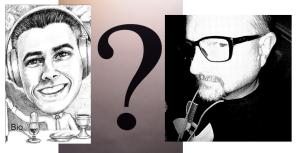
In the first entry of this series, Eric Luppold and I made our cases on the role of authority in the Christian life, one from a Protestant perspective, the other a Catholic. We then responded to each other’s case in a follow-up entry. This entry narrows down the focus to key points of disagreement. For my part, I answer direct questions and observations put to me by Eric.
The Church
In this debate, Dennis seems to use the word ‘church’ to refer to the Roman Catholic Church as it is currently structured. This is a something that I disagree with, and I would argue that the definition of the church must be defined by Scripture, not by imposing the modern structure onto the ancient text.
Correction: for the debate, I use the word Church to refer to the visible historical institution Jesus established. This Church existed at the time of St. Peter and the apostles and still exists today. I never claimed the Church at the time of St. Peter looks identical to the one that exists today. To use the analogy of the acorn and tree: an acorn looks different than a fully grown tree, yet the tree and the acorn remain the same. The difference between them concerns stages of development. Furthermore, as a fully grown 51-year-old man, I look quite different than I did as a zygote, yet the 51-year-old me and the zygote me are the same person.
Moreover, Eric’s comment regarding Scripture defining the Church merely adds one more layer to our current debate, as he now gets to define Church because he is the interpreter of Scripture. My definition concerns an historical institution, not my own interpretation of Scripture.
The Authority of an Arian Council
If we give councils preeminence over Scripture, we end up in a conundrum. For example, the Council of Ariminum in 359 AD was attended by over 400 bishops and adopted the Arian position. Why was that council invalid? Dennis might argue that the church does not recognize that council as ecumenical. But he has the luxury of looking back on history. How could a Christian living in 360 AD know that the Council of Ariminum was wrong? And, when the next council met in 362 AD., what standard did they use to overturn the previous council? God’s revealed word.
Sadly, if the Church lacks the final authority to define doctrine, those who twist Scripture, even in groups (like the “council of Arimimum”), may also lead others down their own twisted path to destruction. For the record, Ariminum took place in Italy and the only local council that took place in 362 occurred in Alexandria, Egypt. In fact, Pope Liberius decreed Ariminum lacked authority, not a council. I could not find any evidence that the council of Alexandria used Scripture alone to overturn any previous Arian “council.”
Who Determines Conformity?
Now, while Scripture is the final authority, councils, creeds, and confessions do have authority insofar as they rightly conform to Scripture.
In the above statement, Eric affirms a main point I made in my opening statement. I observed that, for Protestants, councils only possess authority insofar as they agree with the Protestant’s understanding of Scripture, as they judge for themselves if the council “conforms to Scripture.” I again restate: each individual believer (who can read) possesses the authority of God (via the Bible) to correct (reform) the Church and hold the Church accountable to their own personal interpretations. They, not the Church, decide the criterion for what counts as conformity.
Man’s Words Vs. God’s Words
For the Protestant, God’s word is at the top. For the Catholic, man’s word (the word of the Magisterium) is at the top. In this way, Catholics have traded divine truth for man-made certainty.
For the Protestant, what counts as “divine truth,” if all truths contained in Scripture must first filter through each individual Protestant? Catholics hold that God stands at the top. In turn, God reveals Himself through both written and spoken words. The Church’s role, via the Holy Spirit, concerns cherishing these words, reflecting on them, and carrying them to the ends of the earth. These words, as they travel through time, require clarification as they encounter new cultures and new ideas, especially dangerous ones which threaten Church unity and the salvation of souls. The role of clarification, and ultimately definition, falls to the Magisterium (the bishops and the pope).
However, every instance of a Protestant interpreting Scripture ultimately ends with one man’s word against another. All Protestants possess are man’s words.
Who Corrects the Correctors?
But even Dennis’s position does not solve the problem of certainty. For how does he know if the Magisterium got it right? What decision-making process did it use and how could he ever discern whether it made a mistake?
How do I “know if the Magisterium got it right?” May I also appeal to the Holy Spirit? Might I then appeal to history? The fact that the Church has continuously defined doctrines and dogmas; while also spreading the Gospel the end of the earth, proves her right. Also, my role is to submit and assent to the Church, not to dictate to her.
Boundaries and Definitions
God’s word sets the boundaries and defines terms.
The standard of discerning a tyrant from a legitimate authority is God’s word. God is the one who grants authority. If that authority is being wielded as God instructs, then it is legitimate. If not, it is tyrannical.
Finally, if each individual Christian thinks they wield God’s Word as God instructs, they set the boundaries and definitions by which they then legitimately judge. If readers perceive a circle here, you were paying attention. Protestants, in their circular appeal to Scripture alone, replace one supposed “tyrant” with millions of competing tyrannies and chaos. To quote Iron Man in Marvel’s Avengers, “not a good plan.”
Thank you!
Read The Latin Right’s other writing here.
Please visit my Facebook page and IM your questions (and follow my page) or topics for articles you would like covered.
Also, please subscribe my YouTube page for updates on upcoming articles.
My Answers to Protestant Questions and Concerns: Response 2
Evangelical
History and Religion
Previous Post
September 9, 2024
Response 1 To: Authority in the Christian Life
Next Post

September 16, 2024 Can God Bridge the Gap? Luppold's 2nd Response
Recent Comments
""It's reasonable to ask what those claims mean in practice."It is. And I've laid out ..."
Amoris Laetitia Deserves a Better Defence
"I've said what I said, Peter. Read the words. If you don't have anything new ..."
Amoris Laetitia Deserves a Better Defence
"I don't expect you to decide who should be admitted to the sacraments. I'm asking ..."
Amoris Laetitia Deserves a Better Defence
"But is that how you see it, Todd? You initially offered “salvation is more important ..."
Amoris Laetitia Deserves a Better Defence
Browse Our Archives
Select a Category Abortion Arius Atheists Catholic Apologetics Catholic Culture Catholic History Catholic Humor Catholic Poetry Catholic Politics Catholic Theology Dr. James White Faith Alone Joe Heschmeyer Kamala Harris Martin Luther Pope Francis Preborn Children President Biden Science and Catholicism Sola Scriptura Synod of Synodality Trinity
Select a Month October 2026 September 2026 August 2026 July 2026 June 2026 May 2026 April 2026 March 2026 February 2026 January 2026 December 2025 November 2025 October 2025 September 2025 August 2025 July 2025 June 2025 May 2025 April 2025 March 2025 February 2025 January 2025 December 2024 November 2024 October 2024 September 2024 August 2024 July 2024 June 2024 May 2024 April 2024 March 2024 February 2024 January 2024 December 2023 November 2023 October 2023 September 2023 August 2023 July 2023 June 2023 May 2023 April 2023 March 2023 February 2023 January 2023 December 2022 November 2022 October 2022 September 2022 August 2022 July 2022 June 2022 May 2022 April 2022 March 2022 February 2022 January 2022 December 2021 November 2021
Follow Us!
TAKE THE
Religious Wisdom Quiz
Why did Jesus wash His disciples' feet?
Select your answer to see how you score.
To show humble service Tradition only They asked Him to To clean them for eating
Related posts from The Latin Right

Amoris Laetitia Deserves a Better Defence

Rich Man, Poor Man: Altruism and Agency

The Order We Did Not Make: The World...

Is This “Culture War” Catholicism—or Evangelization?
TRENDING AT PATHEOS Catholic

In "Irreplaceable," our book on vocation and technology, Trevor Sutton and I...

I was strolling through the top floor of the brand new Parthenon...

What Does Gêvâh Mean For Kimberley Guifoyle &...
This week, a lot of the news is focused on Kimberly Guilfoyle....

INNER CIRCLE: Profound Mystery (Of Christ In All...
Ephesians 5:31-32 “For this reason, a man will leave his father and...

Do Not Rejoice When Your Enemy Falls: The...
Turning an execution into a public spectacle is a disturbing expression of...

'The Chosen' S6 Trailer: The Passion Gets Very...
Not many watching 'The Chosen' worry about spoilers, but just because they...
view all Catholic blogs
What Are Your Thoughts?leave a comment
Ad-Free & Subscriber Log-In Subscription Support
- About Us
- 2026 Calendar
- Videos
- Podcasts
- Library of World Religions
- Faith In Media Tracker
- Advertise With Us
- Write for Us
- Privacy Policy
- Terms of Service
- Do Not Sell My Data
- Contact Us
- Radiant Digital
- Manage Newsletter Subscriptions
- Unsubscribe From Notifications
- Sitemap
Copyright 2008-2026, Patheos. All rights reserved.
Subscription Support Ad-Free & Subscriber Log-In
Follow Patheos