
BuddhistCatholicContemplativeEvangelicalGeneral ChristianHinduJewishLatter-day SaintMuslimNew VisionsProgressive Christian
Beliefs
- Buddhist
- Catholic
- Contemplative
- Evangelical
- General Christian
- Hindu
- Jewish
- Latter-day Saint
- More Voices
- Muslim
- New Visions
- Pagan
- Progressive Christian
Topics
- Religion News
- Food and Religion
- Sports and Religion
- Religious Art
- Religious Music and Entertainment
- Religious Events
- History and Religion
- Style and Religion
- Politics and Religion
- Women in Religion
- Recreation Outdoors and Religion
- Business Finance and Religion
- Careers Workplace and Religion
- Education and Religion
- Family Parenting and Religion
- Health Fitness and Religion
- Home and Religion
- Relationships and Religion
- Technology and Religion
- Travel and Religion
Columnists
- Buddhist Columnists
- Business Finance and Religion Columnists
- Careers Workplace and Religion Columnists
- Catholic Columnists
- Contemplative Columnists
- Education and Religion Columnists
- Evangelists Columnists
- Family Parenting and Religion Columnists
- General Christian Columnists
- Health Fitness and Religion Columnists
- Hindu Columnists
- History and Religion Columnists
- Home and Religion Columnists
- Jewish Columnists
- More Voices Columnists
- Latter Day Columnists
- Muslim Columnists
- New Visions Columnists
- Nonreligious Columnists
- Pagan Columnists
- Politics and Religion Columnists
- Progressive Columnists
- Recreation Outdoors and Religion Columnists
- Relationships and Religion Columnists
- Religion News Columnists
- Religious Art Columnists
- Religious Events Columnists
- Religious Music and Entertainment Columnists
- Sports and Religion Columnists
- Style and Religion Columnists
- Technology and Religion Columnists
- Travel and Religion Columnists
- Women in Religion Columnists
Resource Library
- 2026 Calendar
- Library of World Religions
- The 100 Most Holy Places on Earth
- Patheos Answers
- Podcasts
- Videos
- Faith Leaders Database
- Anglican Episcopalian
- Bahai
- Baptist
- Buddhism
- Christianity
- Confucianism
- Eastern Orthodoxy
- Hinduism
- Holiness and Pentecostal
- ISKCON
- Islam
- Judaism
- Lutheran
- Methodist
- The Church of Jesus Christ of Latter-day Saints
- New Age
- Paganism
- Presbytarian and Reformed
- Protestantism
- Religion Behind the Scenes
- Roman Catholic
- Scientology
- Shia Islam
- Sikhism
- Sufism
- Sunni Islam
- Taoism
- Zen
- See all religions
Research Tools
 Ad-Free & Subscriber Log-In Subscription Support
Ad-Free & Subscriber Log-In Subscription Support
Follow Patheos 

- Trending:
- Forgiveness
- |
- Marriage
- |
- Consciousness
- |
- Death Penalty
- |
- Election
- |
- Halloween

- Home
- Catholic
- History and Religion
- Christian Authority: Who Gets to Define It? (TLR’s Opening)
Christian Authority: Who Gets to Define It? (TLR’s Opening)
Last updated on: September 3, 2024 at 4:19 pm by Dennis Knapp
Christian Authority: Who Gets to Define It? (TLR’s Opening) 2024-09-03T16:19:22-06:00 Dennis Knapp
Patheos Explore the world's faith through different perspectives on religion and spirituality! Patheos has the views of the prevalent religions and spiritualities of the world.
Since I started my blog on Patheos, the role authority in the Christian life remains for me a main topic of exploration. For example:
The Protestant Appeal for Religious Autonomy
Protestants: When You Speak for God, Be Careful
Sola Scriptura Makes All Beliefs into Mere Opinion
The True Value of Inaccessible Authority… An Historical Critique of Sola Scriptura
How Do Protestants Escape Theological Errors?
Sola Scriptura’s Refutation in the 5th Century
In the above articles, I focused on what I believe sits at the heart of any discussion of Christian authority: the role of the Church. Does the Church possess the authority to define theological truth? And once defined, must the believer accept and submit to this theological truth or risk separation? In short, who has the final say regarding theological truths?
Protestants claim the Bible has the final say. However, as a divinely inspired collection of books spanning millennia, continents, and cultures, the Bible requires interpretation. Furthermore, the Bible plainly states that interpreters can (and do) misinterpret (twist) the Bible “to their own destruction…” (2 Peter 3:16). It also states that Christians must obey and submit to the leaders of the Church, “for they are keeping watch over your souls, as those who will have to give an account” (Hebrews 13:17).
For this article, I lay out the role of the Church and the role of the believer as it relates to authority in the Christian life. I show that only the Church possesses the authority to rightly define theological truth. The role of the believer remains the same today as at the beginning of the Church, acceptance and submission to the theological authority established by Christ—the Church.
Where Does the Church Fit In?
As I explored the role of Church authority within a Chistian’s life, one verse from Matthew chapter 18 often returns to me:
If your brother sins against you, go and tell him his fault, between you and him alone. If he listens to you, you have gained your brother. But if he does not listen, take one or two others along with you, that every charge may be established by the evidence of two or three witnesses. If he refuses to listen to them, tell it to the church. And if he refuses to listen even to the church, let him be to you as a Gentile and a tax collector. Matthew 18:15-17
In the verse above, Jesus gives instruction on how to resolve conflict (here called sin) within the Church. First, conflict resolution occurs between two parties: the offender and the victim. If the offender fails to listen to the victim, other witnesses become involved in establishing evidence against the offender to reconcile the two. However, if the evidence of the witnesses fails, the Church becomes involved. If the offender refuses to listen to the Church, the offender is cast out (anathematized).
While the above concerns sin, the principles drawn from the instructions demonstrated also apply to theological beliefs. If two believers disagree, they attempt to work it out between themselves. However, if they cannot resolve their theological differences, they involve others to give witness and evidence. If they remain unresolved, the theological issue is brought before the Church. Once the Church decides, the believers must assent or receive separation.
Examples of the Church Defining Doctrine and Demanding Assent
In the history of the Church, many examples exist of the Church defining doctrines and demanding assent. In fact, when dangerous theological beliefs emerge that threaten Church unity, setting definitions becomes the Church’s modus operandi.
The Council of Jerusalem
The first theological controversy to threaten the unity of the Church occurred early. This controversy involved whether Gentile converts to Christianity were required to undergo the Jewish ritual of circumcision (or become Jews) before becoming Christians. We read in Acts 15 about some “men from Judea,” who taught circumcision as a requirement for salvation. St. Paul and St. Barnabas confronted these men and tried to work things out with them. Ultimately, with no resolution, they went to Jerusalem to seek the guidance of the apostles there “about this question.” The council determined that Gentiles did not require circumcision for salvation. They then sent a letter to the Gentile Christians stating:
For it has seemed good to the Holy Spirit and to us to lay on you no greater burden than these requirements: that you abstain from what has been sacrificed to idols, and from blood, and from what has been strangled, and from sexual immorality. If you keep yourselves from these, you will do well. Farewell.
St. Paul, in his letter to the Galatians, also addressed this controversy and added to it the threat of anathema:
As we have said before, so now I say again: If anyone is preaching to you a gospel contrary to the one you received, let him be accursed. (Galatians 1:9)
Therefore, we see with the Council of Jerusalem, and St. Paul’s letter to the Galatians, the Church setting theological definitions and expecting the believers within her to assent and submit (or be cut off).
The Council of Nicaea
Moreover, in AD 325, the Church called another council to address a controversy threatening Church unity: Arianism. Arius, a priest in Alexandria, Egypt, overheard his bishop, Alaxander, refer to Jesus (the Son) as always existing and sharing the same substance as the Father. In response, Arius retorted:
If the Father begot the Son, he that was begotten had a beginning of existence: and from this it is evident, that there was a time when the Son was not. It therefore necessarily follows, that he had his substance from nothing.
Arius and his followers eventually shortened their view to the cry: “that there was a time when the Son was not.” Arius and his followers also lambasted those who added unbiblical and pagan philosophical words like homoousion (of the same substance) at the Council of Nicaea to describe the relationship between the Father and the Son. According to the Arian Second Creed of Sirmium, “these terms should not be used at all..”. And:
…in divine Scripture nothing is written about them, and that they are above men’s knowledge and above men’s understanding.
At Nicaea, the Church again exercised her authority to set theological definitions and declared the use of such words valid and that the Son exists eternally and shares the same substance with the Father. Furthermore, it placed the penalty of anathema on any Christian who did not assent and submit:
And whosoever shall say that there was a time when the Son of God was not or that before he was begotten he was not, or that he was made of things that were not, or that he is of a different substance or essence [from the Father] or that he is a creature, or subject to change or conversion— all that so say, the Catholic and Apostolic Church anathematizes them. [emphasis added]
Again, the role of the Church here is to define, and the role of the believer is to assent and submit or be anathematized. Moreover, we see this paradigm again and again at each ecumenical council before the split of the East and West and in the councils of the West through Vatican I.
The Protestant Paradigm Shift
Now, how do Protestants view authority and the role of Church authority towards the believer? Protestants turn the paradigm on its head. The ultimate authority for Protestants resides in the pages of the Bible, which sounds nice on the surface. However, this idea falls short once the minutiae become clear. Historically, the Church defined doctrine from the top down, as with Matthew 18, the Council of Jerusalem, and all councils after. Alternatively, the Protestant paradigm seeks to define doctrine from the bottom up. Each individual believer (who can read) possesses the authority of God (via the Bible) to correct (reform) the Church and hold the Church accountable to their own personal interpretations.
Church councils, where once the Church set theological definitions, now only apply insofar as their definitions agree with “the Bible” or what Protestants thinks the Bible teaches. Furthermore, these same councils never actually defined doctrine. These councils merely affirmed “what the Bible taught.” Well, mostly anyway. You see, not all Protestants accept all the teachings of the councils, especially concerning the nature of the Church and apostolic succession. So, in the same council, a Protestant may affirm one doctrine, like the Trinity, and deny another, like the meaning of “one, holy, catholic, and apostolic Church.”
A Clear Modern Example: Gavin Ortlund
To see a clear modern example of this paradigm, one only need to read Gavin Ortlund’s new book, What It Means to Be Protestant: The Case for an Always-Reforming Church. In his case for Protestantism, Ortlund only devotes a mere two pages to the key issue of Church authority as it relates to individual believers. He states:
Those of us who adhere to sola Scriptura simply seek to follow our conscience. Additional allegedly infallible rules prevent us from doing that because they mandate acceptance of what we regard as errors. To submit to a system that requires assent to such beliefs would be dishonest and thus would violate our conscience. [emphasis added]
And
And for Protestants, it is nothing less than tyranny when churches require beliefs in indulgences, or the assumption of Mary, or the veneration of icons, or many of the other points of doctrine that we have no reason to believe are apostolic. That is why sola Scriptura is so important: it involves nothing less than the setting of boundaries for what Christianity is. [emphasis added]
Notice the appeal to the individual. The individual now determines what they “regard as errors,” theologically. Furthermore, the Church acts the tyrant in the setting of theological definitions that the Protestant disagrees with. Could not Arius and his followers make the same claim? Did they not make the same claims concerning the doctrine of the Trinity? Can we reimagine Arians making the same claim as Ortlund? Yes, we can.
And for the Arian, it is nothing less than tyranny when churches require beliefs in homoousion, or the uncreated Son, or the belief that there was never a time where the Son was not, or many of the other points of doctrine that we have no reason to believe are apostolic.
Conclusion
Sadly, if Arius existed today, he would find a comfortable home among Protestants. In fact, some Protestants share his views on the nature of God in their denial of the Trinity and incarnation. They use the same approach as other Protestants, like Ortlund and others, in their appeal to sola scriptura. In setting the Church’s paradigm on its head, Protestants make themselves the judge over the Church, as the Church must answer to each individual Protestant and their individual consciences. Their approach is not new. A saint in the 5th century named Vincent spelled it out in an almost prophetic manner. I close with his prophetic words. If he had written the following in the 16th century, might he not have added a few other names like Luther, Calvin, and Zwingli? I think so.
Again, the role of the believer remains the same today as at the beginning, acceptance and submission to the theological authority established by Christ—the Church.
St. Vincent states:
Here, it may be, someone will ask, Since the canon of Scripture is complete, and is in itself abundantly sufficient, what need is there to join to it the interpretation of the Church? The answer is that because of the very depth of Scripture all men do not place one identical interpretation upon it. The statements of the same writer are explained by different men in different ways, so much so that it seems almost possible to extract from it as many opinions as there are men. Novatian expounds in one way, Sabellius in another, Donatus in another, Arius, Eunomius and Macedonius in another, Photinus, Apollinaris and Priscillian in another, Jovinian, Pelagius and Caelestius in another, and latterly Nestorius in another. Therefore, because of the intricacies of error, which is so multiform, there is great need for the laying down of a rule for the exposition of Prophets and Apostles in accordance with the standard of the interpretation of the Church Catholic.
Thank you!
Read The Latin Right’s other writing here.
Please visit my Facebook page and IM your questions (and follow my page) or topics for articles you would like covered.
Also, please subscribe my YouTube page for updates on upcoming articles.
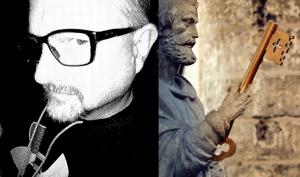
The TLR Opening Statement
Evangelical
History and Religion
Previous Post
September 2, 2024
God’s Icon - The Shroud of Turin
Next Post

September 7, 2024 Response 1 To: Christian Authority: Who Gets to Define It?
Recent Comments
"I agree that St John Paul II did not equivocate. He was insistent that the ..."
Amoris Laetitia Deserves a Better Defence
"Not a different answer.Peter, you have an occasional problem with the truth. Mike Lewis pointed ..."
Amoris Laetitia Deserves a Better Defence
"So, no answer."
Amoris Laetitia Deserves a Better Defence
"Thanks, Mike, but the history points in a different direction to the one you suggest.John ..."
Amoris Laetitia Deserves a Better Defence
Browse Our Archives
Select a Category Abortion Arius Atheists Catholic Apologetics Catholic Culture Catholic History Catholic Humor Catholic Poetry Catholic Politics Catholic Theology Dr. James White Faith Alone Joe Heschmeyer Kamala Harris Martin Luther Pope Francis Preborn Children President Biden Science and Catholicism Sola Scriptura Synod of Synodality Trinity
Select a Month October 2026 September 2026 August 2026 July 2026 June 2026 May 2026 April 2026 March 2026 February 2026 January 2026 December 2025 November 2025 October 2025 September 2025 August 2025 July 2025 June 2025 May 2025 April 2025 March 2025 February 2025 January 2025 December 2024 November 2024 October 2024 September 2024 August 2024 July 2024 June 2024 May 2024 April 2024 March 2024 February 2024 January 2024 December 2023 November 2023 October 2023 September 2023 August 2023 July 2023 June 2023 May 2023 April 2023 March 2023 February 2023 January 2023 December 2022 November 2022 October 2022 September 2022 August 2022 July 2022 June 2022 May 2022 April 2022 March 2022 February 2022 January 2022 December 2021 November 2021
Follow Us!
TAKE THE
Religious Wisdom Quiz
What was Paul’s profession before becoming an apostle?
Select your answer to see how you score.
Tax Collector Tentmaker Carpenter Fisherman
Related posts from The Latin Right

Amoris Laetitia Deserves a Better Defence

Rich Man, Poor Man: Altruism and Agency

The Order We Did Not Make: The World...

The Poor Have Rights—and Responsibilities
TRENDING AT PATHEOS Catholic

How to Make a Decision When You Can't...
Main point: It’s much more valuable to stay close to God so...

Archdiocese Hosts Military Marriage Retreat in Germany
RASTATT, Germany — The transient military lifestyle, with its frequent deployments and...

Nearly every morning, I make the drive to Detroit with my high-school-age...

The Real AI Story Is Adoption Without Trust
Artificial intelligence has crossed a political threshold. It is no longer a...

A new article, written by Jeff Lindsay and Gale L. Pooley,...

Swimfan: Forgotten Aughts Pleasures
This is a recovery effort. In 2002, My Big Fat Greek Wedding...
view all Catholic blogs
What Are Your Thoughts?leave a comment
Ad-Free & Subscriber Log-In Subscription Support
- About Us
- 2026 Calendar
- Videos
- Podcasts
- Library of World Religions
- Faith In Media Tracker
- Advertise With Us
- Write for Us
- Privacy Policy
- Terms of Service
- Do Not Sell My Data
- Contact Us
- Radiant Digital
- Manage Newsletter Subscriptions
- Unsubscribe From Notifications
- Sitemap
Copyright 2008-2026, Patheos. All rights reserved.
Subscription Support Ad-Free & Subscriber Log-In
Follow Patheos