
BuddhistCatholicContemplativeEvangelicalGeneral ChristianHinduJewishLatter-day SaintMuslimNew VisionsProgressive Christian
Beliefs
- Buddhist
- Catholic
- Contemplative
- Evangelical
- General Christian
- Hindu
- Jewish
- Latter-day Saint
- More Voices
- Muslim
- New Visions
- Pagan
- Progressive Christian
Topics
- Religion News
- Food and Religion
- Sports and Religion
- Religious Art
- Religious Music and Entertainment
- Religious Events
- History and Religion
- Style and Religion
- Politics and Religion
- Women in Religion
- Recreation Outdoors and Religion
- Business Finance and Religion
- Careers Workplace and Religion
- Education and Religion
- Family Parenting and Religion
- Health Fitness and Religion
- Home and Religion
- Relationships and Religion
- Technology and Religion
- Travel and Religion
Columnists
- Buddhist Columnists
- Business Finance and Religion Columnists
- Careers Workplace and Religion Columnists
- Catholic Columnists
- Contemplative Columnists
- Education and Religion Columnists
- Evangelists Columnists
- Family Parenting and Religion Columnists
- General Christian Columnists
- Health Fitness and Religion Columnists
- Hindu Columnists
- History and Religion Columnists
- Home and Religion Columnists
- Jewish Columnists
- More Voices Columnists
- Latter Day Columnists
- Muslim Columnists
- New Visions Columnists
- Nonreligious Columnists
- Pagan Columnists
- Politics and Religion Columnists
- Progressive Columnists
- Recreation Outdoors and Religion Columnists
- Relationships and Religion Columnists
- Religion News Columnists
- Religious Art Columnists
- Religious Events Columnists
- Religious Music and Entertainment Columnists
- Sports and Religion Columnists
- Style and Religion Columnists
- Technology and Religion Columnists
- Travel and Religion Columnists
- Women in Religion Columnists
Resource Library
- 2026 Calendar
- Library of World Religions
- The 100 Most Holy Places on Earth
- Patheos Answers
- Podcasts
- Videos
- Faith Leaders Database
- Anglican Episcopalian
- Bahai
- Baptist
- Buddhism
- Christianity
- Confucianism
- Eastern Orthodoxy
- Hinduism
- Holiness and Pentecostal
- ISKCON
- Islam
- Judaism
- Lutheran
- Methodist
- The Church of Jesus Christ of Latter-day Saints
- New Age
- Paganism
- Presbytarian and Reformed
- Protestantism
- Religion Behind the Scenes
- Roman Catholic
- Scientology
- Shia Islam
- Sikhism
- Sufism
- Sunni Islam
- Taoism
- Zen
- See all religions
Research Tools
 Ad-Free & Subscriber Log-In Subscription Support
Ad-Free & Subscriber Log-In Subscription Support
Follow Patheos 

- Trending:
- Forgiveness
- |
- Marriage
- |
- Consciousness
- |
- Death Penalty
- |
- Election
- |
- Halloween

- Home
- Catholic
- Family, Parenting and Religion
- Becoming Child-LIKE (Guest Writer)
Becoming Child-LIKE (Guest Writer)
Last updated on: September 29, 2024 at 1:12 pm by Dennis Knapp
Becoming Child-LIKE (Guest Writer) 2024-09-29T13:12:16-06:00 Dennis Knapp
Patheos Explore the world's faith through different perspectives on religion and spirituality! Patheos has the views of the prevalent religions and spiritualities of the world.
Guest writer: Pilgrim.
Becoming Christ-Like
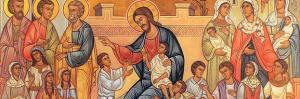
“Truly I tell you, unless you change and become like little children, you will never enter the kingdom of heaven. Therefore, whoever takes the lowly position of this child is the greatest in the kingdom of heaven. And whoever welcomes one such child in my name welcomes me.” (Matthew 18: 3-5)
Introduction – Child-like not Childishness
A multitude of factors will influence the person we become in life: biological and genetic factors; parenting; social relationships; and the wider culture and times we’re born into. These factors interact in a complex and unpredictable way.
A Christian understanding of ‘personality’ is founded on a belief in the existence of God; the acceptance that He is a person with whom one is in a relationship; and the health of this relationship has consequences. Despite the pulls and pushes of nature/nurture, we have reason, character, and human agency.
Noting the above, a small child is a more complete human being than he will be in adulthood. In the right environment, children possess humility and simplicity; have the capacity for total joy and surrender; express true values; and have little sense of self entitlement. They are natural poets, artists, and explorers. A little child loves wholly; trusts wholly; and gives wholly.
A Child Asks Questions…
A recent conversation between my brother and Seth, my grandson sheds, light on childlikeness. Following a comment Peter made about being fed-up with folk treating him like a simpleton because he was unable to talk properly, Seth approached him:
Seth: Uncle Peter, what’s a simpleton?
Peter: Hmm … well. It’s a person who finds it hard to look after themselves or let people know what they need.
Seth: Oh, but can you look after yourself?
Peter: Yep, sometimes with help from others, like auntie Janet, but yes.
Seth: Uncle, but why can’t you talk properly?
Peter: Well, uncle Peter has a sore tongue and has no teeth, sweetheart, his mouth gets very dry and he runs out of breath when he talks..
Seth: Oh …. (pause) … what’s wrong with it and why haven’t you got teeth?
Peter: Well, I was very sick when you were in your mummy’s tummy and the doctors had to mend my tongue and take my teeth out.
Seth: (hesitates) Oh … Can I see?
Peter: You sure? Well, then, of course, (opens mouth and pokes togue out)
Seth: (close examination) Yuk … that looks horrible. Does it hurt?
Peter: Not at all.
Seth: Is it why you make funny noises when you talk?
Peter: In a way. When I was ill, to make me better the doctors couldn’t help it but they hurt my lungs … you know what they are ….?
Seth: Sort of … mummy shows me a toy with them and a heart and things.
Peter: They get air to our bodies …. So, the doctors couldn’t help it, but the little tubes to my lungs became smaller and now sometimes they make funny noises when I talk and breathe.
Seth: Okay …
He trots off back to his Lego. Then returns.
Seth: Uncle, how do you eat without teeth?
Peter: Well, I don’t eat or drink. I have a tube in my tummy and my food and drink goes in there.
Seth*: Oh ….* (frowns) Can I see?
Peter: Sure.
An inspection followed with a series of questions and a demonstration of Peter’s PEG tube and machine. After a “Wow, cool,” Seth trotted off to resume building his Lego castle.
Then later:
Seth: Uncle Peter, was that scary?
Peter: Yes, it was very scary.
(And here it comes …)
Seth: But why did God make you sick?
Peter: Well, God doesn’t make us sick. Seth. Sometimes we do things that make us sick, and other times God let’s us get sick.
Seth: But why?
Peter: Well, that’s a very big question. We have bodies that wear out, or we can break a leg sometimes, or we don’t look after ourselves, and sometimes we just get sick. We’re not perfect … like Superman … he’s pretend. Remember when we talked about Adam and Eve and what happened?
Seth: (nods) … They ate an apple ‘cos they wanted to be in charge and look after themselves instead of God doing it.
Peter: Well done! What a great answer … (High Five) … So we need to look after our bodies, like when you brush your teeth and eat your dinner, and we must be careful crossing roads and at the beach. But sometimes we just get sick. Like when you get a fever and Lucy doesn’t.
Seth: Oh … but God could make you better if he wanted.
Peter: Well, he could, but the doctors did make me better.
Seth: But you can’t eat and have no teeth and a sore tongue!
Peter: Well, that’s another really big question. Yes, God could mend me but sometimes being sick helps us to be brave and trust Jesus. It also means we must get help from other people. And that shows us they love for us. We know that God always loves us, no matter what, and always wants the best for us. So maybe, just maybe, your uncle getting sick was good for him.
Seth: But did you ask Jesus to make you better?
Peter: When I was really scared, I sure did. I asked Jesus to help me and then I had to just trust him.
Seth: Oh … okay. Did you do something bad? My daddy takes my sea monster away when I’m naughty!
Peter: God doesn’t hurt us because we’re naughty. Sometimes being naughty means bad things happen, and sometimes they just happen. Remember, he loves us and wants what’s best for us. Now, what reason did daddy have for taking your sea monster away?
Seth: Because I wanted to watch Mary Poppins and not have my dinner … and I stamped my foot … like this …. (stamps foot)
Peter: Hmm … Well, that was naughty! Not wanting to watch Mary Poppins, that’s one of my favourite films too … but stamping your foot at your daddy … No so good … So, when daddy took your toy away, it was because he loves you and wants you to have your dinner. He also wants you to listen to him and not be rude, and to do what he says. He’s helping you grow into a good, strong boy. And that’s a very good thing.
Seth: (long silence and a rather begrudging) Okay …
Peter: Now, give Uncle Peter a big hug and a High Five.
(Runs-off; happy for now)
What is Jesus Asking?
Jesus’ is calling us to humility, sincere docility, and trusting obedience. Aiming for greatness will not help us enter the Kingdom of Heaven. He directs our aim low – to that of a child.
We must have faith, acknowledging we do not understand God’s mysteries. Children do not understand very much about the world, yet they accept this and ask questions. Their lack of understanding does not trouble them. They take things as they are. They accept people. Children, especially between three to ten years of age, have the capacity to love without judgement or reserve. As we move into prepubescence, on into adolescence and then adulthood, we tend to become more cynical; more jaded; less trusting; rebellious; sceptical and return to the infant traits of dself-centredness. These traits, once embedded, turn us away from God and from others.
I don’t want to over romanticize childhood or the demands of parenthood. Babies and toddlers are demanding. They need a safe emotional and physical environment to become who they are designed to be. Furthermore, they require physical care and loving. They are unreasonable. Newborn infants are impulsive, conscious only of basic urges, needs, and desires, and having these met. Slowly they move from a preoccupation with ‘I’ towards a growing focus on ‘other.’ Infants demand and little children hope that their parents will provide for them – because it’s what parents are supposed to do.
The Betrayal of Children is a Betrayal of God
Confident dependence on the little child’s side and limitless love from parent defines healthy parent-child relationships. It reflects the love of God and lays a foundation for later in life. It is a great evil when a parent betrays this relationship. Any betrayal of a child is a grave sin. At its root, it is a lie about God.
If anyone causes one of these little ones – those who believe in me – to stumble, it would be better for them to have a large millstone hung around their neck and to be drowned in the depths of the sea. (Matthew 18:6)
Our Lord’s words could not be plainer. Injuring a child’s innocence, failing to love them, or hindering their emotional, intellectual, or spiritual growth, harms them and this then spreads harm to others. The hurt is passed down through the generations.
St Paul tells us (Ephesians 3:14-15) parenthood is derived from God’s Fatherhood. God, our Father, wants us to trust in Him for the things we need. And He will not fail us.
And I tell you, ask and it will be given you; seek, and you will find, knock, and it will be opened to you… What father among you, if his son asks for a fish, will instead of a fish give him a serpent? . . . If you then, who are evil, know how to give good gifts to your children, how much more will the heavenly Father give the Holy Spirit to those who ask him! (Luke 11:9-13).
Little children know the ‘secret’ to entering the Kingdom of Heaven.
I praise you, Father, Lord of heaven and earth, because you have hidden these things from the wise and learned, and revealed them to little children. Yes, Father, for this is what you were pleased to do. (Luke 10:21)
The World
The Catechism of the Catholic Church Catechism of the Catholic Church – PART 1 SECTION 2 CHAPTER 1 ARTICLE 1 PARAGRAPH 7 (scborromeo.org) devotes several pages to a discussion of creation and the Fall of Man. The essential character of the first sin is the loss of original holiness and justice: man is born into a state of spiritual death. As a consequence, not only are we born into a world dominated by oppression, violence, and hatred, but we experience a condition of profound alienation from our Creator. The Holy Spirit does not indwell our soul, and we are deprived of grace. Our nature as rational, spiritual beings, born in the ‘image and likeness of God,’ is wounded.
Aware of this, Jesus warned:
Woe to the world because of the things that cause people to stumble! Such things must come, but woe to the person through whom they come! (Mathew 18:7)
We are called to transform the lower aspects of our animal nature and to seek what is good, true, and beautiful. Searching for and experiencing the self-giving love of God is transcending. Christianity postulates interdependence between people, not individualism, mutual, freely given care for others in relationship. We are fulfilled in self-giving love, not in isolation, in union with God and love of others. A growing closeness to God develops by cultivating the virtues and by adhering to objective morality.
The Return to Childlikeness
To turn back to childhood means finding the courage to grow up. We often become fixed in adolescence and remain emotionally and mentally incomplete; as perpetual, spiritual adolescents. Our infant traits of self-centeredness resurface. To be an adult without spirituality is a deficit; it leaves a hole we try to fill in other ways – material success, position, flattery, sex, drugs, ideologies, dominating others, delusions, sports, and self-love. Christians are not immune to these shortcomings; none of us are. In downplaying spirituality or ignoring it human beings relinquish their deepest human needs.
To heed Christ’s call to return childhood the first step we take is to humbly face and accept oneself as we are – sinners who are loved by God, a God who wills only our good. We can then begin to sort through the accumulated junk from our pasts. Junk covering our ‘Christ-child,’ move on to make simple and uncomplicated demands on others without pretense, deception, or double-mindedness.
St Augustine learned the truth of Isaiah 26:3, when he stated:
You have made us for yourself, O Lord, and our heart is restless until it rests in you.
Conclusion
When come to believe we have a provident loving Father who is watching out for us and who loved us even before our existence. When we believe this, there is nothing in life we cannot face. If we believe Jesus suffered, died, and rose again; that He endured all that we endure, except for sin, what is there in life that we cannot face with Him accompanying us? If we believe that the Holy Spirit prompts us, guides us, protects us, inspires us, what is there in life that we cannot face?
When we know this the peace that only God can give becomes a tangible, lived experience. We may not always understand why He moves in the way He does, and we are not exempt from suffering in this life, but we can trust there is a transformative, redemptive quality that is unexplainable.
To work for real human happiness, first we must abandon the unreality in ourselves and fill our lives with an awareness of God. Caryll Houselander writes:
If we are afraid to know ourselves for what we are, it is because we have not the least idea of what that is. It is because we have not the least idea of the miracle of life-giving love that we are. There is no pretence that can approach the wonder of the truth about us, no unreality that comes anywhere near the reality. We are “other Christs.” Our destiny is to live the Christ-life: to bring Christ’s life into the world; to increase Christ’s love in the world; to give Christ’s peace to the world.
If, in the light of this knowledge, we give ourselves unreservedly to life, every phase of it, every experience, it will lead us back to the “inward heaven of spiritual childhood.”
All the way to Heaven is Heaven,” says St. Catherine of Siena, and this true of the heaven of spiritual childhood, because it means becoming, not any child, but the Child Christ who is the life and the heaven of the soul.
By coming to know God as Father, through our dependence, uncovering His image in our souls, we recover the simplicity, humility, and trust of children. We love God, love ourselves and love one another, and are made new; restored; we see the mystery of the sacramental quality of our daily lives. Our values become true. And in changing, we can help change the world around us.
Thank you!
Read The Latin Right’s other writing here.
Please visit my Facebook page and IM your questions (and follow my page) or topics for articles you would like covered.
Also, please subscribe my YouTube page for updates on upcoming articles.
Becoming Child-LIKE (Guest Writer)
Family, Parenting and Religion
Previous Post

September 23, 2024
Do I Lack the Holy Spirit & Regeneration? Response 3
Next Post

September 30, 2024 Closing Statement: Follow Others as They Follow Christ
Recent Comments
"So, no answer."
Amoris Laetitia Deserves a Better Defence
"Thanks, Mike, but the history points in a different direction to the one you suggest.John ..."
Amoris Laetitia Deserves a Better Defence
"My honest take? I think St John Paul II was adamant that on his watch, ..."
Amoris Laetitia Deserves a Better Defence
""It's reasonable to ask what those claims mean in practice."It is. And I've laid out ..."
Amoris Laetitia Deserves a Better Defence
Browse Our Archives
Select a Category Abortion Arius Atheists Catholic Apologetics Catholic Culture Catholic History Catholic Humor Catholic Poetry Catholic Politics Catholic Theology Dr. James White Faith Alone Joe Heschmeyer Kamala Harris Martin Luther Pope Francis Preborn Children President Biden Science and Catholicism Sola Scriptura Synod of Synodality Trinity
Select a Month October 2026 September 2026 August 2026 July 2026 June 2026 May 2026 April 2026 March 2026 February 2026 January 2026 December 2025 November 2025 October 2025 September 2025 August 2025 July 2025 June 2025 May 2025 April 2025 March 2025 February 2025 January 2025 December 2024 November 2024 October 2024 September 2024 August 2024 July 2024 June 2024 May 2024 April 2024 March 2024 February 2024 January 2024 December 2023 November 2023 October 2023 September 2023 August 2023 July 2023 June 2023 May 2023 April 2023 March 2023 February 2023 January 2023 December 2022 November 2022 October 2022 September 2022 August 2022 July 2022 June 2022 May 2022 April 2022 March 2022 February 2022 January 2022 December 2021 November 2021
Follow Us!
TAKE THE
Religious Wisdom Quiz
How did Judas signal who Jesus was to the soldiers?
Select your answer to see how you score.
By pointing With a kiss By handing Him bread By shouting
Related posts from The Latin Right

Amoris Laetitia Deserves a Better Defence

Rich Man, Poor Man: Altruism and Agency

The Order We Did Not Make: The World...

The Poor Have Rights—and Responsibilities
TRENDING AT PATHEOS Catholic

Pope Leo Celebrates Mass for Nurses & Docs...
I don't have any idea how he did it, but Pope Leo...

The Sermon on the Mount, Part I: Matthew...
The Sermon on the Mount, Part I (Matthew 4:12-5:12) St. Matthew moves...

What's up from Crossway: Reviewing some of their latest A few weeks...

Janie Learns the Way of the Cross: A...
Teaching children about Jesus' Passion can be challenging. Many parents and educators...

Looking For Good Catholic Writing - October 2026
He alone extends the heavens, and he walks upon the waves of...

In "Irreplaceable," our book on vocation and technology, Trevor Sutton and I...
view all Catholic blogs
What Are Your Thoughts?leave a comment
Ad-Free & Subscriber Log-In Subscription Support
- About Us
- 2026 Calendar
- Videos
- Podcasts
- Library of World Religions
- Faith In Media Tracker
- Advertise With Us
- Write for Us
- Privacy Policy
- Terms of Service
- Do Not Sell My Data
- Contact Us
- Radiant Digital
- Manage Newsletter Subscriptions
- Unsubscribe From Notifications
- Sitemap
Copyright 2008-2026, Patheos. All rights reserved.
Subscription Support Ad-Free & Subscriber Log-In
Follow Patheos