
BuddhistCatholicContemplativeEvangelicalGeneral ChristianHinduJewishLatter-day SaintMuslimNew VisionsProgressive Christian
Beliefs
- Buddhist
- Catholic
- Contemplative
- Evangelical
- General Christian
- Hindu
- Jewish
- Latter-day Saint
- More Voices
- Muslim
- New Visions
- Pagan
- Progressive Christian
Topics
- Religion News
- Food and Religion
- Sports and Religion
- Religious Art
- Religious Music and Entertainment
- Religious Events
- History and Religion
- Style and Religion
- Politics and Religion
- Women in Religion
- Recreation Outdoors and Religion
- Business Finance and Religion
- Careers Workplace and Religion
- Education and Religion
- Family Parenting and Religion
- Health Fitness and Religion
- Home and Religion
- Relationships and Religion
- Technology and Religion
- Travel and Religion
Columnists
- Buddhist Columnists
- Business Finance and Religion Columnists
- Careers Workplace and Religion Columnists
- Catholic Columnists
- Contemplative Columnists
- Education and Religion Columnists
- Evangelists Columnists
- Family Parenting and Religion Columnists
- General Christian Columnists
- Health Fitness and Religion Columnists
- Hindu Columnists
- History and Religion Columnists
- Home and Religion Columnists
- Jewish Columnists
- More Voices Columnists
- Latter Day Columnists
- Muslim Columnists
- New Visions Columnists
- Nonreligious Columnists
- Pagan Columnists
- Politics and Religion Columnists
- Progressive Columnists
- Recreation Outdoors and Religion Columnists
- Relationships and Religion Columnists
- Religion News Columnists
- Religious Art Columnists
- Religious Events Columnists
- Religious Music and Entertainment Columnists
- Sports and Religion Columnists
- Style and Religion Columnists
- Technology and Religion Columnists
- Travel and Religion Columnists
- Women in Religion Columnists
Resource Library
- 2026 Calendar
- Library of World Religions
- The 100 Most Holy Places on Earth
- Patheos Answers
- Podcasts
- Videos
- Faith Leaders Database
- Anglican Episcopalian
- Bahai
- Baptist
- Buddhism
- Christianity
- Confucianism
- Eastern Orthodoxy
- Hinduism
- Holiness and Pentecostal
- ISKCON
- Islam
- Judaism
- Lutheran
- Methodist
- The Church of Jesus Christ of Latter-day Saints
- New Age
- Paganism
- Presbytarian and Reformed
- Protestantism
- Religion Behind the Scenes
- Roman Catholic
- Scientology
- Shia Islam
- Sikhism
- Sufism
- Sunni Islam
- Taoism
- Zen
- See all religions
Research Tools
 Ad-Free & Subscriber Log-In Subscription Support
Ad-Free & Subscriber Log-In Subscription Support
Follow Patheos 

- Trending:
- Forgiveness
- |
- Marriage
- |
- Consciousness
- |
- Death Penalty
- |
- Election
- |
- Halloween

- Home
- Catholic
- If God Forgives Sins Without Sacrifice, Why Did Jesus Do It?
If God Forgives Sins Without Sacrifice, Why Did Jesus Do It?
Last updated on: August 24, 2024 at 6:37 pm by Dennis Knapp
If God Forgives Sins Without Sacrifice, Why Did Jesus Do It? 2024-08-24T18:37:12-06:00 Dennis Knapp
Patheos Explore the world's faith through different perspectives on religion and spirituality! Patheos has the views of the prevalent religions and spiritualities of the world.
I recently got into a debate with a Protestant friend concerning the forgiveness of sins and how God, if He so chooses, can simply forgive sins by declaring it so. This rests on the fact that God, as all-powerful, can divinely decree all sins forgiven. We see Jesus use this power in His forgiveness of sins in the Gospels. This use of divine power eventually led (among other things) to His arrest and ultimate death on the cross. So, why did Jesus die as a sacrifice if a sacrifice is not required?
In this article, I examine the forgiveness of sins as presented in the Scriptures. As opposed to the penal substitution theory espoused by Protestants (and the Protestant friend I debated), the Catholic understanding of Jesus’ sacrifice demonstrates that God, while powerful enough to degree sins forgiven, allowed for Jesus’ sacrifice. In short, in Christ’s free act of love, not God’s punishment, we receive transformation and healing.
The Power to Forgive Sins
First, Christ’s power to forgive sins comes up in all four Gospels. Christ demonstrated His divine nature to the spiritual leaders of Israel by doing something retained to God alone—forgiving sins.
And when Jesus saw their faith, he said to the paralytic, “Son, your sins are forgiven.” Now some of the scribes were sitting there, questioning in their hearts, “Why does this man speak like that? He is blaspheming! Who can forgive sins but God alone?” And immediately Jesus, perceiving in his spirit that they thus questioned within themselves, said to them, “Why do you question these things in your hearts? Which is easier, to say to the paralytic, ‘Your sins are forgiven,’ or to say, ‘Rise, take up your bed and walk’? But that you may know that the Son of Man has authority on earth to forgive sins”—he said to the paralytic— “I say to you, rise, pick up your bed, and go home.” Mark 2:5-11 (and Luke 5:20, and Matthew 9:2.) [emphasis added]
And he said to her, “Your sins are forgiven.” Then those who were at table with him began to say among themselves, “Who is this, who even forgives sins?” And he said to the woman, “Your faith has saved you; go in peace.” Luke 7:48-50 [emphasis added]
Moreover, Jesus then passed this authority to His apostles:
Jesus said to them again, “Peace be with you. As the Father has sent me, even so I am sending you.” And when he had said this, he breathed on them and said to them, “Receive the Holy Spirit. If you forgive the sins of any, they are forgiven them; if you withhold forgiveness from any, it is withheld.” John 20:21-23 [emphasis added]
St. Thomas Aquinas also addressed the claim that forgiveness requires Christ’s sacrifice to free humans for sin. He replies:
Even this justice depends on the Divine will, requiring satisfaction for sin from the human race. But if He had willed to free man from sin without any satisfaction, He would not have acted against justice.
But God has no one higher than Himself, for He is the sovereign and common good of the whole universe. Consequently, if He forgive sin, which has the formality of fault in that it is committed against Himself, He wrongs no one: just as anyone else, overlooking a personal trespass, without satisfaction, acts mercifully and not unjustly. And so David exclaimed when he sought mercy: “To Thee only have I sinned” (Psalm 50:6), as if to say: “Thou canst pardon me without injustice.”
Therefore, this power to forgive sins did not require a sacrifice, as we see above. So then, why did Jesus need to die?
Why Did Jesus Need to Die?
O loving Pelican! O Jesus Lord! Unclean I am but cleanse me in Thy Blood! Of which a single drop, for sinners split, can purge the entire world from all its guilt. Adoro Te Devote by St. Thomas Aquinas
This beautiful poem by St. Thomas Aquinas declares the power in just one drop of Christ’s blood. If a mother pelican’s blood nourishes her young by her blood, how much more the power contained in the Son of God’s blood! So, why did He need to die in such a horrific way? Catholic apologist Trent Horn puts it perfectly:
Christ wanted to offer himself to the Father as the ultimate and perfect sacrifice of love to demonstrate his love for humanity and desire for the sins of humanity to be forgiven…
… rather than Jesus being punished with all of our sins and that’s why our sins go away, rather we would say that Jesus’s death on the cross is so good, it’s so meritorious, it’s of infinite value, because Jesus is God and man—he’s divine, so what he offers the Father in that act is of infinite value, because he’s divine—that it outweighs the harm caused by our sins. It outweighs the damage, the punishment due.
Jesus offers a satisfaction for our sin, not in place of our punishment, but out of an act of perfect love. In fact, the doctrine of penal substitution, the one most commonly taught by modern Protestants, makes God unjust in order to justify mankind.
The Problem with Penal Substitution
According to Protestant pastor and teacher John McArthur, penal substitution requires God the Father to punish God the Son for our sakes and our salvation. He states:
Penal substitution says God is so holy that every sin will be punished. Every single sin in the life of every Christian believer through all of human history was punished. All sin must be punished. Either the sinner will bear that punishment eternally, or Christ took that punishment on the cross. The only thing that protects the pure, righteous holiness of God is that sin is punished. That’s penal substitution. If you remove that part of the cross, then how does God reconcile His holiness with wishing sin away without a punishment? There has to be a punishment for God to maintain His justice. That punishment falls on His Son.
Of the numerous issues with penal substitution, two stand out. First, a just God never punishes an innocent man (Jesus). Jesus, as God incarnate, knew no sin. Second, and more importantly, penal substitution ruptures the relationship within the Trinity. Dr. Allison Low at The Catholic Stand sums it up nicely:
With the doctrine of penal substitution, however, it is held that God the Father ruptured His relationship with God the Son on the cross in order to punish Jesus. But this element of the doctrine is contrary to the doctrines of the Incarnation and the Trinity. If it were possible for God the Son to be separated from God the Father, even for a moment, then he would not and could not be God.
If Jesus literally took on all our mortal sins, we would have a situation where Jesus would be at enmity with God. But, as already pointed out, this is not possible because Jesus is God the Son.
Finally, God never changes. God exists without needs or passions, He requires nothing, including sacrifices.
Sin Changes Us, Not God
As stated above, God never changes, therefore, even our sin cannot change Him. Unfortunately, sin does change us. Dr. Low, again:
…our disobedience and rebellion do not causes any change in God by nature of who He is. Rather, we are changed by sin. If we reject God’s love and rebel, our hearts are hardened. Lacking God’s love, one will be tormented by the thought of God’s judgment and, as a result, will experience “God’s wrath.” But in both scenarios, what has changed is not God but us.
We require change, unlike God. Through Christ’s free and obedient sacrifice in love, He pleased God and merited for us our salvation. Therefore, Christ’s sacrifice was no punishment, but a free act of love, a free act of love that provides a way of transformation for poor sinners.
Final Thoughts…
As stated above, God allowed for Jesus’ sacrifice, not as an act punishing an innocent man in the place of the guilty, but as an act of freely chosen love. In Christ’s free act of love, not God’s punishment, we receive transformation and healing. We change, not God. God could have decreed forgiveness, but instead, He chose sacrificial love.
Thank you!
Read The Latin Right’s other writing here.
Please visit my Facebook page and IM your questions (and follow my page) or topics for articles you would like covered.
Also, please subscribe my YouTube page for updates on upcoming articles.
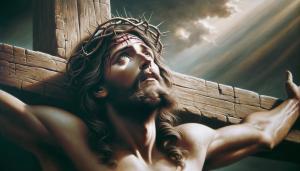
If God Forgive Sins Without Sacrifice, Why Did Jesus Do It?
Evangelical
Previous Post

August 15, 2024
The Protestant Appeal for Religious Autonomy
Next Post

August 31, 2024 Authority in the Christian Life: Written Dialogue
Recent Comments
"So, no answer."
Amoris Laetitia Deserves a Better Defence
"Thanks, Mike, but the history points in a different direction to the one you suggest.John ..."
Amoris Laetitia Deserves a Better Defence
"My honest take? I think St John Paul II was adamant that on his watch, ..."
Amoris Laetitia Deserves a Better Defence
""It's reasonable to ask what those claims mean in practice."It is. And I've laid out ..."
Amoris Laetitia Deserves a Better Defence
Browse Our Archives
Select a Category Abortion Arius Atheists Catholic Apologetics Catholic Culture Catholic History Catholic Humor Catholic Poetry Catholic Politics Catholic Theology Dr. James White Faith Alone Joe Heschmeyer Kamala Harris Martin Luther Pope Francis Preborn Children President Biden Science and Catholicism Sola Scriptura Synod of Synodality Trinity
Select a Month October 2026 September 2026 August 2026 July 2026 June 2026 May 2026 April 2026 March 2026 February 2026 January 2026 December 2025 November 2025 October 2025 September 2025 August 2025 July 2025 June 2025 May 2025 April 2025 March 2025 February 2025 January 2025 December 2024 November 2024 October 2024 September 2024 August 2024 July 2024 June 2024 May 2024 April 2024 March 2024 February 2024 January 2024 December 2023 November 2023 October 2023 September 2023 August 2023 July 2023 June 2023 May 2023 April 2023 March 2023 February 2023 January 2023 December 2022 November 2022 October 2022 September 2022 August 2022 July 2022 June 2022 May 2022 April 2022 March 2022 February 2022 January 2022 December 2021 November 2021
Follow Us!
TAKE THE
Religious Wisdom Quiz
To where did Jesus' family flee from Bethlehem?
Select your answer to see how you score.
Greece Samaria Nazareth Egypt
Related posts from The Latin Right

Amoris Laetitia Deserves a Better Defence

Rich Man, Poor Man: Altruism and Agency

The Order We Did Not Make: The World...

Is This “Culture War” Catholicism—or Evangelization?
TRENDING AT PATHEOS Catholic

Pope Leo Celebrates Mass for Nurses & Docs...
I don't have any idea how he did it, but Pope Leo...

The Sermon on the Mount, Part I: Matthew...
The Sermon on the Mount, Part I (Matthew 4:12-5:12) St. Matthew moves...

What's up from Crossway: Reviewing some of their latest A few weeks...

Janie Learns the Way of the Cross: A...
Teaching children about Jesus' Passion can be challenging. Many parents and educators...

Looking For Good Catholic Writing - October 2026
He alone extends the heavens, and he walks upon the waves of...

In "Irreplaceable," our book on vocation and technology, Trevor Sutton and I...
view all Catholic blogs
What Are Your Thoughts?leave a comment
Ad-Free & Subscriber Log-In Subscription Support
- About Us
- 2026 Calendar
- Videos
- Podcasts
- Library of World Religions
- Faith In Media Tracker
- Advertise With Us
- Write for Us
- Privacy Policy
- Terms of Service
- Do Not Sell My Data
- Contact Us
- Radiant Digital
- Manage Newsletter Subscriptions
- Unsubscribe From Notifications
- Sitemap
Copyright 2008-2026, Patheos. All rights reserved.
Subscription Support Ad-Free & Subscriber Log-In
Follow Patheos