
BuddhistCatholicContemplativeEvangelicalGeneral ChristianHinduJewishLatter-day SaintMuslimNew VisionsProgressive Christian
Beliefs
- Buddhist
- Catholic
- Contemplative
- Evangelical
- General Christian
- Hindu
- Jewish
- Latter-day Saint
- More Voices
- Muslim
- New Visions
- Pagan
- Progressive Christian
Topics
- Religion News
- Food and Religion
- Sports and Religion
- Religious Art
- Religious Music and Entertainment
- Religious Events
- History and Religion
- Style and Religion
- Politics and Religion
- Women in Religion
- Recreation Outdoors and Religion
- Business Finance and Religion
- Careers Workplace and Religion
- Education and Religion
- Family Parenting and Religion
- Health Fitness and Religion
- Home and Religion
- Relationships and Religion
- Technology and Religion
- Travel and Religion
Columnists
- Buddhist Columnists
- Business Finance and Religion Columnists
- Careers Workplace and Religion Columnists
- Catholic Columnists
- Contemplative Columnists
- Education and Religion Columnists
- Evangelists Columnists
- Family Parenting and Religion Columnists
- General Christian Columnists
- Health Fitness and Religion Columnists
- Hindu Columnists
- History and Religion Columnists
- Home and Religion Columnists
- Jewish Columnists
- More Voices Columnists
- Latter Day Columnists
- Muslim Columnists
- New Visions Columnists
- Nonreligious Columnists
- Pagan Columnists
- Politics and Religion Columnists
- Progressive Columnists
- Recreation Outdoors and Religion Columnists
- Relationships and Religion Columnists
- Religion News Columnists
- Religious Art Columnists
- Religious Events Columnists
- Religious Music and Entertainment Columnists
- Sports and Religion Columnists
- Style and Religion Columnists
- Technology and Religion Columnists
- Travel and Religion Columnists
- Women in Religion Columnists
Resource Library
- 2026 Calendar
- Library of World Religions
- The 100 Most Holy Places on Earth
- Patheos Answers
- Podcasts
- Videos
- Faith Leaders Database
- Anglican Episcopalian
- Bahai
- Baptist
- Buddhism
- Christianity
- Confucianism
- Eastern Orthodoxy
- Hinduism
- Holiness and Pentecostal
- ISKCON
- Islam
- Judaism
- Lutheran
- Methodist
- The Church of Jesus Christ of Latter-day Saints
- New Age
- Paganism
- Presbytarian and Reformed
- Protestantism
- Religion Behind the Scenes
- Roman Catholic
- Scientology
- Shia Islam
- Sikhism
- Sufism
- Sunni Islam
- Taoism
- Zen
- See all religions
Research Tools
 Ad-Free & Subscriber Log-In Subscription Support
Ad-Free & Subscriber Log-In Subscription Support
Follow Patheos 

- Trending:
- Forgiveness
- |
- Marriage
- |
- Consciousness
- |
- Death Penalty
- |
- Election
- |
- Halloween

- Home
- Catholic
- Religion News
- What is Fr. Martin’s Endgame?
What is Fr. Martin’s Endgame?
Last updated on: May 30, 2024 at 6:08 am by Dennis Knapp
What is Fr. Martin’s Endgame? 2024-05-30T06:08:28-06:00 Dennis Knapp
Patheos Explore the world's faith through different perspectives on religion and spirituality! Patheos has the views of the prevalent religions and spiritualities of the world.
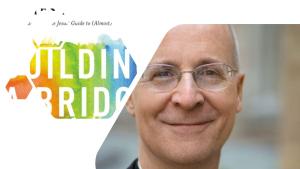
This weekend, I watched the 2021 documentary Building a Bridge, based on the 2018 book of the same name by Fr. James Martin, SJ. As I watched the documentary, I found myself agreeing with some of the points concerning compassion and kindness. However, Building the Bridge left me with more questions than answers as to how the Church ought to build a bridge to the Catholics within the LGBT community, especially if said Catholics see themselves as made by God as LGBT.
For this article, I ask the questions that often came into my head during my viewing. I highlight some of the comments made by Fr. Martin that stood out to me. Finally, I ask Fr. Martin directly what his endgame is concerning the Catholic Church bridge towards Catholics who consider themselves first and foremost members of the LGBT community.
Unwelcomed, Excluded, and Insulted Towards Respect, Compassion, and Sensitivity
In the documentary, and in his book, Fr. Martin reports that many Catholics who identify as LGBT hold many strong feelings towards the institutional Church. In his book, he states:
But many LGBT Catholics have told me that they have felt hurt by the institutional church—unwelcomed, excluded, and insulted.
He goes on to challenge the Church to treat LGBT Catholics with respect, compassion, and sensitivity. Here, Fr. Martin echoes the words of the Catechism of the Catholic Church paragraph 2358:
The number of men and women who have deep-seated homosexual tendencies is not negligible. This inclination, which is objectively disordered, constitutes for most of them a trial. They must be accepted with respect, compassion, and sensitivity. Every sign of unjust discrimination in their regard should be avoided. These persons are called to fulfill God’s will in their lives and, if they are Christians, to unite to the sacrifice of the Lord’s Cross the difficulties they may encounter from their condition.
Moreover, if this represents the crux of Fr. Martin’s call to the institutional Church (and the Catholics with her) to build their side of the bridge, I fully support it. However, the catechism goes on in paragraph 2359 to address the bridge’s other half:
Homosexual persons are called to chastity. By the virtues of self-mastery that teach them inner freedom, at times by the support of disinterested friendship, by prayer and sacramental grace, they can and should gradually and resolutely approach Christian perfection.
Therefore, just as the Church (and those in her) must exercise respect, compassion, and sensitivity, those who identify as LGBT Catholics must live lives of chastity, self-mastery, prayer, and sacramental grace (as must all Catholics).
Would Fr. Martin agree with this assessment?
Does Sensitivity Mean Change?
In the chapter on sensitivity of the Church towards LGBT Catholics, Fr. Martin takes to task the insensitive use of the words objectively disordered in paragraph 2358 of Catechism (see above).
Our sexuality, in a sense, touches everything we do, including the way we love, even with the sexual expression of that love is neither involved nor even contemplated. So to call a person’s sexuality “objectively disordered” is to tell a person that all of his or her love, even the most chaste, is disordered. That seems unnecessarily cruel.
He contends that the use of such language produces harm in those who hear and read it and therefore ought to change. In June 2017, Fr. Martin reported in an interview that he liked the term “differently ordered,” proposed to him by an Italian theologian.
Now, ordered and disordered, in this context, come from an understanding of natural law, and as Fr. Martin claims, he does not see himself as a theologian. However, as a Catholic priest (and Jesuit), Fr. Martin is more a theologian than almost all lay Catholics. Furthermore, those who agree with him also see him as such, regardless of whether he sees it himself. Given these facts, changing the precise language of the Catechism out of a sense of sensitivity reframes all Catholic teaching on human sexuality.
Is this what the non-theologian Fr. Martin, SJ, proposes?
“I’m Not Supposed to Support It…”
As Fr. Martin goes about promoting his book and speaking in various places, many people come to him and ask if he plans on attending the approaching local Pride parade. One man even pleads with him that his presence as a priest is desperately needed there. In response, Fr. Martin states that he must first obtain the approval of his superior before attending such an event. He thinks such approval unlikely (he later informs us his superiors denied his request), as he may “get a photo taken in front of a gay marriage sign” and laments, “I’m not supposed to support it…” He did not state he cannot support it, only that he’s not “supposed to support it.”
Moreover, in his book, Fr. Martin intentionally omits any lengthy discussion on the Church’s teaching on same-sex relations and same-sex marriage. The reason: the two sides (the Church and the LGBTQ community) stand too far apart to allow for any kind of bridge building on these issues. Yet, when Fr. Martin does quote the Catechism on the nature of same-sex relations, he only speaks of how insensitive and hurtful the language is. Therefore, Fr. Martin understands that the Church and the LGBTQ community (and Catholics in those community) stand too far apart, however, the Church acts cruelly in the language it uses and ought to change it.
Does the non-theologian Fr. Martin not understand that changing the language on same-sex relations changes Church teaching? Maybe he does…
Fr. Martin, What is Your Endgame?
Fr. Martin, what is your ultimate end goal in building a bridge between the Church and LGBT Catholics who identify with the LGBT community first and the Church second (or not at all)? You rightly state in the documentary, and book, that all baptized Catholics have a place within the Church. You also state that the Church teaches things regarding same-sex relations that bar the building of any bridges, a distance too far to cross. However, in your book, you call out the Church’s insensitive and cruel language in calling same-sex relations “objectively disordered” and indicated in an interview that you prefer the phrase “differently ordered.” As you know, such a change in language entails a change in the Church’s understanding of human sexuality. In the spirit of respect, compassion, and sensitivity must the Church change its views in order to build a true bridge. To some, it appears so.
Final Thoughts…
For my final thoughts, I affirm what the Church teaches regarding respect, compassion, and sensitivity towards those within the LGBT Catholic community. I fully embrace what the Catechism states in paragraphs 2357, 2358, and 2359. While watching the documentary and reading the book, these questions often crossed my mind:
- Does Fr. Martin agree with the assessment that all Catholics must live lives of chastity, self-mastery, prayer, and sacramental grace (LGBT Catholics included)?
- Out of a sense of sensitivity, should the Church reframe all Catholic teaching on human sexuality?
It seems clear to me that ultimately Fr. Martin seeks to change Church teaching; not directly, but through a push for respect, compassion, and sensitivity beyond that reflected in the Catechism. Only by changing the Church’s teaching on human sexuality can the true bridge be built. To me, this seems Fr. Martin’s ultimate endgame.
If wrong, I stand ready for his correction.
Thank you!
Read The Latin Right’s other writing here.
Please visit my Facebook page and IM your questions (and follow my page) or topics for articles you would like covered.
Also, please subscribe my YouTube page for updates on upcoming articles.
What is Fr. Martin’s Endgame?
Religion News
Relationships and Religion
Previous Post
May 22, 2024
Want Proof Butker’s Comments Agree with Catholic Teaching?
Next Post

May 31, 2024 In America, Trump Is Not the Problem, We Are: Guest Writer
Recent Comments
"Todd, you gave a reply. You haven't answered my question.How does “Salvation is more important ..."
Amoris Laetitia Deserves a Better Defence
"I agree these questions were legitimate subjects of theological speculation. That doesn't demonstrate continuity in ..."
Amoris Laetitia Deserves a Better Defence
"I agree that St John Paul II did not equivocate. He was insistent that the ..."
Amoris Laetitia Deserves a Better Defence
"Not a different answer.Peter, you have an occasional problem with the truth. Mike Lewis pointed ..."
Amoris Laetitia Deserves a Better Defence
Browse Our Archives
Select a Category Abortion Arius Atheists Catholic Apologetics Catholic Culture Catholic History Catholic Humor Catholic Poetry Catholic Politics Catholic Theology Dr. James White Faith Alone Joe Heschmeyer Kamala Harris Martin Luther Pope Francis Preborn Children President Biden Science and Catholicism Sola Scriptura Synod of Synodality Trinity
Select a Month October 2026 September 2026 August 2026 July 2026 June 2026 May 2026 April 2026 March 2026 February 2026 January 2026 December 2025 November 2025 October 2025 September 2025 August 2025 July 2025 June 2025 May 2025 April 2025 March 2025 February 2025 January 2025 December 2024 November 2024 October 2024 September 2024 August 2024 July 2024 June 2024 May 2024 April 2024 March 2024 February 2024 January 2024 December 2023 November 2023 October 2023 September 2023 August 2023 July 2023 June 2023 May 2023 April 2023 March 2023 February 2023 January 2023 December 2022 November 2022 October 2022 September 2022 August 2022 July 2022 June 2022 May 2022 April 2022 March 2022 February 2022 January 2022 December 2021 November 2021
Follow Us!
TAKE THE
Religious Wisdom Quiz
How many Psalms are attributed to David?
Select your answer to see how you score.
40 50 100 73
Related posts from The Latin Right

Amoris Laetitia Deserves a Better Defence

Rich Man, Poor Man: Altruism and Agency

The Order We Did Not Make: The World...

The Poor Have Rights—and Responsibilities
TRENDING AT PATHEOS Catholic

When Halloween Unmasks Married Hearts
Written by Dr. David K. Ewen from Eternal Truth Bible College Behind...

Aristotle. He’s been called the father of logic, the father of the...

Methodist Central Hall and Westminster Abbey
Situated on the same square is Methodist Central Hall and Westminster Abbey. ...

57th Dove Awards Honor Dolly Parton, Crown New...
On gospel music’s biggest night, the 57th annual GMA Dove Awards honored...

The First Eucharistic Controversy: Christ’s Real Presence
For Catholics, the Eucharist is the source and summit of the Christian...

What a Stop Sign Can Teach Us About...
How to Make a Decision When You Can't Hear God Main point:...
view all Catholic blogs
What Are Your Thoughts?leave a comment
Ad-Free & Subscriber Log-In Subscription Support
- About Us
- 2026 Calendar
- Videos
- Podcasts
- Library of World Religions
- Faith In Media Tracker
- Advertise With Us
- Write for Us
- Privacy Policy
- Terms of Service
- Do Not Sell My Data
- Contact Us
- Radiant Digital
- Manage Newsletter Subscriptions
- Unsubscribe From Notifications
- Sitemap
Copyright 2008-2026, Patheos. All rights reserved.
Subscription Support Ad-Free & Subscriber Log-In
Follow Patheos