
BuddhistCatholicContemplativeEvangelicalGeneral ChristianHinduJewishLatter-day SaintMuslimNew VisionsProgressive Christian
Beliefs
- Buddhist
- Catholic
- Contemplative
- Evangelical
- General Christian
- Hindu
- Jewish
- Latter-day Saint
- More Voices
- Muslim
- New Visions
- Pagan
- Progressive Christian
Topics
- Religion News
- Food and Religion
- Sports and Religion
- Religious Art
- Religious Music and Entertainment
- Religious Events
- History and Religion
- Style and Religion
- Politics and Religion
- Women in Religion
- Recreation Outdoors and Religion
- Business Finance and Religion
- Careers Workplace and Religion
- Education and Religion
- Family Parenting and Religion
- Health Fitness and Religion
- Home and Religion
- Relationships and Religion
- Technology and Religion
- Travel and Religion
Columnists
- Buddhist Columnists
- Business Finance and Religion Columnists
- Careers Workplace and Religion Columnists
- Catholic Columnists
- Contemplative Columnists
- Education and Religion Columnists
- Evangelists Columnists
- Family Parenting and Religion Columnists
- General Christian Columnists
- Health Fitness and Religion Columnists
- Hindu Columnists
- History and Religion Columnists
- Home and Religion Columnists
- Jewish Columnists
- More Voices Columnists
- Latter Day Columnists
- Muslim Columnists
- New Visions Columnists
- Nonreligious Columnists
- Pagan Columnists
- Politics and Religion Columnists
- Progressive Columnists
- Recreation Outdoors and Religion Columnists
- Relationships and Religion Columnists
- Religion News Columnists
- Religious Art Columnists
- Religious Events Columnists
- Religious Music and Entertainment Columnists
- Sports and Religion Columnists
- Style and Religion Columnists
- Technology and Religion Columnists
- Travel and Religion Columnists
- Women in Religion Columnists
Resource Library
- 2026 Calendar
- Library of World Religions
- The 100 Most Holy Places on Earth
- Patheos Answers
- Podcasts
- Videos
- Faith Leaders Database
- Anglican Episcopalian
- Bahai
- Baptist
- Buddhism
- Christianity
- Confucianism
- Eastern Orthodoxy
- Hinduism
- Holiness and Pentecostal
- ISKCON
- Islam
- Judaism
- Lutheran
- Methodist
- The Church of Jesus Christ of Latter-day Saints
- New Age
- Paganism
- Presbytarian and Reformed
- Protestantism
- Religion Behind the Scenes
- Roman Catholic
- Scientology
- Shia Islam
- Sikhism
- Sufism
- Sunni Islam
- Taoism
- Zen
- See all religions
Research Tools
 Ad-Free & Subscriber Log-In Subscription Support
Ad-Free & Subscriber Log-In Subscription Support
Follow Patheos 

- Trending:
- Forgiveness
- |
- Marriage
- |
- Consciousness
- |
- Death Penalty
- |
- Election
- |
- Halloween

- Home
- Catholic
- Politics and Religion
- Sensus Fidei: Do the Faithful Share in Infallibility?
Sensus Fidei: Do the Faithful Share in Infallibility?
Last updated on: May 19, 2024 at 11:58 am by Dennis Knapp
Sensus Fidei: Do the Faithful Share in Infallibility? 2024-05-19T11:58:50-06:00 Dennis Knapp
Patheos Explore the world's faith through different perspectives on religion and spirituality! Patheos has the views of the prevalent religions and spiritualities of the world.
In past articles, I touched upon Church authority verses Scripture only authority. Many Protestants bring up that the regular Christian, whether Catholic or not, does not hold a sense of infallibility, even if the Church hierarchy possesses it in a theoretical sense. Now, this understanding of infallibility among the laity often gets misunderstood even among Catholics. In a specific sense, Catholic laity do share in the charism of infallibility. This sense of infallibility among the laity the Church calls the sensus fidei (fidelium).
In this article, I explain the sensus fidei, why it is important, and how some Catholics in the modern Church seek to hijack the concept for their own nefarious purposes.
Sensus Fidei in the Life of the Church
In the introduction to the 2014 document Sensus Fidei in the Life of the Church, we read:
-
By the gift of the Holy Spirit, ‘the Spirit of truth who comes from the Father’ and bears witness to the Son (Jn 15:26), all of the baptized participate in the prophetic office of Jesus Christ, ‘the faithful and true witness’ (Rev 3:14). They are to bear witness to the Gospel and to the apostolic faith in the Church and in the world. The Holy Spirit anoints them and equips them for that high calling, conferring on them a very personal and intimate knowledge of the faith of the Church. In the first letter of St John, the faithful are told: ‘you have been anointed by the Holy One, and all of you have knowledge’, ‘the anointing that you received from [Christ] abides in you, and so you do not need anyone to teach you’, ‘his anointing teaches you about all things’ (1Jn 2:20, 27).
-
As a result, the faithful have an instinct for the truth of the Gospel, which enables them to recognize and endorse authentic Christian doctrine and practice, and to reject what is false. That supernatural instinct, intrinsically linked to the gift of faith received in the communion of the Church, is called the sensus fidei, and it enables Christians to fulfil their prophetic calling.
Therefore, contrary to the common misunderstanding of lay Catholics as mere passive theological observers, the senus fidei demonstrates that each of the baptized:
…participate in their own proper way in the three offices of Christ as prophet, priest and king. In particular, it taught that Christ fulfills his prophetic office not only by means of the hierarchy but also via the laity.
In short, the sensus fidei means that the faithful possess a gift to discern the truth of the Gospel and “recognize and endorse authentic Christian doctrine and practice…”
Marks of Authentic Sensus Fidei
Moreover, after a lengthy explanation of the sensus fidei’s basis in Scripture, tradition, history, the life of individual believer, the life of the Church, development of doctrine, theology, ecumenism, and the magisterium, the document lays out the marks of authentic sensus fidei.
Participation
The first mark of sensus fidei is active participation in the life of the Church.
…especially the Eucharist, regular reception of the sacrament of reconciliation, discernment and exercise of gifts and charisms received from the Holy Spirit, and active engagement in the Church’s mission and in her diakonia. It presumes an acceptance of the Church’s teaching on matters of faith and morals, a willingness to follow the commands of God, and courage both to correct one’s brothers and sisters, and also to accept correction oneself.
In the sense above, the “sense of the faithful” authentically operates when the faithful demonstrate fidelity. The faithful must cooperate with the Holy Spirt by receiving the graces available in the sacraments, accept Church teaching on matters of faith and morals, obey God’s commands, and give and receive correction.
Attentiveness to God’s Word
The subjects of the sensus fidei are members of the Church who have ‘received the word with joy inspired by the Holy Spirit’ (1Thess 1:6).
Referencing the Holy Spirit again, this time as He speaks to the faithful through the Word of God, as the faithful listen and respond attentively to it. The faithful primarily receive the Word of God through the liturgy.
A Proper Expression of Faith and Reason
All the faithful are called to be ‘transformed by the renewing of your minds, so that you may discern what is the will of God – what is good and acceptable and perfect’ (Rom 12:1-2).
Here, the document speaks of a “fundamental disposition required for authentic participation in the sensus fidei” as the proper expression of faith and reason. God calls the faithful to love Him with all their mind, as well as their soul and strength. By loving God with all their mind, the faithful are renewed. This renewed faithful God grants the ability to discern what is proper and true.
Heeds the Magisterium
The subjects of the sensus fidei are members of the Church who heed the words of Jesus to the envoys he sends: ‘Whoever listens to you listens to me, and whoever rejects you rejects me, and whoever rejects me rejects the one who sent me’ (Lk 10:16).
Jesus established a Church with apostles. These apostles, in turn, set up successors to carry on their mission to spread the Gospel throughout the world. In time, these successors (magisterium), in unison with Scripture and tradition, reflected God’s teaching authority on earth. As such, the faithful must demonstrate “a willingness to listen to the teaching of the pastors of the Church, as an act of freedom and deeply held conviction.” Failure to listen to the magisterium is failure to listen to Christ.
The Pursuit of Holiness
Holiness is the vocation of the whole Church and of every believer. To be holy fundamentally means to belong to God in Jesus Christ and in his Church, to be baptized and to live the faith in the power of the Holy Spirit.
As the faithful listen to the Holy Spirit in the pursuit of holiness, they clearly discern His voice. This voice enables the faithful to recognize God’s true revelation to mankind. As there is only one God, there is only one truth, which manifests itself in unity and humility. Therefore:
members of the Church who hear and respond to the urging of St Paul: ‘make my joy complete: be of the same mind, having the same love, being in full accord and of one mind’. ‘Do nothing from selfish ambition or conceit, but in humility regard others as better than yourselves’ (Phil 2:2-3).
Edification
According to the document, edification means to build up the Church.
To build the Church means seeking to discover and develop one’s own gifts and helping others to discover and develop their charisms, too, correcting their failures, and accepting correction oneself, in a spirit of Christian charity, working with others and praying with them, sharing their joys and sorrows (cf. 1Cor 12:12, 26).
Moreover, a key part of edification (and of participation) concerns the role of correction, both the reception and acceptance of it. Conversely, one who rejects edification removes themselves from participation in the sensus fidei.
What the Sensus Fidei is NOT
With all this discussion of truth and the role of the laity, one must ask what role the majority opinion of the laity plays in determining religious truth. In short, very little, as truth does not depend on how many people accept it. In fact, as we see in our current culture, most people, even Catholics, may accept lies as truths.
In the history of the people of God, it has often been not the majority but rather a minority which has truly lived and witnessed to the faith. The Old Testament knew the ‘holy remnant’ of believers, sometimes very few in number, over against the kings and priests and most of the Israelites. Christianity itself started as a small minority, blamed and persecuted by public authorities.
In many countries today, Christians are under strong pressure from other religions or secular ideologies to neglect the truth of faith and weaken the boundaries of ecclesial community. It is therefore particularly important to discern and listen to the voices of the ‘little ones who believe’ (Mk 9:42).
Example of Catholic Truth Failures
Stephen P. White, writing for The Catholic Thing, recently wrote about the discouraging amount of self-identifying Catholics who hold views contrary to Catholic faith and morals. Reference Pew Research data, he wrote:
A sizable majority of Catholics (61 percent) think abortion should be legal in all or most cases, while 38 percent say it should be illegal in all or most cases. Among the portion of Catholics who attend Mass at least once a week, those numbers are basically reversed, though more than a third (34 percent) of Catholics who say they attend Mass at least weekly also believe abortion should be legal in all or most cases.
Clearly, that most Catholics accept a lie does not, therefore, magically transform that lie into a truth. It simply means most Catholics dissent from Church teaching. They, as demonstrated by the above, remove themselves from the sensus fidei.
Another Failure in The German Synodal Way
The most obvious abuse of the sensus fidei in a religious document comes from the German Synodal Way’s document, Women in ministries and offices in the Church. In support of women in the priesthood, the document states:
It should give pause for thought in the controversy surrounding this question that a large number of believers in Christ refuse to accept the assumption that only a man could preside over the Eucharistic liturgy because of his natural likeness to Jesus. The Second Vatican Council teaches that the “sensus fidelium” (“sense of faith of the faithful” as defined in Lumen Gentium 12) cannot err. [emphasis added]
Here, clear abuse takes place. First, the document states that “a large number of believers” do not accept the teaching of the Church. Next, the document references Lumen Gentium and sensus fidei (here as fidelium) to infer that these “believers” cannot err.
As with the previous example, this too falls short.
Final Thoughts…
For my final thoughts, I leave the reader to ponder the conclusion of the document.
The sensus fidei is closely related to the ‘infallibilitas in credendo’ that the Church as a whole has as a believing ‘subject’ making its pilgrim way in history. Sustained by the Holy Spirit, it enables the witness that the Church gives and the discernment that the members of the Church must constantly make, both as individuals and as a community, of how best to live and act and speak in fidelity to the Lord.
The sensus fidei ensure continued fidelity to the Lord. The faithful, in unison with the clergy, with the Holy Spirit, testify to the truth as infallibly revealed by God. This fidelity is not based on mere majority opinion, but on the clear criteria listed above.
What do you think?
Thank you!
Read The Latin Right’s other writing here.
Please visit my Facebook page and IM your questions (and follow my page) or topics for articles you would like covered.
Also, please subscribe my YouTube page for updates on upcoming articles.
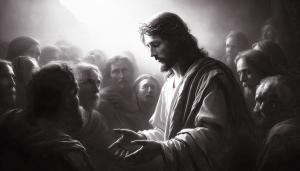
Do the Faithful Share in Infallible?
Politics and Religion
Previous Post

May 12, 2024
President Mocks Catholics As Progressive Catholicism Weakens
Next Post
May 22, 2024 Want Proof Butker’s Comments Agree with Catholic Teaching?
Recent Comments
"So, no answer."
Amoris Laetitia Deserves a Better Defence
"Thanks, Mike, but the history points in a different direction to the one you suggest.John ..."
Amoris Laetitia Deserves a Better Defence
"My honest take? I think St John Paul II was adamant that on his watch, ..."
Amoris Laetitia Deserves a Better Defence
""It's reasonable to ask what those claims mean in practice."It is. And I've laid out ..."
Amoris Laetitia Deserves a Better Defence
Browse Our Archives
Select a Category Abortion Arius Atheists Catholic Apologetics Catholic Culture Catholic History Catholic Humor Catholic Poetry Catholic Politics Catholic Theology Dr. James White Faith Alone Joe Heschmeyer Kamala Harris Martin Luther Pope Francis Preborn Children President Biden Science and Catholicism Sola Scriptura Synod of Synodality Trinity
Select a Month October 2026 September 2026 August 2026 July 2026 June 2026 May 2026 April 2026 March 2026 February 2026 January 2026 December 2025 November 2025 October 2025 September 2025 August 2025 July 2025 June 2025 May 2025 April 2025 March 2025 February 2025 January 2025 December 2024 November 2024 October 2024 September 2024 August 2024 July 2024 June 2024 May 2024 April 2024 March 2024 February 2024 January 2024 December 2023 November 2023 October 2023 September 2023 August 2023 July 2023 June 2023 May 2023 April 2023 March 2023 February 2023 January 2023 December 2022 November 2022 October 2022 September 2022 August 2022 July 2022 June 2022 May 2022 April 2022 March 2022 February 2022 January 2022 December 2021 November 2021
Follow Us!
TAKE THE
Religious Wisdom Quiz
How did Judas signal who Jesus was to the soldiers?
Select your answer to see how you score.
By pointing With a kiss By handing Him bread By shouting
Related posts from The Latin Right

Amoris Laetitia Deserves a Better Defence

Rich Man, Poor Man: Altruism and Agency

The Order We Did Not Make: The World...

The Poor Have Rights—and Responsibilities
TRENDING AT PATHEOS Catholic

Pope Leo Celebrates Mass for Nurses & Docs...
I don't have any idea how he did it, but Pope Leo...

The Sermon on the Mount, Part I: Matthew...
The Sermon on the Mount, Part I (Matthew 4:12-5:12) St. Matthew moves...

What's up from Crossway: Reviewing some of their latest A few weeks...

Janie Learns the Way of the Cross: A...
Teaching children about Jesus' Passion can be challenging. Many parents and educators...

Looking For Good Catholic Writing - October 2026
He alone extends the heavens, and he walks upon the waves of...

In "Irreplaceable," our book on vocation and technology, Trevor Sutton and I...
view all Catholic blogs
What Are Your Thoughts?leave a comment
Ad-Free & Subscriber Log-In Subscription Support
- About Us
- 2026 Calendar
- Videos
- Podcasts
- Library of World Religions
- Faith In Media Tracker
- Advertise With Us
- Write for Us
- Privacy Policy
- Terms of Service
- Do Not Sell My Data
- Contact Us
- Radiant Digital
- Manage Newsletter Subscriptions
- Unsubscribe From Notifications
- Sitemap
Copyright 2008-2026, Patheos. All rights reserved.
Subscription Support Ad-Free & Subscriber Log-In
Follow Patheos