
BuddhistCatholicContemplativeEvangelicalGeneral ChristianHinduJewishLatter-day SaintMuslimNew VisionsProgressive Christian
Beliefs
- Buddhist
- Catholic
- Contemplative
- Evangelical
- General Christian
- Hindu
- Jewish
- Latter-day Saint
- More Voices
- Muslim
- New Visions
- Pagan
- Progressive Christian
Topics
- Religion News
- Food and Religion
- Sports and Religion
- Religious Art
- Religious Music and Entertainment
- Religious Events
- History and Religion
- Style and Religion
- Politics and Religion
- Women in Religion
- Recreation Outdoors and Religion
- Business Finance and Religion
- Careers Workplace and Religion
- Education and Religion
- Family Parenting and Religion
- Health Fitness and Religion
- Home and Religion
- Relationships and Religion
- Technology and Religion
- Travel and Religion
Columnists
- Buddhist Columnists
- Business Finance and Religion Columnists
- Careers Workplace and Religion Columnists
- Catholic Columnists
- Contemplative Columnists
- Education and Religion Columnists
- Evangelists Columnists
- Family Parenting and Religion Columnists
- General Christian Columnists
- Health Fitness and Religion Columnists
- Hindu Columnists
- History and Religion Columnists
- Home and Religion Columnists
- Jewish Columnists
- More Voices Columnists
- Latter Day Columnists
- Muslim Columnists
- New Visions Columnists
- Nonreligious Columnists
- Pagan Columnists
- Politics and Religion Columnists
- Progressive Columnists
- Recreation Outdoors and Religion Columnists
- Relationships and Religion Columnists
- Religion News Columnists
- Religious Art Columnists
- Religious Events Columnists
- Religious Music and Entertainment Columnists
- Sports and Religion Columnists
- Style and Religion Columnists
- Technology and Religion Columnists
- Travel and Religion Columnists
- Women in Religion Columnists
Resource Library
- 2026 Calendar
- Library of World Religions
- The 100 Most Holy Places on Earth
- Patheos Answers
- Podcasts
- Videos
- Faith Leaders Database
- Anglican Episcopalian
- Bahai
- Baptist
- Buddhism
- Christianity
- Confucianism
- Eastern Orthodoxy
- Hinduism
- Holiness and Pentecostal
- ISKCON
- Islam
- Judaism
- Lutheran
- Methodist
- The Church of Jesus Christ of Latter-day Saints
- New Age
- Paganism
- Presbytarian and Reformed
- Protestantism
- Religion Behind the Scenes
- Roman Catholic
- Scientology
- Shia Islam
- Sikhism
- Sufism
- Sunni Islam
- Taoism
- Zen
- See all religions
Research Tools
 Ad-Free & Subscriber Log-In Subscription Support
Ad-Free & Subscriber Log-In Subscription Support
Follow Patheos 

- Trending:
- Forgiveness
- |
- Marriage
- |
- Consciousness
- |
- Death Penalty
- |
- Election
- |
- Halloween

- Home
- Catholic
- Religion News
- Why Does an All-Loving God Tolerate So Much Suffering?
Why Does an All-Loving God Tolerate So Much Suffering?
Last updated on: March 4, 2024 at 5:39 pm by Dennis Knapp
Why Does an All-Loving God Tolerate So Much Suffering? 2024-03-04T17:39:54-06:00 Dennis Knapp
Patheos Explore the world's faith through different perspectives on religion and spirituality! Patheos has the views of the prevalent religions and spiritualities of the world.
Recently, I wrote about the Super Bowl ad “He Gets Us.” In the comments section, a reader made the following observation about suffering that I want to explore. This reader often claims that the unnecessary suffering of children proves an “All-powerful, All-knowing, All-loving God” cannot exist.
Giving weight to real world data means that I cannot achieve the level of self-deception that is necessary to believe in an All-powerful, All-knowing, All-loving God. It is very likely that there is a God, but the undeserved suffering of children in the real world means that one or more of those “All” attributes is false. In fact, the “God given free will” theobable that is used to explain the undeserved suffering of children in the real world is itself nothing but a fabricated excuse.
I challenged this reader with the following:
What real world data do you have to know how much evil an All-powerful, All-knowing, and All-loving God will tolerate?
They retorted that the issue is not “evil” but underserved suffering.
I have no idea how much evil such a God will tolerate. But “evil” is not the issue. “Evil” is a very abstract and generalized term. The specific issue is undeserved suffering. A truly All-powerful, All-knowing, All-loving God would not tolerate the starvation death of even one child. Since God clearly does tolerate children dying of starvation, one or more of those All’s is mistaken. Since Jesus by His life and actions seems to have confirmed God’s All-loving character, it must be that the All-knowing or All-powerful or both are lies.
Sorry for the long quotations. I thought this would provide the proper context.
For this article, I explore the “Alls” listed above and how they relate to God’s toleration of underserved suffering. Furthermore, I reflect on Jesus’ life and actions as a reflection of God’s “All-loving character.” Do the life and actions of Jesus show God as “All-loving,” yet not “All-knowing” and “All-powerful?” How does Jesus’ suffering death (an undeserved death) fit into a discussion of God’s toleration of suffering?
Definitions
First, some definitions.
All-Power (Omnipotence)
The power of God to effect whatever is not intrinsically impossible. The universality of the object of the Divine power is not merely relative but absolute, so that the true nature of omnipotence is not clearly expressed by saying that God can do all things that are possible to Him; it requires the further statement that all things are possible to God. The intrinsically impossible is the self-contradictory, and its mutually exclusive elements could result only in nothingness.
All-Knowing (Omniscient)
God is omniscient or possesses the most perfect knowledge of all things, follows from His infinite perfection. In the first place He knows and comprehends Himself fully and adequately, and in the next place He knows all created objects and comprehends their finite and contingent mode of being.
All-Loving (Omnibenevolence)
This definition comes from multiple sources.
God is all-good. Possessing perfect or unlimited goodness. God’s goodness is tied to His all-lovingness.
221 But St. John goes even further when he affirms that “God is love”: God’s very being is love. By sending his only Son and the Spirit of Love in the fullness of time, God has revealed his innermost secret: God himself is an eternal exchange of love, Father, Son and Holy Spirit, and he has destined us to share in that exchange.
The Problem of Suffering (Evil)
The problem of undeserved suffering brought up by the reader is commonly known as The Problem of Suffering (Evil). The most popular version comes from the atheist philosopher, J.L Mackie. His Logical Problem From Evil posits that the Christian God cannot exist because contradictions exist between what Christians assert God is:
- God is omniscient (all-knowing)
- God is omnipotent (all-powerful)
- God is omnibenevolent (morally perfect)
- There is evil in the world
Concluding from this, one must come accept “that a God with the attributes (1-3), must know about all evil, would be capable of preventing it, and as morally perfect would be motivated to do so.” As pointed out by the reader, given these premises, God either does not exist, or is powerless, ignorant, or evil.
Plantinga’s Free Will Response
Moreover, the most comprehensive response to Mackie’s argument comes from analytic philosopher (and Christian) Alvin Plantinga. Plantinga’s free will defense counters that:
Mackie’s argument fails to establish an explicit logical contradiction. He contends that the contraction originates from the atheist (referred to an atheologian) unstated implicit assumptions. For example:
- God’s omnipotence does not mean that he can do anything, even logically impossible things, like create square circles. Likewise, God cannot create creatures with free will unable to choose evil.
- The moral value of free will provides God with a morally justified reason in permitting the existence of evil.
Plantinga states:
A world containing creatures who are significantly free (and freely perform more good than evil actions) is more valuable, all else being equal, than a world containing no free creatures at all. Now God can create free creatures, but He can’t cause or determine them to do only what is right. For if He does so, then they aren’t significantly free after all; they do not do what is right freely. To create creatures capable of moral good, therefore, He must create creatures capable of moral evil; and He can’t give these creatures the freedom to perform evil and at the same time prevent them from doing so. As it turned out, sadly enough, some of the free creatures God created went wrong in the exercise of their freedom; this is the source of moral evil. The fact that free creatures sometimes go wrong, however, counts neither against God’s omnipotence nor against His goodness; for He could have forestalled the occurrence of moral evil only by removing the possibility of moral good.
The Life, Actions, and Suffering of Jesus
As stated above, the reader commented that the life and actions of Jesus “confirmed God’s All-loving character.” However, when we look at His innocent life, and His good actions in healing the sick and feeding the hungry, in light of His horrific death (which includes extreme and undeserved suffering), we see an All-loving God allowing the most extreme example of underserved suffering. Now Christians understand this event as Jesus offering Himself up freely for the sins of the world (Hebrews 9:11-14). Therefore, as stated in the Catechism above, “By sending his only Son and the Spirit of Love in the fullness of time, God has revealed his innermost secret: God himself is an eternal exchange of love, Father, Son and Holy Spirit, and he has destined us to share in that exchange.”
In this “sending” out of love for humanity, God allowed for the immense and underserved suffering of Jesus. Furthermore, in the life, actions, underserved suffering, death, and resurrection of Jesus, God showed His great love.
Final Thoughts…
To sum up, God allows for a great deal of suffering, as we see in our world. He does so because He sees moral value in free will. Moreover, just as God cannot create a square circle, He cannot also create creatures with free will and the inability to choose evil (or inflict underserved suffering on others, even children). Finally, God used the greatest example of underserved suffering to bring out the greatest good for the human race in the person of Jesus’ life, suffering, death, and resurrection.
Thank you!
Read The Latin Right’s other writing here.
I am in the process of writing articles where I answer your questions.
So, please go to my Facebook page and IM your questions (and follow my page). I may just write one article or do a Q&A article.
Also, please subscribe my YouTube page for updates on upcoming articles.

Why Does an All-Loving God Tolerate So Much Suffering?
More Voices
Religion News
Previous Post

February 29, 2024
Trump: A Theo-fascist Dictator? Come On, Man…
Next Post

March 7, 2024 Democrats: Want Trump to Go Away? Let Him Win and Reset
Recent Comments
"So, no answer."
Amoris Laetitia Deserves a Better Defence
"Thanks, Mike, but the history points in a different direction to the one you suggest.John ..."
Amoris Laetitia Deserves a Better Defence
"My honest take? I think St John Paul II was adamant that on his watch, ..."
Amoris Laetitia Deserves a Better Defence
""It's reasonable to ask what those claims mean in practice."It is. And I've laid out ..."
Amoris Laetitia Deserves a Better Defence
Browse Our Archives
Select a Category Abortion Arius Atheists Catholic Apologetics Catholic Culture Catholic History Catholic Humor Catholic Poetry Catholic Politics Catholic Theology Dr. James White Faith Alone Joe Heschmeyer Kamala Harris Martin Luther Pope Francis Preborn Children President Biden Science and Catholicism Sola Scriptura Synod of Synodality Trinity
Select a Month October 2026 September 2026 August 2026 July 2026 June 2026 May 2026 April 2026 March 2026 February 2026 January 2026 December 2025 November 2025 October 2025 September 2025 August 2025 July 2025 June 2025 May 2025 April 2025 March 2025 February 2025 January 2025 December 2024 November 2024 October 2024 September 2024 August 2024 July 2024 June 2024 May 2024 April 2024 March 2024 February 2024 January 2024 December 2023 November 2023 October 2023 September 2023 August 2023 July 2023 June 2023 May 2023 April 2023 March 2023 February 2023 January 2023 December 2022 November 2022 October 2022 September 2022 August 2022 July 2022 June 2022 May 2022 April 2022 March 2022 February 2022 January 2022 December 2021 November 2021
Follow Us!
TAKE THE
Religious Wisdom Quiz
What does the name "Elijah" mean?
Select your answer to see how you score.
God is Light God Provides God Saves My God is Yahweh
Related posts from The Latin Right

The Poor Have Rights—and Responsibilities

Fighting Over the Rhetorical Woman

Is It Christian Nationalist to Want Christian Civilization?
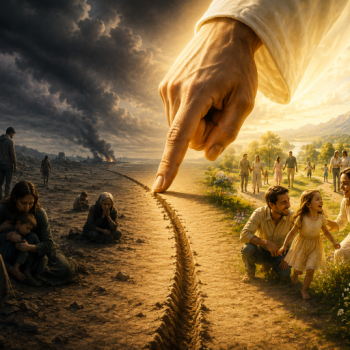
Where Should God Draw the Line on Allowing...
TRENDING AT PATHEOS Catholic

Pope Leo Celebrates Mass for Nurses & Docs...
I don't have any idea how he did it, but Pope Leo...

The Sermon on the Mount, Part I: Matthew...
The Sermon on the Mount, Part I (Matthew 4:12-5:12) St. Matthew moves...

What's up from Crossway: Reviewing some of their latest A few weeks...

Janie Learns the Way of the Cross: A...
Teaching children about Jesus' Passion can be challenging. Many parents and educators...

Looking For Good Catholic Writing - October 2026
He alone extends the heavens, and he walks upon the waves of...

In "Irreplaceable," our book on vocation and technology, Trevor Sutton and I...
view all Catholic blogs
What Are Your Thoughts?leave a comment
Ad-Free & Subscriber Log-In Subscription Support
- About Us
- 2026 Calendar
- Videos
- Podcasts
- Library of World Religions
- Faith In Media Tracker
- Advertise With Us
- Write for Us
- Privacy Policy
- Terms of Service
- Do Not Sell My Data
- Contact Us
- Radiant Digital
- Manage Newsletter Subscriptions
- Unsubscribe From Notifications
- Sitemap
Copyright 2008-2026, Patheos. All rights reserved.
Subscription Support Ad-Free & Subscriber Log-In
Follow Patheos