
BuddhistCatholicContemplativeEvangelicalGeneral ChristianHinduJewishLatter-day SaintMuslimNew VisionsProgressive Christian
Beliefs
- Buddhist
- Catholic
- Contemplative
- Evangelical
- General Christian
- Hindu
- Jewish
- Latter-day Saint
- More Voices
- Muslim
- New Visions
- Pagan
- Progressive Christian
Topics
- Religion News
- Food and Religion
- Sports and Religion
- Religious Art
- Religious Music and Entertainment
- Religious Events
- History and Religion
- Style and Religion
- Politics and Religion
- Women in Religion
- Recreation Outdoors and Religion
- Business Finance and Religion
- Careers Workplace and Religion
- Education and Religion
- Family Parenting and Religion
- Health Fitness and Religion
- Home and Religion
- Relationships and Religion
- Technology and Religion
- Travel and Religion
Columnists
- Buddhist Columnists
- Business Finance and Religion Columnists
- Careers Workplace and Religion Columnists
- Catholic Columnists
- Contemplative Columnists
- Education and Religion Columnists
- Evangelists Columnists
- Family Parenting and Religion Columnists
- General Christian Columnists
- Health Fitness and Religion Columnists
- Hindu Columnists
- History and Religion Columnists
- Home and Religion Columnists
- Jewish Columnists
- More Voices Columnists
- Latter Day Columnists
- Muslim Columnists
- New Visions Columnists
- Nonreligious Columnists
- Pagan Columnists
- Politics and Religion Columnists
- Progressive Columnists
- Recreation Outdoors and Religion Columnists
- Relationships and Religion Columnists
- Religion News Columnists
- Religious Art Columnists
- Religious Events Columnists
- Religious Music and Entertainment Columnists
- Sports and Religion Columnists
- Style and Religion Columnists
- Technology and Religion Columnists
- Travel and Religion Columnists
- Women in Religion Columnists
Resource Library
- 2026 Calendar
- Library of World Religions
- The 100 Most Holy Places on Earth
- Patheos Answers
- Podcasts
- Videos
- Faith Leaders Database
- Anglican Episcopalian
- Bahai
- Baptist
- Buddhism
- Christianity
- Confucianism
- Eastern Orthodoxy
- Hinduism
- Holiness and Pentecostal
- ISKCON
- Islam
- Judaism
- Lutheran
- Methodist
- The Church of Jesus Christ of Latter-day Saints
- New Age
- Paganism
- Presbytarian and Reformed
- Protestantism
- Religion Behind the Scenes
- Roman Catholic
- Scientology
- Shia Islam
- Sikhism
- Sufism
- Sunni Islam
- Taoism
- Zen
- See all religions
Research Tools
 Ad-Free & Subscriber Log-In Subscription Support
Follow Patheos 

- Trending:
- Advent
- |
- Forgiveness
- |
- Thanksgiving
- |
- Election
- |
- Seasonal Holidays
- |
- Marriage

- Home
- Catholic
- Which God Exists? Guest Writer – Douglas Beaumont
Which God Exists? Guest Writer – Douglas Beaumont
Last updated on: March 6, 2023 at 11:04 am by Dennis Knapp
Which God Exists? Guest Writer – Douglas Beaumont 2023-03-06T11:04:17-06:00 Dennis Knapp
Patheos Explore the world's faith through different perspectives on religion and spirituality! Patheos has the views of the prevalent religions and spiritualities of the world.
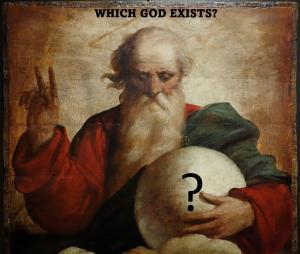
WHICH GOD EXISTS?
In discussions over the existence of God, many atheists seem to assume that anything that can be labeled “god” counts toward what informed Christians mean by the term. I’ve seen more than one atheist in a debate say that with the thousands of gods on offer from the world’s religions, atheists only disbelieve in one more of them than Christians do – and if Christians were consistent, they’d be atheists about their god too. This is a dim-witted argument on multiple counts, but besides reflecting poor reasoning it also reveals ignorance as to what a Christian means (or should mean) when he speaks of “God.”
Even if they existed, beings such as Odin, Zeus, or Thor cannot be the God of creation. At best they would be very powerful sub-creations and thus part of the natural order. The creator God is metaphysically distinct from them or any other natural thing (i.e., super-natural). Once this is understood, the absurd nature of the above claim becomes apparent. Moreover, the existence of this kind of God is not simply a matter of biblical interpretation or theological tradition – it is solidly based in philosophical principles derived from creation itself.
Now, Thomas Aquinas wrote what might amount to a doctoral dissertation on this subject but we don’t have time for that here. (If you want to get it straight from him, the book is called On Being and Essence). I’ll summarize the relevant points here in a way that I hope will make sense to non-philosophers. We start with a simple and, I think, obvious principle:
A thing’s essence and existence are distinct.
The term “essence,” as it is used here, refers to what a thing is. My essence is humanness, a horse’s essence is horseness. You get the point. “Existence,” on the other hand, here refers to whether or not there is a certain thing. The important thing to grasp is that essences do not automatically exist just because we know what they are. In fact, we could not know if something existed unless we first knew what it was.
So for example, a horse in a field is an essence with existence. A dinosaur is an essence without existence (there must be an essence or we wouldn’t know what a dinosaur is to deny that there are any). A phoenix is an essence that never had existence. Etc.
Because we can have essences that do not have existence (like the character Harry Potter whose essence is human but who does not have existence), essence and existence cannot be equivalent. Moreover, since a thing’s essence and existence are distinct, then:
If an essence has existence it must have received it from another.
A “bare essence” without existence does not, by definition, exist – and non-existent things can’t be the cause of anything (much less themselves). So if an essence has received existence, it must have come from some other essence that already had existence (it would have to exist in order to accomplish this feat). But now we run into a problem – because how did THAT thing get its existence?
We still cannot say this other essence got existence from itself – and if we say it came from another, then we enter into an infinite regress of causes. There are two problems with infinite regresses. First, there cannot be an infinite series of things, because infinity is not a number (crazy paradoxes arise when we try to treat infinity like a number – see Hibert’s Hotel or Zeno’s paradoxes for example). Second, even an infinite chain of essences causing other essences would not explain the chain. It would be like trying to explain the motion of rail cars that cannot move by themselves. Adding more doesn’t help! Eventually you need to have something that can move itself – something that doesn’t just have motion, but has it essentially ( it because of what it is – i.e., a train engine). So,
There cannot be an infinite series of existing-giving essences.
In a similar fashion with the engine and rail cars, since every essence-existence combination cannot be explained by another, there must be a cause which exists because of what it is – a thing in which essence and existence are not distinct (and therefore require no cause to join them together). Therefore,
This cause would not have existence – it would be existence.
The final piece of the puzzle here involves noting that pure existence is boundless. This is no mere assertion – what limits existence is always essence. The existence of the man, horse, and sun do not overlap – they are not shared. The existence of a thing is limited to what it is – a thing’s essence limits its existence. However, a being who joins existence to essences (i.e., creates) and whose essence is existence would be unlimited….infinite….pure spirit…
This infinite spirit can only be the creator God.
This unlimited creator is, of course, God. Thus, when God’s essence is described as various attributes – each must be understood as being without limit. This is why the theologically sophisticated list of God’s attributes traditionally are formed by prefixing the principle attribute in such a way as to highlight lack of limitation either positively (e.g., omni-, all-,) or negatively (e.g., a-, e-, im-, in-). Thus, the Christian God is not accurately described as an old man in Heaven or a towering figure throwing a hammer around. He is infinite spirit, immutable, eternal, omnipresent, omniscient, omnipotent, etc.
The fact of the existence of a universe of things that do not exist simply because of what they are (their essence) shows that there must a cause exist whose essence is existence. Further, it shows that there can only be one of them (because unlimitedness cannot be multiplied). When we understand that this unlimited, infinite, first cause is the creator traditionally affirmed by Christianity, we see that comparing the true God to the “gods” of other religions is to commit a category mistake.
Douglas Beaumont
A writer, teacher, and speaker on topics in Christian Apologetics, Philosophy of Religion, Sacred Scripture, and Catholic Theology. Please check out Douglas’ content via the links below. Thank you.
If you enjoy my writing and want to support my work, please consider donating a monetary gift of any size or quantity by clicking here. Thank you!
Read my other writing here.
Please click the link below to join.
Voices of the Faithful in the Synod on Synodality
Please make your voice heard.
I Support Church Teaching in the Synod of Synodality
More Voices
Previous Post
February 28, 2023
When is Empathy Unhealthy? A Critique of Unfettered Empathy
Next Post
March 8, 2023 An Appeal to Pope Francis on the 10th Anniversary of His Pontificate
Recent Comments
"Saying "she has no reason to feel guilty" is a legalistic, out of touch response. ..."
Pope Leo in Lima: The Speech ..."
"You're right about one thing: there is evidence that average female sexual desire increases around ..."
Pope Leo in Lima: The Speech ..."
"If you really believe that the purpose of sex is procreation, you can't deny that ..."
Pope Leo in Lima: The Speech ..."
"Several things are being conflated here. I think your imaginary Eileen illustrates the problem with ..."
Pope Leo in Lima: The Speech ..."
Browse Our Archives
Select a Category Abortion Arius Atheists Catholic Apologetics Catholic Culture Catholic History Catholic Humor Catholic Poetry Catholic Politics Catholic Theology Dr. James White Faith Alone Joe Heschmeyer Kamala Harris Martin Luther Pope Francis Preborn Children President Biden Science and Catholicism Sola Scriptura Synod of Synodality Trinity
Select a Month November 2026 October 2026 September 2026 August 2026 July 2026 June 2026 May 2026 April 2026 March 2026 February 2026 January 2026 December 2025 November 2025 October 2025 September 2025 August 2025 July 2025 June 2025 May 2025 April 2025 March 2025 February 2025 January 2025 December 2024 November 2024 October 2024 September 2024 August 2024 July 2024 June 2024 May 2024 April 2024 March 2024 February 2024 January 2024 December 2023 November 2023 October 2023 September 2023 August 2023 July 2023 June 2023 May 2023 April 2023 March 2023 February 2023 January 2023 December 2022 November 2022 October 2022 September 2022 August 2022 July 2022 June 2022 May 2022 April 2022 March 2022 February 2022 January 2022 December 2021 November 2021
Follow Us!
TAKE THE
Religious Wisdom Quiz
What does Paul, as a spiritual father of the Corinthians, beseech them to do?
Select your answer to see how you score.
Eat Be Followers of Him Send Paul Money Pray
Related posts from The Latin Right
Where Should God Draw the Line on Allowing...
The Cosmic Jury: Part II – Cross-Examining the...
The Cosmic Jury: Part I – The Verdict...
The Arguments About Mary Were Never Really About...
TRENDING AT PATHEOS Catholic

Will Islam become the world's biggest religion by 2035? Congo will replace...

The resilience of the Christian faith in the english speaking world of...

An Advent Calendar, and a Tree full of...
I've spent the weekend deeply invested in internet drama about a $150...

How to Have Financial Transparency in Marriage
Despite the fact that financial issues and money problems are the number...
The Healing Power of Forgiveness in Marriage
Learning how to give and accept apologies are essential ingredients of a...

The West's Christian Moral Inheritance: A Legacy Denied
Whether we like it or not, our environment matters, shaping us both...
view all Catholic blogs
What Are Your Thoughts?leave a comment
Ad-Free & Subscriber Log-In Subscription Support
- About Us
- 2026 Calendar
- Videos
- Podcasts
- Library of World Religions
- Faith In Media Tracker
- Advertise With Us
- Write for Us
- Privacy Policy
- Terms of Service
- Do Not Sell My Data
- Contact Us
- Radiant Digital
- Manage Newsletter Subscriptions
- Unsubscribe From Notifications
- Sitemap
Copyright 2008-2026, Patheos. All rights reserved.
Subscription Support Ad-Free & Subscriber Log-In
Follow Patheos