
BuddhistCatholicContemplativeEvangelicalGeneral ChristianHinduJewishLatter-day SaintMuslimNew VisionsProgressive Christian
Beliefs
- Buddhist
- Catholic
- Contemplative
- Evangelical
- General Christian
- Hindu
- Jewish
- Latter-day Saint
- More Voices
- Muslim
- New Visions
- Pagan
- Progressive Christian
Topics
- Religion News
- Food and Religion
- Sports and Religion
- Religious Art
- Religious Music and Entertainment
- Religious Events
- History and Religion
- Style and Religion
- Politics and Religion
- Women in Religion
- Recreation Outdoors and Religion
- Business Finance and Religion
- Careers Workplace and Religion
- Education and Religion
- Family Parenting and Religion
- Health Fitness and Religion
- Home and Religion
- Relationships and Religion
- Technology and Religion
- Travel and Religion
Columnists
- Buddhist Columnists
- Business Finance and Religion Columnists
- Careers Workplace and Religion Columnists
- Catholic Columnists
- Contemplative Columnists
- Education and Religion Columnists
- Evangelists Columnists
- Family Parenting and Religion Columnists
- General Christian Columnists
- Health Fitness and Religion Columnists
- Hindu Columnists
- History and Religion Columnists
- Home and Religion Columnists
- Jewish Columnists
- More Voices Columnists
- Latter Day Columnists
- Muslim Columnists
- New Visions Columnists
- Nonreligious Columnists
- Pagan Columnists
- Politics and Religion Columnists
- Progressive Columnists
- Recreation Outdoors and Religion Columnists
- Relationships and Religion Columnists
- Religion News Columnists
- Religious Art Columnists
- Religious Events Columnists
- Religious Music and Entertainment Columnists
- Sports and Religion Columnists
- Style and Religion Columnists
- Technology and Religion Columnists
- Travel and Religion Columnists
- Women in Religion Columnists
Resource Library
- 2026 Calendar
- Library of World Religions
- The 100 Most Holy Places on Earth
- Patheos Answers
- Podcasts
- Videos
- Faith Leaders Database
- Anglican Episcopalian
- Bahai
- Baptist
- Buddhism
- Christianity
- Confucianism
- Eastern Orthodoxy
- Hinduism
- Holiness and Pentecostal
- ISKCON
- Islam
- Judaism
- Lutheran
- Methodist
- The Church of Jesus Christ of Latter-day Saints
- New Age
- Paganism
- Presbytarian and Reformed
- Protestantism
- Religion Behind the Scenes
- Roman Catholic
- Scientology
- Shia Islam
- Sikhism
- Sufism
- Sunni Islam
- Taoism
- Zen
- See all religions
Research Tools
 Ad-Free & Subscriber Log-In Subscription Support
Ad-Free & Subscriber Log-In Subscription Support
Follow Patheos 

- Trending:
- Forgiveness
- |
- Marriage
- |
- Consciousness
- |
- Death Penalty
- |
- Election
- |
- Halloween

- Home
- Catholic
- Religious Events
- Historical Context: In Defense of the First Crusaders?
Historical Context: In Defense of the First Crusaders?
Last updated on: January 5, 2023 at 1:37 pm by Dennis Knapp
Historical Context: In Defense of the First Crusaders? 2023-01-05T13:37:25-06:00 Dennis Knapp
Patheos Explore the world's faith through different perspectives on religion and spirituality! Patheos has the views of the prevalent religions and spiritualities of the world.
Do you consider yourself someone who understands historical context? How about the word historiography? Many who claim to understand history do so without first identifying their own social and educational biases. They judge people of the past through the lens of the present. Some condemn the past, as if their actions and decisions would have somehow differed. Hindsight’s 20/20…but is it?
In this article, I look at a controversial moment in Western history, the First Crusade (1095-1102). I show that this often-reproached historical epoch was not, as often understood by modern people, a bloodthirsty, militaristic landgrab. According to the source material, the majority of those involved, mostly unhorsed free-men warriors, saw in the crusade a spiritual pilgrimage undertaken to save their souls. Souls stained with the blood of fellow Christians. Regardless of what modern commentators think of the horrific actions during the Crusade (and they were horrific), the motivation of those involved must also enter the equation. Only then can proper historical context be achieved.
What is historiography?
Historiography is:
the writing of history, especially the writing of history based on the critical examination of sources, the selection of particular details from the authentic materials in those sources, and the synthesis of those details into a narrative that stands the test of critical examination. The term historiography also refers to the theory and history of historical writing.
For the purposes of this article, historiography of the motivation of free-men warriors, taken from primary sources, demonstrate the clearly spiritual nature of most crusaders. This stands in stark contrast to the more common understandings of the First Crusade as a militaristic landgrab.
Motivation of the Crusader
Due to medieval feudal obligations, those who possessed land did so in feudal bond to another more landed lord or noble. This lord or noble was then in feudal bond to a far greater landed noble, and so on. These landed nobles in turn fought over land and required their feudal vassals to fight in their battles, battles against fellow Christians. To answer the call to feudal obligation put one’s soul at risk of mortal sin due to the violation of the commandment thou shalt not kill. In the appeal of Urban II at Clermont in 1095, Guibert of Nogent reported Urban stating:
You have thus far waged unjust wars, at one time and another; you have brandished mad weapons to your mutual destruction, for no other reason than covetousness and pride, as a result of which you have deserved eternal death and sure damnation. We now hold out to you wars which contain the glorious reward of martyrdom, which will retain that title of praise now and forever.
Furthermore, as the ultimate spiritual authority in the West, this papal condemnation bore the utmost weight. Urban II held nothing back in laying out the status of souls of fighting men in Europe. He ends with an opportunity to put their skills at war to use in the redemption of their souls. This pilgrimage provided the free-men warrior the means for forgiveness within a feudal system of violence.
Privilege of Urban to the Pilgrims
Moreover, Urban II made the spiritual emphasis perfectly clear in listing out criteria for those who chose to go on pilgrimage. Fulcher of Chartres records the pope saying:
Whoever goes on the journey to free the church of God in Jerusalem out of devotion alone, and not for the gaining of glory or money, can substitute the journey for all penance for sin.
The requirement laid out by Urban II to receive the penance and therefore forgiveness of sin were:
- Free the church of God in Jerusalem.
- Free it out of devotion alone.
- Not for glory or money.
Those who took up the pilgrimage were required to satisfy all three requirements. Failure to satisfy any one requirement meant failure. Failure meant no forgiveness and hell. Furthermore, once the pilgrimage got underway and some pilgrims died, the objective of Jerusalem took on greater concern. Those who survived all hardships along the way, not only had the weight of their sin, but those of the fallen.
Counting the Cost of Crusade
The primary sources demonstrate the free-men warriors met the last two requirements of the pilgrimage in enthusiastically selling their possessions at a much-reduced price.
Guibert of Nogent states that the free-men warrior set out:
…without any consideration for the scarcity of their resources, and without worrying about suitably disposing of their homes, and fields. Instead, each sold his assets at a price much lower than he would have received if he has been shut up in a painful prison and needed to pay an immediate ransom.
International travel remains expensive in our modern world; in the medieval world, such travel rarely happened, and never on such a large scale as this. To willfully bankrupt oneself to partake in such a dangerous endeavor speaks loudly of the level of devotion and the lack of concern for monetary gain and glory.
Along the Way and To the End
Did money and glory play any role at all in the First Crusade? Yes, for “the princes” that led the pilgrim army. Of the main princes (Bohemond, Prince of Taranto, Godfrey of Bouillon, Raymond de Saint-Gilles, Robert Curthose, Duke of Normandy, and twelve others), only Raymond de Saint-Gilles fulfilled his vow to take Jerusalem, and this only after the free-men in his army forced him at Maara (in modern day Syria).
William Archbishop of Tyre writes:
They complained to each other that the leaders were ever trying to invent excuses for delay and that the main object of the pilgrimage seemed wholly forgotten. Whenever a city was taken, the chiefs at once began to wrangle and fight over the question of its possession. They thereupon held a meeting of their own and decided that as soon as the count [Raymond] happened to be away for any reason they would destroy Maara, that thereafter there might be nothing to hinder the accomplishment of their vows.
Final Thoughts
To conclude, a few words on the horrors of the First Crusade. In no way does this article seek to justify the evil acts committed by the crusaders. Also, violence in the name of Jesus is unbiblical and an extreme theological corruption. This article intends to show historical context for those who gave up the most and suffered the most—the free-man warrior. By focusing on the group that gave up the most, suffered the most, and therefore pushed the expedition across the finish line, adds to our historical understanding of the First Crusade. Hopefully, it also shows insight into how those in difficult situations in the past address them. Before we judge the past based on modern standards, we must try to understand the world as it was.
Thanks for Reading!
If you enjoy my writing and want to support my work, please consider donating a monetary gift of any size or quantity by clicking here. Thank you!
Read my other writing here.
Please click the link below to join.
Voices of the Faithful in the Synod on Synodality
Please make your voice heard.
I Support Church Teaching in the Synod of Synodality
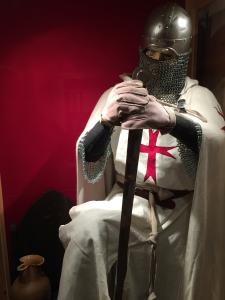
Taken from Pixabay
Religious Events
History and Religion
Previous Post

December 30, 2022
By What Authority? The Keys to Real Authority in the Church
Next Post
January 7, 2023 TLR Asks: As a Catholic, Should I Vote Republican?
Recent Comments
"So, no answer."
Amoris Laetitia Deserves a Better Defence
"Thanks, Mike, but the history points in a different direction to the one you suggest.John ..."
Amoris Laetitia Deserves a Better Defence
"My honest take? I think St John Paul II was adamant that on his watch, ..."
Amoris Laetitia Deserves a Better Defence
""It's reasonable to ask what those claims mean in practice."It is. And I've laid out ..."
Amoris Laetitia Deserves a Better Defence
Browse Our Archives
Select a Category Abortion Arius Atheists Catholic Apologetics Catholic Culture Catholic History Catholic Humor Catholic Poetry Catholic Politics Catholic Theology Dr. James White Faith Alone Joe Heschmeyer Kamala Harris Martin Luther Pope Francis Preborn Children President Biden Science and Catholicism Sola Scriptura Synod of Synodality Trinity
Select a Month October 2026 September 2026 August 2026 July 2026 June 2026 May 2026 April 2026 March 2026 February 2026 January 2026 December 2025 November 2025 October 2025 September 2025 August 2025 July 2025 June 2025 May 2025 April 2025 March 2025 February 2025 January 2025 December 2024 November 2024 October 2024 September 2024 August 2024 July 2024 June 2024 May 2024 April 2024 March 2024 February 2024 January 2024 December 2023 November 2023 October 2023 September 2023 August 2023 July 2023 June 2023 May 2023 April 2023 March 2023 February 2023 January 2023 December 2022 November 2022 October 2022 September 2022 August 2022 July 2022 June 2022 May 2022 April 2022 March 2022 February 2022 January 2022 December 2021 November 2021
Follow Us!
TAKE THE
Religious Wisdom Quiz
To where did Jesus' family flee from Bethlehem?
Select your answer to see how you score.
Greece Samaria Nazareth Egypt
Related posts from The Latin Right

Amoris Laetitia Deserves a Better Defence

Rich Man, Poor Man: Altruism and Agency

The Order We Did Not Make: The World...

The Poor Have Rights—and Responsibilities
TRENDING AT PATHEOS Catholic

Pope Leo Celebrates Mass for Nurses & Docs...
I don't have any idea how he did it, but Pope Leo...

The Sermon on the Mount, Part I: Matthew...
The Sermon on the Mount, Part I (Matthew 4:12-5:12) St. Matthew moves...

What's up from Crossway: Reviewing some of their latest A few weeks...

Janie Learns the Way of the Cross: A...
Teaching children about Jesus' Passion can be challenging. Many parents and educators...

Looking For Good Catholic Writing - October 2026
He alone extends the heavens, and he walks upon the waves of...

In "Irreplaceable," our book on vocation and technology, Trevor Sutton and I...
view all Catholic blogs
What Are Your Thoughts?leave a comment
Ad-Free & Subscriber Log-In Subscription Support
- About Us
- 2026 Calendar
- Videos
- Podcasts
- Library of World Religions
- Faith In Media Tracker
- Advertise With Us
- Write for Us
- Privacy Policy
- Terms of Service
- Do Not Sell My Data
- Contact Us
- Radiant Digital
- Manage Newsletter Subscriptions
- Unsubscribe From Notifications
- Sitemap
Copyright 2008-2026, Patheos. All rights reserved.
Subscription Support Ad-Free & Subscriber Log-In
Follow Patheos