
BuddhistCatholicContemplativeEvangelicalGeneral ChristianHinduJewishLatter-day SaintMuslimNew VisionsProgressive Christian
Beliefs
- Buddhist
- Catholic
- Contemplative
- Evangelical
- General Christian
- Hindu
- Jewish
- Latter-day Saint
- More Voices
- Muslim
- New Visions
- Pagan
- Progressive Christian
Topics
- Religion News
- Food and Religion
- Sports and Religion
- Religious Art
- Religious Music and Entertainment
- Religious Events
- History and Religion
- Style and Religion
- Politics and Religion
- Women in Religion
- Recreation Outdoors and Religion
- Business Finance and Religion
- Careers Workplace and Religion
- Education and Religion
- Family Parenting and Religion
- Health Fitness and Religion
- Home and Religion
- Relationships and Religion
- Technology and Religion
- Travel and Religion
Columnists
- Buddhist Columnists
- Business Finance and Religion Columnists
- Careers Workplace and Religion Columnists
- Catholic Columnists
- Contemplative Columnists
- Education and Religion Columnists
- Evangelists Columnists
- Family Parenting and Religion Columnists
- General Christian Columnists
- Health Fitness and Religion Columnists
- Hindu Columnists
- History and Religion Columnists
- Home and Religion Columnists
- Jewish Columnists
- More Voices Columnists
- Latter Day Columnists
- Muslim Columnists
- New Visions Columnists
- Nonreligious Columnists
- Pagan Columnists
- Politics and Religion Columnists
- Progressive Columnists
- Recreation Outdoors and Religion Columnists
- Relationships and Religion Columnists
- Religion News Columnists
- Religious Art Columnists
- Religious Events Columnists
- Religious Music and Entertainment Columnists
- Sports and Religion Columnists
- Style and Religion Columnists
- Technology and Religion Columnists
- Travel and Religion Columnists
- Women in Religion Columnists
Resource Library
- 2026 Calendar
- Library of World Religions
- The 100 Most Holy Places on Earth
- Patheos Answers
- Podcasts
- Videos
- Faith Leaders Database
- Anglican Episcopalian
- Bahai
- Baptist
- Buddhism
- Christianity
- Confucianism
- Eastern Orthodoxy
- Hinduism
- Holiness and Pentecostal
- ISKCON
- Islam
- Judaism
- Lutheran
- Methodist
- The Church of Jesus Christ of Latter-day Saints
- New Age
- Paganism
- Presbytarian and Reformed
- Protestantism
- Religion Behind the Scenes
- Roman Catholic
- Scientology
- Shia Islam
- Sikhism
- Sufism
- Sunni Islam
- Taoism
- Zen
- See all religions
Research Tools
 Ad-Free & Subscriber Log-In Subscription Support
Ad-Free & Subscriber Log-In Subscription Support
Follow Patheos 

- Trending:
- Forgiveness
- |
- Marriage
- |
- Consciousness
- |
- Death Penalty
- |
- Election
- |
- Halloween

- Home
- Catholic
- Women in Religion
- The Misuse of the Faithful in the Synod of Synodality
The Misuse of the Faithful in the Synod of Synodality
Last updated on: November 3, 2022 at 12:30 am by Dennis Knapp
The Misuse of the Faithful in the Synod of Synodality 2022-11-02T14:37:58-06:00 Dennis Knapp
Patheos Explore the world's faith through different perspectives on religion and spirituality! Patheos has the views of the prevalent religions and spiritualities of the world.
The misuse of the faithful in the Synod of Synodality.
Recently, I wrote an article about the extreme content found in National Synthesis of the People of God in the United States of America for the Diocesan Phase of the 2021-2023 Synod. This “synthesis” appears to be an attempt by those who dissent from Church teaching to enact change. I contend that those who lead this effort seek to appeal to sensus fidelium in their attempt at doctrinal change. The thought: if it appears all the “faithful” throughout the world agree, the Pope must listen and move towards change. This is a misuse of the faithful.
In this article, I lay out why the “synthesis” represents an abuse of sensus fidelium. The supernatural sense of faith in sensus fidelium cannot contradict defined Church teaching. The attempt to do so represents a misuse not only of the concept of sensus fidelium, but also of the people of God.
Sensus Fidelium Explained
According to the Catechism of the Catholic Church, sensus fidelium must meet specific criteria. Sensus fidelium is not a mere consensus of Catholic opinion that in turn affects Catholic doctrine.
The supernatural sense of faith
91 All the faithful share in understanding and handing on revealed truth. They have received the anointing of the Holy Spirit, who instructs them and guides them into all truth.
92 “The whole body of the faithful. . . cannot err in matters of belief. This characteristic is shown in the supernatural appreciation of faith (sensus fidei) on the part of the whole people, when, from the bishops to the last of the faithful, they manifest a universal consent in matters of faith and morals.”
93 “By this appreciation of the faith, aroused and sustained by the Spirit of truth, the People of God, guided by the sacred teaching authority (Magisterium)…receives…the faith, once for all delivered to the saints…the People unfailingly adheres to this faith, penetrates it more deeply with right judgment, and applies it more fully in daily life.” [emphasis added]
Therefore, Magisterial teaching authority must guide sensus fidelium, not the other way round. Any attempt to reduce sensus fidelium to mere opinion, regardless of how many “faithful” hold an opinion, constitutes misuse.
Examples of Misuse
Allow me to provide proof of my contentions. Below is a direct quote that reference the concept of sensus fidelium for change in doctrine.
As one synodal consultation described, “People noted that the Church seems to prioritize doctrine over people, rules, and regulations over lived reality. People want the Church to be a home for the wounded and broken, not an institution for the perfect. They want the Church to meet people where they are, wherever they are, and walk with them rather than judging them; to build real relationships through care and authenticity, not superiority.” In no particular order, the following groups were frequently mentioned as integral to being a more welcoming Church.
The reference to a more “open” Church by the People of God later gets clarified as Catholics in the LGBTQ+ community.
Nearly all synodal consultations shared a deep appreciation for the powerful impact of women religious who have consistently led the way in carrying out the mission of the Church… Ordination for women emerged not primarily as a solution to the problem of the priest shortage, but as a matter of justice.
Notice that “nearly all synodal consultations” also means People of God. So, the inference here is that the People of God see the ordination of women as a matter of justice.
Invoking the Holy Spirit and the People of God
Moreover, in the final paragraph of the “synthesis,” we see a more direct reference to sensus fidelium.
Gratitude is a gift of the Holy Spirit, which is essential for authentic discernment. Throughout all the synodal consultations, the People of God have continually shared their expressions of joy and gratitude for the invitation to journey together on the synodal path. These spiritual conversations and fraternal dialogues have renewed a sense of common love and responsibility for the good of our Church—in our parishes, in our dioceses, and in our country. Through participation in the diocesan phase of the Synod, the People of God have already begun to build the Church for which they hope. Listening brings forth the impetus toward healing our enduring wounds, and enhancing our healthy communion and participation, which is vital for living out our mission. This synthesis, as well as the syntheses generated on the local level, are an invitation to ongoing attentive listening, respectful encounter, and prayerful discernment. [page 13]
Furthermore, the author’s use of the phrase the People of God in conjunction with the Holy Spirit shows their intent to invoke sensus fidelium to push for doctrinal change. Such a tactic, while more subtle in the US “synthesis,” is not so subtle in the other synod across the Atlantic, The Synodal Path in Germany.
Sensus Fidelium in The Synodal Path
In the document Women in ministries and offices in the Church, the authors directly reference sensus fidelium in their argument for women priests. The document states,
The daring recent beginning of a period of theological argumentation on the Synodal Path in Germany with regard to the participation of women in the sacramental ministry presupposes that the doctrinal texts currently available have not yet gone so far as to be finally binding. It should give pause for thought in the controversy surrounding this question that a large number of believers in Christ refuse to accept the assumption that only a man could preside over the Eucharistic liturgy because of his natural likeness to Jesus. The Second Vatican Council teaches that the “sensus fidelium” (“sense of faith of the faithful” as defined in Lumen Gentium 12) cannot err. [page 3]
The “large number of believers” referenced here appears to include those who drafted the US “synthesis.” The move of The Synodal Path of Germany by directly appealing to sensus fidelium confirms the tactic currently underway in the US. Clearly, the similarities between the Synod of Synodality and The Synodal Path are no accident. The intention to hijack sensus fidelium is clear.
Closing Thoughts
In conclusion, the movement to change Church doctrine through the misuse of the faithful or the People of God is here. Through a misguided appeal to sensus fidelium, dissenters within the Church see in the Synod of Synodality an opportunity for real doctrinal change. Doctrines concerning human sexuality and social justice (women’s ordination) appear as the primary targets. Those who wish for change, see Pope Francis’ call for synodality as the means to achieve their ends. If enough of the People of God demand change, the Holy Spirit must be speaking through them—so, their thought goes.
Allow me to squash these hopes by Pope Francis’ words from Episcopalis Communio.
During every Synodal Assembly, consultation of the faithful must be followed by discernment on the part of the Bishops chosen for the task, united in the search for a consensus that springs not from worldly logic, but from common obedience to the Spirit of Christ. Attentive to the sensus fidei of the People of God – “which they need to distinguish carefully from the changing currents of public opinion” – the members of the Assembly offer their opinion to the Roman Pontiff so that it can help him in his ministry as universal Pastor of the Church.
Did you get that? The synodal process needs to search for consensus not “from worldly logic” and “currents of public opinion,” in “obedience to the Spirit of Christ.” The document produced by the US appears heavy on worldly logic and public opinion and light on obedience to the Spirit of Christ. Let’s pray for correction.
Please click the link below to join.
Voices of the Faithful in the Synod on Synodality
Please make your voice heard.
I Support Church Teaching in the Synod of Synodality
Like and follow me on Facebook and Twitter.
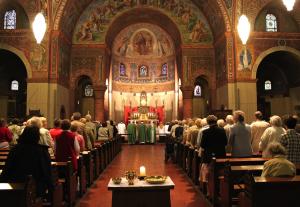
Taken from Pixabay
Women in Religion
Religion News
History and Religion
Education and Religion
Next Post

November 4, 2022 The Church Has Failed
Browse Our Archives
Select a Category Abortion Arius Atheists Catholic Apologetics Catholic Culture Catholic History Catholic Humor Catholic Poetry Catholic Politics Catholic Theology Dr. James White Faith Alone Joe Heschmeyer Kamala Harris Martin Luther Pope Francis Preborn Children President Biden Science and Catholicism Sola Scriptura Synod of Synodality Trinity
Select a Month October 2026 September 2026 August 2026 July 2026 June 2026 May 2026 April 2026 March 2026 February 2026 January 2026 December 2025 November 2025 October 2025 September 2025 August 2025 July 2025 June 2025 May 2025 April 2025 March 2025 February 2025 January 2025 December 2024 November 2024 October 2024 September 2024 August 2024 July 2024 June 2024 May 2024 April 2024 March 2024 February 2024 January 2024 December 2023 November 2023 October 2023 September 2023 August 2023 July 2023 June 2023 May 2023 April 2023 March 2023 February 2023 January 2023 December 2022 November 2022 October 2022 September 2022 August 2022 July 2022 June 2022 May 2022 April 2022 March 2022 February 2022 January 2022 December 2021 November 2021
Follow Us!
TAKE THE
Religious Wisdom Quiz
What did God write the Ten Commandments with?
Select your answer to see how you score.
A chisel A pen A sword His finger
Related posts from The Latin Right

Amoris Laetitia Deserves a Better Defence

Rich Man, Poor Man: Altruism and Agency

The Order We Did Not Make: The World...

The Poor Have Rights—and Responsibilities
TRENDING AT PATHEOS Catholic

The Sermon on the Mount, Part I: Matthew...
The Sermon on the Mount, Part I (Matthew 4:12-5:12) St. Matthew moves...

What's up from Crossway: Reviewing some of their latest A few weeks...

Janie Learns the Way of the Cross: A...
Teaching children about Jesus' Passion can be challenging. Many parents and educators...

Looking For Good Catholic Writing - October 2026
He alone extends the heavens, and he walks upon the waves of...

In "Irreplaceable," our book on vocation and technology, Trevor Sutton and I...

I was strolling through the top floor of the brand new Parthenon...
view all Catholic blogs
Ad-Free & Subscriber Log-In Subscription Support
- About Us
- 2026 Calendar
- Videos
- Podcasts
- Library of World Religions
- Faith In Media Tracker
- Advertise With Us
- Write for Us
- Privacy Policy
- Terms of Service
- Do Not Sell My Data
- Contact Us
- Radiant Digital
- Manage Newsletter Subscriptions
- Unsubscribe From Notifications
- Sitemap
Copyright 2008-2026, Patheos. All rights reserved.
Subscription Support Ad-Free & Subscriber Log-In
Follow Patheos