
BuddhistCatholicContemplativeEvangelicalGeneral ChristianHinduJewishLatter-day SaintMuslimNew VisionsProgressive Christian
Beliefs
- Buddhist
- Catholic
- Contemplative
- Evangelical
- General Christian
- Hindu
- Jewish
- Latter-day Saint
- More Voices
- Muslim
- New Visions
- Pagan
- Progressive Christian
Topics
- Religion News
- Food and Religion
- Sports and Religion
- Religious Art
- Religious Music and Entertainment
- Religious Events
- History and Religion
- Style and Religion
- Politics and Religion
- Women in Religion
- Recreation Outdoors and Religion
- Business Finance and Religion
- Careers Workplace and Religion
- Education and Religion
- Family Parenting and Religion
- Health Fitness and Religion
- Home and Religion
- Relationships and Religion
- Technology and Religion
- Travel and Religion
Columnists
- Buddhist Columnists
- Business Finance and Religion Columnists
- Careers Workplace and Religion Columnists
- Catholic Columnists
- Contemplative Columnists
- Education and Religion Columnists
- Evangelists Columnists
- Family Parenting and Religion Columnists
- General Christian Columnists
- Health Fitness and Religion Columnists
- Hindu Columnists
- History and Religion Columnists
- Home and Religion Columnists
- Jewish Columnists
- More Voices Columnists
- Latter Day Columnists
- Muslim Columnists
- New Visions Columnists
- Nonreligious Columnists
- Pagan Columnists
- Politics and Religion Columnists
- Progressive Columnists
- Recreation Outdoors and Religion Columnists
- Relationships and Religion Columnists
- Religion News Columnists
- Religious Art Columnists
- Religious Events Columnists
- Religious Music and Entertainment Columnists
- Sports and Religion Columnists
- Style and Religion Columnists
- Technology and Religion Columnists
- Travel and Religion Columnists
- Women in Religion Columnists
Resource Library
- 2026 Calendar
- Library of World Religions
- The 100 Most Holy Places on Earth
- Patheos Answers
- Podcasts
- Videos
- Faith Leaders Database
- Anglican Episcopalian
- Bahai
- Baptist
- Buddhism
- Christianity
- Confucianism
- Eastern Orthodoxy
- Hinduism
- Holiness and Pentecostal
- ISKCON
- Islam
- Judaism
- Lutheran
- Methodist
- The Church of Jesus Christ of Latter-day Saints
- New Age
- Paganism
- Presbytarian and Reformed
- Protestantism
- Religion Behind the Scenes
- Roman Catholic
- Scientology
- Shia Islam
- Sikhism
- Sufism
- Sunni Islam
- Taoism
- Zen
- See all religions
Research Tools
 Ad-Free & Subscriber Log-In Subscription Support
Ad-Free & Subscriber Log-In Subscription Support
Follow Patheos 

- Trending:
- Forgiveness
- |
- Marriage
- |
- Consciousness
- |
- Death Penalty
- |
- Election
- |
- Halloween

- Home
- Catholic
- Relationships and Religion
- Sin, The Principle of Double Effect, and Pastoral Care
Sin, The Principle of Double Effect, and Pastoral Care
Last updated on: October 17, 2022 at 12:10 am by Dennis Knapp
Sin, The Principle of Double Effect, and Pastoral Care 2022-10-16T21:51:10-06:00 Dennis Knapp
Patheos Explore the world's faith through different perspectives on religion and spirituality! Patheos has the views of the prevalent religions and spiritualities of the world.
Sin, The Principle of Double Effect, and Pastoral Care.
Recently, I wrote an article in response to another Patheos blogger regarding the Church’s view on Catholics in the LGBTQIA+ community. In this article, I concluded with the following exhortation:
No one desires the death of another, especially a family member. But Catholics need not lie to LBGTQIA family members and thus put their souls at eternal risk. Love does not do that. Imagine a loved one who believes their salvation lies at the bottom of a cliff. They tell you that they must jump, or they die. Do you affirm them in that belief or tell them the truth that death awaits them at the bottom of the cliff—not just physical death, but also eternal death.
In response, the blogger in question doubled down on her ultimatum that failure to affirm Catholics in the LBGTQIA+ community, including the support of same sex sexual relationships, results in suffering and death. This time around, the author appeals to the Principle of Double Effect to make her case.
In this article, I examine her claim to the Principle of Double Effect and how it relates to those Catholics in the LBGTQIA+ community. I show that this principle does not apply to Catholics in the LBGTQIA+ community. Furthermore, as a counterargument, I show the U.S. Church’s currently approved approach to pastoral care of Catholics in the LBGTQIA+ community. The document, Ministry to Persons with a Homosexual Inclination: Guidelines for Pastoral Care, represents the authentic Church position, not the views expressed by the aforenoted blogger.
The Principle of Double Effect
The Principle of Double Effect, formulated by St. Thomas Aquinas, states the following:
- The action itself is good or at least neutral;
- The good effect, not the bad effect, is what is intended;
- The good effect is not produced by the bad effect;
- There is a proportionately grave reason for permitting the bad effect.
Sulmasy, Daniel P. “‘Reinventing’ the Rule of Double Effect.” in The Oxford Handbook of Bioethics, edited by Bonnie Steinbock, 116 (Oxford University Press, 2007). https://doi.org/10.1093/oxfordhb/9780199562411.003.0006
According to Catholic teaching on human sexuality, homosexual acts constitute a grave sin, a mortal sin. Therefore, numbers 1, 2, and 3 fall off right away. Now, the only possibility for this principle to apply is in the 4th option. In theory, if it is shown that there exists a “grave reason” to permit the sin, the author may appeal to this principle. However, the author fails to understand that for the principle to apply, ALL four conditions need apply, not only one. And since mortal sin condemns the soul to eternal separation from God, there exists no reason to allow it.
The Principle of Double Effect at Work
Moreover, to illustrate the Principle of Double Effect, consider the following example.
A newly pregnant woman, whom we will call Maggy, receives a tragic diagnosis of uterine cancer. Maggy must undergo cancer treatments, including a hysterectomy, to live. Now, to save the life of Maggy, and to treat the cancer that is killing her, the baby dies. In this scenario, the Principle of Double Effect applies. Maggy did not act immorally in the actions that led to the death of her baby. Why?
- The action to save Maggy’s life was good.
- The good intention is to save Maggy’s life, not take her baby’s life.
- The loss of the baby did not save Maggy’s life. The treatment did.
- To save Maggy’s life via cancer treatment (grave reason), permits the loss of the baby (bad effect).
Therefore, for the Principle of Double Effect to apply, at no point can something considered intrinsically immoral (bad effect) the source of the good effect (life). In other words, sin is never a good end in and of itself. Stating that the affirmation of homosexual acts to protect life, acts which the Church considers sin, cannot appeal to the Principle of Double Effect because sinful acts produce no good effect.
Truly Catholic Pastoral Care
Furthermore, the author’s appeals to “pastoral care” of Catholics in the LBGTQIA+ community and equates this with “affirmative care” approved by American Medical Associations. Missing from the author’s list of authorities is the United States Conference of Catholic Bishops (USCCB). In particular, the document titled, Ministry to Persons with a Homosexual Inclination: Guidelines for Pastoral Care. This document lays out, in detail, the pastoral care for Catholics in the LBGTQIA+ community. I recommend all my readers take the time to read the document. Below are some key excerpts.
Respecting Human Dignity
All people are created in the image and likeness of God and thus possess an innate human dignity that must be acknowledged and respected.
In keeping with this conviction, the Church teaches that persons with a homosexual inclination “must be accepted with respect, compassion, and sensitivity.”
The Place of Sexuality in God’s Plan
The purpose of sexual desire is to draw man and woman together in the bond of marriage, a bond that is directed toward two inseparable ends: the expression of marital love and the procreation and education of children. “The spouses’ union achieves the twofold end of marriage: the good of the spouses themselves and the transmission of life.” This is the order of nature, an order whose source is ultimately the wisdom of God. To the extent that man and woman cooperate with the divine plan by acting in accord with the order of nature, they not only bring to fulfillment their own individual human natures but also accomplish the will of God.
Homosexual Acts Cannot Fulfill the Natural Ends of Human Sexuality
Homosexual acts also violate the true purpose of sexuality. They are sexual acts that cannot be open to life. Nor do they reflect the complementarity of man and woman that is an integral part of God’s design for human sexuality. Consequently, the Catholic Church has consistently taught that homosexual acts “are contrary to the natural law…Under no circumstances can they be approved.”
Homosexual Inclination Is Not Itself a Sin
While the Church teaches that homosexual acts are immoral, she does distinguish between engaging in homosexual acts and having a homosexual inclination. While the former is always objectively sinful, the latter is not. To the extent that a homosexual tendency or inclination is not subject to one’s free will, one is not morally culpable for that tendency. Although one would be morally culpable if one were voluntarily to entertain homosexual temptations or to choose to act on them, simply having the tendency is not a sin. Consequently, the Church does not teach that the experience of homosexual attraction is, in itself, sinful.
The homosexual inclination is objectively disordered, i.e., it is an inclination that predisposes one toward what is truly not good for the human person.
Therapy for Homosexual Inclinations?
Catholics who experience homosexual tendencies and who wish to explore therapy should seek out the counsel and assistance of a qualified professional who has preparation and competence in psychological counseling and who understands and supports the Church’s teaching on homosexuality. They should also seek out the guidance of a confessor and spiritual director who will support their quest to live a chaste life.
Cultural Obstacles
All ministry to persons with a homosexual inclination must be guided by Church teaching on sexuality. The basis of this ministry, if it is to be effective, has to be a true understanding of the human person and of the place of sexuality in human life. “Departure from the Church’s teaching, or silence about it, in an effort to provide pastoral care is neither caring nor pastoral.” Love and truth go together. The Sacred Scriptures tell us that the way to grow more Christ-like is by “living the truth in love” (Eph 4:15). The Church cannot support organizations or individuals whose work contradicts, is ambiguous about, or neglects her teaching on sexuality.
Final Thoughts
In conclusion, reading the sections Therapy for Homosexual Inclinations? and Cultural Obstacles, the Church’s position on pastoral care for Catholics in the LBGTQIA+ community becomes crystal clear. All pastoral care, at its foundation, supports the Church’s teaching on human sexuality. The document states that ALL ministries to those with homosexual inclination MUST adhere to Church teaching.
With such a claim, does the USCCB weaponize Church teaching? Do they endanger LBGTQIA+ Catholic by providing such pastoral care? Obviously, the US Bishops do not think so. A bishop’s primary responsibility are the souls of his people. He knows that “love and truth go together” and a departure from Church teaching “in an effort to provide pastoral care is neither caring nor pastoral.”
Dissent if you must, but know that you do not speak for the Church.
Like and follow me on Facebook and Twitter.
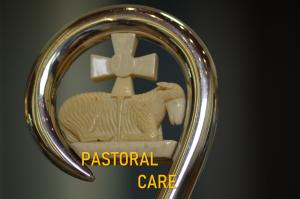
Taken from Pixabay
Relationships and Religion
Politics and Religion
Previous Post

October 14, 2022
The Synodal Path to Schism in Germany
Next Post
October 20, 2022 What Bad Christian Behaviors Invalidate Catholic Moral Teaching?
Browse Our Archives
Select a Category Abortion Arius Atheists Catholic Apologetics Catholic Culture Catholic History Catholic Humor Catholic Poetry Catholic Politics Catholic Theology Dr. James White Faith Alone Joe Heschmeyer Kamala Harris Martin Luther Pope Francis Preborn Children President Biden Science and Catholicism Sola Scriptura Synod of Synodality Trinity
Select a Month October 2026 September 2026 August 2026 July 2026 June 2026 May 2026 April 2026 March 2026 February 2026 January 2026 December 2025 November 2025 October 2025 September 2025 August 2025 July 2025 June 2025 May 2025 April 2025 March 2025 February 2025 January 2025 December 2024 November 2024 October 2024 September 2024 August 2024 July 2024 June 2024 May 2024 April 2024 March 2024 February 2024 January 2024 December 2023 November 2023 October 2023 September 2023 August 2023 July 2023 June 2023 May 2023 April 2023 March 2023 February 2023 January 2023 December 2022 November 2022 October 2022 September 2022 August 2022 July 2022 June 2022 May 2022 April 2022 March 2022 February 2022 January 2022 December 2021 November 2021
Follow Us!
TAKE THE
Religious Wisdom Quiz
What was the first miracle Jesus performed according to John's Gospel?
Select your answer to see how you score.
Feeding the 5000 Raising Lazarus Walking on water Turning water into wine
Related posts from The Latin Right

The Dangers of Gradual Accommodation (Winking at Sin)

Amoris Laetitia Deserves a Better Defence

Rich Man, Poor Man: Altruism and Agency

The Order We Did Not Make: The World...
TRENDING AT PATHEOS Catholic

Looking at the Largest Orthodox Cathedral on Earth
There is often a considerable amount of anger and, shall we...

The Problem with False Prophets
Miller’s Station UMC| 10/18/26| Anchor Verse: Jeremiah 23: 1, 9-23 I...

Emotion in Early Christianity by Andrew Crislip
Andrew Crislip’s Emotion in Early Christianity examines an often overlooked dimension of...

16 Spiritual Touchstones for a More Grounded Life
After decades of spiritual study, here are 16 principles I try...

Catholic Evangelization: Sharing Your Faith Every Day
Welcome back to the Graceful Awakening mini-series called, “From Faith to Mission.” ...

The Pillar of the Boatmen: the Ancient Monument...
The Pillar of the Boatmen is a Romano-Gaulish sculpture that dates from...
view all Catholic blogs
Ad-Free & Subscriber Log-In Subscription Support
- About Us
- 2026 Calendar
- Videos
- Podcasts
- Library of World Religions
- Faith In Media Tracker
- Advertise With Us
- Write for Us
- Privacy Policy
- Terms of Service
- Do Not Sell My Data
- Contact Us
- Radiant Digital
- Manage Newsletter Subscriptions
- Unsubscribe From Notifications
- Sitemap
Copyright 2008-2026, Patheos. All rights reserved.
Subscription Support Ad-Free & Subscriber Log-In
Follow Patheos