
BuddhistCatholicContemplativeEvangelicalGeneral ChristianHinduJewishLatter-day SaintMuslimNew VisionsProgressive Christian
Beliefs
- Buddhist
- Catholic
- Contemplative
- Evangelical
- General Christian
- Hindu
- Jewish
- Latter-day Saint
- More Voices
- Muslim
- New Visions
- Pagan
- Progressive Christian
Topics
- Religion News
- Food and Religion
- Sports and Religion
- Religious Art
- Religious Music and Entertainment
- Religious Events
- History and Religion
- Style and Religion
- Politics and Religion
- Women in Religion
- Recreation Outdoors and Religion
- Business Finance and Religion
- Careers Workplace and Religion
- Education and Religion
- Family Parenting and Religion
- Health Fitness and Religion
- Home and Religion
- Relationships and Religion
- Technology and Religion
- Travel and Religion
Columnists
- Buddhist Columnists
- Business Finance and Religion Columnists
- Careers Workplace and Religion Columnists
- Catholic Columnists
- Contemplative Columnists
- Education and Religion Columnists
- Evangelists Columnists
- Family Parenting and Religion Columnists
- General Christian Columnists
- Health Fitness and Religion Columnists
- Hindu Columnists
- History and Religion Columnists
- Home and Religion Columnists
- Jewish Columnists
- More Voices Columnists
- Latter Day Columnists
- Muslim Columnists
- New Visions Columnists
- Nonreligious Columnists
- Pagan Columnists
- Politics and Religion Columnists
- Progressive Columnists
- Recreation Outdoors and Religion Columnists
- Relationships and Religion Columnists
- Religion News Columnists
- Religious Art Columnists
- Religious Events Columnists
- Religious Music and Entertainment Columnists
- Sports and Religion Columnists
- Style and Religion Columnists
- Technology and Religion Columnists
- Travel and Religion Columnists
- Women in Religion Columnists
Resource Library
- 2026 Calendar
- Library of World Religions
- The 100 Most Holy Places on Earth
- Patheos Answers
- Podcasts
- Videos
- Faith Leaders Database
- Anglican Episcopalian
- Bahai
- Baptist
- Buddhism
- Christianity
- Confucianism
- Eastern Orthodoxy
- Hinduism
- Holiness and Pentecostal
- ISKCON
- Islam
- Judaism
- Lutheran
- Methodist
- The Church of Jesus Christ of Latter-day Saints
- New Age
- Paganism
- Presbytarian and Reformed
- Protestantism
- Religion Behind the Scenes
- Roman Catholic
- Scientology
- Shia Islam
- Sikhism
- Sufism
- Sunni Islam
- Taoism
- Zen
- See all religions
Research Tools
 Ad-Free & Subscriber Log-In Subscription Support
Ad-Free & Subscriber Log-In Subscription Support
Follow Patheos 

- Trending:
- Forgiveness
- |
- Marriage
- |
- Consciousness
- |
- Death Penalty
- |
- Election
- |
- Halloween

- Home
- Catholic
- Politics and Religion
- Choose The Way, The Truth, and The Life
Choose The Way, The Truth, and The Life
Last updated on: October 10, 2022 at 8:28 am by Dennis Knapp
Choose The Way, The Truth, and The Life 2022-10-10T08:28:23-06:00 Dennis Knapp
Patheos Explore the world's faith through different perspectives on religion and spirituality! Patheos has the views of the prevalent religions and spiritualities of the world.
Choose the Way, the Truth, and the Life.
Recently, another Patheos blogger wrote an article titled, I Choose Life. In the article, the author describes her experience with “traditionalist” Catholics. Also called a “cafeteria Catholic” for her views on the application of Church teaching on sexuality when applied to LGBTQIA Catholics and neurodiverse individuals. The author claims her approach best reflects the spirit of Catholic Social Teaching on the Sanctity of life and the Dignity of the Human Person, Pope Francis’s encyclical Amoris Lattetita, and Jesus’ commandment to love one’s neighbor as one loves themselves. She also claims that not following her lead on this results in suffering and death.
So in short, we have to choose between the Sanctity of Life or weaponizing sexuality doctrine to harm and kill. I choose life and love of neighbor.
In this article, I examine the author’s claims. Is what she writes an accurate reflection of Catholic Social Teaching on the Sanctity of Life and Dignity of the Human Person, Pope Francis’s encyclical Amoris Lattetita? Is it an accurate teaching of Jesus’ command to love our neighbor? If so, all Catholics need to follow her lead here. If not, Catholics need feel no compulsion to follow her lead, nor guilt over disagreeing with her claims.
Catholic Social Teaching on the Sanctity of Life and Dignity
The claim:
If you want to get technical with Catholic Teaching, by advocating for LBGTQIA + inclusion, we are following Catholic Social Teaching which honors the Sanctity of life and Dignity of the Human Person.
What is Catholic Social Teaching concerning those in the LBGTQIA community who also belong to the Catholic Church? Well, when one looks up the Life and Dignity of the Human Person, one finds this from the United States Conference of Catholic Bishops (USCCB):
The Catholic Church proclaims that human life is sacred and that the dignity of the human person is the foundation of a moral vision for society. This belief is the foundation of all the principles of our social teaching. In our society, human life is under direct attack from abortion and euthanasia. The value of human life is being threatened by cloning, embryonic stem cell research, and the use of the death penalty. The intentional targeting of civilians in war or terrorist attacks is always wrong. Catholic teaching also calls on us to work to avoid war. Nations must protect the right to life by finding increasingly effective ways to prevent conflicts and resolve them by peaceful means. We believe that every person is precious, that people are more important than things, and that the measure of every institution is whether it threatens or enhances the life and dignity of the human person.
Therefore, we read that the dignity of the human person IS the sanctity of life, especially as it concerns abortion, euthanasia, cloning, embryonic stem cell research, the death penalty, and war. It makes No mention of members of LBGTQIA persons. All people hold inherent dignity and the right to life. The author appears to add more meaning to the concept of “life” than is laid out by the Catholic Church. The author admits as much when she states in no uncertain terms that not allowing homosexual persons to live in life-long sexual relationships within Catholic families destroys the person and their family. To the author, this issue is life and death.
The Call to Family, Community, and Participation
The claim:
The Call to Family, Community, and Participation by keeping the family intact, which includes the LBGTQIA person
Again, when one looks for guidance from the USSCB on the issue of family, community, and participation, one finds this:
The person is not only sacred but also social. How we organize our society—in economics and politics, in law and policy—directly affects human dignity and the capacity of individuals to grow in community. Marriage and the family are the central social institutions that must be supported and strengthened, not undermined. We believe people have a right and a duty to participate in society, seeking together the common good and well-being of all, especially the poor and vulnerable. [emphasis added]
Moreover, the author appeals to the support of the Catholic family to include the acceptance and affirmation of LBGTQIA persons in them. Now, no one claims the rejection of any member of a family, regardless of their temptation and sin. But neither should the family (and the larger Church family) encourage and affirm their temptation and sin. Our call as Catholics is to holiness. To affirm someone in their sin threatens their eternal life.
Amoris Lattetita
The claim:
I am following Pope Francis’s directive in his encyclical Amoris Lattetita to give appropriate pastoral care to the LBGTQIA person by including him/her because it’s life and death
Meaning The Joy of Love, the encyclical, written in 2016, addresses the pastoral care of families. Two sections in the encyclical address LBGTQIA persons, section 250 and 251. They state:
- The Church makes her own the attitude of the Lord Jesus, who offers his boundless love to each person without exception. During the Synod, we discussed the situation of families whose members include persons who experience same-sex attraction, a situation not easy either for parents or for children. We would like before all else to reaffirm that every person, regardless of sexual orientation, ought to be respected in his or her dignity and treated with consideration, while ‘every sign of unjust discrimination’ is to be carefully avoided, particularly any form of aggression and violence. Such families should be given respectful pastoral guidance, so that those who manifest a homosexual orientation can receive the assistance they need to understand and fully carry out God’s will in their lives.
And
- In discussing the dignity and mission of the family, the Synod Fathers observed that, “as for proposals to place unions between homosexual persons on the same level as marriage, there are absolutely no grounds for considering homosexual unions to be in any way similar or even remotely analogous to God’s plan for marriage and family”. It is unacceptable “that local Churches should be subjected to pressure in this matter and that international bodies should make financial aid to poor countries dependent on the introduction of laws to establish ‘marriage’ between persons of the same sex”.
The Proper Understanding of Amoris Lattetita
Clearly, Amoris Lattetita does not endorse the approach taken by the author. Section 250 states that those with same-sex attraction treated with dignity and consideration, and condemns all aggression and violence. It also references Catechism of the Catholic Church 2358 and 2359 concerning God’s will for those with homosexual orientation. These sections state:
2358 The number of men and women who have deep-seated homosexual tendencies is not negligible. This inclination, which is objectively disordered, constitutes for most of them a trial. They must be accepted with respect, compassion, and sensitivity. Every sign of unjust discrimination in their regard should be avoided. These persons are called to fulfill God’s will in their lives and, if they are Christians, to unite to the sacrifice of the Lord’s Cross the difficulties they may encounter from their condition.
And regarding God’s will for their lives:
2359 Homosexual persons are called to chastity. By the virtues of self-mastery that teach them inner freedom, at times by the support of disinterested friendship, by prayer and sacramental grace, they can and should gradually and resolutely approach Christian perfection.
Therefore, the calling of every LBGTQIA person with the Catholic Church is the same as the calling of every other Catholic—the call to holiness. For all Catholics, the call to holiness includes chastity, self-mastery, friendship, prayer, and sacramental grace. Moreover, the author’s call for the Catholic Church to allow for homosexual sexual relationships contradicts both Amoris Lattetita and sections 2358 and 2359 of the Catechism of the Catholic Church, which Amoris Lattetita references.
Love Our Neighbor as Ourselves
The claim:
I am following… Jesus’ 2nd greatest commandment to love our neighbor as ourselves.
Matthew 22:36-40
“Teacher, which is the great commandment in the Law?” And he said to him, “You shall love the Lord your God with all your heart and with all your soul and with all your mind. This is the great and first commandment. And a second is like it: You shall love your neighbor as yourself. On these two commandments depend all the Law and the Prophets.”
As with the other points the author attempts to make, this too constitutes a misrepresentation. The great commandment calls all Catholics to love God above all else, even their own desires, and especially more than their sin. The second shows how this love of God effects our relationship with each other, our neighbors. Furthermore, the Catechism of the Catholic Church again offers clarification on the Catholic understanding of the second greatest commandment. It states in 2196:
The apostle St. Paul reminds us of this: “He who loves his neighbor has fulfilled the law. The commandments, ‘You shall not commit adultery, You shall not kill, You shall not steal, You shall not covet,’ and any other commandment, are summed up in this sentence, ‘You shall love your neighbor as yourself.’ Love does no wrong to a neighbor; therefore love is the fulfilling of the law.”
Clearly, love of neighbor does not mean affirming their sin. It means to not sin against them.
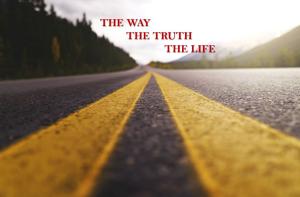
The Way, the Truth, and the Life
Furthermore, love requires truth. Ephesians states:
Rather, speaking the truth in love, we are to grow up in every way into him who is the head, into Christ,
St. Paul states that we speak the truth in love to one another to grow into maturity in Christ. Why? Because Christ is the Truth, just as He is the Way and the Life. Jesus said so Himself in John 14:6:
Jesus said to him, “I am the way, and the truth, and the life. No one comes to the Father except through me.
Jesus states the way to life is through the truth. If we forsake the truth, life goes with it. Most importantly, eternal life.
In Conclusion
Should Catholics follow the lead of the author of I Choose Love? Her final appeal shows a lack of understanding of the Church’s position and a position at complete odds with it. Not only this, but she makes it an emotional appeal and an ultimatum—agree with her claims or people die. No one desires the death of another, especially a family member. But Catholics need not lie to LBGTQIA family members and thus put their souls at eternal risk. Love does not do that. Imagine a loved one who believes their salvation lies at the bottom of a cliff. They tell you that they must jump, or they die. Do you affirm them in that belief or tell them the truth that death awaits them at the bottom of the cliff—not just physical death, but also eternal death.
Please choose the Way, the Truth, and the Life.
Like and follow me on Facebook and Twitter.
Politics and Religion
Family, Parenting and Religion
Next Post

October 14, 2022 The Synodal Path to Schism in Germany
Browse Our Archives
Select a Category Abortion Arius Atheists Catholic Apologetics Catholic Culture Catholic History Catholic Humor Catholic Poetry Catholic Politics Catholic Theology Dr. James White Faith Alone Joe Heschmeyer Kamala Harris Martin Luther Pope Francis Preborn Children President Biden Science and Catholicism Sola Scriptura Synod of Synodality Trinity
Select a Month October 2026 September 2026 August 2026 July 2026 June 2026 May 2026 April 2026 March 2026 February 2026 January 2026 December 2025 November 2025 October 2025 September 2025 August 2025 July 2025 June 2025 May 2025 April 2025 March 2025 February 2025 January 2025 December 2024 November 2024 October 2024 September 2024 August 2024 July 2024 June 2024 May 2024 April 2024 March 2024 February 2024 January 2024 December 2023 November 2023 October 2023 September 2023 August 2023 July 2023 June 2023 May 2023 April 2023 March 2023 February 2023 January 2023 December 2022 November 2022 October 2022 September 2022 August 2022 July 2022 June 2022 May 2022 April 2022 March 2022 February 2022 January 2022 December 2021 November 2021
Follow Us!
TAKE THE
Religious Wisdom Quiz
Who pleaded with Joseph for Benjamin's release?
Select your answer to see how you score.
Reuben Judah Naphtali Levi
Related posts from The Latin Right

Amoris Laetitia Deserves a Better Defence

Rich Man, Poor Man: Altruism and Agency

The Order We Did Not Make: The World...

The Poor Have Rights—and Responsibilities
TRENDING AT PATHEOS Catholic

The Real AI Story Is Adoption Without Trust
Artificial intelligence has crossed a political threshold. It is no longer a...

A new article, written by Jeff Lindsay and Gale L. Pooley,...

Swimfan: Forgotten Aughts Pleasures
This is a recovery effort. In 2002, My Big Fat Greek Wedding...

Top Three Anti-Catholic Lies About Catholicism
This is my initial transcript for the video, "THE 3 WORST...

Pope Leo Celebrates Mass for Nurses & Docs...
I don't have any idea how he did it, but Pope Leo...

The Sermon on the Mount, Part I: Matthew...
The Sermon on the Mount, Part I (Matthew 4:12-5:12) St. Matthew moves...
view all Catholic blogs
Ad-Free & Subscriber Log-In Subscription Support
- About Us
- 2026 Calendar
- Videos
- Podcasts
- Library of World Religions
- Faith In Media Tracker
- Advertise With Us
- Write for Us
- Privacy Policy
- Terms of Service
- Do Not Sell My Data
- Contact Us
- Radiant Digital
- Manage Newsletter Subscriptions
- Unsubscribe From Notifications
- Sitemap
Copyright 2008-2026, Patheos. All rights reserved.
Subscription Support Ad-Free & Subscriber Log-In
Follow Patheos