
BuddhistCatholicContemplativeEvangelicalGeneral ChristianHinduJewishLatter-day SaintMuslimNew VisionsProgressive Christian
Beliefs
- Buddhist
- Catholic
- Contemplative
- Evangelical
- General Christian
- Hindu
- Jewish
- Latter-day Saint
- More Voices
- Muslim
- New Visions
- Pagan
- Progressive Christian
Topics
- Religion News
- Food and Religion
- Sports and Religion
- Religious Art
- Religious Music and Entertainment
- Religious Events
- History and Religion
- Style and Religion
- Politics and Religion
- Women in Religion
- Recreation Outdoors and Religion
- Business Finance and Religion
- Careers Workplace and Religion
- Education and Religion
- Family Parenting and Religion
- Health Fitness and Religion
- Home and Religion
- Relationships and Religion
- Technology and Religion
- Travel and Religion
Columnists
- Buddhist Columnists
- Business Finance and Religion Columnists
- Careers Workplace and Religion Columnists
- Catholic Columnists
- Contemplative Columnists
- Education and Religion Columnists
- Evangelists Columnists
- Family Parenting and Religion Columnists
- General Christian Columnists
- Health Fitness and Religion Columnists
- Hindu Columnists
- History and Religion Columnists
- Home and Religion Columnists
- Jewish Columnists
- More Voices Columnists
- Latter Day Columnists
- Muslim Columnists
- New Visions Columnists
- Nonreligious Columnists
- Pagan Columnists
- Politics and Religion Columnists
- Progressive Columnists
- Recreation Outdoors and Religion Columnists
- Relationships and Religion Columnists
- Religion News Columnists
- Religious Art Columnists
- Religious Events Columnists
- Religious Music and Entertainment Columnists
- Sports and Religion Columnists
- Style and Religion Columnists
- Technology and Religion Columnists
- Travel and Religion Columnists
- Women in Religion Columnists
Resource Library
- 2026 Calendar
- Library of World Religions
- The 100 Most Holy Places on Earth
- Patheos Answers
- Podcasts
- Videos
- Faith Leaders Database
- Anglican Episcopalian
- Bahai
- Baptist
- Buddhism
- Christianity
- Confucianism
- Eastern Orthodoxy
- Hinduism
- Holiness and Pentecostal
- ISKCON
- Islam
- Judaism
- Lutheran
- Methodist
- The Church of Jesus Christ of Latter-day Saints
- New Age
- Paganism
- Presbytarian and Reformed
- Protestantism
- Religion Behind the Scenes
- Roman Catholic
- Scientology
- Shia Islam
- Sikhism
- Sufism
- Sunni Islam
- Taoism
- Zen
- See all religions
Research Tools
 Ad-Free & Subscriber Log-In Subscription Support
Ad-Free & Subscriber Log-In Subscription Support
Follow Patheos 

- Trending:
- Forgiveness
- |
- Marriage
- |
- Consciousness
- |
- Death Penalty
- |
- Election
- |
- Halloween

- Home
- Catholic
- Athanasius and the Need for Creeds
Athanasius and the Need for Creeds
Last updated on: June 20, 2022 at 5:01 pm by Dennis Knapp
Athanasius and the Need for Creeds 2022-06-20T17:01:22-06:00 Dennis Knapp
Patheos Explore the world's faith through different perspectives on religion and spirituality! Patheos has the views of the prevalent religions and spiritualities of the world.
Do Christians need creeds? Recently, an article from a fellow Patheos blogger stated creeds are not only unnecessary, but toxic. By standardizing belief that overturned heresies, creeds draw a line between people, “between us and them.” In this article, I examine the true nature of creeds and why they are of the utmost importance in the Christian life. I draw upon the life of an instrumental early Christian theologian, St. Athanasius, and show how the dismissal of the work of Christians like St. Athanasius disrespects early Christianity and the martyrs that died to safeguard the faith. To label such hard won creeds as toxic also does a great disservice to Christians martyrs throughout the history of the Church.
What Is a Creed?
Basically, a creed is the summation of true (orthodox) doctrinal statements for the purpose of unity. As such, creeds do not simply fall out of the sky and demand assent. No, creeds take time and consideration. A creed involves many minds, many committed followers of Jesus, to hash out truth from novelty, fact from fiction. During the first three centuries of the Church, three centuries of constant threats of persecution and death, language developed to speak about God: Father, Son, and Holy Spirit, in a way that made the most sense. This language was then taken by St. Athanasius and others to formulate creeds, like the Athanasian Creed.
St. Athanasius and the Church’s Fight for Orthodoxy
St. Athanasius’ birth fell somewhere in the late 290s, in or around the city of Alexandria, Egypt, to a Christian family. His early life took place during the Diocletianic or Great Persecution (AD 303 to 315), but there is no record of St. Athanasius personally experiencing persecution. The bishop of his youth, St. Peter of Alexandria, did suffer martyrdom in in AD 313. This tells us that, while he did not have firsthand personal experience of persecution, St. Athanasius had firsthand knowledge of persecution. St. Athanasius was also formed by other Christians who did have such experience.
Therefore, given this fact, and the past two centuries where countless Christians shed their blood for the truth of their faith, it does not take a leap of faith to understand the importance of doctrinal truth statements (creeds) to St. Athanasius and other like him. For St. Athanasius, this importance meant constant threats to his life and exile five times over.
So What?
Moreover, in the aforementioned blog, the author cites his student as saying, “so what?” to the creedal formulation regarding the nature of Christ within the Trinity. This author goes on to state what relevance did such a creedal statement have on the regular citizen of the empire. How did such a claim as “of one Being with the Father” truly impact a regular Christian? His inference is—not at all. Ultimately, the argument is made that creeds are a means of control. Creeds codify beliefs by limiting the definition of true belief (orthodoxy) and who can access it.
What Is the Cost of Orthodox?
Clearly, this author fails to understand the sufferings of countless early Christians who chose to die rather than to deny their faith, for a denial of the truth of their faith. Why die for your faith when such trivial things such as creeds only serve as a divide “between us and them.” Creeds matter because they were purchased in blood, the blood of the martyrs. Early Christians accepted death because they held their creeds as true. They refused to bow to falsehood. Therefore, such a sacrifice deserves respect, not dismissal.
Like what you read? Please check out my other writing here.
Please like and follow me on Facebook and Twitter.
Please support my writing through Patreon. Thank you!
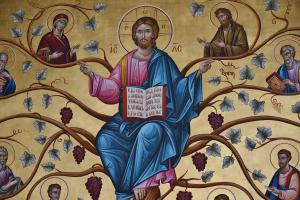
Taken from Pixabay
Previous Post

June 17, 2022
The Catholic Church Can Simultaneously Walk and Chew Gum
Next Post
June 29, 2022 Are Catholics Christian?
Browse Our Archives
Select a Category Abortion Arius Atheists Catholic Apologetics Catholic Culture Catholic History Catholic Humor Catholic Poetry Catholic Politics Catholic Theology Dr. James White Faith Alone Joe Heschmeyer Kamala Harris Martin Luther Pope Francis Preborn Children President Biden Science and Catholicism Sola Scriptura Synod of Synodality Trinity
Select a Month October 2026 September 2026 August 2026 July 2026 June 2026 May 2026 April 2026 March 2026 February 2026 January 2026 December 2025 November 2025 October 2025 September 2025 August 2025 July 2025 June 2025 May 2025 April 2025 March 2025 February 2025 January 2025 December 2024 November 2024 October 2024 September 2024 August 2024 July 2024 June 2024 May 2024 April 2024 March 2024 February 2024 January 2024 December 2023 November 2023 October 2023 September 2023 August 2023 July 2023 June 2023 May 2023 April 2023 March 2023 February 2023 January 2023 December 2022 November 2022 October 2022 September 2022 August 2022 July 2022 June 2022 May 2022 April 2022 March 2022 February 2022 January 2022 December 2021 November 2021
Follow Us!
TAKE THE
Religious Wisdom Quiz
What did God tell Moses from the burning bush?
Select your answer to see how you score.
That he would become Pharaoh That he would lead Israel out of Egypt That he would build the temple That he would be king of Israel
Related posts from The Latin Right

Amoris Laetitia Deserves a Better Defence

Rich Man, Poor Man: Altruism and Agency

The Order We Did Not Make: The World...

Is This “Culture War” Catholicism—or Evangelization?
TRENDING AT PATHEOS Catholic

How to Make a Decision When You Can't...
Main point: It’s much more valuable to stay close to God so...

Archdiocese Hosts Military Marriage Retreat in Germany
RASTATT, Germany — The transient military lifestyle, with its frequent deployments and...

Nearly every morning, I make the drive to Detroit with my high-school-age...

The Real AI Story Is Adoption Without Trust
Artificial intelligence has crossed a political threshold. It is no longer a...

A new article, written by Jeff Lindsay and Gale L. Pooley,...

Swimfan: Forgotten Aughts Pleasures
This is a recovery effort. In 2002, My Big Fat Greek Wedding...
view all Catholic blogs
Ad-Free & Subscriber Log-In Subscription Support
- About Us
- 2026 Calendar
- Videos
- Podcasts
- Library of World Religions
- Faith In Media Tracker
- Advertise With Us
- Write for Us
- Privacy Policy
- Terms of Service
- Do Not Sell My Data
- Contact Us
- Radiant Digital
- Manage Newsletter Subscriptions
- Unsubscribe From Notifications
- Sitemap
Copyright 2008-2026, Patheos. All rights reserved.
Subscription Support Ad-Free & Subscriber Log-In
Follow Patheos