
BuddhistCatholicContemplativeEvangelicalGeneral ChristianHinduJewishLatter-day SaintMuslimNew VisionsProgressive Christian
Beliefs
- Buddhist
- Catholic
- Contemplative
- Evangelical
- General Christian
- Hindu
- Jewish
- Latter-day Saint
- More Voices
- Muslim
- New Visions
- Pagan
- Progressive Christian
Topics
- Religion News
- Food and Religion
- Sports and Religion
- Religious Art
- Religious Music and Entertainment
- Religious Events
- History and Religion
- Style and Religion
- Politics and Religion
- Women in Religion
- Recreation Outdoors and Religion
- Business Finance and Religion
- Careers Workplace and Religion
- Education and Religion
- Family Parenting and Religion
- Health Fitness and Religion
- Home and Religion
- Relationships and Religion
- Technology and Religion
- Travel and Religion
Columnists
- Buddhist Columnists
- Business Finance and Religion Columnists
- Careers Workplace and Religion Columnists
- Catholic Columnists
- Contemplative Columnists
- Education and Religion Columnists
- Evangelists Columnists
- Family Parenting and Religion Columnists
- General Christian Columnists
- Health Fitness and Religion Columnists
- Hindu Columnists
- History and Religion Columnists
- Home and Religion Columnists
- Jewish Columnists
- More Voices Columnists
- Latter Day Columnists
- Muslim Columnists
- New Visions Columnists
- Nonreligious Columnists
- Pagan Columnists
- Politics and Religion Columnists
- Progressive Columnists
- Recreation Outdoors and Religion Columnists
- Relationships and Religion Columnists
- Religion News Columnists
- Religious Art Columnists
- Religious Events Columnists
- Religious Music and Entertainment Columnists
- Sports and Religion Columnists
- Style and Religion Columnists
- Technology and Religion Columnists
- Travel and Religion Columnists
- Women in Religion Columnists
Resource Library
- 2026 Calendar
- Library of World Religions
- The 100 Most Holy Places on Earth
- Patheos Answers
- Podcasts
- Videos
- Faith Leaders Database
- Anglican Episcopalian
- Bahai
- Baptist
- Buddhism
- Christianity
- Confucianism
- Eastern Orthodoxy
- Hinduism
- Holiness and Pentecostal
- ISKCON
- Islam
- Judaism
- Lutheran
- Methodist
- The Church of Jesus Christ of Latter-day Saints
- New Age
- Paganism
- Presbytarian and Reformed
- Protestantism
- Religion Behind the Scenes
- Roman Catholic
- Scientology
- Shia Islam
- Sikhism
- Sufism
- Sunni Islam
- Taoism
- Zen
- See all religions
Research Tools
 Ad-Free & Subscriber Log-In Subscription Support
Ad-Free & Subscriber Log-In Subscription Support
Follow Patheos 

- Trending:
- Forgiveness
- |
- Marriage
- |
- Consciousness
- |
- Death Penalty
- |
- Election
- |
- Halloween

- Home
- Catholic
- What Happens When the Existential Vacuum Stares Back at You?
What Happens When the Existential Vacuum Stares Back at You?
Last updated on: April 11, 2022 at 7:59 pm by Dennis Knapp
What Happens When the Existential Vacuum Stares Back at You? 2022-04-11T19:59:54-06:00 Dennis Knapp
Patheos Explore the world's faith through different perspectives on religion and spirituality! Patheos has the views of the prevalent religions and spiritualities of the world.
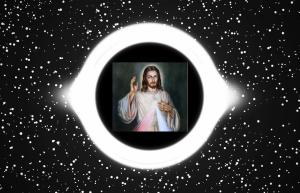 What happens when the existential vacuum stares back at you? This may seem like an inauspicious question, but as our youth and Western society experience an identity crisis, the answer to this question is of the utmost relevance. Previously, I wrote about the identity crisis experienced by our youth. In this article, I further explore the causes of the current crisis in the West drawing upon the wisdom of Viktor Frankl, Fredrick Nietzsche, and Blaise Pascal. I will also present that a life grounded in Christianity provides interpersonal fulfillment (happiness), makes sense to apparent senseless suffering, and fills the existential vacuum with meaning and purpose.
What is the Existential Vacuum?
Psychiatrist Viktor Frankl, holocaust survivor and originator of logotherapy, coined the phrase “existential vacuum” in his book Man’s Search for Meaning (1946).
He states:
The existential vacuum which is the mass neurosis of the present time can be described as a private and personal form of nihilism; for nihilism can be defined as the contention that being has no meaning. [emphasis added]
The existential vacuum, therefore, is the nothingness (nihilism) left when traditional forms of meaning (God and religion) disappear. In place of the belief that God created individuals for a purpose, individuals are now accidents on a cosmic scale. The advent of reductionist science, philosophy, and psychology, which reduces all existence to mere matter, is the cause of the existential vacuum. Love reduces to chemical reactions in the brain. Freewill is an illusion. God is dead. Furthermore, as this reductionism spreads, so too does the existential vacuum.
Totalitarian Conformity
According to Frankl, the primary reactions to the existential vacuum manifest in two ways: conformity and totalitarianism. Left with no sense of meaning, individuals will seek to do what other people do or do what other people tell them to do.
He continues:
The existential vacuum is a widespread phenomenon of the twentieth century… man has suffered another loss in his more recent development inasmuch as the traditions which buttressed his behavior are now rapidly diminishing. No instinct tells him what he has to do, and no tradition tells him what he ought to do; sometimes he does not even know what he wishes to do. Instead, he either wishes to do what other people do (conformism) or he does what other people tell him to do (totalitarianism). [emphasis added]
We see the truth of Frankl’s observations in the mid-20thcentury, played out to the extremes in the third decade of the 21st century, as both conformity and totalitarianism merge into totalitarian conformity. Devoid of ultimate meaning, individuals now seek to conform to the dictates of a reductionist society and obey what this society tells them. To break with the status quo incurs the label traitor, the brand of pariah, and exile (cancelation). For all wise enough to pick up on the subtle undertones, I am here referring to the current identity movement.
Pleasure, Happiness, Mental Health, and Meaning(lessness)
Moreover, as our current culture continues to grapple with the existential vacuum, the absence of ultimate meaning has caused an increase in the neurosis Frankl called the “mass neurotic triad” of depression, addiction, and aggression—an increase Frankl predicted. One does not have to look far to see the rampant hopelessness, drug use, and violent crime afflicting communities in the West. Experts point to systematic racism, income inequality, and sexism, but the real cause is the existential vacuum.
Frankl’s Remedy to Meaninglessness
“He who has a why to live for can bear almost any how.” ―Friedrich Nietzsche
Frankl lived through one of the worst experiences in human history—the Holocaust. He lost his parent and brother as he moved through four different concentration camps. What kept him alive, and what caused many others to succumb, was hope. Frankl observed that those who survived did so because they held onto hope, despite their apparently hopeless situation. From this experience, the philosophy of Friedrich Nietzche, and his psychiatric training, Frankl developed the logotherapeutic method.
To discover meaning, Frankl recommends three things:
- Creating a work or doing a deed
- Experiencing something or encountering someone
- By the attitude we take toward unavoidable suffering
To sum up, meaning is found in creativity, loving relationships, and a healthy attitude towards inevitable suffering. Furthermore, meaning must be found, it cannot be given. It takes work, individual work.
Frankl’s Approach Falls Short
Frankl’s solution the broader societal problem of the existential vacuum was to focus on the individual reaction to the problem and not the problem itself. He admitted that reductionism caused the existential vacuum but did not see a return to traditional norms and beliefs as part of the solution. It is to the self that one must turn to find meaning; exterior realities cannot provide it.
It did not really matter what we expected from life, but rather what life expected from us. We needed to stop asking about the meaning of life, and instead to think of ourselves as those who were being questioned by life—daily and hourly. Our answer must consist, not in talk and meditation, but in right action and in right conduct. Life ultimately means taking the responsibility to find the right answer to its problems and to fulfill the tasks which it constantly sets for each individual.” (from Man’s Search for Meaning).
As a Catholic, here is where I part ways with Frankl. I respect and admire his approach. I also agree with his assessment of the existential vacuum, but we part ways. Frankl does not attempt to address the larger issue of meaningless but leaves it up to the individual. If the current state of the identity crisis is any indication of the current state of the individual, this is not a solution to the existential vacuum. This vacuum requires something to fill it.
Why Are the Religious Happier?
According to a 2019 Pew Research Study, religious people tend to be happier, live longer, and are more civically engaged than non-religious people. Why? I have a few thoughts on this.
Religious people, especially Christians, view their lives as meaningful. In their view, God created them for a purpose. Furthermore, they believe their lives are of such value that this same God took on human flesh, lived, suffered, and died to rescue them from death. That this God also suffered as an innocent man gives meaning to their suffering, as this God personally knows the full extent of human suffering and death. This Godman not only sympathizes with His creation, but He also empathizes through firsthand experience. This is not to say that Christians do not suffer from depression, addiction, or aggression—they do. Sin is still part of the human equation on this side of heaven. Christians do not only have themselves to turn to for assistance. Christians also have a God who suffers with them.
Why are religious, and especially Christians, happier than non-believers? In short, their lives have meaning and purpose. They have filled the existential vacuum.
Pascal’s Wager
Blaise Pascal (1623–1662) was a French mathematician and thinker who many know for Pascal’s Wager. Many think this “wager” is a proof of God’s existence, but I disagree. I see the “wager” as a productive thought exercise to determine a meaningful life. It is a pragmatic “wager” between happiness and unhappiness.
What is the “wager?”
You have two things to lose: the true and the good; and two things to stake: your reason and your will, your knowledge and your happiness; and your nature has two things to avoid: error and wretchedness. Since you must necessarily choose, your reason is no more affronted by choosing one rather than the other. That is one point cleared up. But your happiness? Let us weigh up the gain and the loss involved in calling heads that God exists. Let us assess the two cases: if you win, you win everything: if you lose, you lose nothing. Do not hesitate then: wager that he does exist. {Pensées, 1669)
Basically, the only options before us are theism and atheism, one cannot choose agnosticism, as the “wager” is that either “God exists” or “God does not exist.” To choose that “God exists” means one wins eternal and earthly happiness and joy, peace, and justice. If “God exists” is chosen and God does not exist, then one has lost nothing (except indulgence in some unhealthy, sinful behaviors). Moreover, according to the 2019 Pew Research Study, even if God does not exist, religious people are HAPPIER! Conversely, if “God does not exist” is chosen and God does exist, the “wager” is one’s eternal condemnation. All is therefore lost.
The Existential Vacuum, Meaning, and Pascal’s Wager
To conclude, Viktor Frankl was the first to point out the reality of the existential vacuum effect on Western culture. As reductionist science, philosophy, and psychology spread through the West, so too does the “mass neurotic triad” of depression, addiction, and aggression. Frankl did attempt to counter this phenomenon with his logotherapeutic method, but this did nothing to contain the spread of the existential vacuum. This focus solely on an individual’s search for meaning is moot in today’s identity crisis.
Anyone who views YouTube and TikTok can see the individual search for meaning is floundering, if not lost. The 2019 Pew Research Study showed that religious people are happier, live longer, and are more civically involved. Pascal’s Wager shows that a belief in the existence of God is beneficial on a pragmatic level, as those who believe in God are happier than those who do not believe in God. This is due to the filling of the existential vacuum and a sense of meaningfulness and purpose.
What happens when the existential vacuum stares back at you? You need to “wager” that God exists and fill it with meaning and purpose.
Like what you read? Please check out my other writing here.
Please like and follow me on Facebook.
Next Post

April 14, 2022 Why I am Catholic: My Long Journey to Rome
Browse Our Archives
Select a Category Abortion Arius Atheists Catholic Apologetics Catholic Culture Catholic History Catholic Humor Catholic Poetry Catholic Politics Catholic Theology Dr. James White Faith Alone Joe Heschmeyer Kamala Harris Martin Luther Pope Francis Preborn Children President Biden Science and Catholicism Sola Scriptura Synod of Synodality Trinity
Select a Month October 2026 September 2026 August 2026 July 2026 June 2026 May 2026 April 2026 March 2026 February 2026 January 2026 December 2025 November 2025 October 2025 September 2025 August 2025 July 2025 June 2025 May 2025 April 2025 March 2025 February 2025 January 2025 December 2024 November 2024 October 2024 September 2024 August 2024 July 2024 June 2024 May 2024 April 2024 March 2024 February 2024 January 2024 December 2023 November 2023 October 2023 September 2023 August 2023 July 2023 June 2023 May 2023 April 2023 March 2023 February 2023 January 2023 December 2022 November 2022 October 2022 September 2022 August 2022 July 2022 June 2022 May 2022 April 2022 March 2022 February 2022 January 2022 December 2021 November 2021
Follow Us!
TAKE THE
Religious Wisdom Quiz
Which prophet lamented over Israel's oppression of the poor?
Select your answer to see how you score.
Joel Obadiah Amos Hosea
Related posts from The Latin Right

Amoris Laetitia Deserves a Better Defence

Rich Man, Poor Man: Altruism and Agency

The Order We Did Not Make: The World...

Is This “Culture War” Catholicism—or Evangelization?
TRENDING AT PATHEOS Catholic

How to Make a Decision When You Can't...
Main point: It’s much more valuable to stay close to God so...

Archdiocese Hosts Military Marriage Retreat in Germany
RASTATT, Germany — The transient military lifestyle, with its frequent deployments and...

Nearly every morning, I make the drive to Detroit with my high-school-age...

The Real AI Story Is Adoption Without Trust
Artificial intelligence has crossed a political threshold. It is no longer a...

A new article, written by Jeff Lindsay and Gale L. Pooley,...

Swimfan: Forgotten Aughts Pleasures
This is a recovery effort. In 2002, My Big Fat Greek Wedding...
view all Catholic blogs
Ad-Free & Subscriber Log-In Subscription Support
- About Us
- 2026 Calendar
- Videos
- Podcasts
- Library of World Religions
- Faith In Media Tracker
- Advertise With Us
- Write for Us
- Privacy Policy
- Terms of Service
- Do Not Sell My Data
- Contact Us
- Radiant Digital
- Manage Newsletter Subscriptions
- Unsubscribe From Notifications
- Sitemap
Copyright 2008-2026, Patheos. All rights reserved.
Subscription Support Ad-Free & Subscriber Log-In
Follow Patheos