
BuddhistCatholicContemplativeEvangelicalGeneral ChristianHinduJewishLatter-day SaintMuslimNew VisionsProgressive Christian
Beliefs
- Buddhist
- Catholic
- Contemplative
- Evangelical
- General Christian
- Hindu
- Jewish
- Latter-day Saint
- More Voices
- Muslim
- New Visions
- Pagan
- Progressive Christian
Topics
- Religion News
- Food and Religion
- Sports and Religion
- Religious Art
- Religious Music and Entertainment
- Religious Events
- History and Religion
- Style and Religion
- Politics and Religion
- Women in Religion
- Recreation Outdoors and Religion
- Business Finance and Religion
- Careers Workplace and Religion
- Education and Religion
- Family Parenting and Religion
- Health Fitness and Religion
- Home and Religion
- Relationships and Religion
- Technology and Religion
- Travel and Religion
Columnists
- Buddhist Columnists
- Business Finance and Religion Columnists
- Careers Workplace and Religion Columnists
- Catholic Columnists
- Contemplative Columnists
- Education and Religion Columnists
- Evangelists Columnists
- Family Parenting and Religion Columnists
- General Christian Columnists
- Health Fitness and Religion Columnists
- Hindu Columnists
- History and Religion Columnists
- Home and Religion Columnists
- Jewish Columnists
- More Voices Columnists
- Latter Day Columnists
- Muslim Columnists
- New Visions Columnists
- Nonreligious Columnists
- Pagan Columnists
- Politics and Religion Columnists
- Progressive Columnists
- Recreation Outdoors and Religion Columnists
- Relationships and Religion Columnists
- Religion News Columnists
- Religious Art Columnists
- Religious Events Columnists
- Religious Music and Entertainment Columnists
- Sports and Religion Columnists
- Style and Religion Columnists
- Technology and Religion Columnists
- Travel and Religion Columnists
- Women in Religion Columnists
Resource Library
- 2026 Calendar
- Library of World Religions
- The 100 Most Holy Places on Earth
- Patheos Answers
- Podcasts
- Videos
- Faith Leaders Database
- Anglican Episcopalian
- Bahai
- Baptist
- Buddhism
- Christianity
- Confucianism
- Eastern Orthodoxy
- Hinduism
- Holiness and Pentecostal
- ISKCON
- Islam
- Judaism
- Lutheran
- Methodist
- The Church of Jesus Christ of Latter-day Saints
- New Age
- Paganism
- Presbytarian and Reformed
- Protestantism
- Religion Behind the Scenes
- Roman Catholic
- Scientology
- Shia Islam
- Sikhism
- Sufism
- Sunni Islam
- Taoism
- Zen
- See all religions
Research Tools
 Ad-Free & Subscriber Log-In Subscription Support
Ad-Free & Subscriber Log-In Subscription Support
Follow Patheos 

- Trending:
- Forgiveness
- |
- Marriage
- |
- Consciousness
- |
- Death Penalty
- |
- Election
- |
- Halloween
 The Lady's Quill
- Home
- Pagan
- Where Do You Begin? Where Do The Gods End?
Where Do You Begin? Where Do The Gods End?
Last updated on: October 18, 2016 at 5:22 pm by Laine Mardollsdottir
Where Do You Begin? Where Do The Gods End? 2016-10-18T17:22:48-07:00 Laine Mardollsdottir
Patheos Explore the world's faith through different perspectives on religion and spirituality! Patheos has the views of the prevalent religions and spiritualities of the world.
We’ve been speaking a lot about living devotion; how we can engage the Gods as a part of our daily lives and integrating their desires and presence into the way we conduct our living. We already live with a consciousness of the people and things closest to us, and shape our lives in tandem with them. I’ve been exploring these thoughts lately (this excellent article by Megan Mason helped to bring some to the surface) and wondering. The question that I keep coming back to in this is:
Where do you begin and other things end?
We claim that we are defined as human by our DNA, but what we consider a human being is a composite creature. Mitochondria with their own genetic structure reside within our cells, providing the energy that we use to live. Mites in the millions crawl over our skin, invisible but living vast life cycles unaware of anything about us but the vague climate of our existence. Our guts are filled with bacteria, who we’ve learned help us to digest food and can affect many of our bodies’ other systems and functions. We take in other lives, substance of other living things, and incorporate parts of them into ourselves.
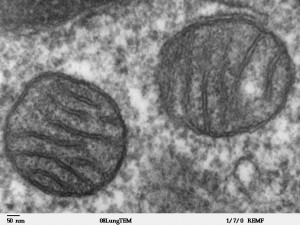
(Mitochondria. These live in your cells. Courtesy of Wikipedia.)
Where do you begin and other people end?
Other human beings surround us. We share air with them; with every breath you may be inhaling the substance of any one of the other billions of humans that have lives on this planet. We share food and drink with them, and in doing so share some of our substance, share some of our microbes, and some of our essence. We make love and in it exchange physical contact, fluids, heat, chemicals, thoughts, dreams, desires. We talk with other humans beings and their words and deeds change us as we witness them and react, either imitating or refusing to or simply learning and observing. Each one of us is the sum of our Ancestors, and all those who affected them, and our contemporaries, and all that which affects them.

(Image courtesy of Pixabay)
Where do you begin and the Gods end?
Before a prepared shrine we sing the names and deeds of a God, calling for their attention. We feel the warmth of their presence, the breath of their air, the exciting tingle or other signs that herald them. We share with them our food and beverage from the fields from which we eat and the wells from which we drink. We give them incense and breathe the same air that it hangs in. As we sing in praise of them we give them our breath, our emotion, the very vibrations that produce our words. We give them parts of ourselves and they bless us. They touch us and fill us with the ecstasy of the knowledge of them. They reach in and change us or give us things. They reach into the world around us and change it on our behalf.
When you have felt a deep communion with a God, lost yourself in them – where do you end, and where do you begin? Afterwards, when you feel whole and of a piece again, where do you end, where do you begin?
Do we carry them within us afterwards, worlding them with our presence? If parts of them reside within us, should we treat ourselves as we would something more holy? Are our bodies truly temples to the ones we connect to deeply? Do they then experience the world through us? Is that why they protect us and wish to help us prosper; enlightened self-interest of a being who has part of themselves invested in you?
Many of us who have grown close to a God feel them affecting our lives, our choices, our styles and aesthetics. Is this because we are mindful of them and their preferences? Because they ask us to quietly, without us really hearing, as they so often do? Is this because we carry a piece of them in ourselves, just as we do pieces of every other being we interact with, and it colors us the way our gut bacteria do?
I’ve seen people react in different ways to these thoughts. There are those with no grounding or training or counterbalance or who simply have bad luck, who claim to be Gods themselves (and then proceed to act more foolishly than most Gods I’d imagine do). There are those who panic when they feel that closeness that isn’t quite going away and seek to cleanse themselves of it by engaging in habitual behavior and courting denial. I’ve also seen people become more responsible for themselves and their actions, and treat themselves as vessels for their Gods in a reverent way.

(Courtesy of Pexels)
“Nothing is ‘just’ anything.” is a mantra that I’ve used to walk myself out of some of the darkest places in my life. Our reductive minds try to isolate things – humans, cultures, stories, Gods – when everything, in fact, blends together at the borders. Like the layers of the atmosphere or ocean, there are no clearly demarcated lines; just fuzzy areas where one thing bleeds into another.
Do you begin somewhere? Somewhere outside of where the Gods end? Is there a clear boundary, a defining line even for the hardest polytheists? There are those that see them as manifestations of forces of nature, those that see them as powerful spirit beings, those that see them as shared dreams and ideals, and those that see them as distant Ancestors. None of those interpretations show a sharp boundary, all of them lead to fuzzy lines and borders.
I am a semsolid polytheist; I favor the concept of distinct identities for our Gods (mostly; there are polytheist models that do have gods syncretized, merged, or part of something greater and I won’t discount them outright). As I’ve said before, I don’t refer to every human I meet by my partner’s name just because they happen to be one of my favorite humans; I extend the Gods the same courtesy. Even so, I see where the lines between individual people blur and wonder. In any case, I’ve started to consider that in a way, we may be sacred to the Gods who love us and wonder how that might inform our lives.
Do you hold deep devotion to a God? Have they touched you or blessed you or your life? Have you felt them speak within you? Have you shared of yourself with them? If you have then perhaps part of you is in them, and part of them is in you. How would you treat yourself and your life differently if you thought of it that way?
Previous Post

September 25, 2016
Being Trans and Heathen
Next Post

October 28, 2016 The Blessings of Online Community
Browse Our Archives
Select a Category Columns Community Interfaith Nature Politics Ritual and Practice The Lady's Quill Theology, Ethics, Philosophy Uncategorized
Select a Month January 2017 December 2016 November 2016 October 2016 September 2016 August 2016 June 2016 March 2016 February 2016 December 2015 November 2015 October 2015 September 2015 August 2015
TAKE THE
Religious Wisdom Quiz
Whose bones were to be carried from Egypt back to Canaan?
Select your answer to see how you score.
Jacob Benjamin Levi Joseph
Related posts from The Lady's Quill

Pagans Need To Remember The Holocaust As Well

Night Has Fallen, Light Your Torches
Greeting Freyja: A Simple Rite

TRENDING AT PATHEOS Pagan

I was recently chatting with someone on Instagram. She asked me what...

While there are many people who share their results, the end of...

On July 23, I saw Christopher Nolan's The Odyssey which is Homer’s...

As I write this two big events have just finished up. One...

Restoring the Watershed of Divine Love
Perhaps cooperation is not something we manufacture through legislation, ideology, or moral...

Many UUs don’t pray because of bad experiences in a previous religion,...
view all Pagan blogs
Ad-Free & Subscriber Log-In Subscription Support
- About Us
- 2026 Calendar
- Videos
- Podcasts
- Library of World Religions
- Faith In Media Tracker
- Advertise With Us
- Write for Us
- Privacy Policy
- Terms of Service
- Do Not Sell My Data
- Contact Us
- Radiant Digital
- Manage Newsletter Subscriptions
- Unsubscribe From Notifications
- Sitemap
Copyright 2008-2026, Patheos. All rights reserved.
Subscription Support Ad-Free & Subscriber Log-In
Follow Patheos