
BuddhistCatholicContemplativeEvangelicalGeneral ChristianHinduJewishLatter-day SaintMuslimNew VisionsProgressive Christian
Beliefs
- Buddhist
- Catholic
- Contemplative
- Evangelical
- General Christian
- Hindu
- Jewish
- Latter-day Saint
- More Voices
- Muslim
- New Visions
- Pagan
- Progressive Christian
Topics
- Religion News
- Food and Religion
- Sports and Religion
- Religious Art
- Religious Music and Entertainment
- Religious Events
- History and Religion
- Style and Religion
- Politics and Religion
- Women in Religion
- Recreation Outdoors and Religion
- Business Finance and Religion
- Careers Workplace and Religion
- Education and Religion
- Family Parenting and Religion
- Health Fitness and Religion
- Home and Religion
- Relationships and Religion
- Technology and Religion
- Travel and Religion
Columnists
- Buddhist Columnists
- Business Finance and Religion Columnists
- Careers Workplace and Religion Columnists
- Catholic Columnists
- Contemplative Columnists
- Education and Religion Columnists
- Evangelists Columnists
- Family Parenting and Religion Columnists
- General Christian Columnists
- Health Fitness and Religion Columnists
- Hindu Columnists
- History and Religion Columnists
- Home and Religion Columnists
- Jewish Columnists
- More Voices Columnists
- Latter Day Columnists
- Muslim Columnists
- New Visions Columnists
- Nonreligious Columnists
- Pagan Columnists
- Politics and Religion Columnists
- Progressive Columnists
- Recreation Outdoors and Religion Columnists
- Relationships and Religion Columnists
- Religion News Columnists
- Religious Art Columnists
- Religious Events Columnists
- Religious Music and Entertainment Columnists
- Sports and Religion Columnists
- Style and Religion Columnists
- Technology and Religion Columnists
- Travel and Religion Columnists
- Women in Religion Columnists
Resource Library
- 2026 Calendar
- Library of World Religions
- The 100 Most Holy Places on Earth
- Patheos Answers
- Podcasts
- Videos
- Faith Leaders Database
- Anglican Episcopalian
- Bahai
- Baptist
- Buddhism
- Christianity
- Confucianism
- Eastern Orthodoxy
- Hinduism
- Holiness and Pentecostal
- ISKCON
- Islam
- Judaism
- Lutheran
- Methodist
- The Church of Jesus Christ of Latter-day Saints
- New Age
- Paganism
- Presbytarian and Reformed
- Protestantism
- Religion Behind the Scenes
- Roman Catholic
- Scientology
- Shia Islam
- Sikhism
- Sufism
- Sunni Islam
- Taoism
- Zen
- See all religions
Research Tools
 Ad-Free & Subscriber Log-In Subscription Support
Ad-Free & Subscriber Log-In Subscription Support
Follow Patheos 

- Trending:
- Forgiveness
- |
- Marriage
- |
- Consciousness
- |
- Death Penalty
- |
- Election
- |
- Halloween
 The Jesuit Post
-
About TJP on Patheos
- Home
- Catholic
- Interviewing Camille Paglia
Interviewing Camille Paglia
Last updated on: March 1, 2015 at 8:21 pm by Sean Salai, SJ
Interviewing Camille Paglia 2015-03-01T20:21:36-08:00 Sean Salai, SJ
Patheos Explore the world's faith through different perspectives on religion and spirituality! Patheos has the views of the prevalent religions and spiritualities of the world.
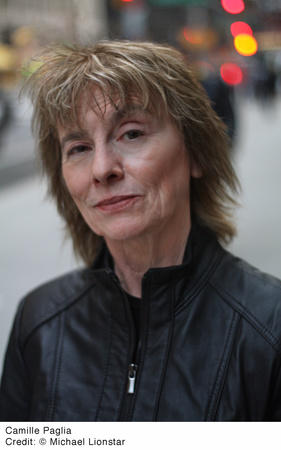
Thanks to her love for the Jesuits (her dad taught at LeMoyne College and she took a logic class there) and to a former Wabash College professor of mine, Camille Paglia was gracious enough to let me interview her for America last week.
In our interview, “The Catholic Pagan,” the punchy cultural critic shares her views on Pope Francis and academia. Professor Paglia also recalls the influence of her own Catholic upbringing and journey out of the Church to embrace paganism. “Italian Catholicism remains my strongest identity,” she says.
Father James Martin, S.J., notes that I’m the second Jesuit scholastic to interview the nation’s most famous “dissident feminist” for America magazine. In this America blog entry, Father Martin re-posts his 1994 interview with Paglia and an introduction by Father George Hunt, S.J. He also explains how his own interview came about.
For my part, I first encountered Paglia’s work as an undergraduate student in the fall 2000 semester at all-male Wabash in Indiana, where my Classics 101 (Mythology) professor assigned one of her essay collections (“Sex, Art, and American Culture”) as a required textbook. He liked its pop culture-infused commentaries on ancient mythology. Classics 101 was a popular class with a popular teacher at Wabash, but Paglia’s fun little book — so very different from many of the dreary, trendy, and disposable texts we read elsewhere in our liberal arts studies — was so engagingly written that it left a stronger impression on us than any of the other readings.
So it was because of this classics professor, a Latin mass-going Catholic, that I first read Paglia and more recently was able to contact her for an interview. My professor has maintained a friendship with Paglia for many years now. He is currently arranging a campus lecture for her at Wabash sometime this semester.
After college I bought and read most of “Sexual Personae,” Paglia’s master work on art and pop culture. Although I didn’t enjoy it as much as her essays on the pagan roots of Madonna and Catholicism, its direct writing style and original insights made an impact on me. It’s hard to read Paglia without agreeing and disagreeing with her in equal measure.
Read the interview and see what you think.
Previous Post
February 18, 2015
Now is the Time: Show me love
Next Post

March 4, 2015 Elizabeth Scalia at America: The Anchoress Speaks
Browse Our Archives
Select a Category About the Blog TJP Book Excerpt TJP Excerpt Uncategorized Weekly Post
Select a Month June 2015 May 2015 April 2015 March 2015 February 2015 January 2015 December 2014 November 2014 October 2014 September 2014 August 2014 July 2014 June 2014 May 2014 April 2014 March 2014 February 2014 January 2014
Follow Us!
TAKE THE
Religious Wisdom Quiz
What does James say someone who doubts is like?
Select your answer to see how you score.
A house built on sand A wave of the sea, blown and tossed by the wind A sheep without a shepherd A leaf falling from a tree
Related posts from The Jesuit Post
America interviews TJP editor Michael Rossmann, SJ

Rosario Rodriguez on forgiving her attackers

Leah Darrow: From America's Next Top Model to...
Being Polite about the Resurrection
TRENDING AT PATHEOS Catholic

Rejecting Doom: Christian Hope And Human Action
Christianity is a religion of hope. We are to have hope and...

It’s What Comes From Within Which Matters
One of the most difficult things for us to understand is why...

Why I Choose the Eucharist Over the Sermon
Choose the Eucharist, Not the Sermon What are we supposed to get...

5 Design Elements Found in Spiritually Rooted Homes
Putting Spirituality Into Home Decor Our homes are more than our living...

Credo: A Story of God Told with the...
About 10 years ago, I began to imagine a personal "Credo" that...

The Anatomy of Divine Revelation in Catholic Thought
The claim that God has made Himself known to human beings is...
view all Catholic blogs
Ad-Free & Subscriber Log-In Subscription Support
- About Us
- 2026 Calendar
- Videos
- Podcasts
- Library of World Religions
- Faith In Media Tracker
- Advertise With Us
- Write for Us
- Privacy Policy
- Terms of Service
- Do Not Sell My Data
- Contact Us
- Radiant Digital
- Manage Newsletter Subscriptions
- Unsubscribe From Notifications
- Sitemap
Copyright 2008-2026, Patheos. All rights reserved.
Subscription Support Ad-Free & Subscriber Log-In
Follow Patheos