
BuddhistCatholicContemplativeEvangelicalGeneral ChristianHinduJewishLatter-day SaintMuslimNew VisionsProgressive Christian
Beliefs
- Buddhist
- Catholic
- Contemplative
- Evangelical
- General Christian
- Hindu
- Jewish
- Latter-day Saint
- More Voices
- Muslim
- New Visions
- Pagan
- Progressive Christian
Topics
- Religion News
- Food and Religion
- Sports and Religion
- Religious Art
- Religious Music and Entertainment
- Religious Events
- History and Religion
- Style and Religion
- Politics and Religion
- Women in Religion
- Recreation Outdoors and Religion
- Business Finance and Religion
- Careers Workplace and Religion
- Education and Religion
- Family Parenting and Religion
- Health Fitness and Religion
- Home and Religion
- Relationships and Religion
- Technology and Religion
- Travel and Religion
Columnists
- Buddhist Columnists
- Business Finance and Religion Columnists
- Careers Workplace and Religion Columnists
- Catholic Columnists
- Contemplative Columnists
- Education and Religion Columnists
- Evangelists Columnists
- Family Parenting and Religion Columnists
- General Christian Columnists
- Health Fitness and Religion Columnists
- Hindu Columnists
- History and Religion Columnists
- Home and Religion Columnists
- Jewish Columnists
- More Voices Columnists
- Latter Day Columnists
- Muslim Columnists
- New Visions Columnists
- Nonreligious Columnists
- Pagan Columnists
- Politics and Religion Columnists
- Progressive Columnists
- Recreation Outdoors and Religion Columnists
- Relationships and Religion Columnists
- Religion News Columnists
- Religious Art Columnists
- Religious Events Columnists
- Religious Music and Entertainment Columnists
- Sports and Religion Columnists
- Style and Religion Columnists
- Technology and Religion Columnists
- Travel and Religion Columnists
- Women in Religion Columnists
Resource Library
- 2026 Calendar
- Library of World Religions
- The 100 Most Holy Places on Earth
- Patheos Answers
- Podcasts
- Videos
- Faith Leaders Database
- Anglican Episcopalian
- Bahai
- Baptist
- Buddhism
- Christianity
- Confucianism
- Eastern Orthodoxy
- Hinduism
- Holiness and Pentecostal
- ISKCON
- Islam
- Judaism
- Lutheran
- Methodist
- The Church of Jesus Christ of Latter-day Saints
- New Age
- Paganism
- Presbytarian and Reformed
- Protestantism
- Religion Behind the Scenes
- Roman Catholic
- Scientology
- Shia Islam
- Sikhism
- Sufism
- Sunni Islam
- Taoism
- Zen
- See all religions
Research Tools
 Ad-Free & Subscriber Log-In Subscription Support
Ad-Free & Subscriber Log-In Subscription Support
Follow Patheos 

- Trending:
- Forgiveness
- |
- Marriage
- |
- Consciousness
- |
- Death Penalty
- |
- Election
- |
- Halloween
 The Jesuit Post
-
About TJP on Patheos
- Home
- Catholic
- This Coming Apocalypse
This Coming Apocalypse
Last updated on: May 21, 2014 at 12:06 pm by Paul Lickteig, SJ
This Coming Apocalypse 2014-05-21T12:06:39-08:00 Paul Lickteig, SJ
Patheos Explore the world's faith through different perspectives on religion and spirituality! Patheos has the views of the prevalent religions and spiritualities of the world.
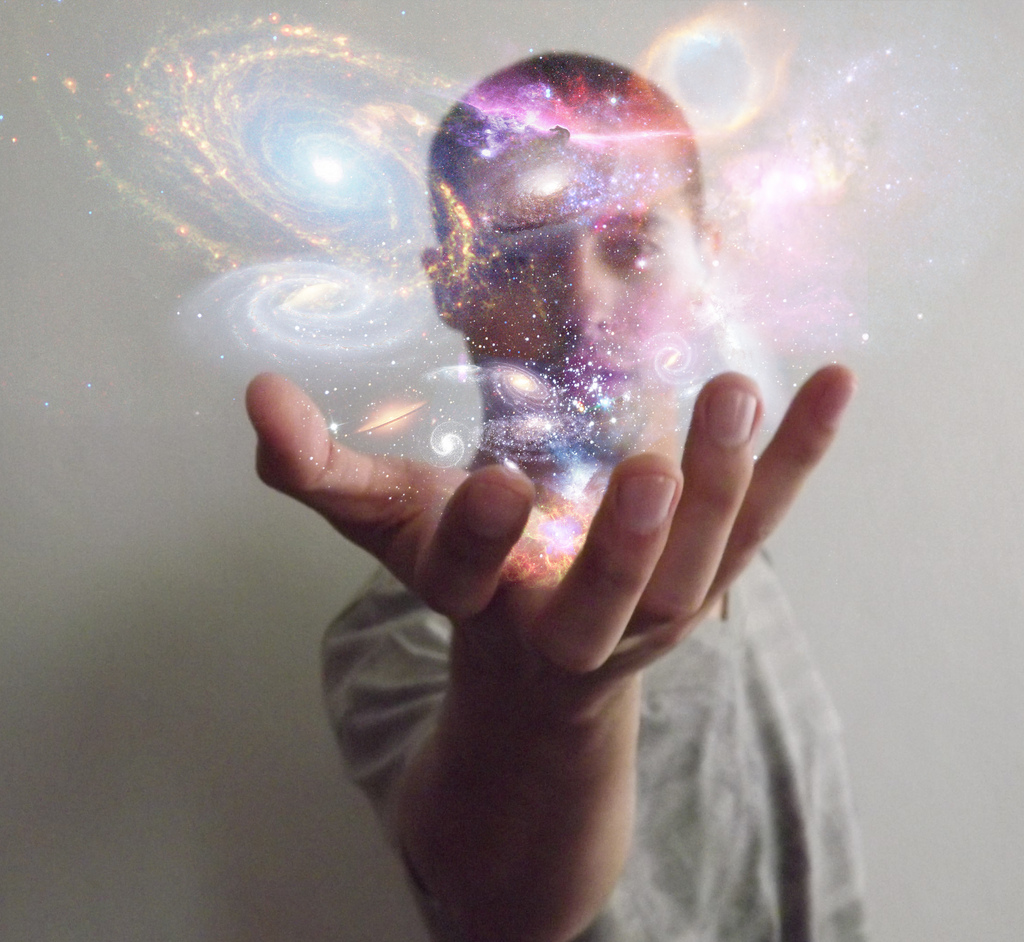 Each generation has had to contend with Biblical ideas about death, judgment and the resulting eternity spent in heaven or hell, but none have yet seen the “day” alluded to in scripture. Millennia have passed as people, from time to time and to varying degrees, worried about the end of the world. Apocalyptic fervor might have spiked at the year 1,000 and again in 2012, but God (not being into numerology) did not come. Life continued. So it is that when anyone becomes convinced that their generation will be the last, most everyone else can take comfort in the fact that doomsayers, traditionally, have had a really bad track record.
In the year 2014 we have pretty much relegated the idea of “judgment day” to the category of “superstition with possible psychological importance.” Whether understood as the fiery condemnation of a fallen world or the joyful coming to fullness in Christ who is Alpha and Omega, there is an unreality to any discussions of a final end. We might accept that we ourselves one day will die, but the concept of “the last days” is viewed as nothing but allegory…as unreal, or at least as not-quite-literal. Instead – as we do with most mythologically giant themes in our day and age – we reinterpret it individualistically: who am I? Am I accountable for what I’ve done? Am I living well and fully?
It’s not that these are inapt questions. It’s that in them there is little sense that we are more than I; that we as a culture, a world, may be called to accountability for our actions.
***
There are any number of reasons that it is difficult to grapple with the possibility that an entire people might be moving towards its own destruction. First, the concept of global cataclysm is… well, it’s too large to wrap our heads around. Second, the “end times” seems to describe something that sounds really, really bad… but has never actually happened. Why would it now? Third, thinking about our part in perpetuating global decay kind of gets in the way of living our lives with anything like a relative sense of peace and hope. Since hope is the wellspring of our future aspirations, we do what we can to reframe any such disruptive evidence.
Take the possibility of global climate change, for example. The more I have been reading and talking with others about ecological crisis in the past few months, the more I have come to believe that we are on the cusp of something very bad. Is it an apocalypse? Well, this is (part of) what we know:
• Climate change is a problem that is directly related to the production of CO2 and other greenhouse gasses.
• These gasses are primarily released into the atmosphere by burning of fossil fuels, fuels which we need for production of food and goods, for the transportation of, well, everything, and for all of the things in our lives that we enjoy (from hot showers to hot food).
• The consequences of global warming, which include increased wildfires, rising sea levels, unstable weather patterns, etc., seem pretty drastic at this point.
• If we were to view this as a problem, it would mean finding a source of the problem. But there is no single source. The production and use of fossil energy is inseparable from the ways we think about our economic, political and personal lives.
• A change in the production of harmful gasses would not only mean that we would all have to radically change the ways that we live, but that this issue would have to be addressed on a global scale.
We come right back to the first of our reasons for not thinking about it: A global scale is too large (for us) to hold in balance. So, rather than really accept the possibility that an apocalypse in the form of climate change poses a threat, we might try to convince ourselves that our fears are nothing but an alarmist response to an uncertain future; a “chicken little”’ scenario. We might question the findings of various scientific studies, claiming that the estimates for a rise in global change in temperature are too extreme. We might just as easily dismiss the destruction of various types of plant and animal life in some scientific studies by pointing to the flourishing of other species in different studies.
In this way, we begin to name scientific “alarmists” as something like myth-makers for the 21st century. We believe in science, but in this case we just presume that all of this “climate change” talk is a matter of interpretation of data. We might insist those who claim that climate change is real are simply weaving numbers into a narrative that will allow them to continue getting funding for their projects. We might also insist that there is no possible way that scientists could really figure this out. I mean, if meteorologists cannot even predict the weather for the next two weeks, what makes anyone think that someone from NASA can predict what will happen in two decades?
We resist the data because the scale is too large and we too small. And so the climate change narrative becomes a fictive display of pseudo-science that goes the way Y2K bug and the Mayan Calendar. It all goes the way of the Book of Revelation – something that sounds kind of cool, and pretty scary, but ultimately will not affect us all that much. However, like the idea of a Day of Judgment, the possibility of a cataclysm, ecological or otherwise remains in the back of our collective consciousness, emerging as food for entertainment.[1] In the case of entertainment we acknowledge the threat and the importance of the collected data, but we interpret it all in way that mollifies us, presenting us with stories of triumphal human values amidst dire circumstances rather than demanding us to change.
Here is a question I have been asking myself though: what if the ecological situation – as it is, as it is right now – is not a metaphor for things like human consumption, the abuse of “economically disenfranchised” populations, the misuse of created goods, or systemic injustices wrought by pride, greed, indifference, and desire, or whatever?
What if it actually is the result of those things?
***
Few of us give much thought to our own end times. Fewer still give much thought to the end times. Even we Christians. And we ought to know better.
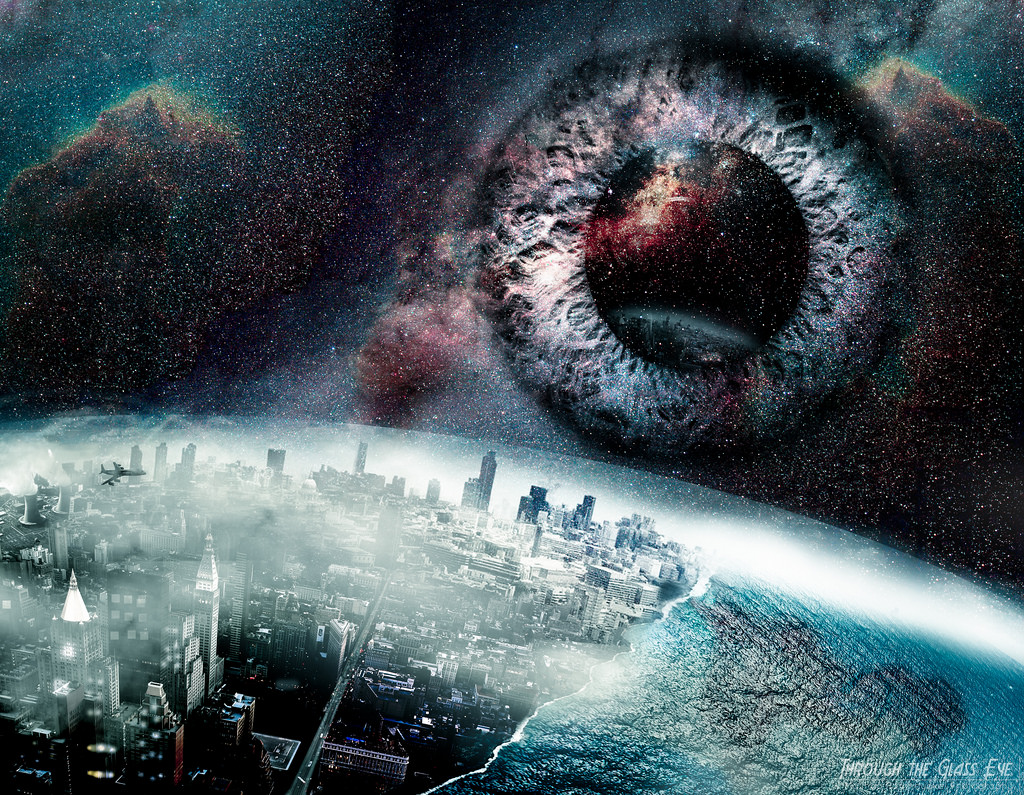 That we don’t pay much attention should alarm us because, as Jesus said over and over again, the end of time is already here, in him.[2] The Kingdom of God is within you. It has come near to you. It is like a treasure buried in a field – right there, already there, waiting to be uncovered. The time for God’s people to be gathered is always now, he said. And still, when events come along that ought to remind us of this, that should jog us out of our self-obsession and bring to mind those classic “four last things” of the old catechism – death, judgment, heaven, hell – even we Christians have our rebuttals.
We do a good job of explaining away the “day of reckoning” and of making excuses against the “global cataclysm.” But despite the delay of Jesus’ second coming, Christians are bound to take both of these notions seriously – and not just as allegories.
Which is not to say that we are among those who think to force God’s hand; who, through human will and deeds, anticipate and expedite the final days. And this is because the kind of apocalypse God had in mind and the kind of destruction we are causing move in opposite directions. The latter, the one we actually could bring about, is an apocalypse of destruction wrought by humanity’s errors. It’s the triumph of sin on a global scale, the opposite of God’s triumph over sin in the holy apocalypse of the second coming.
Not to say that climate change is not happening, but even if it were not actually occurring, all of the consumption, abuse, and misuse of people and resources still is. What does that mean for us, not as a species, but as souls? All of the issues associated with climate change, all of the causes named and their associated abuses, are evidence for only a certain kind of will and reckoning – the kind figured by humans rather than by the Holy One, Father of Mercies.
***
Regardless of whether we will see the actual destruction of the Earth and its inhabitants due to our own actions – and I surely hope not, will work so that we do not – there will still come a day of reckoning. Regardless of whether or not climate change is happening and we are directly responsible, there are still countless evils at work in our lives that might have more than just a metaphorical hold on us. At some point I have to move away from the impulse to explain it all away so that I do not have to think about what it would really mean if it were actually true.
Ultimately, the real inconvenient truth is this: we are, all of us who claim to be Christian, formed in the shadow of the apocalypse. This is not a joke. We hear about it all through scripture, especially in the New Testament with its allusions to the Day of Lord;[3] in Paul’s Letters;[4] we even have an entire book that focuses on it.[5] We are formed with this idea that there will come a day of reckoning when all things will come to an end, all will be judged, and all will be made new. At that time, the truth of our existence will be revealed, and we will be forced to make an account of our actions.
We do not reach this day by ignoring the possibility of it. Instead, as Christians, we are asked to accept that reality precisely so that we can learn to live with the values of hope, love, and faith.
The defining feature of triumphal virtues is being able to maintain a sense of peace, trust, hope, courage, love and all the rest in the face of extreme adversity. We do not practice virtue by pretending problems do not exist. Rather, it is only by trusting that Christ will lead us through our fears that we enter a new place of peace. Faith in Christ is faith in the midst of the confusion and suffering of the cross. It is always about the resurrection, but for that to happen, we have to face death first.
_______________________________________________
1. A fascination since I was six, here are some of my favorite apocalypse movies presented in the order I saw them: Planet of the Apes, Logan’s Run, The Road Warrior, Blade Runner, Threads, Robocop, The Running Man, Terminator, and Total Recall (what’s up Arnold?). More recently I have really enjoyed Gattaca, The Book of Eli, In Time (yeah, I know…but you’ve gotta love JT), Children of Men, I Am Legend (though I usually do not do Zombie movies), The Road, and The Hunger Games movies.
2. See the masterful book “Jesus, Who He Was and What He Wanted” by Gerald Lohfink, SJ for more on this theme. You can read a review of Lohfink’s book here, and an excerpt from it here, and buy it here.
3. e.g. Matthew 24:36-44.
4. And his constant talk of the Parousia.
5. The Book of Revelation — and if graphic novels are your thing, maybe check out this brilliant adaptation.
_______________________________________
Lead Photo: When the Moon Breaks Down by Robbert van der Steeg. Found on Flick, used under Creative Commons.
Main Article Photo 1: Universe In My Hands by Lauro Roger McCallister. Found on Flickr, used under Creative Commons.
Main Article Photo 2: In the Eyes of the Creator by Malinda Rathnayake. Found on Flickr, used under Creative Commons.
Previous Post
May 20, 2014
Jesuit Superior General intends to retire
Next Post

June 24, 2014 A Third Way? Exploring the Church's Teaching on Homosexuality
Browse Our Archives
Select a Category About the Blog TJP Book Excerpt TJP Excerpt Uncategorized Weekly Post
Select a Month June 2015 May 2015 April 2015 March 2015 February 2015 January 2015 December 2014 November 2014 October 2014 September 2014 August 2014 July 2014 June 2014 May 2014 April 2014 March 2014 February 2014 January 2014
Follow Us!
TAKE THE
Religious Wisdom Quiz
Who built an ark to survive the great flood?
Select your answer to see how you score.
Abram Noah Shem Enoch
Related posts from The Jesuit Post
America interviews TJP editor Michael Rossmann, SJ

Rosario Rodriguez on forgiving her attackers
Leah Darrow: From America's Next Top Model to...
TRENDING AT PATHEOS Catholic

Creation, Preservation, and Teleology in Catholic Theology
As I write this, it is very early Monday morning. Like millions...

The Parable Of The Sower And The Word...
One of Christ’s most famous parables is that of the sower who...

Rejecting Doom: Christian Hope And Human Action
Christianity is a religion of hope. We are to have hope and...

Why I Choose the Eucharist Over the Sermon
Choose the Eucharist, Not the Sermon What are we supposed to get...

5 Design Elements Found in Spiritually Rooted Homes
Putting Spirituality Into Home Decor Our homes are more than our living...

Credo: A Story of God Told with the...
About 10 years ago, I began to imagine a personal "Credo" that...
view all Catholic blogs
Ad-Free & Subscriber Log-In Subscription Support
- About Us
- 2026 Calendar
- Videos
- Podcasts
- Library of World Religions
- Faith In Media Tracker
- Advertise With Us
- Write for Us
- Privacy Policy
- Terms of Service
- Do Not Sell My Data
- Contact Us
- Radiant Digital
- Manage Newsletter Subscriptions
- Unsubscribe From Notifications
- Sitemap
Copyright 2008-2026, Patheos. All rights reserved.
Subscription Support Ad-Free & Subscriber Log-In
Follow Patheos