
BuddhistCatholicContemplativeEvangelicalGeneral ChristianHinduJewishLatter-day SaintMuslimNew VisionsProgressive Christian
Beliefs
- Buddhist
- Catholic
- Contemplative
- Evangelical
- General Christian
- Hindu
- Jewish
- Latter-day Saint
- More Voices
- Muslim
- New Visions
- Pagan
- Progressive Christian
Topics
- Religion News
- Food and Religion
- Sports and Religion
- Religious Art
- Religious Music and Entertainment
- Religious Events
- History and Religion
- Style and Religion
- Politics and Religion
- Women in Religion
- Recreation Outdoors and Religion
- Business Finance and Religion
- Careers Workplace and Religion
- Education and Religion
- Family Parenting and Religion
- Health Fitness and Religion
- Home and Religion
- Relationships and Religion
- Technology and Religion
- Travel and Religion
Columnists
- Buddhist Columnists
- Business Finance and Religion Columnists
- Careers Workplace and Religion Columnists
- Catholic Columnists
- Contemplative Columnists
- Education and Religion Columnists
- Evangelists Columnists
- Family Parenting and Religion Columnists
- General Christian Columnists
- Health Fitness and Religion Columnists
- Hindu Columnists
- History and Religion Columnists
- Home and Religion Columnists
- Jewish Columnists
- More Voices Columnists
- Latter Day Columnists
- Muslim Columnists
- New Visions Columnists
- Nonreligious Columnists
- Pagan Columnists
- Politics and Religion Columnists
- Progressive Columnists
- Recreation Outdoors and Religion Columnists
- Relationships and Religion Columnists
- Religion News Columnists
- Religious Art Columnists
- Religious Events Columnists
- Religious Music and Entertainment Columnists
- Sports and Religion Columnists
- Style and Religion Columnists
- Technology and Religion Columnists
- Travel and Religion Columnists
- Women in Religion Columnists
Resource Library
- 2026 Calendar
- Library of World Religions
- The 100 Most Holy Places on Earth
- Patheos Answers
- Podcasts
- Videos
- Faith Leaders Database
- Anglican Episcopalian
- Bahai
- Baptist
- Buddhism
- Christianity
- Confucianism
- Eastern Orthodoxy
- Hinduism
- Holiness and Pentecostal
- ISKCON
- Islam
- Judaism
- Lutheran
- Methodist
- The Church of Jesus Christ of Latter-day Saints
- New Age
- Paganism
- Presbytarian and Reformed
- Protestantism
- Religion Behind the Scenes
- Roman Catholic
- Scientology
- Shia Islam
- Sikhism
- Sufism
- Sunni Islam
- Taoism
- Zen
- See all religions
Research Tools
 Ad-Free & Subscriber Log-In Subscription Support
Ad-Free & Subscriber Log-In Subscription Support
Follow Patheos 

- Trending:
- Forgiveness
- |
- Marriage
- |
- Consciousness
- |
- Death Penalty
- |
- Election
- |
- Halloween
 The Jesuit Post
-
About TJP on Patheos
- Home
- Catholic
- The Catholic “More Than”
The Catholic “More Than”
Last updated on: February 4, 2014 at 7:41 pm by Sam Sawyer, SJ
The Catholic “More Than” 2014-02-04T19:41:46-08:00 Sam Sawyer, SJ
Patheos Explore the world's faith through different perspectives on religion and spirituality! Patheos has the views of the prevalent religions and spiritualities of the world.
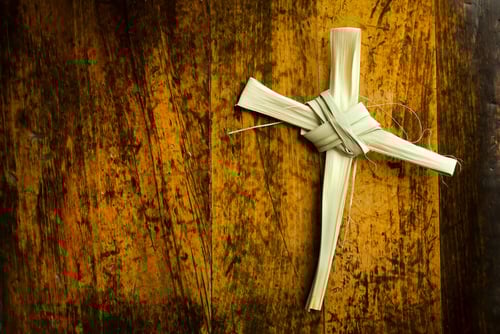
How do we start to imagine more than vengeance?
Image: Ricardo Reitmeyer / Shutterstock
The observation is frequently made that Catholicism is a religion of “both/and” rather than “either/or” — that at its best, the tradition tends to reconcile apparent contradictions rather than simply elevating one position over another. As usual, G.K. Chesterton put it beautifully:
Christianity got over the difficulty of combining furious opposites, by keeping them both, and keeping them both furious.
Now, admittedly, I may just be enjoying the way it sounds, but I think in addition to the Catholic “both/and” we might also have a Catholic “more than” — a tendency to look for deeper meanings, to look for possibilities opened by grace that are not immediately apparent on the surface.
My reason for thinking about this today is a great piece by a friend and classmate of mine, Matt Janeczko, OFM Cap. Here in Boston, as preparations are beginning for the trial of Dzokhar Tsarnaev, there’s debate over whether or not the death penalty should be on the table. Matt writes against it and the title he’s given his piece, “I Want to Remember More than Evil,” says why. He concludes:
I will always remember the victims of the Boston Marathon Bombings. And when I do, I also want to be able to remember that when we all saw something evil on our streets, on our screens, and later on a Rolling Stone cover, we did not sink to the level of vengeance. I want to remember that we reached for something grander, something more worthy of those we lost, and something more worthy of us.
I think Matt’s piece is right in terms of its argument, but more than that, I think it has something to teach us about how to propose a truth from the Catholic tradition (opposition to the death penalty, in this case) to the wider world.
Rather than setting out to explain or correct, Matt’s piece works by remembering and imagining. It calls people to attend to what is already good, and then to imagine what more that can point to. It addresses us as a community, and suggests that we don’t have to — and indeed should not — be limited to the options suggested by a political calculus, that we can and should hope for more than that. And it asks us to look at what action that hope calls for.
At its very best the Catholic tradition can offer — even to the secular moral imagination — a challenge to reach for something greater and a glimpse of something more. There’s a powerful hope in that which Matt, quoting Abraham Joshua Heschel, describes as “moral grandeur and spiritual audacity.” Catholicism of course has no monopoly on that hope (witness the quote from Rabbi Heschel), but it perhaps has a distinctive way to catalyze it.
Those of us on the inside have always known that Catholicism offers far more to say “yes” to than it demands that we say “no” to. That’s why it’s so encouraging to see examples of how we can propose that vision to others: both a critique of capital punishment on moral grounds, and also a hope for more than vengeance in response to evil.
Previous Post

January 30, 2014
The (Rolling) Stone That the Builders Rejected
Next Post

February 10, 2014 A Sower Went Out to Sow: Remembering Dan Harrington, SJ
Browse Our Archives
Select a Category About the Blog TJP Book Excerpt TJP Excerpt Uncategorized Weekly Post
Select a Month June 2015 May 2015 April 2015 March 2015 February 2015 January 2015 December 2014 November 2014 October 2014 September 2014 August 2014 July 2014 June 2014 May 2014 April 2014 March 2014 February 2014 January 2014
Follow Us!
TAKE THE
Religious Wisdom Quiz
Which Old Testament book does not mention God?
Select your answer to see how you score.
Ecclesiastes Esther Ruth Song of Solomon
Related posts from The Jesuit Post

America interviews TJP editor Michael Rossmann, SJ

Rosario Rodriguez on forgiving her attackers

Leah Darrow: From America's Next Top Model to...
TRENDING AT PATHEOS Catholic

Creation, Preservation, and Teleology in Catholic Theology
As I write this, it is very early Monday morning. Like millions...

The Parable Of The Sower And The Word...
One of Christ’s most famous parables is that of the sower who...

Rejecting Doom: Christian Hope And Human Action
Christianity is a religion of hope. We are to have hope and...

Why I Choose the Eucharist Over the Sermon
Choose the Eucharist, Not the Sermon What are we supposed to get...

5 Design Elements Found in Spiritually Rooted Homes
Putting Spirituality Into Home Decor Our homes are more than our living...

Credo: A Story of God Told with the...
About 10 years ago, I began to imagine a personal "Credo" that...
view all Catholic blogs
Ad-Free & Subscriber Log-In Subscription Support
- About Us
- 2026 Calendar
- Videos
- Podcasts
- Library of World Religions
- Faith In Media Tracker
- Advertise With Us
- Write for Us
- Privacy Policy
- Terms of Service
- Do Not Sell My Data
- Contact Us
- Radiant Digital
- Manage Newsletter Subscriptions
- Unsubscribe From Notifications
- Sitemap
Copyright 2008-2026, Patheos. All rights reserved.
Subscription Support Ad-Free & Subscriber Log-In
Follow Patheos