
BuddhistCatholicContemplativeEvangelicalGeneral ChristianHinduJewishLatter-day SaintMuslimNew VisionsProgressive Christian
Beliefs
- Buddhist
- Catholic
- Contemplative
- Evangelical
- General Christian
- Hindu
- Jewish
- Latter-day Saint
- More Voices
- Muslim
- New Visions
- Pagan
- Progressive Christian
Topics
- Religion News
- Food and Religion
- Sports and Religion
- Religious Art
- Religious Music and Entertainment
- Religious Events
- History and Religion
- Style and Religion
- Politics and Religion
- Women in Religion
- Recreation Outdoors and Religion
- Business Finance and Religion
- Careers Workplace and Religion
- Education and Religion
- Family Parenting and Religion
- Health Fitness and Religion
- Home and Religion
- Relationships and Religion
- Technology and Religion
- Travel and Religion
Columnists
- Buddhist Columnists
- Business Finance and Religion Columnists
- Careers Workplace and Religion Columnists
- Catholic Columnists
- Contemplative Columnists
- Education and Religion Columnists
- Evangelists Columnists
- Family Parenting and Religion Columnists
- General Christian Columnists
- Health Fitness and Religion Columnists
- Hindu Columnists
- History and Religion Columnists
- Home and Religion Columnists
- Jewish Columnists
- More Voices Columnists
- Latter Day Columnists
- Muslim Columnists
- New Visions Columnists
- Nonreligious Columnists
- Pagan Columnists
- Politics and Religion Columnists
- Progressive Columnists
- Recreation Outdoors and Religion Columnists
- Relationships and Religion Columnists
- Religion News Columnists
- Religious Art Columnists
- Religious Events Columnists
- Religious Music and Entertainment Columnists
- Sports and Religion Columnists
- Style and Religion Columnists
- Technology and Religion Columnists
- Travel and Religion Columnists
- Women in Religion Columnists
Resource Library
- 2026 Calendar
- Library of World Religions
- The 100 Most Holy Places on Earth
- Patheos Answers
- Podcasts
- Videos
- Faith Leaders Database
- Anglican Episcopalian
- Bahai
- Baptist
- Buddhism
- Christianity
- Confucianism
- Eastern Orthodoxy
- Hinduism
- Holiness and Pentecostal
- ISKCON
- Islam
- Judaism
- Lutheran
- Methodist
- The Church of Jesus Christ of Latter-day Saints
- New Age
- Paganism
- Presbytarian and Reformed
- Protestantism
- Religion Behind the Scenes
- Roman Catholic
- Scientology
- Shia Islam
- Sikhism
- Sufism
- Sunni Islam
- Taoism
- Zen
- See all religions
Research Tools
 Ad-Free & Subscriber Log-In Subscription Support
Ad-Free & Subscriber Log-In Subscription Support
Follow Patheos 

- Trending:
- Forgiveness
- |
- Marriage
- |
- Consciousness
- |
- Death Penalty
- |
- Election
- |
- Halloween

- Home
- Progressive Christian
- Politics and Religion
- Husbands Should Not Influence Wives’ Voting
Husbands Should Not Influence Wives’ Voting
Last updated on: November 2, 2024 at 1:12 pm by Christine Schmertz Navarro
Husbands Should Not Influence Wives’ Voting 2024-11-02T13:12:17-07:00 Christine Schmertz Navarro
Patheos Explore the world's faith through different perspectives on religion and spirituality! Patheos has the views of the prevalent religions and spiritualities of the world.
The 19th Amendment to the U.S. Constitution gave women the right to vote in 1920. After decades of advocacy, civil disobedience, incarceration, marches, and other activities, many women began to exercise this right. Discriminatory voting practices in some states wrongly made it difficult for minority women to vote until years later. Unfortunately, we have witnessed efforts to restrict voting in the twenty-first century.
Some believe that wives who vote differently than their husbands violate the sanctity of marriage.
Jesse Watters’ Interpretation of the Sanctity of Marriage
You may have seen the commercial on TV, narrated by Julia Roberts, in which two women with their Trump-supporting husbands vote for Harris and Waltz in the voting booth’s privacy. The assumption is that their husbands expected their wives to vote for Trump and Vance, but they secretly chose to vote differently.
Jesse Waters and The Vote
I stumbled upon a video of Fox host, Jesse Watters, having a meltdown about this commercial. He said that a wife voting for Harris/Waltz was a deal breaker for a marriage, comparing it to an affair. He would divorce his wife if he found out she had voted this way.
Watters accused the Harris campaign of attacking the sanctity of marriage. If his wife lied about her vote, he questioned what else she kept from him. Another commentator asked why she would need to lie to him. Former House Speaker, Newt Gingrich, also expressed disgust with the ad, produced by VoteCommon, of promoting dishonesty between husband and wife. After the couple vote in this commercial, the husband asks her if she made the “right choice.” She replies, “Sure did, honey.”
Suffragettes Did Not Battle to Give Husbands Two Votes
Women who marched, held hunger strikes, and spent time in jail to advocate for the 19th Amendment would be horrified by men’s reactions to this commercial. How does a woman use her right to vote if her husband expects her to vote the same way he does? The suffragettes of the eighteenth and nineteenth centuries did not sacrifice the way they did to give husbands two votes.
If a wife needs to lie to her husband about her vote, I sense that her husband feels entitled. He thinks his voting decisions are the “right choice,” as in the commercial. If a woman feels she must lie to her husband to vote the way she prefers, I think the sanctity of their marriage is in jeopardy.
The Sanctity of Marriage and Voting
A woman has a constitutional right to vote privately for the candidates of her choice.
In many Christian wedding vows, in addition to the “in sickness and in health” aspect of the promises, there are the vows to “have and to hold,” and “to love and to cherish.” My vows in the Catholic Church were to “love and honor you all the days of my life.”
Denying one’s wife her constitutional right to vote privately for a candidate of her choice should be illegal. What other consequences would husbands hold over their wives’ heads if they voted differently and do they regularly take away their wives’ freedom to make decisions?
In a healthy marriage, spouses respect and honor each other’s individuality and decision-making. When campaigns’ value systems differ greatly, it may be difficult for a couple to hold radically different views. I know I would struggle if faced with the situation.
The answer is not to force or scare one’s spouse, however, into voting the same way. Dialogue is a healthier approach. My parents never discussed voting with us. I do not know whether they discussed voting privately. If a couple argues about candidates or other issues, perhaps they need to resolve the issue by keeping their thoughts to themselves for harmony’s sake.
Husbands Ruling Over Their Wives is a Result of Sin
The Genesis stories of Creation and the Fall of the first man and woman go from a couple who are partners to the consequences of the Fall which includes husbands ruling over wives.
Genesis 1-3
God’s intent, as shared by the authors of Genesis, was for men and women to have healthy relationships with each other, God, and the natural world. All humans are made in Gods’ image.
So God created humankind in his image,
in the image of God he created them;
male and female he created them.(Gen. 1:17)
Voting differently than one’s spouse does not violate the sanctity of marriage; husbands who force their spouses to vote one way or the other is a violation.
It is only after Original Sin that men dominate women. This domination does not reflect God’s original intention in Creation. Since both men and women are made in God’s image and likeness, a husband who dictates her vote not only defies the U.S. Constitution but also restricts her unique way of sharing God with the world.
God said to the woman,
“I will greatly increase your pangs in childbearing;
in pain you shall bring forth children,
yet your desire shall be for your husband,
and he shall rule over you.”(Genesis 3:16)
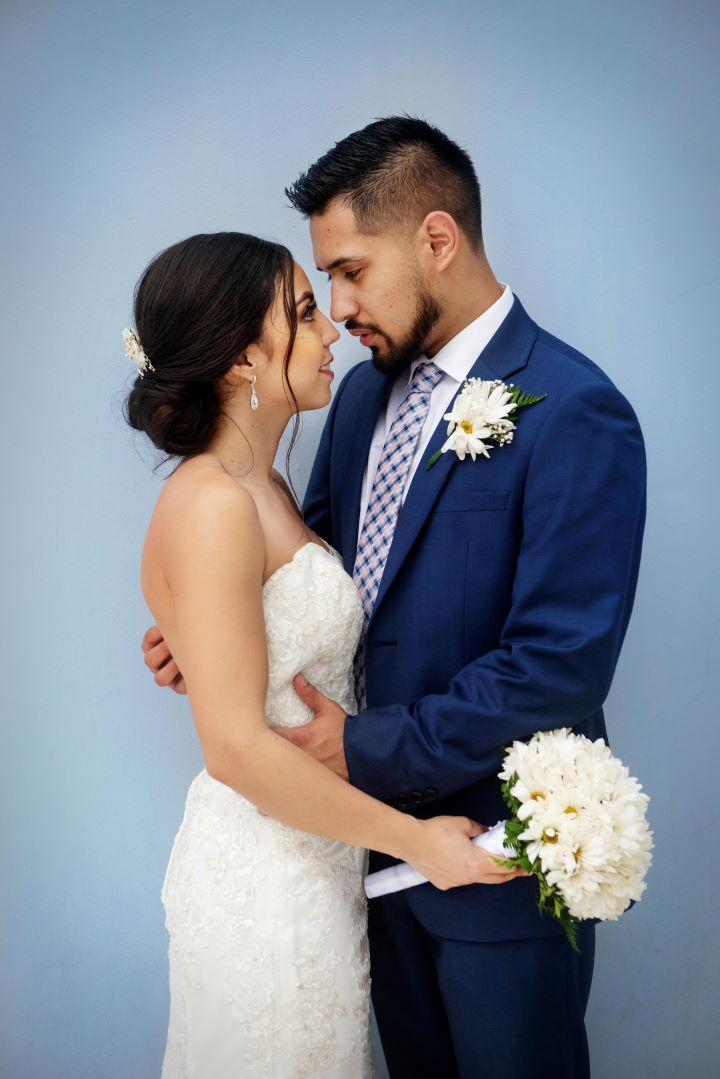
If the “Sanctity of Marriage” means that a wife must vote as her husband wishes, is it really holy? (Misha Earles, Pexels.com)
Marriage Vows
In many Christian wedding vows, in addition to the “in sickness and in health” aspect of the promise, there are the vows to “have and to hold,” and “to love and to cherish.” My vows in the Catholic Church were to “love and honor you all the days of my life.”
Denying one’s spouse their constitutional right to vote privately for a candidate of her choice is wrong. What other consequences would husbands hold over their wives’ heads if they voted contrary to their husbands’ views?
In a healthy marriage, spouses must respect and honor each other’s individuality and agency to allow for disagreements. When campaigns’ value systems differ greatly, it may be difficult for a couple to hold radically different views. I know I would struggle if faced with the situation.
The answer is not to force or scare one’s spouse into voting the same way. Dialogue is a healthier approach. My parents never discussed voting with us. I do not know whether they discussed voting privately. If a couple argues about candidates or other issues, perhaps they need to resolve the issue by keeping their political thoughts to themselves for harmony’s sake.
Women Must Have the Right to Vote Independently
Every person is made in the image and likeness of God. A man and a woman take a marriage vow that includes the promise to love each other. Women have a constitutional right to vote. They do not have to vote according to their husbands’ wishes. (Of course, if there is a threat of domestic violence, women should do what they need to in order to be safe.)
Forcing one’s wife to vote in a certain way suggests that the husband is made in the image and likeness of God, but his wife is in the image and likenss of her husband. Husbands ruling over their wives is the result of sin, not virtue, and contradicts the U.S. Constitution.
General Christian
Politics and Religion
Previous Post

October 19, 2024
No Matter the Election Outcomes, God Remains
Next Post

November 25, 2024 I Feel Between a Rock and a Hard Place, Post-Election
Browse Our Archives
Select a Category Bible Call and Vocation Cars and Religion Christian Behavior Christmas Generosity Family and Religion Law and Religion Money and Religion Moral Leadership Music and Religion Nature and Religion Politics and Religion Religion and Athletics Religion and Generalizations Religion and justice Ritual and Religion Uncategorized
Select a Month June 2026 April 2026 June 2025 February 2025 January 2025 November 2024 October 2024 September 2024 August 2024 April 2024 March 2024 February 2024 January 2024 December 2023 November 2023 October 2023 September 2023 August 2023 July 2023
Follow Us!
TAKE THE
Religious Wisdom Quiz
Four beasts rose from the sea—one like a lion with eagle's wings, one like a bear, one like a leopard, and a fourth terrifying beast. What did these represent?
Select your answer to see how you score.
Four judgments Four kingdoms Four kings Four ages
Related posts from The Intersection of Faith and Life

Will the U.S. Warehouse People with Disabilities?
The Intersection of Faith and Life
The Intersection of Faith and Life
Cruelty Toward Immigrants is Not Christian
The Intersection of Faith and Life
Peter Hegseth's Religious Beliefs Harm Americans
The Intersection of Faith and Life
TRENDING AT PATHEOS Progressive Christian

What Being a Modern-Day Apostle Means to Me
In my last column, I discussed the ins and outs of modern-day...

Did Ancient China Once Worship the God of...
Across human history, a common thread weaves through the origins of the...

Love Your Neighbor – Including Earth-Kin: Lev. 19,...
God’s command to love your neighbor means acting in an ethical and...

Lead a Church Study of “Jesus and Lao...
Guest writer Jack Thomas (The Irreverent Reverend) reflects on leading his church...

Pastoral Wisdom for Responding to Sermon Pushback
Getting sermon pushback on your social justice sermon? Learn practical, Proverbs-based strategies...

Principles for Understanding the Apostolic Ministry Today
Whenever people discover that my formal ministry title is "apostle," as in...
view all Progressive Christian blogs
Ad-Free & Subscriber Log-In Subscription Support
- About Us
- 2026 Calendar
- Videos
- Podcasts
- Library of World Religions
- Faith In Media Tracker
- Advertise With Us
- Write for Us
- Privacy Policy
- Terms of Service
- Do Not Sell My Data
- Contact Us
- Radiant Digital
- Manage Newsletter Subscriptions
- Unsubscribe From Notifications
- Sitemap
Copyright 2008-2026, Patheos. All rights reserved.
Subscription Support Ad-Free & Subscriber Log-In
Follow Patheos