
BuddhistCatholicContemplativeEvangelicalGeneral ChristianHinduJewishLatter-day SaintMuslimNew VisionsProgressive Christian
Beliefs
- Buddhist
- Catholic
- Contemplative
- Evangelical
- General Christian
- Hindu
- Jewish
- Latter-day Saint
- More Voices
- Muslim
- New Visions
- Pagan
- Progressive Christian
Topics
- Religion News
- Food and Religion
- Sports and Religion
- Religious Art
- Religious Music and Entertainment
- Religious Events
- History and Religion
- Style and Religion
- Politics and Religion
- Women in Religion
- Recreation Outdoors and Religion
- Business Finance and Religion
- Careers Workplace and Religion
- Education and Religion
- Family Parenting and Religion
- Health Fitness and Religion
- Home and Religion
- Relationships and Religion
- Technology and Religion
- Travel and Religion
Columnists
- Buddhist Columnists
- Business Finance and Religion Columnists
- Careers Workplace and Religion Columnists
- Catholic Columnists
- Contemplative Columnists
- Education and Religion Columnists
- Evangelists Columnists
- Family Parenting and Religion Columnists
- General Christian Columnists
- Health Fitness and Religion Columnists
- Hindu Columnists
- History and Religion Columnists
- Home and Religion Columnists
- Jewish Columnists
- More Voices Columnists
- Latter Day Columnists
- Muslim Columnists
- New Visions Columnists
- Nonreligious Columnists
- Pagan Columnists
- Politics and Religion Columnists
- Progressive Columnists
- Recreation Outdoors and Religion Columnists
- Relationships and Religion Columnists
- Religion News Columnists
- Religious Art Columnists
- Religious Events Columnists
- Religious Music and Entertainment Columnists
- Sports and Religion Columnists
- Style and Religion Columnists
- Technology and Religion Columnists
- Travel and Religion Columnists
- Women in Religion Columnists
Resource Library
- 2026 Calendar
- Library of World Religions
- The 100 Most Holy Places on Earth
- Patheos Answers
- Podcasts
- Videos
- Faith Leaders Database
- Anglican Episcopalian
- Bahai
- Baptist
- Buddhism
- Christianity
- Confucianism
- Eastern Orthodoxy
- Hinduism
- Holiness and Pentecostal
- ISKCON
- Islam
- Judaism
- Lutheran
- Methodist
- The Church of Jesus Christ of Latter-day Saints
- New Age
- Paganism
- Presbytarian and Reformed
- Protestantism
- Religion Behind the Scenes
- Roman Catholic
- Scientology
- Shia Islam
- Sikhism
- Sufism
- Sunni Islam
- Taoism
- Zen
- See all religions
Research Tools
 Ad-Free & Subscriber Log-In Subscription Support
Follow Patheos 

- Trending:
- Advent
- |
- Forgiveness
- |
- Thanksgiving
- |
- Election
- |
- Seasonal Holidays
- |
- Marriage

- Home
- Progressive Christian
- Education and Religion
- Can You Read the Bible Literally with Varied Translations?
Can You Read the Bible Literally with Varied Translations?
Last updated on: January 16, 2024 at 3:59 pm by Christine Schmertz Navarro
Can You Read the Bible Literally with Varied Translations? 2024-01-16T15:59:36-08:00 Christine Schmertz Navarro
Patheos Explore the world's faith through different perspectives on religion and spirituality! Patheos has the views of the prevalent religions and spiritualities of the world.
Part II: Translations
The Bible cannot be read literally because what I buy today is a translation from centuries ago. Even when reading English as a native speaker, it is not always possible to determine what the author means or intends. We ask these types of questions. Is the writing a translation from another language? Has the writing been updated from an earlier version of English? Did someone who speaks English elsewhere in the world add references that Americans might not understand? Biblical translations are even more challenging.
Translating Hebrew into English
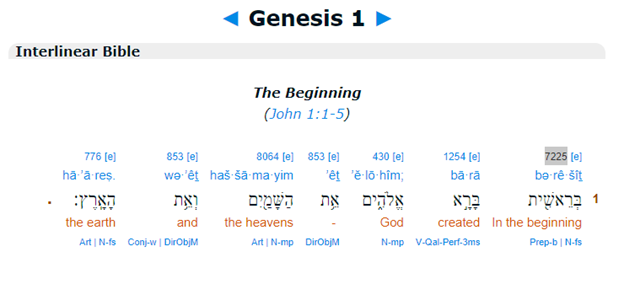
This is called an Interlinear Bible because it shows how Hebrew has been translated into English. (https://biblehub.com/interlinear/genesis/1.htm)
Scholars who have translated Biblical Hebrew into English or other modern languages, face a few challenges. First, these scholars are referring to old manuscripts, some of which differ from one another. Second, Hebrew reads right to left as we see in the first line of the Bible from Genesis above. Third, different versions of Hebrew can be found in the writings as well as some Aramaic and koine Greek.
If a person wants to become a Scripture scholar who specializes in the Hebrew Bible, it helps to have strong linguistic skills.
The challenge of mastering multiple biblical languages in addition to others like Ugaritic should not make you think that no one knows what the original scripture writings say.
Early Biblical Translations
The early biblical translations were Greek and Latin.
Septuagint
Jewish scholars translated the first five biblical books into Greek in the third century BCE. The name of this version is the Septuagint because apparently seventy scholars worked on the translation.
Vulgate
Christianity grew rapidly in the Roman Empire, where the the use of Greek was lessening and many people spoke Latin. Some people translated the Bible into “common” Latin: the Latin used by everyday people. Note that people in the U.S. use the word “vulgar” to mean that something is inappropriate or rude. In the ancient world, vulgar was an adjective that referred to language understood by everyone.]
Because there were various Latin translations in circulation, Pope Damasus, in the late fourth or early fifth centuries, asked St. Jerome to revise the four Gospels from a widely used Latin translation called the “Vulgate” because it used common Latin. St. Jerome did so, working with Greek texts and comparing various Latin translations. The saint went on to translate other books in the Bible and to oversee others’ work. The resulting common Latin translation is usually called the “Vulgate.” Interestingly, the Vulgate was not approved by the Catholic Church for more than one thousand years. In 1546, the Council of Trent gave its official approval to the Vulgate. Who said that the Catholic Church moves quickly?
St. Jerome was uniquely qualified to translate as he was “fluent” in Latin, Greek, and Hebrew; he was also familiar with Arabic, Syriac, and Aramaic. The Vulgate was in use for centuries. Various scholars used the Vulgate to translate the Bible into additional languages. Gutenberg used the Vulgate on his newly invented printing press.
The Bible in the Modern Day
In the twentieth century, Pope Pius XII (1939 – 1958) wrote an encyclical mandating that any future bibical translations of the Bible must be based on the original languages.
As you can imagine, any translation of the Bible requires careful scholarship. Knowing ancient languages is one part. Understanding cultural features of different eras helps scholars understand what the biblical texts say.
In addition to figuring out what an author meant centuries ago, a translator must then figure out how to convey the same meaning in the new language. If you were to look at Bibles back several centuries, the choice of words in an English translation would be different because some words fall out of circulation while others are introduced into a language. Meanings change. Look at the word “vulgar”!
General Christian
Education and Religion
Previous Post

January 15, 2024
Why I Do Not Think the Bible Can be Read Literally
Next Post
January 22, 2024 Oral Tradition Makes Literal Bible Reading Challenging
Browse Our Archives
Select a Category Bible Call and Vocation Cars and Religion Christian Behavior Christmas Generosity Family and Religion Law and Religion Money and Religion Moral Leadership Music and Religion Nature and Religion Politics and Religion Religion and Athletics Religion and Generalizations Religion and justice Ritual and Religion Uncategorized
Select a Month June 2026 April 2026 June 2025 February 2025 January 2025 November 2024 October 2024 September 2024 August 2024 April 2024 March 2024 February 2024 January 2024 December 2023 November 2023 October 2023 September 2023 August 2023 July 2023
Follow Us!
TAKE THE
Religious Wisdom Quiz
"Thou preparest a table for me in the presence of mine _____."
Select your answer to see how you score.
Kinsmen Enemies Friends Children
Related posts from The Intersection of Faith and Life

Will the U.S. Warehouse People with Disabilities?
The Intersection of Faith and Life

The Intersection of Faith and Life

Cruelty Toward Immigrants is Not Christian
The Intersection of Faith and Life

Peter Hegseth's Religious Beliefs Harm Americans
The Intersection of Faith and Life
TRENDING AT PATHEOS Progressive Christian

The Secret behind A Charlie Brown Thanksgiving
Where Franklin Sat at Charlie Brown's Thanksgiving Table Sparky was sticking to...

Bridging the Gap Between God and Man
From Far Off to the Ultimate Embrace “God is a Spirit: and...

Let Matthew 25 Guide You to a Greater...
With the crisp feel of fall in the air, our minds quickly...

Can a Chatbot Touch Your Soul?
Can a chatbot offer genuine spiritual counsel? One conversation brought me to...

Religion and Politics: How Should We Then Live?
Two cultural axioms get repeated in polite company. Don't mix religion and...

7 Things We Get Wrong About Giving Thanks
It's a time of year when many of us turn to the...
view all Progressive Christian blogs
Ad-Free & Subscriber Log-In Subscription Support
- About Us
- 2026 Calendar
- Videos
- Podcasts
- Library of World Religions
- Faith In Media Tracker
- Advertise With Us
- Write for Us
- Privacy Policy
- Terms of Service
- Do Not Sell My Data
- Contact Us
- Radiant Digital
- Manage Newsletter Subscriptions
- Unsubscribe From Notifications
- Sitemap
Copyright 2008-2026, Patheos, part of the Radiant Digital network of media brands. All rights reserved.
Subscription Support Ad-Free & Subscriber Log-In
Follow Patheos