
BuddhistCatholicContemplativeEvangelicalGeneral ChristianHinduJewishLatter-day SaintMuslimNew VisionsProgressive Christian
Beliefs
- Buddhist
- Catholic
- Contemplative
- Evangelical
- General Christian
- Hindu
- Jewish
- Latter-day Saint
- More Voices
- Muslim
- New Visions
- Pagan
- Progressive Christian
Topics
- Religion News
- Food and Religion
- Sports and Religion
- Religious Art
- Religious Music and Entertainment
- Religious Events
- History and Religion
- Style and Religion
- Politics and Religion
- Women in Religion
- Recreation Outdoors and Religion
- Business Finance and Religion
- Careers Workplace and Religion
- Education and Religion
- Family Parenting and Religion
- Health Fitness and Religion
- Home and Religion
- Relationships and Religion
- Technology and Religion
- Travel and Religion
Columnists
- Buddhist Columnists
- Business Finance and Religion Columnists
- Careers Workplace and Religion Columnists
- Catholic Columnists
- Contemplative Columnists
- Education and Religion Columnists
- Evangelists Columnists
- Family Parenting and Religion Columnists
- General Christian Columnists
- Health Fitness and Religion Columnists
- Hindu Columnists
- History and Religion Columnists
- Home and Religion Columnists
- Jewish Columnists
- More Voices Columnists
- Latter Day Columnists
- Muslim Columnists
- New Visions Columnists
- Nonreligious Columnists
- Pagan Columnists
- Politics and Religion Columnists
- Progressive Columnists
- Recreation Outdoors and Religion Columnists
- Relationships and Religion Columnists
- Religion News Columnists
- Religious Art Columnists
- Religious Events Columnists
- Religious Music and Entertainment Columnists
- Sports and Religion Columnists
- Style and Religion Columnists
- Technology and Religion Columnists
- Travel and Religion Columnists
- Women in Religion Columnists
Resource Library
- 2026 Calendar
- Library of World Religions
- The 100 Most Holy Places on Earth
- Patheos Answers
- Podcasts
- Videos
- Faith Leaders Database
- Anglican Episcopalian
- Bahai
- Baptist
- Buddhism
- Christianity
- Confucianism
- Eastern Orthodoxy
- Hinduism
- Holiness and Pentecostal
- ISKCON
- Islam
- Judaism
- Lutheran
- Methodist
- The Church of Jesus Christ of Latter-day Saints
- New Age
- Paganism
- Presbytarian and Reformed
- Protestantism
- Religion Behind the Scenes
- Roman Catholic
- Scientology
- Shia Islam
- Sikhism
- Sufism
- Sunni Islam
- Taoism
- Zen
- See all religions
Research Tools
 Ad-Free & Subscriber Log-In Subscription Support
Ad-Free & Subscriber Log-In Subscription Support
Follow Patheos 

- Trending:
- Forgiveness
- |
- Marriage
- |
- Consciousness
- |
- Death Penalty
- |
- Election
- |
- Halloween
 The Inner Room
- Home
- Catholic
- The Sacredness of Now
The Sacredness of Now
Last updated on: July 14, 2016 at 7:00 am by Cassidy Hall
The Sacredness of Now 2016-07-13T22:19:29-04:00 Cassidy Hall
Patheos Explore the world's faith through different perspectives on religion and spirituality! Patheos has the views of the prevalent religions and spiritualities of the world.
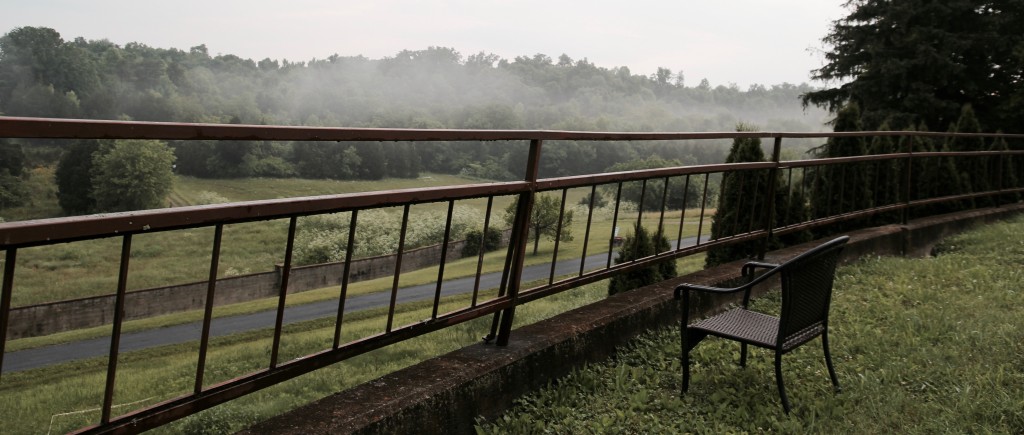
The monastery grounds at Gethsemani Abbey. Photo by Cassidy Hall
The bells began to ring just outside my window for Vigils, 3:15 am prayer, and I couldn’t help but roll over to doze off again until the next round of bells would awaken me a few hours later. I’m not sure how I was so lucky to receive a room with a view of the Abbey’s bell-tower and the monastery’s resting place for monks who have since left the world. I awoke each day overlooking the burial grounds of those who have prayed for decades before me, including Thomas Merton. In some way I felt all those monks overlooking me – showering my awake and resting moments in their lifetimes of prayer.
On this, my third visit to Gethsemani Abbey, I was not only awoken by bells but also to the sacredness of the “smallest” moments in my life. My times at monasteries have been encounters that continually strip away the layers of facade that the world covers me with. And as these false covers are peeled back – I am left raw, vulnerable, and opened to the sacredness before me. This inner stance then permits me to ease into a necessary detachment from the world – an exploration where I can once again see that the simplest of moments are filled with awe and full of the sacredness that they’ve always hosted.
Sometimes it’s difficult to see how this stripping away of layers could lead to such striking awareness and joy in the moment, especially at a monastery. Some find the daily tasks and routines of these monks to be an imprisonment that hinders their own self-discovery, but Gethsemani Abbey and other monasteries have long since proven otherwise. It may be precisely the paradox that provides the freedom – that daring step away from the world in order to deepen one’s relationship with the world; that deep exploration of our rough edges which leads us to greater unity with one another.
Culturally – any external that is a limitation is perceived as bad. But when you choose these self limits, do they open you to a reality that is only accessible because you’ve chosen those limitations? A Trappist Monk
This world of chaos tells us that sacredness is wherever we declare it to be – that we make our own destiny, and form our own spiritual experiences. Yet, we all know, the moments that we truly deem as sacred quite simply are. They exist without our permission or proclamation and are only hindered by our words to define them. On this trip to Gethsemani Abbey, I found myself full of awe in moments I’d previously failed to fully live in. I found intense joy getting lost in the woods, I reveled in the gifts of friendship, I opened my eyes to the offerings of living that were poured out before me at each and every moment. I was continually captivated by the sacredness of now.
Now that I’m back from the Kentucky wilderness – I’ve abruptly resurfaced into this modern-day society of chaos and discourse. I’ve already managed to lose touch with my natural rhythms and instead of the bells calling me to prayer, I’m haunted and hunted by the speaker screams of grocery stores and the barking of traffic just outside my door. Where am I and what am I doing here? Returning to the “real world” immediately reconditions my adherence to the world’s demands and suggestions – an artifice I often declare sacred when it isn’t. I’ll go about my days forgetting the sacredness of each moment; the cup in my hands, the bird in flight, eye-contact with a wandering stranger, being remembered by a friend – the sacredness of being alive.
How easily we get trapped in that which is not essential – in looking good, winning at competition, gathering power and wealth – when simply being alive is the gift beyond measure. Parker Palmer
But, maybe, it will be different this time. Coming back into the world doesn’t mean I have to re-align myself with it. And, defining what is sacred is certainly different for each person. Religious spaces and religions themselves certainly have no monopoly on what is sacred for an individual. For me, sacredness arises from the eyes and heart that I bring to a moment. Sacredness’s existence begins before I encounter it; it’s a preparatory stance of openness towards what is before me. What’s striking to me is that this very moment can be sacred, as long as I’m willing to see it, as long as I’m willing to behold it.
Perhaps the sacred is always now.
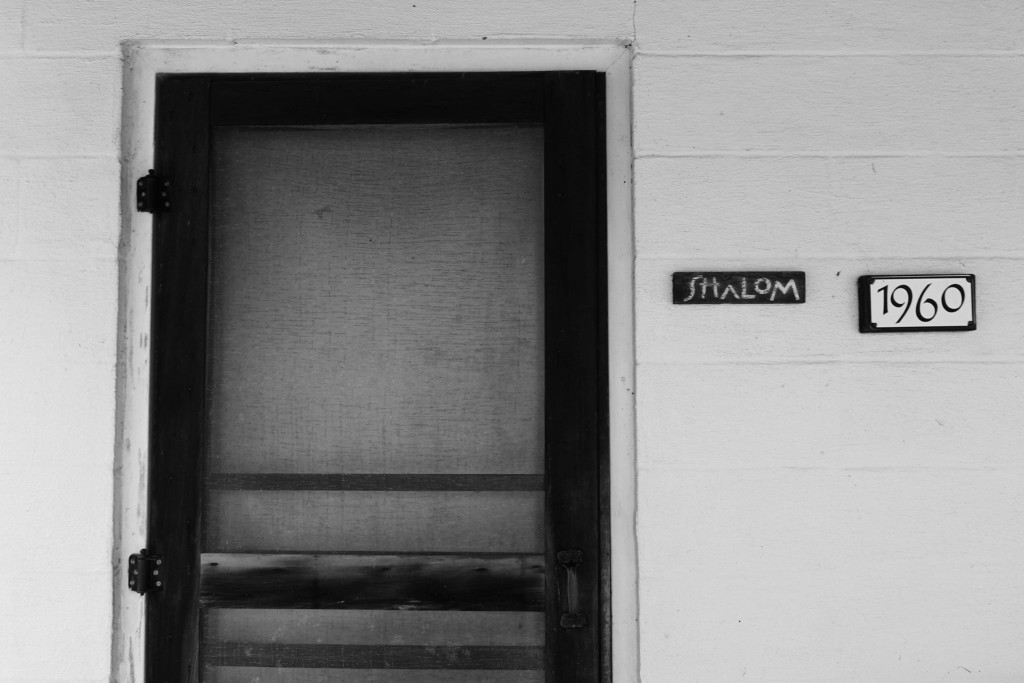
The front door of Thomas Merton’s former hermitage. Photo by Cassidy Hall
Previous Post
July 12, 2016
Reflections on Grief and Compassion Overload
Next Post
August 22, 2016 Coming Soon!
Browse Our Archives
Select a Category Advent Awe Hope Lent listening Pentecost Prayer Reflection Silence Solitude Space Uncategorized wonder
Select a Month February 2017 January 2017 November 2016 September 2016 August 2016 July 2016 June 2016 May 2016 April 2016 March 2016 February 2016 January 2016 December 2015
Follow Us!
TAKE THE
Religious Wisdom Quiz
Who was the oldest man recorded in Genesis?
Select your answer to see how you score.
Jared Enoch Noah Methuselah
Related posts from The Inner Room

TRENDING AT PATHEOS Catholic

Rejecting Doom: Christian Hope And Human Action
Christianity is a religion of hope. We are to have hope and...

It’s What Comes From Within Which Matters
One of the most difficult things for us to understand is why...

Why I Choose the Eucharist Over the Sermon
Choose the Eucharist, Not the Sermon What are we supposed to get...

5 Design Elements Found in Spiritually Rooted Homes
Putting Spirituality Into Home Decor Our homes are more than our living...

Credo: A Story of God Told with the...
About 10 years ago, I began to imagine a personal "Credo" that...

The Anatomy of Divine Revelation in Catholic Thought
The claim that God has made Himself known to human beings is...
view all Catholic blogs
Ad-Free & Subscriber Log-In Subscription Support
- About Us
- 2026 Calendar
- Videos
- Podcasts
- Library of World Religions
- Faith In Media Tracker
- Advertise With Us
- Write for Us
- Privacy Policy
- Terms of Service
- Do Not Sell My Data
- Contact Us
- Radiant Digital
- Manage Newsletter Subscriptions
- Unsubscribe From Notifications
- Sitemap
Copyright 2008-2026, Patheos. All rights reserved.
Subscription Support Ad-Free & Subscriber Log-In
Follow Patheos