
BuddhistCatholicContemplativeEvangelicalGeneral ChristianHinduJewishLatter-day SaintMuslimNew VisionsProgressive Christian
Beliefs
- Buddhist
- Catholic
- Contemplative
- Evangelical
- General Christian
- Hindu
- Jewish
- Latter-day Saint
- More Voices
- Muslim
- New Visions
- Pagan
- Progressive Christian
Topics
- Religion News
- Food and Religion
- Sports and Religion
- Religious Art
- Religious Music and Entertainment
- Religious Events
- History and Religion
- Style and Religion
- Politics and Religion
- Women in Religion
- Recreation Outdoors and Religion
- Business Finance and Religion
- Careers Workplace and Religion
- Education and Religion
- Family Parenting and Religion
- Health Fitness and Religion
- Home and Religion
- Relationships and Religion
- Technology and Religion
- Travel and Religion
Columnists
- Buddhist Columnists
- Business Finance and Religion Columnists
- Careers Workplace and Religion Columnists
- Catholic Columnists
- Contemplative Columnists
- Education and Religion Columnists
- Evangelists Columnists
- Family Parenting and Religion Columnists
- General Christian Columnists
- Health Fitness and Religion Columnists
- Hindu Columnists
- History and Religion Columnists
- Home and Religion Columnists
- Jewish Columnists
- More Voices Columnists
- Latter Day Columnists
- Muslim Columnists
- New Visions Columnists
- Nonreligious Columnists
- Pagan Columnists
- Politics and Religion Columnists
- Progressive Columnists
- Recreation Outdoors and Religion Columnists
- Relationships and Religion Columnists
- Religion News Columnists
- Religious Art Columnists
- Religious Events Columnists
- Religious Music and Entertainment Columnists
- Sports and Religion Columnists
- Style and Religion Columnists
- Technology and Religion Columnists
- Travel and Religion Columnists
- Women in Religion Columnists
Resource Library
- 2026 Calendar
- Library of World Religions
- The 100 Most Holy Places on Earth
- Patheos Answers
- Podcasts
- Videos
- Faith Leaders Database
- Anglican Episcopalian
- Bahai
- Baptist
- Buddhism
- Christianity
- Confucianism
- Eastern Orthodoxy
- Hinduism
- Holiness and Pentecostal
- ISKCON
- Islam
- Judaism
- Lutheran
- Methodist
- The Church of Jesus Christ of Latter-day Saints
- New Age
- Paganism
- Presbytarian and Reformed
- Protestantism
- Religion Behind the Scenes
- Roman Catholic
- Scientology
- Shia Islam
- Sikhism
- Sufism
- Sunni Islam
- Taoism
- Zen
- See all religions
Research Tools
 Ad-Free & Subscriber Log-In Subscription Support
Ad-Free & Subscriber Log-In Subscription Support
Follow Patheos 

- Trending:
- Forgiveness
- |
- Marriage
- |
- Consciousness
- |
- Death Penalty
- |
- Election
- |
- Halloween
 The Inner Room
- Home
- Catholic
- The Hard Sayings of Gaudete Sunday
The Hard Sayings of Gaudete Sunday
Last updated on: December 13, 2015 at 4:35 am by Karl Persson
The Hard Sayings of Gaudete Sunday 2015-12-13T04:35:03-04:00 Karl Persson
Patheos Explore the world's faith through different perspectives on religion and spirituality! Patheos has the views of the prevalent religions and spiritualities of the world.
Photo by Kylie Howsam
Brothers and sisters:
Rejoice in the Lord always.
I shall say it again: rejoice!
Your kindness should be known to all.
The Lord is near.
Have no anxiety at all, but in everything,
by prayer and petition, with thanksgiving,
make your requests known to God.
Then the peace of God that surpasses all understanding
will guard your hearts and minds in Christ Jesus.
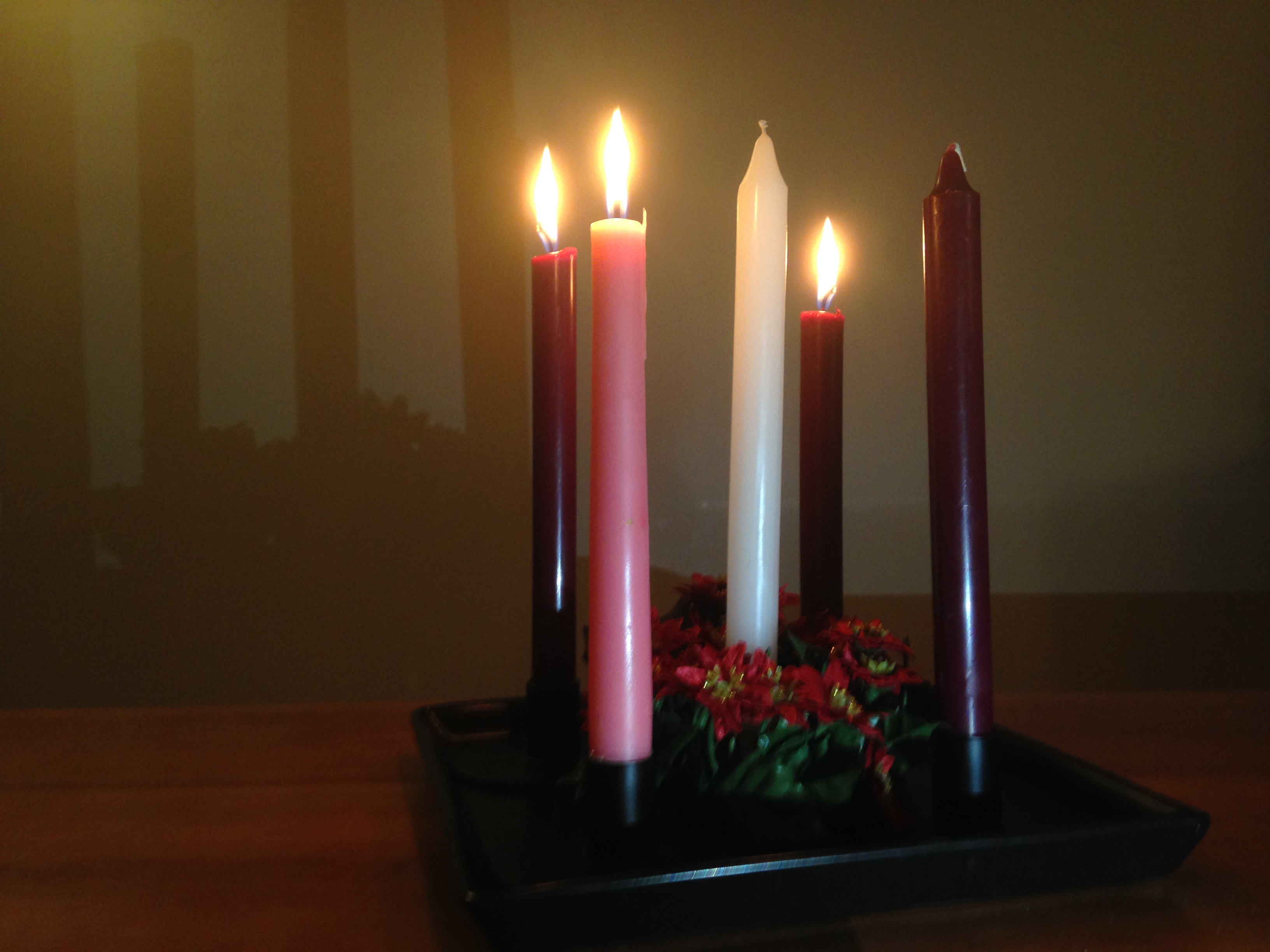
Rejoice in the Lord always. Have no anxiety. These are some of the hardest words in Scripture. How do we rejoice when our spirits are in darkness? How refrain from anxiety when all creation seems to tremble with uncertainty? A cursory glance at the news – at the bigotry, violence, and fear – is enough to make us wonder. Is St. Paul naïve beyond belief?
Beyond belief, perhaps – what he proposes “surpasses…understanding” – yet perhaps not so naïve as we might feel. Not only did he write this while imprisoned – experiencing persecution from outside the Church – but there were envy and rivalry within the Church herself. And his initial response – which he iterates again in today’s Gaudete Sunday reading – is the double affirmation of joy; what matters is “that Christ is proclaimed in every way, whether out of false motives or true; and in that I rejoice. Yes, and I will continue to rejoice.” (Phil. 1: 18b, NRSVCE).
It is a prayer and hope rather than an assertion of immediate fact; joy is perilous and precarious. The implacability of joy can steamroll the broken hearted, and must be handled with care; our kindness should be known to all. Yet it is not something rare and impossible, encountered only in far off, perfected circumstances. The Lord is near.
Such joy does not ignore reality – asserting “peace, where there is no peace” – but rather surpasses understanding, opening a spiritual imaginary wherein Christ rather than the violence about us determines reality. The realism of this perspective hangs on thanksgiving, the ability to see beyond the world that appears, to the world that is given. In the Greek of today’s reading, the word for thanksgiving is the root of the word “Eucharist,” signifying the place where the matter of the fallen world is transformed from lapse to glory. It is this that determines us, and protects our hearts and minds from the cynicism we would otherwise develop as a shell against a shattered world.
What is shattered is repaired in Eucharist – thanksgiving – and joy in this instance is not a matter of elation, but of making quiet space in our hearts for this Eucharist, this place where even the darkest of darknesses is transformed. The peace that relies on understanding alone sees only darkness, but the peace that passes understanding knows light, and it is this latter we must know in ourselves. “The people who walked in darkness have seen a great light…” During Advent, this is our prayer.
Previous Post
December 12, 2015
Our Lady of Guadalupe -- Seat of Wisdom
Next Post
December 14, 2015 Memorial of St. John of the Cross
Browse Our Archives
Select a Category Advent Awe Hope Lent listening Pentecost Prayer Reflection Silence Solitude Space Uncategorized wonder
Select a Month February 2017 January 2017 November 2016 September 2016 August 2016 July 2016 June 2016 May 2016 April 2016 March 2016 February 2016 January 2016 December 2015
Follow Us!
TAKE THE
Religious Wisdom Quiz
How old was Isaac when Abraham attempted to sacrifice him?
Select your answer to see how you score.
Adult Child Young teenager Infant
Related posts from The Inner Room




TRENDING AT PATHEOS Catholic

Creation, Preservation, and Teleology in Catholic Theology
As I write this, it is very early Monday morning. Like millions...

The Parable Of The Sower And The Word...
One of Christ’s most famous parables is that of the sower who...

Rejecting Doom: Christian Hope And Human Action
Christianity is a religion of hope. We are to have hope and...

Why I Choose the Eucharist Over the Sermon
Choose the Eucharist, Not the Sermon What are we supposed to get...

5 Design Elements Found in Spiritually Rooted Homes
Putting Spirituality Into Home Decor Our homes are more than our living...

Credo: A Story of God Told with the...
About 10 years ago, I began to imagine a personal "Credo" that...
view all Catholic blogs
Ad-Free & Subscriber Log-In Subscription Support
- About Us
- 2026 Calendar
- Videos
- Podcasts
- Library of World Religions
- Faith In Media Tracker
- Advertise With Us
- Write for Us
- Privacy Policy
- Terms of Service
- Do Not Sell My Data
- Contact Us
- Radiant Digital
- Manage Newsletter Subscriptions
- Unsubscribe From Notifications
- Sitemap
Copyright 2008-2026, Patheos. All rights reserved.
Subscription Support Ad-Free & Subscriber Log-In
Follow Patheos