
BuddhistCatholicContemplativeEvangelicalGeneral ChristianHinduJewishLatter-day SaintMuslimNew VisionsProgressive Christian
Beliefs
- Buddhist
- Catholic
- Contemplative
- Evangelical
- General Christian
- Hindu
- Jewish
- Latter-day Saint
- More Voices
- Muslim
- New Visions
- Pagan
- Progressive Christian
Topics
- Religion News
- Food and Religion
- Sports and Religion
- Religious Art
- Religious Music and Entertainment
- Religious Events
- History and Religion
- Style and Religion
- Politics and Religion
- Women in Religion
- Recreation Outdoors and Religion
- Business Finance and Religion
- Careers Workplace and Religion
- Education and Religion
- Family Parenting and Religion
- Health Fitness and Religion
- Home and Religion
- Relationships and Religion
- Technology and Religion
- Travel and Religion
Columnists
- Buddhist Columnists
- Business Finance and Religion Columnists
- Careers Workplace and Religion Columnists
- Catholic Columnists
- Contemplative Columnists
- Education and Religion Columnists
- Evangelists Columnists
- Family Parenting and Religion Columnists
- General Christian Columnists
- Health Fitness and Religion Columnists
- Hindu Columnists
- History and Religion Columnists
- Home and Religion Columnists
- Jewish Columnists
- More Voices Columnists
- Latter Day Columnists
- Muslim Columnists
- New Visions Columnists
- Nonreligious Columnists
- Pagan Columnists
- Politics and Religion Columnists
- Progressive Columnists
- Recreation Outdoors and Religion Columnists
- Relationships and Religion Columnists
- Religion News Columnists
- Religious Art Columnists
- Religious Events Columnists
- Religious Music and Entertainment Columnists
- Sports and Religion Columnists
- Style and Religion Columnists
- Technology and Religion Columnists
- Travel and Religion Columnists
- Women in Religion Columnists
Resource Library
- 2026 Calendar
- Library of World Religions
- The 100 Most Holy Places on Earth
- Patheos Answers
- Podcasts
- Videos
- Faith Leaders Database
- Anglican Episcopalian
- Bahai
- Baptist
- Buddhism
- Christianity
- Confucianism
- Eastern Orthodoxy
- Hinduism
- Holiness and Pentecostal
- ISKCON
- Islam
- Judaism
- Lutheran
- Methodist
- The Church of Jesus Christ of Latter-day Saints
- New Age
- Paganism
- Presbytarian and Reformed
- Protestantism
- Religion Behind the Scenes
- Roman Catholic
- Scientology
- Shia Islam
- Sikhism
- Sufism
- Sunni Islam
- Taoism
- Zen
- See all religions
Research Tools
 Ad-Free & Subscriber Log-In Subscription Support
Ad-Free & Subscriber Log-In Subscription Support
Follow Patheos 

- Trending:
- Forgiveness
- |
- Marriage
- |
- Consciousness
- |
- Death Penalty
- |
- Election
- |
- Halloween
 The Infinity of Divinity
- Home
- Muslim
- Education and Religion
- Easter, Ramadan, and Passover: Why Are the Dates Always Changing?
Easter, Ramadan, and Passover: Why Are the Dates Always Changing?
Last updated on: April 13, 2023 at 1:15 am by Jared Woods
Easter, Ramadan, and Passover: Why Are the Dates Always Changing? 2023-04-13T01:15:08+01:00 Jared Woods
Patheos Explore the world's faith through different perspectives on religion and spirituality! Patheos has the views of the prevalent religions and spiritualities of the world.
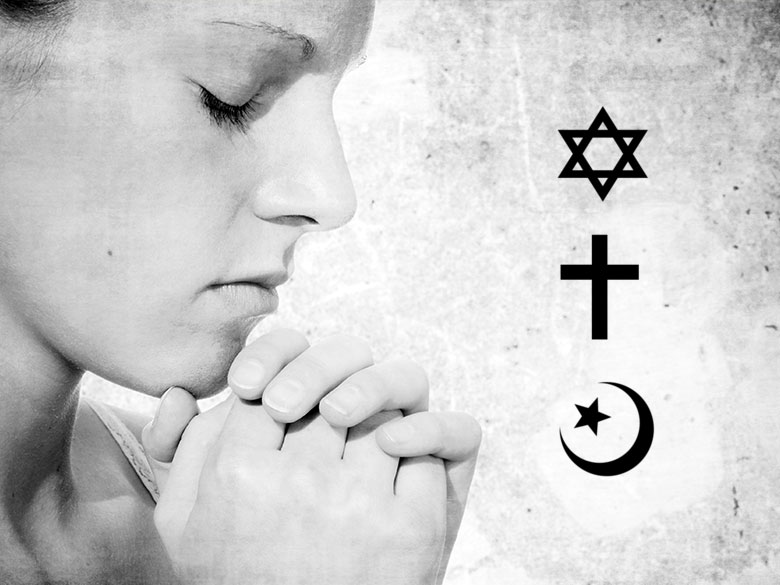
Passover, Easter, and Ramadan worship differently. Image: mleonascimento0, Pixabay, free to use under the Content License.
There are several faiths lumped beneath the “Abrahamic” umbrella, but three religions ascend far above the others: Judaism, Christianity, and Islam. However, despite their shared roots, there are key differences in how the Mighty Trinity honour their separate beliefs. One rich example is their annual celebrations, such as Passover, Easter, and Ramadan.
Interestingly, once every 30 years or so, these holidays occur simultaneously. 2023 is one of those occasions. But how is this possible? Why are they not on the same date every year? And what exactly are their traditional differences? Let’s take a look!
Passover
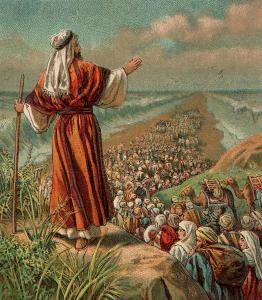
Israel’s Escape from Egypt. Image: public domain.
Passover History
Passover is a Jewish observation. It is a celebration of the Israelites’ escape from slavery in Egypt, according to the Hebrew Bible (Torah and Old Testament).
In the Book of Exodus, God (aka Yahweh) is angry with the Egyptian Pharaoh for enslaving the Israelites. To retaliate, He attacked Egypt with ten plagues. On God’s menu of devastation, we find water turning to blood, boils festering on the skin, and swarms of locusts eating everything. But none were as harrowing as plague #10: the death of each family’s firstborn son.
To protect the Israelites, Moses instructed them to mark their doors with lamb’s blood. The Angel of Death then passed over those bloodied homes and ultimately murdered the Pharaoh’s son. The Egyptian leader finally got the message and ordered the Israelites to leave.
In their rush to depart, the Israelites did not have time to let their bread rise. The Jewish community calls this food matzah or “unleavened bread“, meaning unrisen without yeast fermentation. Subsequently, Passover acknowledges the history of abstaining from leavened foods, which are known as chametz (such as pasta, cookies, or cereal).
Passover Customs
Passover traditions include:
- Cleaning the house by candlelight to remove all chametz before Passover Seder (the first night of the holiday)
- Eating matzah on the Seder
- Retelling the Book of Exodus text about the Israelites’ liberation
- Consuming four cups of wine and pouring an extra one for Elijah the Prophet
Passover Date
Passover commences on the eve of the 15th day of Nisan. In Hebrew calendars, Nisan is the first month of spring, when the barley ripens. In 2023, it occurred on March 23rd. The holiday lasts for eight days unless you live in Israel, as then it is only seven.
Easter
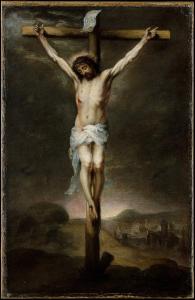
The Crucifixion by Bartolomé Esteban Murillo. Creative Commons CC0 1.0 Universal Public Domain Dedication.
Easter History
Easter is a Christian festival. It is a celebration of the resurrection of Jesus Christ, according to the Christian Bible’s New Testament.
As told by the four Gospels (Matthew, Mark, Luke, and John), the Jewish council considered Jesus a troublemaker. He was arrested and charged with various crimes, which included the violation of Sabbath law and practising sorcery. They sentenced him to die by crucifixion, and then he was buried, only to rise from the dead three days later.
This process is recognised as the Great Three Days, marked by Jesus’ suffering, death, and resurrection. Good Friday commemorates the crucifixion. Holy Saturday follows, marking the end of Lent when Christians complete their 40 days of chosen abstinence to recall Jesus’ fasting in the desert. Finally, Easter Sunday marks the joy of the resurrection. These form part of the Holy Week.
Easter Customs
Easter traditions primarily revolve around eggs, the ancient symbol of rebirth. Most famous customs include:
- Painting or dying hard-boiled eggs
- Partaking in a chocolate egg hunt
- Enjoying hot cross buns (spiced buns with crosses on them)
The Easter Bunny has no direct connection with Jesus beyond marketing for the holiday.
Easter Date
What’s fascinating is that Jesus’ Last Supper was a Passover meal, meaning the two narratives are profoundly interlaced. However, their dates are not guaranteed to overlap, as the lunar calendar determines Easter festivities. More specifically, Easter takes place on the first Sunday after the first full moon of spring. In 2023, Easter falls on April 9th.
Ramadan
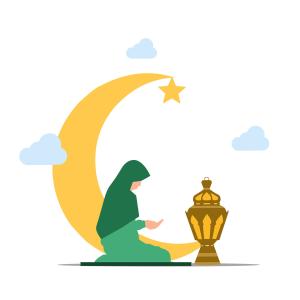
A woman praying during Ramadan. Image: mleonascimento0, Pixabay, free to use under the Content License.
Ramadan History
Ramadan is the ninth month of the Islamic calendar, which is roughly 11 days shorter than the Gregorian version. This period honours the Prophet Muhammad’s first revelation from Angel Gabriel in 610 CE.
According to Islamic teachings, Muhammad was nearly 40 when he grew concerned with the behaviour of the people of Mecca, his home city. To seek answers, he spent time praying in the nearby Mount Hira. Here, Angel Gabriel delivered the initial verses of the Quran. As Muhammad was illiterate, the Quran is studied as his most remarkable miracle.
Ramadan Customs
To observe this sacred occasion, Muslims must fast from eating, starting at dawn and ending at sunset. This absence is considered an act of religious devotion and self-discipline. It is an obligatory Muslim practice as one of the Five Pillars of Islam. That said, these rules kindly do not apply to the elderly as well as those travelling, breastfeeding, diabetic, or menstruating.
Other customs associated with Ramadan include:
- Abstaining from drinking, smoking, and sexual activity
- Eating a predawn meal (Suhur) and a fast-breaking evening meal (Iftar)
- Increasing prayer and Quran studies
- Giving to charity
Ramadan Date
Ramadan starts and ends with the sighting of the crescent moon, lasting the twenty-nine to thirty days between. In 2023, this event commenced on March 22nd.
Conclusions
Judaism, Christianity, and Islam have numerous differences beyond these religious celebrations. Some of these discrepancies have caused fierce conflicts throughout the ages. However, it is essential to note that each faith agrees upon and reveres the identical One God. This means their worship has far more in common than any of the minor disparities above.
Additionally, their scriptures teach peace, adhering to the golden rule: treat others as you would like others to treat you. Hence, these dates should be cherished as an opportunity to pull cultures together and praise the uniqueness of human development.
“That which is hateful to you do not do to another; that is the entire Torah, and the rest is its interpretation. Go study.”
– Judaism (Shabbat, 31a)“Love your neighbour as yourself.”
– Christianity (Matthew, 22:39-40)“None of you will believe until you love for your brother what you love for yourself.”
– Islam (Hadith, 13)
Muslim
General Christian
Religious Events

About Jared Woods
Born in South Africa and now homeless as a nomadic something or other, Jared Woods does whatever he wants. He has authored numerous books, including the spiritual philosophy texts known as the "Janthopoyism Bible". Follow Jared on Facebook, Instagram, and Twitter @legotrip You can read more about the author here.
Previous Post
April 8, 2023
10 Weirdest Gods From Different Mythologies
Next Post

April 10, 2023 10 Sacred Pilgrimage Sites You Must Travel to Before You Die
Recent Comments
Browse Our Archives
Select a Category Abrahamic Faiths Afterlife Ancient Egypt Ancient Greek Ancient Religion Artifacts Aztec Bible Bible Studies Buddhism Chicken Church Christian History Christianity Church Comparative Religion Conversion Creation Stories cults Dalai Lama Deconstruction Doorkijkkerk Easter esoteric feminism Folklore Gaza Gospels Halloween Hermetic Philosophy Hinduism Holy Week Humor Indian Philosophy Israel Jerusalem Jesus Christ Kanye West magick Meditation Mental Health mysticism Mythology new religious movement New Thought Occult Palestine pantheism Pilgrimage Pop Culture quantum mysticism Ramadan Reincarnation relationships Religion and Art Religion and Music Religious Symbolism Religious Tourism Sacred Texts Scientology Sikhism The Beatles The British Museum The Kybalion Uncategorized Vipassana witchcraft Zionism
Select a Month November 2024 January 2024 December 2023 October 2023 September 2023 August 2023 July 2023 June 2023 May 2023 April 2023
Follow Us!
TAKE THE
Religious Wisdom Quiz
Who was the prophet that confronted King David about his sin with Bathsheba?
Select your answer to see how you score.
Elijah Nathan Isaiah Samuel
Related posts from The Infinity of Divinity
Patheos Portals
Visiting Israel/Palestine During the War

Patheos Portals
The 10 Creepiest Places in Milan, Italy
Patheos Portals
The Jefferson Bible: Why Even Atheists Should Love...
Patheos Portals
The Beatles, The Bible, and Charles Manson
TRENDING AT PATHEOS Education and Religion

Revelation's Jesus Isn't the Lamb — He's the...
In the first article in this series of three articles, "One Jesus,...
How Paul Turned a Dead Messiah Into Christianity's...
This is a continuation of our investigation into the New Testament theologies...

Christian Nationalism: Political Tool And Biased Reporting
Christian Nationalism - An Artificial Category to Label MAGA Supporters Could "Christian...

There is no Clear Definition for "Christian Nationalism"
In the first article of this series I presented a definition of...

"Play or Pray? Exploring Faith and Choice in...
September 25, 2017. The date may not stand out to most....

Bizzle Be Better: Critiquing the Christian Rapper Bizzle
Few Christian Hip Hop artists can connect the lyrical poetics of both...
view all Education and Religion blogs
Ad-Free & Subscriber Log-In Subscription Support
- About Us
- 2026 Calendar
- Videos
- Podcasts
- Library of World Religions
- Faith In Media Tracker
- Advertise With Us
- Write for Us
- Privacy Policy
- Terms of Service
- Do Not Sell My Data
- Contact Us
- Radiant Digital
- Manage Newsletter Subscriptions
- Unsubscribe From Notifications
- Sitemap
Copyright 2008-2026, Patheos. All rights reserved.
Subscription Support Ad-Free & Subscriber Log-In
Follow Patheos