
BuddhistCatholicContemplativeEvangelicalGeneral ChristianHinduJewishLatter-day SaintMuslimNew VisionsProgressive Christian
Beliefs
- Buddhist
- Catholic
- Contemplative
- Evangelical
- General Christian
- Hindu
- Jewish
- Latter-day Saint
- More Voices
- Muslim
- New Visions
- Pagan
- Progressive Christian
Topics
- Religion News
- Food and Religion
- Sports and Religion
- Religious Art
- Religious Music and Entertainment
- Religious Events
- History and Religion
- Style and Religion
- Politics and Religion
- Women in Religion
- Recreation Outdoors and Religion
- Business Finance and Religion
- Careers Workplace and Religion
- Education and Religion
- Family Parenting and Religion
- Health Fitness and Religion
- Home and Religion
- Relationships and Religion
- Technology and Religion
- Travel and Religion
Columnists
- Buddhist Columnists
- Business Finance and Religion Columnists
- Careers Workplace and Religion Columnists
- Catholic Columnists
- Contemplative Columnists
- Education and Religion Columnists
- Evangelists Columnists
- Family Parenting and Religion Columnists
- General Christian Columnists
- Health Fitness and Religion Columnists
- Hindu Columnists
- History and Religion Columnists
- Home and Religion Columnists
- Jewish Columnists
- More Voices Columnists
- Latter Day Columnists
- Muslim Columnists
- New Visions Columnists
- Nonreligious Columnists
- Pagan Columnists
- Politics and Religion Columnists
- Progressive Columnists
- Recreation Outdoors and Religion Columnists
- Relationships and Religion Columnists
- Religion News Columnists
- Religious Art Columnists
- Religious Events Columnists
- Religious Music and Entertainment Columnists
- Sports and Religion Columnists
- Style and Religion Columnists
- Technology and Religion Columnists
- Travel and Religion Columnists
- Women in Religion Columnists
Resource Library
- 2026 Calendar
- Library of World Religions
- The 100 Most Holy Places on Earth
- Patheos Answers
- Podcasts
- Videos
- Faith Leaders Database
- Anglican Episcopalian
- Bahai
- Baptist
- Buddhism
- Christianity
- Confucianism
- Eastern Orthodoxy
- Hinduism
- Holiness and Pentecostal
- ISKCON
- Islam
- Judaism
- Lutheran
- Methodist
- The Church of Jesus Christ of Latter-day Saints
- New Age
- Paganism
- Presbytarian and Reformed
- Protestantism
- Religion Behind the Scenes
- Roman Catholic
- Scientology
- Shia Islam
- Sikhism
- Sufism
- Sunni Islam
- Taoism
- Zen
- See all religions
Research Tools
 Ad-Free & Subscriber Log-In Subscription Support
Ad-Free & Subscriber Log-In Subscription Support
Follow Patheos 

- Trending:
- Forgiveness
- |
- Marriage
- |
- Consciousness
- |
- Death Penalty
- |
- Election
- |
- Halloween

- Home
- Evangelical
- Religious Art
- Qualifying the Called: Moses at the Burning Bush, Part 1
Qualifying the Called: Moses at the Burning Bush, Part 1
Last updated on: April 9, 2025 at 9:27 am by David Weiss
Qualifying the Called: Moses at the Burning Bush, Part 1 2025-04-09T09:27:17-04:00 David Weiss
Patheos Explore the world's faith through different perspectives on religion and spirituality! Patheos has the views of the prevalent religions and spiritualities of the world.
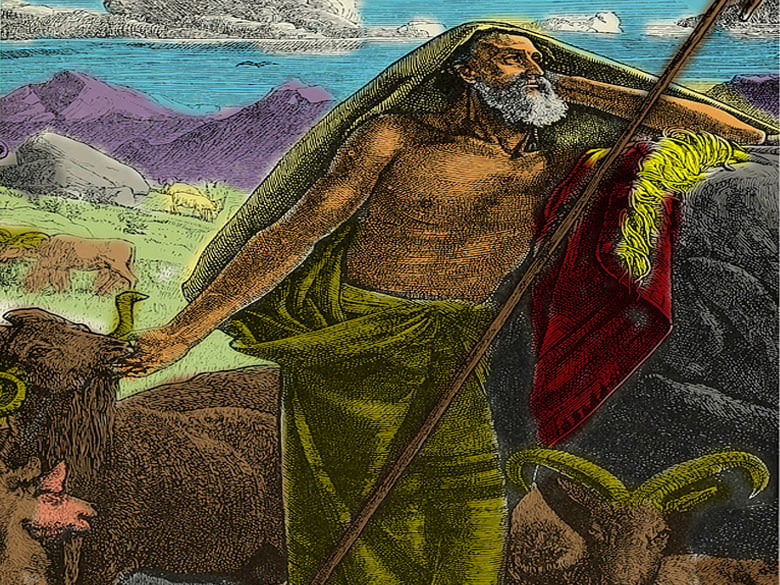
Moses the Shepherd from Wikimedia Commons manipulated and colored by the author
Have you ever wondered if you have what it takes? Perhaps you feel like you don’t measure up. Maybe you wonder if you can have a calling after all you have done or been through. Maybe you have physical limitation. Maybe you’re just scared. Maybe you just plain think, “Who am I to think God might be able to use me?” If any of these describe your condition, I’d like to introduce you to my “friend” Moses.
Humble Beginnings
A lot of us let our humble beginnings set the limits for our lives. The late, great Dan Miller of 48 Days to the Work You Love fame, referred to this as an upper limit challenge. Somewhere, maybe deep in your subconscious mind, you have an idea that there is a limit to the level to which you can, or should aspire. So let’s start off with a question. Is there anything more humble than being born a slave? That was Moses lot in life, but it gets better, Moses was part of an entire nation of slaves. Even worse, the paranoid, homicidal king of his land, Pharaoh, feared that the nation of people he enslaved, would turn on him, so he made a plan. Kill all the baby boys born to these people. Not only was Moses a slave, but he was born with a price on his head.
Transition to Privilege
Moses’ mother refused to allow her child to be murdered, so she hid him, and when she could hide him no longer, she placed him in a basket, sealed and waterproof and hid him in the river. There he was found by Pharaoh’s daughter, and rescued. Ultimately she adopted him, and raised him in the lap of luxury. The little slave boy soon became a prince of Egypt, with all the right and privileges associated with the position.
Torn
Despite the fact that that Moses was a prince, he knew who he was. He still identified with his people. When he saw another Hebrew being beaten by a task master, Moses killed the abuser. It seems Moses was already feeling his destiny to lead his people, but he got way out in front of it and made a real mess. Moses thought he hid what he did, but the next day, when he stepped into a fight between two of his fellow Hebrews, this happened. “…he said to the man in the wrong, “Why do you strike your companion?” He answered, “Who made you a prince and a judge over us? Do you mean to kill me as you killed the Egyptian?” (Exodus 2:13-14 ESV) What Moses had done was not hidden. People knew and it wouldn’t be long before Pharaoh knew, so Moses fled.
Reversal of Fortunes
Moses fled to Midian. There once again Moses came to the rescue. When he saw some shepherdesses being driven from the watering hole by their fellow shepherds, Moses sprang into action, fought off the shepherds and watered the women’s flock. They took him home to their father, Jethro, the priest of Midian for a meal, and he stayed 40 years.
Moses ended up as a shepherd. Now, there is nothing wrong with being a shepherd, but think of Moses. He was raised in the palace of Pharaoh from the time he was a toddler. He was raised to be a prince in Egypt. If you think back to Genesis, you’ll remember Joseph telling his brothers how to present themselves to Pharaoh on coming to Egypt. “you shall say, ‘Your servants have been keepers of livestock from our youth even until now, both we and our fathers,’ in order that you may dwell in the land of Goshen, for every shepherd is an abomination to the Egyptians.” (Genesis 46:34)
Why Do I Share This?
You might be familiar with this story and wonder what it has to do with my topic. There are a few lessons be learned. First you can’t help where you begin, but it’s no indication of where you can end up. Secondly, don’t get ahead of God. Moses did have a call to rescue his people, but when he took matters into his own hands, it created a disaster. God’s will never involves sin. Moses committed murder. Now you could make the case that he did the wrong thing for the right reason, but it still had consequences. This brings about another point. We know, because we know the whole story, that God still used Moses mightily. Past sin does not necessarily disqualify you from doing great things for God, though unrepentant sin does.
More Lessons
Moses still had lessons to learn. We too have things in life that can prepare us for our calling and those things are not always pleasant. Moses fled Egypt at 40 and for the next 40 years, half his life to that point, he did something that would have been despised in his former life. He was a shepherd. Did you ever notice that many of the people God used mightily, started off as shepherds. Abraham did. So did Isaac and Jacob. We see it here with Moses, and later with David, and while He was a carpenter by trade, Jesus called Himself the Good Shepherd. It would lead one to wonder, what is the magic of shepherding?
Shepherd Lessons
I would argue, there are a lot of connections between shepherding sheep and leading people, and most of life involves leading people. You may not see yourself as a leader but almost everyone ends up leading someone. Sheep don’t think before they act. Neither do many people. Sheep don’t always want to be led and yet they often need to be led. So do people. Shepherding requires sacrificial leadership. A good shepherd must make sacrifices for his flock and does this willingly because he cares for his sheep. Good leaders do the same.
Is It Preparation?
Moses’ adopted people may have looked down on shepherds, but shepherding was vital to the training of a man who would end up leading a nation of slaves, who never had to think for themselves, always being ordered what to do at the tip of a whip, to freedom. That after all was Moses’ call. He was being prepared to lead God’s people to freedom. What is your calling? Here’s the thing. You may think you are a thousand miles off course, and have a hard time seeing how where you are gets you to where you want to be. Rather than assuming you are off track, or that God has given up on you, might I suggest you look at the story of Moses and ask yourself some questions, “Is this preparation? How can God use this to take me where He wants me to be?”
Moses may have thought he was off course, but then one day while he was out tending the sheep, he saw a curious sight. A bush on fire that wasn’t burning up. (to be continued…)
General Christian

About Dave Weiss
Dave Weiss is a pastor and a traveling speaker. He has written and/or illustrated many self-published books and has his MDIV and DMIN, both with a concentration in Creative Arts Ministry. He is married to his wife Dawn and has two adult sons and a grandson named David. You can see more about his ministry at AMOKArts.com You can read more about the author here.
Previous Post

March 31, 2025
Lessons From Snow White for Christian Creatives
Next Post
April 14, 2025 You're Not Too Old: Moses and the Call at 80
Browse Our Archives
Select a Category Creative Arts Ministry Leadership Uncategorized Worship
Select a Month October 2026 September 2026 August 2026 July 2026 June 2026 May 2026 January 2026 December 2025 November 2025 October 2025 September 2025 July 2025 June 2025 May 2025 April 2025 March 2025 February 2025 June 2024 May 2024 April 2024 March 2024 February 2024
Follow Us!
TAKE THE
Religious Wisdom Quiz
What does "Apostle" mean in Greek?
Select your answer to see how you score.
One who is sent Elder Preacher King
Related posts from The Imaginative Church

What About the Trees? Another Living Parable

Falling Leaves: A Living Parable on Letting Go

Life's Urge: What My $16 Life Surge Ticket...

Creatively Created Creatures Created to Create
TRENDING AT PATHEOS Evangelical

How the author of the world's best hymn...
I've been working with John Newton for a while now. This makes...

Long before this Lectio Divina, Psalm 130 - the song - started...

What About the Trees? Another Living Parable
After I finished writing the last article about falling leaves as a...

Why Classical Education Is a Conversation, Not a...
Come and Read: Joy in Classical Education When I was a little...

Falling Leaves: A Living Parable on Letting Go
I’ve spent the vast majority of my life in the southeast corner...

Cornell University has received a great deal of negative publicity and intense...
view all Evangelical blogs
Ad-Free & Subscriber Log-In Subscription Support
- About Us
- 2026 Calendar
- Videos
- Podcasts
- Library of World Religions
- Faith In Media Tracker
- Advertise With Us
- Write for Us
- Privacy Policy
- Terms of Service
- Do Not Sell My Data
- Contact Us
- Radiant Digital
- Manage Newsletter Subscriptions
- Unsubscribe From Notifications
- Sitemap
Copyright 2008-2026, Patheos. All rights reserved.
Subscription Support Ad-Free & Subscriber Log-In
Follow Patheos