
BuddhistCatholicContemplativeEvangelicalGeneral ChristianHinduJewishLatter-day SaintMuslimNew VisionsProgressive Christian
Beliefs
- Buddhist
- Catholic
- Contemplative
- Evangelical
- General Christian
- Hindu
- Jewish
- Latter-day Saint
- More Voices
- Muslim
- New Visions
- Pagan
- Progressive Christian
Topics
- Religion News
- Food and Religion
- Sports and Religion
- Religious Art
- Religious Music and Entertainment
- Religious Events
- History and Religion
- Style and Religion
- Politics and Religion
- Women in Religion
- Recreation Outdoors and Religion
- Business Finance and Religion
- Careers Workplace and Religion
- Education and Religion
- Family Parenting and Religion
- Health Fitness and Religion
- Home and Religion
- Relationships and Religion
- Technology and Religion
- Travel and Religion
Columnists
- Buddhist Columnists
- Business Finance and Religion Columnists
- Careers Workplace and Religion Columnists
- Catholic Columnists
- Contemplative Columnists
- Education and Religion Columnists
- Evangelists Columnists
- Family Parenting and Religion Columnists
- General Christian Columnists
- Health Fitness and Religion Columnists
- Hindu Columnists
- History and Religion Columnists
- Home and Religion Columnists
- Jewish Columnists
- More Voices Columnists
- Latter Day Columnists
- Muslim Columnists
- New Visions Columnists
- Nonreligious Columnists
- Pagan Columnists
- Politics and Religion Columnists
- Progressive Columnists
- Recreation Outdoors and Religion Columnists
- Relationships and Religion Columnists
- Religion News Columnists
- Religious Art Columnists
- Religious Events Columnists
- Religious Music and Entertainment Columnists
- Sports and Religion Columnists
- Style and Religion Columnists
- Technology and Religion Columnists
- Travel and Religion Columnists
- Women in Religion Columnists
Resource Library
- 2026 Calendar
- Library of World Religions
- The 100 Most Holy Places on Earth
- Patheos Answers
- Podcasts
- Videos
- Faith Leaders Database
- Anglican Episcopalian
- Bahai
- Baptist
- Buddhism
- Christianity
- Confucianism
- Eastern Orthodoxy
- Hinduism
- Holiness and Pentecostal
- ISKCON
- Islam
- Judaism
- Lutheran
- Methodist
- The Church of Jesus Christ of Latter-day Saints
- New Age
- Paganism
- Presbytarian and Reformed
- Protestantism
- Religion Behind the Scenes
- Roman Catholic
- Scientology
- Shia Islam
- Sikhism
- Sufism
- Sunni Islam
- Taoism
- Zen
- See all religions
Research Tools
 Ad-Free & Subscriber Log-In Subscription Support
Ad-Free & Subscriber Log-In Subscription Support
Follow Patheos 

- Trending:
- Forgiveness
- |
- Marriage
- |
- Consciousness
- |
- Death Penalty
- |
- Election
- |
- Halloween

- Home
- Evangelical
- Religious Art
- Maundy Thursday: Jesus Illustrates Lent, Love and Leadership
Maundy Thursday: Jesus Illustrates Lent, Love and Leadership
Last updated on: March 22, 2024 at 5:02 am by David Weiss
Maundy Thursday: Jesus Illustrates Lent, Love and Leadership 2024-03-22T05:02:16-04:00 David Weiss
Patheos Explore the world's faith through different perspectives on religion and spirituality! Patheos has the views of the prevalent religions and spiritualities of the world.

Maundy Thursday Foot Washing Illustration by the AuthorMaundy Thursday Foot Washing Illustration by the Author
In this season leading up to Easter, we often speak of Palm Sunday, Good Friday and of course Easter Sunday, but what about Maundy Thursday? That Thursday was absolutely crucial in the ministry of Jesus, and it was on that day that Jesus gave us not one but two amazing illustrations—illustrations as clear and vibrant as any work of art. Let’s start with the basics…
What is Maundy Thursday?
First and most obviously, it was the last full day of Jesus’ earthly life. It’s evening has been immortalized in DaVinci’s famous painting, The Last Supper. To say a lot happened on that evening would be an extreme understatement. So we can say it’s important, but what’s with the name? Why is it called Maundy Thursday? According to an article in the Economic Times, “The word “Maundy” is originated from the Latin word called “mandatum,” which means “commandment.” This day is named after Jesus’ commandment to his disciples to love one another.” We’ll see this more on that commandment in the next article.
The Last Supper
On that Thursday, Jesus’ disciples were sent into town to secure a place where they would eat their Passover Feast. Jesus told them the signs that would point to the place He selected, and everything happened just as Jesus said. They secured the upper room and made preparations. This would be Jesus’ last earthly meal, His last supper. It was Passover, and that is significant, because on that night, Christian’s believe Passover met it’s fulfillment.
Passover
Passover traces it’s roots to the day Israel was freed after 400 years of oppression in Egypt. God had sent ten plagues against the hard-hearted Pharaoh and his people. These ten plagues got progressively worse, and each plague showed God’s power over one of the false gods of the Egyptians. The final plague was the death of the firstborn, in which every first born human being and every first born animal of the Egyptians would die. The Israelites were instructed to select a lamb for each family, and at sundown, they were supposed kill the lamb and take some of his blood and put it on the doorframes of the houses and eat a meal together, dressed and ready to go. At midnight, the angel of death came through the nation, and passed over any home that was under the blood of the lamb. Hence the name Passover.
The Passover Lamb
Do you remember how John the Baptist introduced Jesus to the people? He called Him the Lamb of God who takes away the Sin of the World. Jesus came to lay down His life and shed His blood, so that whoever would come to Him, “under His blood,” by faith would be saved. This is the fulfillment of the Passover. Even as the disciples gathered to eat the Passover with Jesus, they were a part of that fulfillment. When they prepared the room for the meal it was as if they were preparing the way for Jesus’ greatest act of love, but one preparation was omitted.
The Full Extent of His Love
John 13:1 says, “Now before the Feast of the Passover, when Jesus knew that his hour had come to depart out of this world to the Father, having loved his own who were in the world, he loved them to the end.” While I love this passage, I prefer how the 1984 version of the NIV said it. It said, “Having loved His own who were in the world, He showed them the full extent of His love.” Think about this, If Jesus is God, and God is love, then Jesus is the personification of love. How would the personification of love show the full extent of His love? Would He do some amazing miracle? Well He demonstrated over and over again that He was more than capable of such things, but no, that’s not it. Instead He did something much simpler. He washed feet.
Foot Washing
Foot washing was a vital part of their lives. It was a matter of cleanliness, hygiene and safety. After all, they walked dry dusty streets in sandals all day long—streets they shared with animals, beasts of burden and perhaps, at times, even raw sewage. By the end of the day, their feet would become filthy. Not only would this create a mess, the dirt on their feet could present a major health hazard. Foot washing was crucial. In their preparation for the Passover, it seems no one remembered their feet needed to be washed. Now as you can imagine foot washing was a dirty job. If a household has servants, the job of washing feet would fall to the servant of lowest rank. It was a job many people would have seen as beneath them.
The First Illustration
John 13:3-5 tells us what happened next. **“**Jesus, knowing that the Father had given all things into his hands, and that he had come from God and was going back to God, rose from supper. He laid aside his outer garments, and taking a towel, tied it around his waist. Then he poured water into a basin and began to wash the disciples’ feet and to wipe them with the towel that was wrapped around him.” All of the sudden the King of kings and Lord of lords was doing the work of the lowest of servants. That act turned their world upside down. It could be argued that perhaps the disciples were waiting for someone else to step up to do the dirty job. Perhaps they thought this was beneath them, but now Jesus was doing the job they neglected. And the Bible makes it clear, Jesus washed them all, even His betrayer.
Peter Resists
John 13:6-7 shows the scene: “He came to Simon Peter, who said to him, “Lord, do you wash my feet?” To be clear, this is not really a question. Peter sees the situation and knows it’s not right. He realizes, He should be washing Jesus, and not the other way around. By the way Peter would be right in his assumption, except for one thing, which we see in verse 7, “Jesus answered him, “What I am doing you do not understand now, but afterward you will understand.” Aha! This is about more than just clean feet. On this last night of His earthly life, Jesus was teaching His disciples some of His final and perhaps most important lessons. This lesson is huge. Keep in mind who these people are. They will be the leaders of this new thing that is coming called the church.
A Better Example
If it’s true that the disciples neglected washing feet because they felt it beneath them, they weren’t following the model of servant leadership Jesus had been demonstrating to them for the last three years. No, they were acting more like the other religious leaders they had seen in their lives—the very ones who were at this very moment in another place plotting against Jesus. Jesus didn’t want His followers to be high and mighty and prideful. Those were attitudes He was about to die to save us from. No, Jesus wanted His church to be led by faithful servants who would love well and serve humbly, and He still does.
Jesus Breaks the Resistance
Jesus broke down Peter’s resistance, with a simple phrase. John 13:8-9 Peter said to him, “You shall never wash my feet.”Jesus answered him, “If I do not wash you, you have no share with me.” Simon Peter said to him, “Lord, not my feet only but also my hands and my head!” Peter’s first instinct was to go overboard. It was as if he was thinking, “If washing my feet would get him more of Jesus, then wash my head and hands too, because I want all the Jesus I can get.” John 13:10 Jesus said to him, “The one who has bathed does not need to wash, except for his feet, but is completely clean.” The lesson was humble service. No need to go overboard.
Jesus Explains His Illustration
To make sure no one else was missing the point, Jesus started off by putting on the outer robe, probably His rabbinic garment. It seems this was to show He was switching roles back to their teacher and Lord. Next He asked a simple question, “Do you understand what I have done to you?” Answering that question right was crucial for them and it is for us. This is a point every Christian needs to get. Jesus gave the answer in John 13:13-17 Basically He is telling them and us, “Don’t let leadership go to your heads. Here I am your teacher and master, King of kings and Lord of lords, doing the work of the work of the lowest servant in the house. If I am willing to serve in this way, so should you be!”
How Is Your Attitude?
This should be the attitude of every Christian and especially every Christian leader. We need to show the full extent of our love by serving humbly and faithfully and if we determine serve in that way, here’s what Jesus has to say to us…
John 13:17 If you know these things, blessed are you if you do them.
In the next article, we will look at more of what happened on this Maundy Thursday and another amazing illustration from Jesus. For more on foot washing, check out this article.
General Christian

About Dave Weiss
Dave Weiss is a pastor and a traveling speaker. He has written and/or illustrated many self-published books and has his MDIV and DMIN, both with a concentration in Creative Arts Ministry. He is married to his wife Dawn and has two adult sons and a grandson named David. You can see more about his ministry at AMOKArts.com You can read more about the author here.
Previous Post

March 19, 2024
The Subjectivity of Art
Next Post
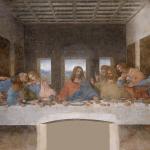
March 25, 2024 Maundy Thursday and Lent: What the Last Supper Means to You
Browse Our Archives
Select a Category Creative Arts Ministry Leadership Uncategorized Worship
Select a Month October 2026 September 2026 August 2026 July 2026 June 2026 May 2026 January 2026 December 2025 November 2025 October 2025 September 2025 July 2025 June 2025 May 2025 April 2025 March 2025 February 2025 June 2024 May 2024 April 2024 March 2024 February 2024
Follow Us!
TAKE THE
Religious Wisdom Quiz
Who was stoned to death for preaching about Jesus?
Select your answer to see how you score.
James Paul Peter Stephen
Related posts from The Imaginative Church
What About the Trees? Another Living Parable

Falling Leaves: A Living Parable on Letting Go

Life's Urge: What My $16 Life Surge Ticket...

Creatively Created Creatures Created to Create
TRENDING AT PATHEOS Evangelical

How the author of the world's best hymn...
I've been working with John Newton for a while now. This makes...

Long before this Lectio Divina, Psalm 130 - the song - started...

What About the Trees? Another Living Parable
After I finished writing the last article about falling leaves as a...

Why Classical Education Is a Conversation, Not a...
Come and Read: Joy in Classical Education When I was a little...

Falling Leaves: A Living Parable on Letting Go
I’ve spent the vast majority of my life in the southeast corner...

Cornell University has received a great deal of negative publicity and intense...
view all Evangelical blogs
Ad-Free & Subscriber Log-In Subscription Support
- About Us
- 2026 Calendar
- Videos
- Podcasts
- Library of World Religions
- Faith In Media Tracker
- Advertise With Us
- Write for Us
- Privacy Policy
- Terms of Service
- Do Not Sell My Data
- Contact Us
- Radiant Digital
- Manage Newsletter Subscriptions
- Unsubscribe From Notifications
- Sitemap
Copyright 2008-2026, Patheos. All rights reserved.
Subscription Support Ad-Free & Subscriber Log-In
Follow Patheos