
BuddhistCatholicContemplativeEvangelicalGeneral ChristianHinduJewishLatter-day SaintMuslimNew VisionsProgressive Christian
Beliefs
- Buddhist
- Catholic
- Contemplative
- Evangelical
- General Christian
- Hindu
- Jewish
- Latter-day Saint
- More Voices
- Muslim
- New Visions
- Pagan
- Progressive Christian
Topics
- Religion News
- Food and Religion
- Sports and Religion
- Religious Art
- Religious Music and Entertainment
- Religious Events
- History and Religion
- Style and Religion
- Politics and Religion
- Women in Religion
- Recreation Outdoors and Religion
- Business Finance and Religion
- Careers Workplace and Religion
- Education and Religion
- Family Parenting and Religion
- Health Fitness and Religion
- Home and Religion
- Relationships and Religion
- Technology and Religion
- Travel and Religion
Columnists
- Buddhist Columnists
- Business Finance and Religion Columnists
- Careers Workplace and Religion Columnists
- Catholic Columnists
- Contemplative Columnists
- Education and Religion Columnists
- Evangelists Columnists
- Family Parenting and Religion Columnists
- General Christian Columnists
- Health Fitness and Religion Columnists
- Hindu Columnists
- History and Religion Columnists
- Home and Religion Columnists
- Jewish Columnists
- More Voices Columnists
- Latter Day Columnists
- Muslim Columnists
- New Visions Columnists
- Nonreligious Columnists
- Pagan Columnists
- Politics and Religion Columnists
- Progressive Columnists
- Recreation Outdoors and Religion Columnists
- Relationships and Religion Columnists
- Religion News Columnists
- Religious Art Columnists
- Religious Events Columnists
- Religious Music and Entertainment Columnists
- Sports and Religion Columnists
- Style and Religion Columnists
- Technology and Religion Columnists
- Travel and Religion Columnists
- Women in Religion Columnists
Resource Library
- 2026 Calendar
- Library of World Religions
- The 100 Most Holy Places on Earth
- Patheos Answers
- Podcasts
- Videos
- Faith Leaders Database
- Anglican Episcopalian
- Bahai
- Baptist
- Buddhism
- Christianity
- Confucianism
- Eastern Orthodoxy
- Hinduism
- Holiness and Pentecostal
- ISKCON
- Islam
- Judaism
- Lutheran
- Methodist
- The Church of Jesus Christ of Latter-day Saints
- New Age
- Paganism
- Presbytarian and Reformed
- Protestantism
- Religion Behind the Scenes
- Roman Catholic
- Scientology
- Shia Islam
- Sikhism
- Sufism
- Sunni Islam
- Taoism
- Zen
- See all religions
Research Tools
 Ad-Free & Subscriber Log-In Subscription Support
Ad-Free & Subscriber Log-In Subscription Support
Follow Patheos 

- Trending:
- Forgiveness
- |
- Marriage
- |
- Consciousness
- |
- Death Penalty
- |
- Election
- |
- Halloween
 The High Calling
- Home
- Careers, Workplace and Religion
- Stewardship of Creation: An Interview with “Noah” Screenwriter, Ari Handel
Stewardship of Creation: An Interview with “Noah” Screenwriter, Ari Handel
Last updated on: April 20, 2015 at 6:42 pm by The High Calling
Stewardship of Creation: An Interview with “Noah” Screenwriter, Ari Handel 2015-04-20T18:42:45-06:00 The High Calling
Patheos Explore the world's faith through different perspectives on religion and spirituality! Patheos has the views of the prevalent religions and spiritualities of the world.
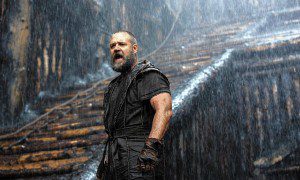 by Christine A. Scheller
The first thing you need to know about Ari Handel, co-writer of the new film adaptation of the Noah story, is that he holds a PhD in neurobiology from New York University. Handel and director/co-writer Darren Aronofsky had been suitemates as Harvard University undergrads and began collaborating on films after Handel decided a career in science wasn’t right for him.
His educational background hasn’t gone to waste, however. It informs his work and can be seen subtly weaving its way through this film. Unlike other articles about Handel’s and Aronofsky’s adaptation, this one focuses on its scientific and stewardship of creation themes. The interview has been edited for length and clarity.
:::
The High Calling: In your interpretation of the Noah story, it seems that the sins for which humanity is judged have a lot to do with their treatment of the earth and animals over which “the Creator” has given them responsibility. Is that intentional?
Ari Handel: Yes. We thought a lot about: what was the sin? Because it doesn’t really say very clearly. What does it say? It says the heart of mankind was filled with wickedness. That’s pretty vague. And then it says mankind corrupted the earth and filled it with violence.
We show human violence in the film. But, corrupting the earth. What does it mean to corrupt the earth? We felt corrupting the earth was a stewardship question. We looked at the other rules and there weren’t many rules before Noah. You have the Noahide Laws and the Ten Commandments, but those come later.
When Cain killed Abel, he was punished by God. That was a rule. Murder. So that’s in the film as a sin. Eating the “apple” was clearly forbidden. And then vegetarianism was proscribed as the way to live until after the Flood.
When we made Noah a vegetarian and other people meat eaters, that was in keeping with the Bible. The first thing that happens after the soul is breathed into Adam in Genesis 2, is that God places him in the Garden to tend it and to keep it. That’s a fundamental, first responsibility.
On the other hand, there’s a whole conversation about taking dominion over the earth. That dynamic of a responsibility towards the earth and the creatures within it is something we wanted to explore in the film. It’s completely purposeful, but it’s also completely grounded in Genesis.
One way to think about this is, in Genesis, mankind is given dominion and then mankind is asked to have stewardship. I think that is pretty much reflective of where we are today. It’s undeniable that we have dominion over this world. It is under our rule in the sense that we are affecting it more than anything has ever affected it. A lot of the things on this planet are going to live or die at our mercy. We have dominion. It’s been given to us. Whether you think that’s right or wrong, good or bad, it’s true. The question is: will we take stewardship?
The American Association for the Advancement of Science and the Intergovernmental Panel on Climate Change both recently issued reports saying there is no real debate among scientists about climate change, and yet doubts persist. Watching the film, one can’t help but think of Noah warning people of impending doom in the biblical account. Were you thinking at all about climate change as you were writing?
That’s very particular. The idea that environmentalism became a politicized word and that somehow if you’re a religious person, to care about the animals and the world is anti-religious in some fashion, I don’t know how that happened. It seems very odd, because if you’re religious you believe that God made all this stuff and therefore it’s holy and beautiful and should be cared for, and you believe that one of the great sins of mankind is to be hubristic and to not know your own place. So it’s strange to me that it’s gone that way.
One of the things we thought about was that we do have a responsibility for creation, and this story is clearly about a man who’s here to conserve the animals. There are certainly environmental themes in the story that are relevant to today. There are parallels. If we can have any influence that makes people say, “You know, it’s not contradictory to care about stewardship and to be religious,” that would be great.
In the sequence where Noah is recounting the creation story to his wife and children, there is a stunning visual depiction of evolution. Were you intentionally saying religion, or the Genesis story, does not have to be at odds with evolution?
Absolutely. We put them together, but we didn’t put them together to say, “Look, you can put these things together.” That scene was meant to emotionally convey glory and awe at the majesty, beauty, and complexity of creation. It was the scene in which Noah was justifying harsh actions out of love and awe for creation.
For us, showing how the universe was created and the earth was formed, and how life evolved while listening to Russell Crowe speak poetry from Genesis is incredibly majestic. We took the most powerful elements we could find to try and give people that sense of the beauty of the world around them. I don’t think religion and evolution contradict at all. I think they can go together.
In that vein, while there’s a lot of diversity shown in the animal kingdom, there’s no racial diversity in the cast. Can you speak to that?
From the beginning, we were concerned about casting, the issue of race. What we realized is that this story is functioning at the level of myth, and as a mythical story, the race of the individuals doesn’t matter. They’re supposed to be stand-ins for all people. Either you end up with a Bennetton ad or the crew of the Starship Enterprise. You either try to put everything in there, which just calls attention to it, or you just say, “Let’s make that not a factor, because we’re trying to deal with everyman.” Looking at this story through that kind of lens is the same as saying, “Would the ark float and is it big enough to get all the species in there?” That’s irrelevant to the questions because the questions are operating on a different plane than that; they’re operating on the mythical plane.
Patton Dodd in his On Faith review of the film said, “To condemn Noah for being wrong about the story of Noah (whether in theological or historical terms) is to ensure that people won’t read and re-read the story of Noah, or at least that they won’t read it anew, won’t encounter the story on its own terms.” He then talked about how the film was a catalyst for in-depth discussion of the biblical account for him and a friend. The overarching theme in your interpretation seems to be about mercy vs. judgment. Is that right?
If you’re going to boil down the essence of what we were trying to do, that was one of the twin poles, to really break expectations of the story so people could look at it fresh, and then encounter these big questions that the story of Noah in Genesis poses. They don’t have to agree with where we get to or even how we get there, but if people are grappling with it, that’s great. The other pole was to make Noah and his family real people, who are existing as real characters grounded within this universe so that we can relate to them.
At The High Calling we talk a lot about the high calling of our daily work. You walked away from a career in neuroscience after investing a lot of time in preparation for that career. What would you say to people considering a radical change like that?
I used to think it was the bravest thing I ever did because I loved neuroscience and I still do, but part of me knew it wasn’t what I wanted to be doing and I wasn’t happy there. I didn’t know what I needed to do, but I knew I had to jump. I had to just say no to neuroscience before I figured out what I needed to do next.
And you’re still using your science in your work.
Looking back, the first movie I made was about a neuroscientist and it’s all useful. It all becomes who you are. It’s never wasted.
Christine A. Scheller is a widely published, award-winning journalist and essayist. She lives with her husband at the Jersey Shore and in Washington, DC, where she helps facilitate dialogue between scientific and religious communities.
Image, courtesy of Paramount Pictures. Used with permission. This interview was originally published at TheHighCalling.org.
Previous Post

April 18, 2015
If I’m Suffering, Is God Punishing Me?
Next Post

April 21, 2015 5 Unexpected Ways You Can Help Orphans
Browse Our Archives
Select a Category Current Events Interviews Reflections Uncategorized Video Posts Vocation Work Practices
Select a Month August 2015 July 2015 June 2015 May 2015 April 2015 March 2015 February 2015 January 2015 December 2014 November 2014 October 2014 September 2014 August 2014 July 2014 June 2014 May 2014 April 2014 March 2014 February 2014 December 2013
Follow Us!
TAKE THE
Religious Wisdom Quiz
What holiday celebrates Jesus’ birth?
Select your answer to see how you score.
Ascension Day Easter Good Friday Christmas
Related posts from The High Calling


Don't Worry, Be Thankful: Eucharisteo with Ann Voskamp
Interview with David Ratcliffe: Chairman, President, and CEO...
5 Ways You Can Care for the Environment
TRENDING AT PATHEOS Careers, Workplace and Religion

St. Francis by Bill Droel Pope Leo XIV declares 2026 as “Year...

Catholics are schooled in the faith by memorizing dogmatic points and lots...

The Good News of Our Human Limitations -...
After another day of trying to meet deadlines and working on projects,...

Quiet Holy Attentiveness (podcast) with Sarah Clarkson
We know that quiet is an essential aspect of the spiritual life,...

Every Vocation Everywhere All At Once
What is a vocation? How does it endure through the years? Can...

I promise this is not going to become a Taylor Swift Studies...
view all Careers, Workplace and Religion blogs
Ad-Free & Subscriber Log-In Subscription Support
- About Us
- 2026 Calendar
- Videos
- Podcasts
- Library of World Religions
- Faith In Media Tracker
- Advertise With Us
- Write for Us
- Privacy Policy
- Terms of Service
- Do Not Sell My Data
- Contact Us
- Radiant Digital
- Manage Newsletter Subscriptions
- Unsubscribe From Notifications
- Sitemap
Copyright 2008-2026, Patheos. All rights reserved.
Subscription Support Ad-Free & Subscriber Log-In
Follow Patheos