
BuddhistCatholicContemplativeEvangelicalGeneral ChristianHinduJewishLatter-day SaintMuslimNew VisionsProgressive Christian
Beliefs
- Buddhist
- Catholic
- Contemplative
- Evangelical
- General Christian
- Hindu
- Jewish
- Latter-day Saint
- More Voices
- Muslim
- New Visions
- Pagan
- Progressive Christian
Topics
- Religion News
- Food and Religion
- Sports and Religion
- Religious Art
- Religious Music and Entertainment
- Religious Events
- History and Religion
- Style and Religion
- Politics and Religion
- Women in Religion
- Recreation Outdoors and Religion
- Business Finance and Religion
- Careers Workplace and Religion
- Education and Religion
- Family Parenting and Religion
- Health Fitness and Religion
- Home and Religion
- Relationships and Religion
- Technology and Religion
- Travel and Religion
Columnists
- Buddhist Columnists
- Business Finance and Religion Columnists
- Careers Workplace and Religion Columnists
- Catholic Columnists
- Contemplative Columnists
- Education and Religion Columnists
- Evangelists Columnists
- Family Parenting and Religion Columnists
- General Christian Columnists
- Health Fitness and Religion Columnists
- Hindu Columnists
- History and Religion Columnists
- Home and Religion Columnists
- Jewish Columnists
- More Voices Columnists
- Latter Day Columnists
- Muslim Columnists
- New Visions Columnists
- Nonreligious Columnists
- Pagan Columnists
- Politics and Religion Columnists
- Progressive Columnists
- Recreation Outdoors and Religion Columnists
- Relationships and Religion Columnists
- Religion News Columnists
- Religious Art Columnists
- Religious Events Columnists
- Religious Music and Entertainment Columnists
- Sports and Religion Columnists
- Style and Religion Columnists
- Technology and Religion Columnists
- Travel and Religion Columnists
- Women in Religion Columnists
Resource Library
- 2026 Calendar
- Library of World Religions
- The 100 Most Holy Places on Earth
- Patheos Answers
- Podcasts
- Videos
- Faith Leaders Database
- Anglican Episcopalian
- Bahai
- Baptist
- Buddhism
- Christianity
- Confucianism
- Eastern Orthodoxy
- Hinduism
- Holiness and Pentecostal
- ISKCON
- Islam
- Judaism
- Lutheran
- Methodist
- The Church of Jesus Christ of Latter-day Saints
- New Age
- Paganism
- Presbytarian and Reformed
- Protestantism
- Religion Behind the Scenes
- Roman Catholic
- Scientology
- Shia Islam
- Sikhism
- Sufism
- Sunni Islam
- Taoism
- Zen
- See all religions
Research Tools
 Ad-Free & Subscriber Log-In Subscription Support
Ad-Free & Subscriber Log-In Subscription Support
Follow Patheos 

- Trending:
- Forgiveness
- |
- Marriage
- |
- Consciousness
- |
- Death Penalty
- |
- Election
- |
- Halloween
 The High Calling
- Home
- Careers, Workplace and Religion
- Praying for Those Who Hurt Us
Praying for Those Who Hurt Us
Last updated on: March 28, 2015 at 8:37 am by The High Calling
Praying for Those Who Hurt Us 2015-03-28T08:37:35-06:00 The High Calling
Patheos Explore the world's faith through different perspectives on religion and spirituality! Patheos has the views of the prevalent religions and spiritualities of the world.
 by Mark D. Roberts
“Bless those who curse you. Pray for those who hurt you.”
Luke 6:28
When Jesus calls us to love our enemies, we might wonder what that really means in practice. Surely, we’re not to get all warm and fuzzy when we think about those who seek to hurt us. That’s our culture’s view of romantic love, not the kind of robust, challenging love envisioned by Jesus, a love that is more about action than about feelings. But what sorts of action embody a love for our enemies?
Jesus gives several specific examples in Luke 6:27-36. In verse 28, for example, he says: “Bless those who curse you.” To bless, in this instance, means to speak well of someone or to speak kindly to that person. Perhaps there is someone in your place of work who is spreading false rumors about you in order to advance above you. How will you respond? According to Jesus, not by retaliating. Rather, you are to love this “enemy” by speaking well of him, even when his back is turned. Or, when you see her, you should address her politely and graciously.
Jesus adds, “Pray for those who hurt you.” There is nothing wrong with asking the Lord to get them to stay their hand. But praying for them involves asking good for them, seeking the Lord’s presence in their lives and transformation of their hearts.
Prayer of this sort may sound easy enough in the abstract, but when you are really praying for real enemies, it can feel counterintuitive and even offensive. In the week following the attacks of 9/11/2001, Irvine Presbyterian Church joined thousands of other churches across our nation in hosting a special prayer service. We poured out our grief to the Lord. We asked him to comfort the families of those who had died. We prayed for firefighters and police officers, many who were risking their lives in the wreckage of the World Trade Center.
And we prayed for our enemies, for those who had planned the attacks and were no doubt plotting further harm to the United States. I was responsible for this particular prayer, and I labored over it for hours. What I wanted to say was, “Lord, wipe them out. Destroy them,” but I sensed that this was not what Jesus meant when he taught us to pray for our enemies. So, I did pray that those who had planned the attacks would be brought to justice, knowing that is was consistent with God’s will. But I also prayed that God would touch their hearts, bringing them to repentance. I asked that he would reveal his love and grace to them, so that their lives might be transformed.
As I prayed this way, I could sense the tension in the room. It was almost as if I had uttered profanity in my prayer. Nobody stormed out in anger. And, near as I can recall, nobody even sent me a nasty email. I did have a few people comment on my “bold prayer.” For me, praying for our enemies that day was truly one of the hardest things I ever have had to do as a pastor. It was an act of sheer obedience.
I’ve said it before. Loving our enemies is not easy. Nor is it easy to bless them or to pray for them. But this is the way of Jesus.
QUESTIONS FOR FURTHER REFLECTION: Have you ever blessed someone who was speaking poorly of you? How did it feel? What happened inside of you when you did this? Have you ever prayed for those who hurt you? Are there people in your life right now who are seeking to harm you, for whom you need to pray? What keeps you from praying for your enemies? What helps you to do it?
PRAYER: Dear Lord, you know how hard it is to do what you ask in this verse. You know because you did it. You blessed those who cursed you, even as you suffered in agony on the cross. You asked the Father to forgive those who were torturing you to death.
And you ask me to imitate you in this behavior. I must confess that part of me just doesn’t want to do this. I want to ignore your command, Lord. I want to pretend as if it’s not really for me. Yet your word is clear.
Help me to bless those who curse me and pray for my enemies. Yes, I ask for the grace to pray for global enemies, for those who would continue to want to hurt me and my fellow citizens. But I also ask you to help me pray for the “little enemies” in my life, for people at work who get under my fingernails, for the politicians whose views drive me crazy, for the check-out clerk who didn’t even say “thank you.” May my heart be trained so that my first instinct when someone wrongs me is to lay that person before you in prayer.
Today, Lord, I also want to pray for my brothers and sisters who are confronting enemies who do far more than curse. I pray for those who are facing harassment, torture, and even the possibility of martyrdom because of their faith. Yes, I continue to pray for their deliverance, for justice and protection. But I also pray that you will give them the supernatural ability to love as you call us all to love, even to pray for those who hurt them.
I pray in the name of Jesus, who lived what he commanded. Amen.
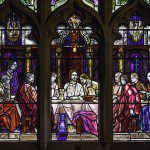
Featured image by Will Foster. Used with Permission. Source via Flickr. This reflection by Mark D. Roberts was originally shared at TheHighCalling.org.
Previous Post

March 27, 2015
A Long Nose for Anger
Next Post

March 30, 2015 Don't Worry, Be Thankful: Eucharisteo with Ann Voskamp
Browse Our Archives
Select a Category Current Events Interviews Reflections Uncategorized Video Posts Vocation Work Practices
Select a Month August 2015 July 2015 June 2015 May 2015 April 2015 March 2015 February 2015 January 2015 December 2014 November 2014 October 2014 September 2014 August 2014 July 2014 June 2014 May 2014 April 2014 March 2014 February 2014 December 2013
Follow Us!
TAKE THE
Religious Wisdom Quiz
Who interpreted Nebuchadnezzar's dream of a statue?
Select your answer to see how you score.
Abraham Joseph Ezekiel Daniel
Related posts from The High Calling



If I’m Suffering, Is God Punishing Me?
TRENDING AT PATHEOS Careers, Workplace and Religion

St. Francis by Bill Droel Pope Leo XIV declares 2026 as “Year...

Catholics are schooled in the faith by memorizing dogmatic points and lots...

The Good News of Our Human Limitations -...
After another day of trying to meet deadlines and working on projects,...

Quiet Holy Attentiveness (podcast) with Sarah Clarkson
We know that quiet is an essential aspect of the spiritual life,...

Every Vocation Everywhere All At Once
What is a vocation? How does it endure through the years? Can...

I promise this is not going to become a Taylor Swift Studies...
view all Careers, Workplace and Religion blogs
Ad-Free & Subscriber Log-In Subscription Support
- About Us
- 2026 Calendar
- Videos
- Podcasts
- Library of World Religions
- Faith In Media Tracker
- Advertise With Us
- Write for Us
- Privacy Policy
- Terms of Service
- Do Not Sell My Data
- Contact Us
- Radiant Digital
- Manage Newsletter Subscriptions
- Unsubscribe From Notifications
- Sitemap
Copyright 2008-2026, Patheos. All rights reserved.
Subscription Support Ad-Free & Subscriber Log-In
Follow Patheos