
BuddhistCatholicContemplativeEvangelicalGeneral ChristianHinduJewishLatter-day SaintMuslimNew VisionsProgressive Christian
Beliefs
- Buddhist
- Catholic
- Contemplative
- Evangelical
- General Christian
- Hindu
- Jewish
- Latter-day Saint
- More Voices
- Muslim
- New Visions
- Pagan
- Progressive Christian
Topics
- Religion News
- Food and Religion
- Sports and Religion
- Religious Art
- Religious Music and Entertainment
- Religious Events
- History and Religion
- Style and Religion
- Politics and Religion
- Women in Religion
- Recreation Outdoors and Religion
- Business Finance and Religion
- Careers Workplace and Religion
- Education and Religion
- Family Parenting and Religion
- Health Fitness and Religion
- Home and Religion
- Relationships and Religion
- Technology and Religion
- Travel and Religion
Columnists
- Buddhist Columnists
- Business Finance and Religion Columnists
- Careers Workplace and Religion Columnists
- Catholic Columnists
- Contemplative Columnists
- Education and Religion Columnists
- Evangelists Columnists
- Family Parenting and Religion Columnists
- General Christian Columnists
- Health Fitness and Religion Columnists
- Hindu Columnists
- History and Religion Columnists
- Home and Religion Columnists
- Jewish Columnists
- More Voices Columnists
- Latter Day Columnists
- Muslim Columnists
- New Visions Columnists
- Nonreligious Columnists
- Pagan Columnists
- Politics and Religion Columnists
- Progressive Columnists
- Recreation Outdoors and Religion Columnists
- Relationships and Religion Columnists
- Religion News Columnists
- Religious Art Columnists
- Religious Events Columnists
- Religious Music and Entertainment Columnists
- Sports and Religion Columnists
- Style and Religion Columnists
- Technology and Religion Columnists
- Travel and Religion Columnists
- Women in Religion Columnists
Resource Library
- 2026 Calendar
- Library of World Religions
- The 100 Most Holy Places on Earth
- Patheos Answers
- Podcasts
- Videos
- Faith Leaders Database
- Anglican Episcopalian
- Bahai
- Baptist
- Buddhism
- Christianity
- Confucianism
- Eastern Orthodoxy
- Hinduism
- Holiness and Pentecostal
- ISKCON
- Islam
- Judaism
- Lutheran
- Methodist
- The Church of Jesus Christ of Latter-day Saints
- New Age
- Paganism
- Presbytarian and Reformed
- Protestantism
- Religion Behind the Scenes
- Roman Catholic
- Scientology
- Shia Islam
- Sikhism
- Sufism
- Sunni Islam
- Taoism
- Zen
- See all religions
Research Tools
 Ad-Free & Subscriber Log-In Subscription Support
Ad-Free & Subscriber Log-In Subscription Support
Follow Patheos 

- Trending:
- Forgiveness
- |
- Marriage
- |
- Consciousness
- |
- Death Penalty
- |
- Election
- |
- Halloween
 The High Calling
- Home
- Careers, Workplace and Religion
- What Is God’s Glory?
What Is God’s Glory?
Last updated on: February 20, 2015 at 8:00 am by The High Calling
What Is God’s Glory? 2015-02-16T10:39:04-06:00 The High Calling
Patheos Explore the world's faith through different perspectives on religion and spirituality! Patheos has the views of the prevalent religions and spiritualities of the world.
 by Mark Roberts
Then the LORD’s glory rose from above the winged creatures and moved toward the temple’s threshold. The temple was filled with the cloud, and the courtyard was filled with the brightness of the LORD’s glory.
If you spend much time in church, you hear God’s glory mentioned all the time. Contemporary songs and classic hymns celebrate God’s glory. Traditional worship services often include the Gloria Patri: “Glory be to the Father, and to the Son, and to the Holy Spirit…” Preachers tell us we should seek to glorify God in all we do. In my Reformed tradition, we are often reminded that the chief purpose of our lives is “to glorify God and enjoy him forever.”
But, have you ever wondered what the glory of God really is? When we speak of God’s glory, what are we talking about? If someone were to ask you, “What is glory?” would you know how to answer?
Ezekiel 10:4 helps us to glimpse and understand God’s glory: “Then the LORD’s glory rose from above the winged creatures and moved toward the temple’s threshold. The temple was filled with the cloud, and the courtyard was filled with the brightness of the LORD’s glory.” The word translated here as “glory” is kabod in Hebrew. Curiously, this word is derived from a root with the basic meaning of “heavy.” From this root came, among other things, a word meaning “rich.” Speakers of ancient Hebrew would refer to a rich person as “heavy in wealth” much as we might say someone is loaded. A similar extension of the literal sense of kabod included being loaded with power, reputation, or honor. It’s from this use of the word that we get the meaning of glory. God’s glory is God’s weightiness in wonderful qualities such as might, beauty, goodness, justice, and honor. When it comes to these characteristics and so many others, God has them in superabundance.
Thus, when we think of God’s glory, we remember that God has all good things in greater quantity and quality than we can ever imagine. Notice, too, that God’s glory is solid and substantial. It isn’t mere reputation. It isn’t dependent on anyone or anything else. God’s glory reflects his essential nature.
Moreover, God is the source of all good things. He actually shares his glory with us. When we receive his plentiful gifts with gratitude, when we use them to enhance his honor, when we acknowledge him as the source of all goodness, then we are glorifying him.
Today’s reflection does not exhaust the Old Testament sense of God’s glory. I’ll have more to say about this tomorrow.
QUESTIONS FOR FURTHER REFLECTION: When you hear the word “glory,” what do you think? How have you experienced God’s glory? How might you live to glorify him in your life and work?
PRAYER:
Glory be to the Father,
and to the Son,
and to the Holy Ghost.
As it was in the beginning,
is now,
and ever shall be,
world without end.
Amen.
The “Gloria Patri” in English
This Daily Reflection was originally shared at TheHighCalling.org.
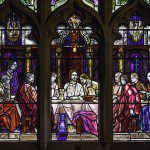
Featured image by Kevin Dooley. Used with Permission. Source via Flickr.
Previous Post

February 19, 2015
Every Platform an Altar
Next Post

March 8, 2015 The Fight for Serious Multi-Ethnic Dialogue
Browse Our Archives
Select a Category Current Events Interviews Reflections Uncategorized Video Posts Vocation Work Practices
Select a Month August 2015 July 2015 June 2015 May 2015 April 2015 March 2015 February 2015 January 2015 December 2014 November 2014 October 2014 September 2014 August 2014 July 2014 June 2014 May 2014 April 2014 March 2014 February 2014 December 2013
Follow Us!
TAKE THE
Religious Wisdom Quiz
Who had a coat of many colors?
Select your answer to see how you score.
Joseph Benjamin Jacob Esau
Related posts from The High Calling



If I’m Suffering, Is God Punishing Me?
TRENDING AT PATHEOS Careers, Workplace and Religion

St. Francis by Bill Droel Pope Leo XIV declares 2026 as “Year...

Catholics are schooled in the faith by memorizing dogmatic points and lots...

The Good News of Our Human Limitations -...
After another day of trying to meet deadlines and working on projects,...

Quiet Holy Attentiveness (podcast) with Sarah Clarkson
We know that quiet is an essential aspect of the spiritual life,...

Every Vocation Everywhere All At Once
What is a vocation? How does it endure through the years? Can...

I promise this is not going to become a Taylor Swift Studies...
view all Careers, Workplace and Religion blogs
Ad-Free & Subscriber Log-In Subscription Support
- About Us
- 2026 Calendar
- Videos
- Podcasts
- Library of World Religions
- Faith In Media Tracker
- Advertise With Us
- Write for Us
- Privacy Policy
- Terms of Service
- Do Not Sell My Data
- Contact Us
- Radiant Digital
- Manage Newsletter Subscriptions
- Unsubscribe From Notifications
- Sitemap
Copyright 2008-2026, Patheos. All rights reserved.
Subscription Support Ad-Free & Subscriber Log-In
Follow Patheos