
BuddhistCatholicContemplativeEvangelicalGeneral ChristianHinduJewishLatter-day SaintMuslimNew VisionsProgressive Christian
Beliefs
- Buddhist
- Catholic
- Contemplative
- Evangelical
- General Christian
- Hindu
- Jewish
- Latter-day Saint
- More Voices
- Muslim
- New Visions
- Pagan
- Progressive Christian
Topics
- Religion News
- Food and Religion
- Sports and Religion
- Religious Art
- Religious Music and Entertainment
- Religious Events
- History and Religion
- Style and Religion
- Politics and Religion
- Women in Religion
- Recreation Outdoors and Religion
- Business Finance and Religion
- Careers Workplace and Religion
- Education and Religion
- Family Parenting and Religion
- Health Fitness and Religion
- Home and Religion
- Relationships and Religion
- Technology and Religion
- Travel and Religion
Columnists
- Buddhist Columnists
- Business Finance and Religion Columnists
- Careers Workplace and Religion Columnists
- Catholic Columnists
- Contemplative Columnists
- Education and Religion Columnists
- Evangelists Columnists
- Family Parenting and Religion Columnists
- General Christian Columnists
- Health Fitness and Religion Columnists
- Hindu Columnists
- History and Religion Columnists
- Home and Religion Columnists
- Jewish Columnists
- More Voices Columnists
- Latter Day Columnists
- Muslim Columnists
- New Visions Columnists
- Nonreligious Columnists
- Pagan Columnists
- Politics and Religion Columnists
- Progressive Columnists
- Recreation Outdoors and Religion Columnists
- Relationships and Religion Columnists
- Religion News Columnists
- Religious Art Columnists
- Religious Events Columnists
- Religious Music and Entertainment Columnists
- Sports and Religion Columnists
- Style and Religion Columnists
- Technology and Religion Columnists
- Travel and Religion Columnists
- Women in Religion Columnists
Resource Library
- 2026 Calendar
- Library of World Religions
- The 100 Most Holy Places on Earth
- Patheos Answers
- Podcasts
- Videos
- Faith Leaders Database
- Anglican Episcopalian
- Bahai
- Baptist
- Buddhism
- Christianity
- Confucianism
- Eastern Orthodoxy
- Hinduism
- Holiness and Pentecostal
- ISKCON
- Islam
- Judaism
- Lutheran
- Methodist
- The Church of Jesus Christ of Latter-day Saints
- New Age
- Paganism
- Presbytarian and Reformed
- Protestantism
- Religion Behind the Scenes
- Roman Catholic
- Scientology
- Shia Islam
- Sikhism
- Sufism
- Sunni Islam
- Taoism
- Zen
- See all religions
Research Tools
 Ad-Free & Subscriber Log-In Subscription Support
Ad-Free & Subscriber Log-In Subscription Support
Follow Patheos 

- Trending:
- Forgiveness
- |
- Marriage
- |
- Consciousness
- |
- Death Penalty
- |
- Election
- |
- Halloween
 The High Calling
- Home
- Careers, Workplace and Religion
- How Can I Forgive Someone Who Has Deeply Hurt Me?
How Can I Forgive Someone Who Has Deeply Hurt Me?
Last updated on: February 1, 2015 at 8:00 am by The High Calling
How Can I Forgive Someone Who Has Deeply Hurt Me? 2015-01-26T13:50:45-06:00 The High Calling
Patheos Explore the world's faith through different perspectives on religion and spirituality! Patheos has the views of the prevalent religions and spiritualities of the world.
 Luke 11:1-4
[A]nd forgive us our sins,
as we forgive those who sin against us.
And don’t let us yield to temptation.
Jesus teaches us to connect our request for divine forgiveness with a strong statement of our own forgiving of those who have wronged us: “And forgive us our sins, as we forgive those who sin against us” (11:4). This imperative could be translated more literally, “And forgive us our sins, for we ourselves forgive everyone who is indebted to us” (ESV).
During my years as Senior Pastor of Irvine Presbyterian Church, I helped my congregation wrestle with Jesus’ teaching on forgiveness. Sometimes, after I had preached about the command to forgive others, a member of my church would make an appointment to meet with me. In the safety of my office, I would hear horror stories about wrongs that people had experienced. Often these accounts involved physical, psychological, and sexual abuse by their parents when they were children.
After laying out a heart-wrenching story, a tearful man or woman would look at me and ask, “How can you expect me to forgive someone like that? How can God expect me to forgive?”
In times like these, I often felt inadequate as a pastor. After all, I had never experienced the things I heard about. Yet, I knew that my job was not to offer just my own wisdom or experience, but to speak the truth in love, sharing God’s wisdom as graciously as I was able. So, I’d begin by acknowledging the pain in a person’s life and how awful it must have been for him or her to suffer such terrible things. I’d admit that I could only begin to imagine how difficult it must be to forgive in such a situation.
How can I forgive?
Then I’d point to Jesus. I’d point to the cross and to Jesus’ experience of both physical torture and extreme rejection. If anyone in the universe can understand what an abused person feels, it is Jesus. And it is Jesus who calls us to forgive those who have wronged us. Yet he offers, not just a command, but also healing and help. Jesus alone can enable us to forgive the one who seems to be unforgivable. Moreover, and most important of all, it is the forgiveness we receive through Jesus that empowers us to forgive others. The more we internalize the reality that God has forgiven us, the more we are able to forgive those who have wronged us.
Forgiveness of this kind does not usually happen quickly. Nor is it saying “That’s okay” or “I understand” or “No problem.” On the contrary, forgiveness assumes that a genuine wrong has been committed. It doesn’t minimize either the wrong or the painful results. Rather, forgiveness says, “Though I was truly wronged, I will not allow that wrong to rule my life. Though I was deeply hurt, I will not allow the hurt to harden my heart. Instead, I will release the wrong. I will give it over to the Lord.”
Forgiveness, when matched with genuine repentance by the offending party, can lead to reconciliation. But, sometimes reconciliation isn’t possible in this life. Nevertheless, when we forgive, we allow the Lord to touch our hearts. We invite him to heal us more deeply. We take down the barriers between ourselves and others, so that we might enjoy deeper and more loving relationships. We let the love and grace of God pervade our lives, so that we might live more fully as forgiven, whole people.
QUESTIONS FOR FURTHER REFLECTION: Is there a person in your life whom you have a hard time forgiving? Why might God want you to forgive that person? Have you asked for God’s help? Have you shared your struggle to forgive with a wise, caring Christian who can support you and pray for you?
PRAYER: Forgive us our sins, as we forgive those who sin against us.
Heavenly Father, thank you for the forgiveness you offer through Christ. Thank you for the riches of your grace, by which we are forgiven beyond measure. Thank you for allowing us to experience the joy and freedom of forgiveness as we confess our sin to you and ask you to forgive us. And thank you for the way our experience of being forgiven by you enables us to forgive others.
But, as you know, sometimes it is very hard to forgive. Sometimes the wrongs are so pernicious and the wounds so painful that forgiveness seems impossible. Your call to forgive is clear, but we feel inadequate to live up to it. Or sometimes we don’t even want to.
So, gracious God, we ask for your help. May our experience of your grace both heal and transform us. May it give us courage to forgive even when we have been terribly wronged.
Today, I pray especially for those who are struggling to forgive. Open their hearts to your loving presence. Impress upon them the majesty of your mercy. Help them to trust you even to the point of forgiving those who have hurt them so deeply.
All praise be to you, God of grace and mercy, God of healing and reconciliation. Amen.
Editor’s Note: This reflection was originally posted at TheHighCalling.org by Mark D. Roberts.
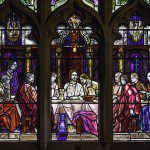
[Photo by lauren rushing, used under a creative commons license, sourced via Flickr.]
Previous Post

January 31, 2015
Vocational Courage and Renewal: An Interview with Parker Palmer
Next Post

February 2, 2015 Centered.org: Lifting the Name of Jesus High
Browse Our Archives
Select a Category Current Events Interviews Reflections Uncategorized Video Posts Vocation Work Practices
Select a Month August 2015 July 2015 June 2015 May 2015 April 2015 March 2015 February 2015 January 2015 December 2014 November 2014 October 2014 September 2014 August 2014 July 2014 June 2014 May 2014 April 2014 March 2014 February 2014 December 2013
Follow Us!
TAKE THE
Religious Wisdom Quiz
Which book of the Bible records Paul’s shipwreck?
Select your answer to see how you score.
1 Corinthians Acts Romans 2 Timothy
Related posts from The High Calling



If I’m Suffering, Is God Punishing Me?
TRENDING AT PATHEOS Careers, Workplace and Religion

St. Francis by Bill Droel Pope Leo XIV declares 2026 as “Year...

Catholics are schooled in the faith by memorizing dogmatic points and lots...

The Good News of Our Human Limitations -...
After another day of trying to meet deadlines and working on projects,...

Quiet Holy Attentiveness (podcast) with Sarah Clarkson
We know that quiet is an essential aspect of the spiritual life,...

Every Vocation Everywhere All At Once
What is a vocation? How does it endure through the years? Can...

I promise this is not going to become a Taylor Swift Studies...
view all Careers, Workplace and Religion blogs
Ad-Free & Subscriber Log-In Subscription Support
- About Us
- 2026 Calendar
- Videos
- Podcasts
- Library of World Religions
- Faith In Media Tracker
- Advertise With Us
- Write for Us
- Privacy Policy
- Terms of Service
- Do Not Sell My Data
- Contact Us
- Radiant Digital
- Manage Newsletter Subscriptions
- Unsubscribe From Notifications
- Sitemap
Copyright 2008-2026, Patheos. All rights reserved.
Subscription Support Ad-Free & Subscriber Log-In
Follow Patheos