
BuddhistCatholicContemplativeEvangelicalGeneral ChristianHinduJewishLatter-day SaintMuslimNew VisionsProgressive Christian
Beliefs
- Buddhist
- Catholic
- Contemplative
- Evangelical
- General Christian
- Hindu
- Jewish
- Latter-day Saint
- More Voices
- Muslim
- New Visions
- Pagan
- Progressive Christian
Topics
- Religion News
- Food and Religion
- Sports and Religion
- Religious Art
- Religious Music and Entertainment
- Religious Events
- History and Religion
- Style and Religion
- Politics and Religion
- Women in Religion
- Recreation Outdoors and Religion
- Business Finance and Religion
- Careers Workplace and Religion
- Education and Religion
- Family Parenting and Religion
- Health Fitness and Religion
- Home and Religion
- Relationships and Religion
- Technology and Religion
- Travel and Religion
Columnists
- Buddhist Columnists
- Business Finance and Religion Columnists
- Careers Workplace and Religion Columnists
- Catholic Columnists
- Contemplative Columnists
- Education and Religion Columnists
- Evangelists Columnists
- Family Parenting and Religion Columnists
- General Christian Columnists
- Health Fitness and Religion Columnists
- Hindu Columnists
- History and Religion Columnists
- Home and Religion Columnists
- Jewish Columnists
- More Voices Columnists
- Latter Day Columnists
- Muslim Columnists
- New Visions Columnists
- Nonreligious Columnists
- Pagan Columnists
- Politics and Religion Columnists
- Progressive Columnists
- Recreation Outdoors and Religion Columnists
- Relationships and Religion Columnists
- Religion News Columnists
- Religious Art Columnists
- Religious Events Columnists
- Religious Music and Entertainment Columnists
- Sports and Religion Columnists
- Style and Religion Columnists
- Technology and Religion Columnists
- Travel and Religion Columnists
- Women in Religion Columnists
Resource Library
- 2026 Calendar
- Library of World Religions
- The 100 Most Holy Places on Earth
- Patheos Answers
- Podcasts
- Videos
- Faith Leaders Database
- Anglican Episcopalian
- Bahai
- Baptist
- Buddhism
- Christianity
- Confucianism
- Eastern Orthodoxy
- Hinduism
- Holiness and Pentecostal
- ISKCON
- Islam
- Judaism
- Lutheran
- Methodist
- The Church of Jesus Christ of Latter-day Saints
- New Age
- Paganism
- Presbytarian and Reformed
- Protestantism
- Religion Behind the Scenes
- Roman Catholic
- Scientology
- Shia Islam
- Sikhism
- Sufism
- Sunni Islam
- Taoism
- Zen
- See all religions
Research Tools
 Ad-Free & Subscriber Log-In Subscription Support
Ad-Free & Subscriber Log-In Subscription Support
Follow Patheos 

- Trending:
- Forgiveness
- |
- Marriage
- |
- Consciousness
- |
- Death Penalty
- |
- Election
- |
- Halloween
 The High Calling
- Home
- Careers, Workplace and Religion
- No One Does Good? Really?
No One Does Good? Really?
Last updated on: January 25, 2015 at 8:00 am by The High Calling
No One Does Good? Really? 2015-01-23T13:23:52-06:00 The High Calling
Patheos Explore the world's faith through different perspectives on religion and spirituality! Patheos has the views of the prevalent religions and spiritualities of the world.
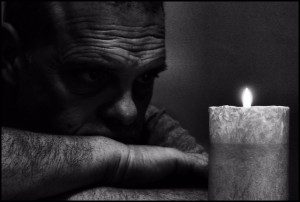 Psalm 14:1-7
But no, all have turned away;
all have become corrupt.
No one does good,
not a single one!
I remember when I first resolved to read through the whole Bible. I was in high school, and it seemed like the godly thing to do. But as I began making my way through Scripture, I kept stumbling upon verses that were unsettling to me. Sometimes what a verse described seemed abhorrent to me. Other verses just seemed wrong. Now I believed that the Bible was God’s Word and was always true. But what was I to do with verses that seemed to be, well, false?
Psalm 14:3 was such a verse. I encountered this verse as it was quoted in Romans 3:12, where it says, “All have turned away; all have become useless. No one does good, not a single one.” As I read this, I thought to myself: “Wait! How is this possible? Somebody does good. I have seen people be generous to the poor. I have watched people love difficult people. And I have even done some good things in my life. So how can the Bible say that no one does good, not a single one?”
Some people, when they come to verses like Psalm 14:3, quickly conclude that the Bible gets it wrong. But, whether they believe in biblical authority or not, they are not reading Scripture with the kind of attentiveness that literature deserves. All responsible reading pays attention to the genre of the material and its context. So, when we approach the Psalms, we must remember that they are poetry. Psalm 14:3 isn’t a piece of prosaic legal material. Rather, it is a poetic, indeed, hyperbolic expression of the pervasive sinfulness of humanity. Poetry says, “No one does good, not a single one.” Philosophical discourse might say, “All people do wrong, but some people do what’s right some of the time.”
Psalm 14:3 appears in a poem that laments the sinfulness of all human beings. In the end, the good that we do cannot erase our sinful behavior. Thus, Psalm 14 ends by asking a paramount question: “Who will come from Mount Zion to rescue us?” (14:7). Who is able to save us? Only the Lord (14:7). He alone is able to restore his people, and ultimately the whole world.
In Romans 3, Paul quotes Psalm 14:3 in order to set up the need for a savior. Yes, no one does good. Both Jews and Gentiles fall short of God’s righteousness: “For everyone has sinned; we all fall short of God’s glorious standard” (Rom. 3:23). This is the bad news that prepares the way for the good news: “Yet God, with undeserved kindness, declares that we are righteous. He did this through Christ Jesus when he freed us from the penalty for our sins” (Rom. 3:24). Truly, everyone does what is wrong. No one does good and good alone . . . except for Jesus Christ, our Savior, through whose goodness we are righteous in God’s sight.
QUESTIONS FOR FURTHER REFLECTION: When you read a verse like Psalm 14:3, a verse that somehow seems wrong to you, what do you do? Do you ever believe that you can be good enough to earn God’s favor? How does the reality of your sinfulness impact your relationship with God?
PRAYER: O Lord, as you know, there are many passages of Scripture that are disconcerting to us, things we don’t understand, or things we understand but don’t like. At times your Word is crystal clear and compelling. But then there are other times . . .
Help us, Lord, to understand your Word correctly. By your Spirit, may we pay close attention to the text and its context. Help us to be accurate readers.
And when we come upon things that we don’t like, help us not to reject your Word as something less than true. Rather, teach us to dig deeply, to think, to pray, to converse with others, to wrestle with Scripture so that we might be changed by it.
Finally, gracious God, thank you for your salvation, for reaching out to us even when we were sinners. Thank you for your grace poured out through Jesus Christ. Amen.
Editor’s Note: This reflection was originally posted at TheHighCalling.org by Mark D. Roberts.
[Photo by Craig Sunter, used under a creative commons license, sourced via Flickr.]
Previous Post

January 24, 2015
Nice Guys Finish…What?
Next Post

January 26, 2015 When You Think Your Work Isn't Making a Difference
Browse Our Archives
Select a Category Current Events Interviews Reflections Uncategorized Video Posts Vocation Work Practices
Select a Month August 2015 July 2015 June 2015 May 2015 April 2015 March 2015 February 2015 January 2015 December 2014 November 2014 October 2014 September 2014 August 2014 July 2014 June 2014 May 2014 April 2014 March 2014 February 2014 December 2013
Follow Us!
TAKE THE
Religious Wisdom Quiz
According to Jesus, what should you do if someone asks you to go one mile with them?
Select your answer to see how you score.
Go two miles Demand payment Go halfway Refuse
Related posts from The High Calling


If I’m Suffering, Is God Punishing Me?
TRENDING AT PATHEOS Careers, Workplace and Religion

St. Francis by Bill Droel Pope Leo XIV declares 2026 as “Year...

Catholics are schooled in the faith by memorizing dogmatic points and lots...

The Good News of Our Human Limitations -...
After another day of trying to meet deadlines and working on projects,...

Quiet Holy Attentiveness (podcast) with Sarah Clarkson
We know that quiet is an essential aspect of the spiritual life,...

Every Vocation Everywhere All At Once
What is a vocation? How does it endure through the years? Can...

I promise this is not going to become a Taylor Swift Studies...
view all Careers, Workplace and Religion blogs
Ad-Free & Subscriber Log-In Subscription Support
- About Us
- 2026 Calendar
- Videos
- Podcasts
- Library of World Religions
- Faith In Media Tracker
- Advertise With Us
- Write for Us
- Privacy Policy
- Terms of Service
- Do Not Sell My Data
- Contact Us
- Radiant Digital
- Manage Newsletter Subscriptions
- Unsubscribe From Notifications
- Sitemap
Copyright 2008-2026, Patheos. All rights reserved.
Subscription Support Ad-Free & Subscriber Log-In
Follow Patheos