
BuddhistCatholicContemplativeEvangelicalGeneral ChristianHinduJewishLatter-day SaintMuslimNew VisionsProgressive Christian
Beliefs
- Buddhist
- Catholic
- Contemplative
- Evangelical
- General Christian
- Hindu
- Jewish
- Latter-day Saint
- More Voices
- Muslim
- New Visions
- Pagan
- Progressive Christian
Topics
- Religion News
- Food and Religion
- Sports and Religion
- Religious Art
- Religious Music and Entertainment
- Religious Events
- History and Religion
- Style and Religion
- Politics and Religion
- Women in Religion
- Recreation Outdoors and Religion
- Business Finance and Religion
- Careers Workplace and Religion
- Education and Religion
- Family Parenting and Religion
- Health Fitness and Religion
- Home and Religion
- Relationships and Religion
- Technology and Religion
- Travel and Religion
Columnists
- Buddhist Columnists
- Business Finance and Religion Columnists
- Careers Workplace and Religion Columnists
- Catholic Columnists
- Contemplative Columnists
- Education and Religion Columnists
- Evangelists Columnists
- Family Parenting and Religion Columnists
- General Christian Columnists
- Health Fitness and Religion Columnists
- Hindu Columnists
- History and Religion Columnists
- Home and Religion Columnists
- Jewish Columnists
- More Voices Columnists
- Latter Day Columnists
- Muslim Columnists
- New Visions Columnists
- Nonreligious Columnists
- Pagan Columnists
- Politics and Religion Columnists
- Progressive Columnists
- Recreation Outdoors and Religion Columnists
- Relationships and Religion Columnists
- Religion News Columnists
- Religious Art Columnists
- Religious Events Columnists
- Religious Music and Entertainment Columnists
- Sports and Religion Columnists
- Style and Religion Columnists
- Technology and Religion Columnists
- Travel and Religion Columnists
- Women in Religion Columnists
Resource Library
- 2026 Calendar
- Library of World Religions
- The 100 Most Holy Places on Earth
- Patheos Answers
- Podcasts
- Videos
- Faith Leaders Database
- Anglican Episcopalian
- Bahai
- Baptist
- Buddhism
- Christianity
- Confucianism
- Eastern Orthodoxy
- Hinduism
- Holiness and Pentecostal
- ISKCON
- Islam
- Judaism
- Lutheran
- Methodist
- The Church of Jesus Christ of Latter-day Saints
- New Age
- Paganism
- Presbytarian and Reformed
- Protestantism
- Religion Behind the Scenes
- Roman Catholic
- Scientology
- Shia Islam
- Sikhism
- Sufism
- Sunni Islam
- Taoism
- Zen
- See all religions
Research Tools
 Ad-Free & Subscriber Log-In Subscription Support
Ad-Free & Subscriber Log-In Subscription Support
Follow Patheos 

- Trending:
- Forgiveness
- |
- Marriage
- |
- Consciousness
- |
- Death Penalty
- |
- Election
- |
- Halloween
 The High Calling
- Home
- Careers, Workplace and Religion
- What Will My Body Be Like in the Resurrection?
What Will My Body Be Like in the Resurrection?
Last updated on: October 13, 2014 at 10:51 am by The High Calling
What Will My Body Be Like in the Resurrection? 2014-10-13T10:51:45-06:00 The High Calling
Patheos Explore the world's faith through different perspectives on religion and spirituality! Patheos has the views of the prevalent religions and spiritualities of the world.
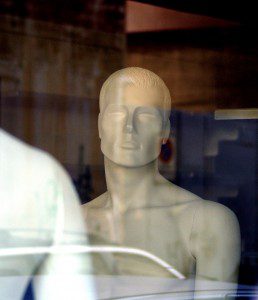 1 Corinthians 15:35-50
Our bodies are buried in brokenness, but they will be raised in glory. They are buried in weakness, but they will be raised in strength. They are buried as natural human bodies, but they will be raised as spiritual bodies. For just as there are natural bodies, there are also spiritual bodies.
To the Christians in Corinth, the idea of resurrection from the dead seemed strange indeed. They were no doubt comfortable with the notion of immortality, in which the souls or spirits of human beings survived death. But the thought of bodies coming back from the dead did not fit their assumptions about the world or the afterlife. So, after affirming that the resurrection of Jesus not only happened, but also was the first of many resurrections yet to come, the Apostle Paul sought to answer a question that the Corinthians surely wished to ask: “How will the dead be raised? What kind of bodies will they have?” (15:35).
Paul’s answer uses the analogy of a seed, which dies and then is planted in the ground. What grows from this seed is something quite different from the seed itself. Similarly, when a body is “planted” in the ground in burial, what is raised is not that same body, but something both connected to the original body and startlingly new. “Our bodies are buried in brokenness,” Paul explains, “but they will be raised in glory. They are buried in weakness, but they will be raised in strength. They are buried as natural human bodies, but they will be raised as spiritual bodies” (15:43-44a). This can sound pretty strange if we think of spiritual things as non-physical. But Paul’s point is that the bodies we will possess after resurrection will be like our physical bodies, yet also different in many ways.
The resurrected body of Jesus provides some clues as the nature of our spiritual, resurrected bodies. After his resurrection, Jesus’ body had physical reality. He could eat food and be touched. Yet his body also had the ability to pass through walls or disappear. It was a real body, yet unlike any body we have ever seen or known.
Even with Paul’s explanation and the example of Jesus, there is much about resurrected bodies that we won’t understand in this life. But one thing is clear: after death, your essential self will be preserved, even as your body is transformed. When Jesus appeared to his disciples in his resurrected body, he was still Jesus. His disciples recognized him and knew him. Thus, by implication, when we are raised from the dead, we will be our true selves, yet in a more vigorous and glorious form.
What is the bottom line? Your identity matters. Who you really are in Christ will last forever. Who you are matters to God. This not only gives hope for the future, but it also gives meaning for our existence in this life, which is a foretaste of that which is to come.
QUESTIONS FOR FURTHER REFLECTION: How do you envision a resurrected body? What difference does it make if our hope for the future involves resurrection, rather than immaterial spiritual existence?
PRAYER: Dear Lord, I must confess that this talk of resurrection can feel rather strange and foreign. There are so many questions that remain unanswered, so much that I can’t quite understand.
Yet I thank you for the truth of the resurrection, for the fact that my body will someday be transformed into something more glorious and strong. Indeed, as my own body gets older, and therefore less glorious and strong, this hope matters more to me then it did when I was twenty. How grateful I am, Lord, that who I am matters and will be preserved even beyond death.
The more I reflect on this truth, the more I find myself wanting to honor my body, such as it is, and to use it for your purposes and glory even now. May I offer my life to you each day as a living sacrifice.
I pray in the name of Jesus, the firstfruits of the resurrection. Amen.
Editor’s Note: This reflection was originally posted at TheHighCalling.org by Mark D. Roberts.
[Photo by Giovanni, used under a creative commons license, sourced via Flickr.]
Previous Post

October 12, 2014
Why Do We Watch the Walking Dead?
Browse Our Archives
Select a Category Current Events Interviews Reflections Uncategorized Video Posts Vocation Work Practices
Select a Month August 2015 July 2015 June 2015 May 2015 April 2015 March 2015 February 2015 January 2015 December 2014 November 2014 October 2014 September 2014 August 2014 July 2014 June 2014 May 2014 April 2014 March 2014 February 2014 December 2013
Follow Us!
TAKE THE
Religious Wisdom Quiz
What is the "Great Commission" Jesus gave his followers?
Select your answer to see how you score.
Build a temple Go and make disciples Stay hidden Gather riches
Related posts from The High Calling



If I’m Suffering, Is God Punishing Me?
TRENDING AT PATHEOS Careers, Workplace and Religion

St. Francis by Bill Droel Pope Leo XIV declares 2026 as “Year...

Catholics are schooled in the faith by memorizing dogmatic points and lots...

The Good News of Our Human Limitations -...
After another day of trying to meet deadlines and working on projects,...

Quiet Holy Attentiveness (podcast) with Sarah Clarkson
We know that quiet is an essential aspect of the spiritual life,...

Every Vocation Everywhere All At Once
What is a vocation? How does it endure through the years? Can...

I promise this is not going to become a Taylor Swift Studies...
view all Careers, Workplace and Religion blogs
Ad-Free & Subscriber Log-In Subscription Support
- About Us
- 2026 Calendar
- Videos
- Podcasts
- Library of World Religions
- Faith In Media Tracker
- Advertise With Us
- Write for Us
- Privacy Policy
- Terms of Service
- Do Not Sell My Data
- Contact Us
- Radiant Digital
- Manage Newsletter Subscriptions
- Unsubscribe From Notifications
- Sitemap
Copyright 2008-2026, Patheos. All rights reserved.
Subscription Support Ad-Free & Subscriber Log-In
Follow Patheos