
BuddhistCatholicContemplativeEvangelicalGeneral ChristianHinduJewishLatter-day SaintMuslimNew VisionsProgressive Christian
Beliefs
- Buddhist
- Catholic
- Contemplative
- Evangelical
- General Christian
- Hindu
- Jewish
- Latter-day Saint
- More Voices
- Muslim
- New Visions
- Pagan
- Progressive Christian
Topics
- Religion News
- Food and Religion
- Sports and Religion
- Religious Art
- Religious Music and Entertainment
- Religious Events
- History and Religion
- Style and Religion
- Politics and Religion
- Women in Religion
- Recreation Outdoors and Religion
- Business Finance and Religion
- Careers Workplace and Religion
- Education and Religion
- Family Parenting and Religion
- Health Fitness and Religion
- Home and Religion
- Relationships and Religion
- Technology and Religion
- Travel and Religion
Columnists
- Buddhist Columnists
- Business Finance and Religion Columnists
- Careers Workplace and Religion Columnists
- Catholic Columnists
- Contemplative Columnists
- Education and Religion Columnists
- Evangelists Columnists
- Family Parenting and Religion Columnists
- General Christian Columnists
- Health Fitness and Religion Columnists
- Hindu Columnists
- History and Religion Columnists
- Home and Religion Columnists
- Jewish Columnists
- More Voices Columnists
- Latter Day Columnists
- Muslim Columnists
- New Visions Columnists
- Nonreligious Columnists
- Pagan Columnists
- Politics and Religion Columnists
- Progressive Columnists
- Recreation Outdoors and Religion Columnists
- Relationships and Religion Columnists
- Religion News Columnists
- Religious Art Columnists
- Religious Events Columnists
- Religious Music and Entertainment Columnists
- Sports and Religion Columnists
- Style and Religion Columnists
- Technology and Religion Columnists
- Travel and Religion Columnists
- Women in Religion Columnists
Resource Library
- 2026 Calendar
- Library of World Religions
- The 100 Most Holy Places on Earth
- Patheos Answers
- Podcasts
- Videos
- Faith Leaders Database
- Anglican Episcopalian
- Bahai
- Baptist
- Buddhism
- Christianity
- Confucianism
- Eastern Orthodoxy
- Hinduism
- Holiness and Pentecostal
- ISKCON
- Islam
- Judaism
- Lutheran
- Methodist
- The Church of Jesus Christ of Latter-day Saints
- New Age
- Paganism
- Presbytarian and Reformed
- Protestantism
- Religion Behind the Scenes
- Roman Catholic
- Scientology
- Shia Islam
- Sikhism
- Sufism
- Sunni Islam
- Taoism
- Zen
- See all religions
Research Tools
 Ad-Free & Subscriber Log-In Subscription Support
Ad-Free & Subscriber Log-In Subscription Support
Follow Patheos 

- Trending:
- Forgiveness
- |
- Marriage
- |
- Consciousness
- |
- Death Penalty
- |
- Election
- |
- Halloween
 The High Calling
- Home
- Careers, Workplace and Religion
- Farewell, Middle Class Morality: What Comes Next?
Farewell, Middle Class Morality: What Comes Next?
Last updated on: August 8, 2014 at 3:51 pm by The High Calling
Farewell, Middle Class Morality: What Comes Next? 2014-08-08T15:51:05-06:00 The High Calling
Patheos Explore the world's faith through different perspectives on religion and spirituality! Patheos has the views of the prevalent religions and spiritualities of the world.
The Middle Class is dying. So what?
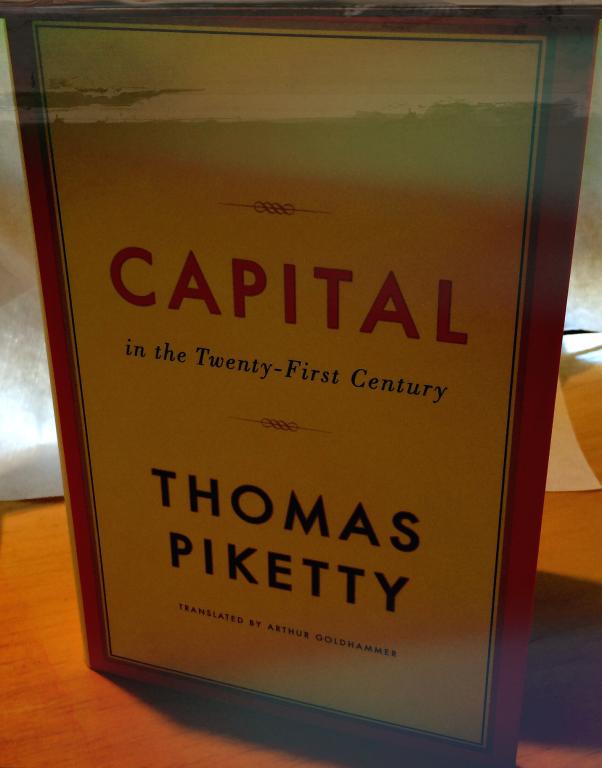
This question opens A.O. Scott’s fascinating response to Thomas Piketty’s bestseller, Capital in the 21st Century. “The book’s thesis,”Scott explains, is “that economic inequality in the developed world is increasing, with potentially dire consequences for social justice and democratic governance.” According to Piketty, the Western dream of an economically egalitarian world is naïve and, ultimately, untenable. His diagnosis hits the Democratic Idealist––for whom “the expansion of the middle class…unfolded according to something like a natural law”––right in the kisser.
But Scott, a cultural critic, isn’t interested in making further economic prognostications. Instead, he wonders: If we lose the middle class or the “middlebrow,” what do we really lose? What do these terms mean culturally, morally?
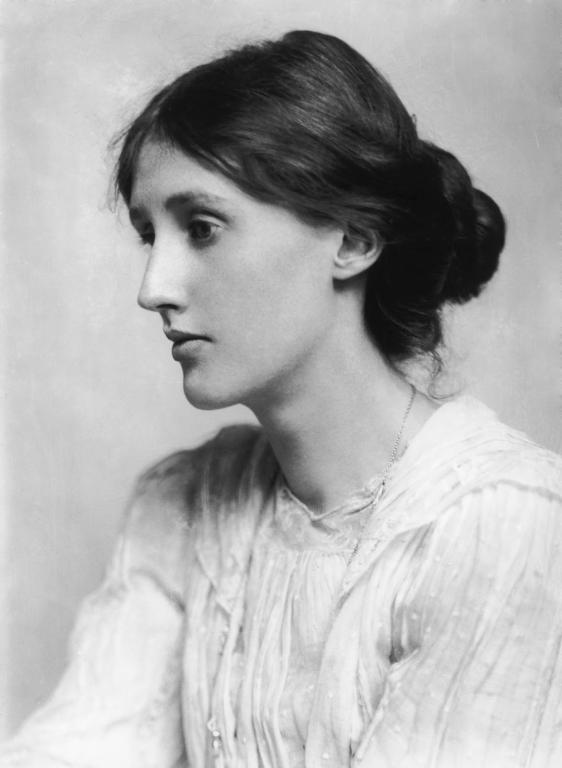
Scott steps back to Britain. After Industrial Revolution workers flocked to cities and aristocrats died off in World Wars I and II, the age-old landlord/serf dichotomy dissolved into a less stratified socioeconomic system. The word “middlebrow” “crept into English, in class-ridden Britain, between the wars.” Virginia Woolf proclaimed: “If any human being, man, woman, dog, cat or half-crushed worm dares call me ‘middlebrow,’ I will take my pen and stab him dead.”
Old World Highbrows, New World Middlebrows
Woolf’s declaration was, in her eyes, a moral one. She was a dedicated, self-proclaimed “highbrow”: dedicated to ideas, language, fine art. These passions left her sympathetic with “lowbrows.” “‘The highbrows would like,’ [Russell Lynes] notes, perhaps with Woolf in mind, ‘to eliminate the middlebrows and devise a society that would approximate an intellectual feudal system, in which the lowbrows do the work and create folk arts, and the highbrows do the thinking and create fine arts.’” By contrast, the pesky “middlebrows” don’t care about “pure, complmentary pursuits”; they swap vocational significance for “money, fame, power or prestige.”
In other words, if we use Woolf’s definition, American culture is utterly middlebrow. We live in constant pursuit of “money, fame, power, and prestige.” In postwar America, “higher wages, more leisure, increased access to higher education, foundation- and government-supported arts organizations” watered the seeds of a blossoming, upwardly mobile middle class.
And now, it seems, that middle class is declining. Scott’s eulogy is fun to read, (“More does not always mean better, but the years after World War II were a grand era of more…. High culture became more accessible, popular culture became more ambitious, until the distinction between them collapsed altogether.”) but it ends on a mournful note: “The highbrows were co-opted or killed off by the middle, and the elitism they championed has been replaced by another kind, the kind that measures all value, cultural and otherwise, in money.”
What Comes Next?
If Piketty and Scott are right, we stand at a moral watershed. Old World ideology is thoughtful but problematic; New World ideology is egalitarian but vapid.
It’s easy to trash British privilege, but Woolf’s indignation was righteous indignation. She championed harmony between life and work. She was wary of greedy opportunism. Rightly so. Unfortunately, like many Western pre-war intellectuals, her moral opinions were couched in a rigid (and, as any liberal arts student will breathlessly tell you, oppressive) socioeconomic hierarchy: “a world of landlords and peasants, of masters and servants, of patrons and workers… in which art and life harmonize.” Woolf’s “intellectual feudal system,” with its person-type classification and its assumption that “lowbrow” people enjoy doing “lowbrow” work, is not only outdated. It’s small-minded.
The middlebrows successfully eliminated this social determinism, championing “life, liberty, and the pursuit of happiness” in its place. But middlebrows threw out the moral baby with the bathwater; the “pursuit of happiness” has, too often, looked like the pursuit of money. (Exhibit A: The Pursuit of Happyness, rags-to-riches Will Smith film, 2006.)
 When middlebrow culture prospered, this didn’t seem like a major problem. People lived decent-looking lives. But now, as distance between the rich and the poor increases, the greediness that underlied an egalitarian 20th century made way for a stratified, polarized 21st century. Occupy Wall Street gave us a sneak preview: blasé tightfistedness from the “haves”; entitled, jealous bullying from the “have-nots.”
Woolf is right: a carpenter or plumber may find joy in her vocation. A bestselling author or a philosopher may do the same. Fine Arts and Craft Arts are both arts. And pursuing wealth for its own sake is a surefire gateway to an empty, narcissistic lifestyle.
The relevant questions, then, relate to how the New High/Lowbrows can learn from the errors of the Old Highbrows and shrining Middlebrows. How can we respect the value of vocational diversity without assuming that “these sorts of people” belong in “those vocations”? How can we ensure that individuals are fairly compensated for diverse, fulfilling careers? And how can we promote an egalitarian society without being unified by greed?
[Another great article by The High Calling summer intern, Nathan Roberts. We’ll miss you, Nathan! Best wishes to you as you return to NYU.]
Photo by Seth Anderson. Accessed via Flickr.
Virginia Woolf. Accessed via Wikipedia

Previous Post

August 8, 2014
[VIDEO] Building a Platform: How to get your ideas to spread
Next Post

August 11, 2014 A Warning for Self-Serving Leaders
Browse Our Archives
Select a Category Current Events Interviews Reflections Uncategorized Video Posts Vocation Work Practices
Select a Month August 2015 July 2015 June 2015 May 2015 April 2015 March 2015 February 2015 January 2015 December 2014 November 2014 October 2014 September 2014 August 2014 July 2014 June 2014 May 2014 April 2014 March 2014 February 2014 December 2013
Follow Us!
TAKE THE
Religious Wisdom Quiz
Who interpreted Nebuchadnezzar's dream of a statue?
Select your answer to see how you score.
Abraham Joseph Ezekiel Daniel
Related posts from The High Calling


The Five Biggest Career Mistakes Christians Make

Trapped: The Church Vocation Issue We Don't Talk...

Talking with VeggieTales Founder Phil Vischer
TRENDING AT PATHEOS Careers, Workplace and Religion

St. Francis by Bill Droel Pope Leo XIV declares 2026 as “Year...

Catholics are schooled in the faith by memorizing dogmatic points and lots...

The Good News of Our Human Limitations -...
After another day of trying to meet deadlines and working on projects,...

Quiet Holy Attentiveness (podcast) with Sarah Clarkson
We know that quiet is an essential aspect of the spiritual life,...

Every Vocation Everywhere All At Once
What is a vocation? How does it endure through the years? Can...

I promise this is not going to become a Taylor Swift Studies...
view all Careers, Workplace and Religion blogs
Ad-Free & Subscriber Log-In Subscription Support
- About Us
- 2026 Calendar
- Videos
- Podcasts
- Library of World Religions
- Faith In Media Tracker
- Advertise With Us
- Write for Us
- Privacy Policy
- Terms of Service
- Do Not Sell My Data
- Contact Us
- Radiant Digital
- Manage Newsletter Subscriptions
- Unsubscribe From Notifications
- Sitemap
Copyright 2008-2026, Patheos. All rights reserved.
Subscription Support Ad-Free & Subscriber Log-In
Follow Patheos