
BuddhistCatholicContemplativeEvangelicalGeneral ChristianHinduJewishLatter-day SaintMuslimNew VisionsProgressive Christian
Beliefs
- Buddhist
- Catholic
- Contemplative
- Evangelical
- General Christian
- Hindu
- Jewish
- Latter-day Saint
- More Voices
- Muslim
- New Visions
- Pagan
- Progressive Christian
Topics
- Religion News
- Food and Religion
- Sports and Religion
- Religious Art
- Religious Music and Entertainment
- Religious Events
- History and Religion
- Style and Religion
- Politics and Religion
- Women in Religion
- Recreation Outdoors and Religion
- Business Finance and Religion
- Careers Workplace and Religion
- Education and Religion
- Family Parenting and Religion
- Health Fitness and Religion
- Home and Religion
- Relationships and Religion
- Technology and Religion
- Travel and Religion
Columnists
- Buddhist Columnists
- Business Finance and Religion Columnists
- Careers Workplace and Religion Columnists
- Catholic Columnists
- Contemplative Columnists
- Education and Religion Columnists
- Evangelists Columnists
- Family Parenting and Religion Columnists
- General Christian Columnists
- Health Fitness and Religion Columnists
- Hindu Columnists
- History and Religion Columnists
- Home and Religion Columnists
- Jewish Columnists
- More Voices Columnists
- Latter Day Columnists
- Muslim Columnists
- New Visions Columnists
- Nonreligious Columnists
- Pagan Columnists
- Politics and Religion Columnists
- Progressive Columnists
- Recreation Outdoors and Religion Columnists
- Relationships and Religion Columnists
- Religion News Columnists
- Religious Art Columnists
- Religious Events Columnists
- Religious Music and Entertainment Columnists
- Sports and Religion Columnists
- Style and Religion Columnists
- Technology and Religion Columnists
- Travel and Religion Columnists
- Women in Religion Columnists
Resource Library
- 2026 Calendar
- Library of World Religions
- The 100 Most Holy Places on Earth
- Patheos Answers
- Podcasts
- Videos
- Faith Leaders Database
- Anglican Episcopalian
- Bahai
- Baptist
- Buddhism
- Christianity
- Confucianism
- Eastern Orthodoxy
- Hinduism
- Holiness and Pentecostal
- ISKCON
- Islam
- Judaism
- Lutheran
- Methodist
- The Church of Jesus Christ of Latter-day Saints
- New Age
- Paganism
- Presbytarian and Reformed
- Protestantism
- Religion Behind the Scenes
- Roman Catholic
- Scientology
- Shia Islam
- Sikhism
- Sufism
- Sunni Islam
- Taoism
- Zen
- See all religions
Research Tools
 Ad-Free & Subscriber Log-In Subscription Support
Ad-Free & Subscriber Log-In Subscription Support
Follow Patheos 

- Trending:
- Forgiveness
- |
- Marriage
- |
- Consciousness
- |
- Death Penalty
- |
- Election
- |
- Halloween
 The High Calling
- Home
- Careers, Workplace and Religion
- What can Pharrell’s ‘Happy’ tell us about God?”
What can Pharrell’s ‘Happy’ tell us about God?”
Last updated on: June 4, 2014 at 4:35 pm by Guest Contributor
What can Pharrell’s ‘Happy’ tell us about God?” 2014-06-04T16:35:35-06:00 Guest Contributor
Patheos Explore the world's faith through different perspectives on religion and spirituality! Patheos has the views of the prevalent religions and spiritualities of the world.
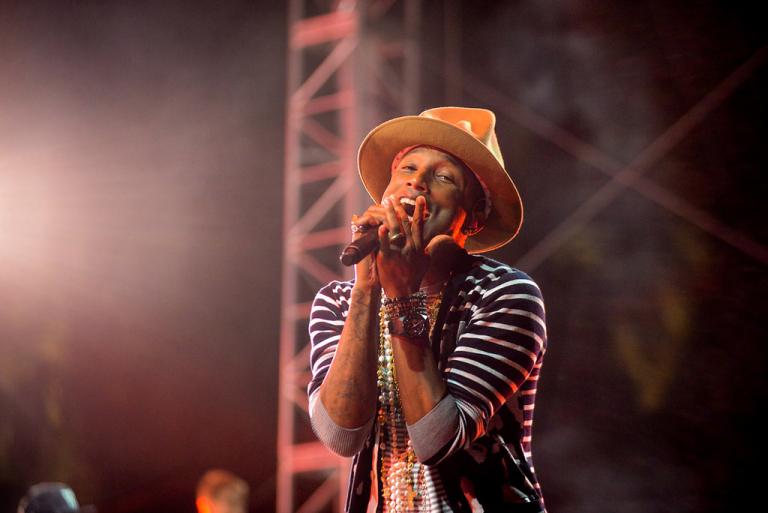
Editor’s Note: another great post by The High Calling summer intern, Nathan Roberts
You like “Happy” by Pharrell Williams, don’t you? Of course you do. The song is catchy, plain and simple. Or maybe not so simple––new evidence suggests that “Happy” isn’t just catchy, but that when we hear it, we’re hardwired to get up and dance. And while it might seem crazy what I’m ‘bout to say, I think this study gives us a glimpse of how God has hardwired us to join in His “dance” on earth, too.
Hardwired to Dance
The “Happy” music video, currently sporting over two hundred and seventy-two million YouTube views, flips through shots of people dancing around the world. It’s spawned a worldwide imitation video phenomenon. So why does Happy make us want to dance?
In a study published last month, neuroscientists in Denmark explored this question. They created a survey asking people to rate a variety of drum patterns, selecting ones that made them want to dance the most. Some were simple rhythms with regular beats (think Drum Class 101), while others were complex, layered rhythmic patterns with lots of unexpected gaps where regular beats should go (think of Chad Smith in a drum-off).
Then there were beats that avoided both extremes, “patterns that had a sort of a balance between predictability and complexity,” explained the study’s leader, Maria Witek.
These were the beats that made people want to get up and dance, worldwide. And “Happy” is full of them.
So why do these beats affect us? Witek’s explanation is fascinating: “there’s enough regularity to sort of perceive the underlying beat, but also enough complexity to sort of invite participants to synchronize to the music.”
As NPR’s Michael Doucleff puts it, “it may be more about what’s missing from the song than what’s there.” Witek elaborates: “Gaps in the rhythmic structure…. provide us with an opportunity to physically inhabit those gaps and fill in those gaps with our own bodies.”
A Dancing God?
In Mere Christianity, C.S. Lewis introduces the image of a God who is always dancing. Every member of the Trinity is ceaselessly adoring, serving, and “dancing with” every other member: “In Christianity God is not a static thing… but a dynamic, pulsating activity, a life… a kind of dance….” God created us to live into this self-giving dance with Him, worshiping him, serving each other, and experiencing the joy of the Trinity. “The whole dance, or drama, or pattern of this three-Personal life is to be played out in each one of us… [It’s] a great fountain of energy and beauty spurting up at the very center of reality.”
When we become Christians, we realize how we’ve turned away from the Divine Dance. We demand that other people serve us and dance for us, but we don’t want to do any serving or dancing.
Then suddenly we sense, to mix Lewis and Witek’s words, “the underlying beat at the very center of reality.” And we find it so attractive that we can’t help but get up and dance. We realize that everyone, worldwide, is hardwired to join us.
Filling in the Gaps with Our Own Bodies
What’s fascinating about this study, of course, isn’t that we like to dance. It’s that we’re attracted to songs with missing beats.
As Christians, we sense the rhythm at the heart of reality, but we also see that beats are missing in our broken everyday lives. God’s song is perfect, but there are gaps in our earthly rhythms. We feel frustrations and longings: why doesn’t God fix the world now? Christ died so we can join the dance––so bring it on, all of it! Why the brokenness?!
But this attitude is, after all, not the attitude of a dancer. God wants us to join in the dance, not wait around for Him to perfect it. Instead, he gives us the power of Holy Spirit. He invites us to do what comes so naturally when we listen to “Happy”: physically inhabit these gaps with our own bodies! God inspires us synchronize the work of our hands, minds, and hearts to the Rhythm of Reality. And rhythm won’t be complete until we join in! As Ephesians 2:10 says, we are “created in Christ Jesus for good works, which God prepared beforehand, that we should walk in them.”
Or, we might say, dance in them.
[Photo by Shawn Ahmed, used under a creative commons license, sourced via Flickr.]

Next Post

June 5, 2014 [VIDEO] What is your responsibility to the greater community?
Browse Our Archives
Select a Category Current Events Interviews Reflections Uncategorized Video Posts Vocation Work Practices
Select a Month August 2015 July 2015 June 2015 May 2015 April 2015 March 2015 February 2015 January 2015 December 2014 November 2014 October 2014 September 2014 August 2014 July 2014 June 2014 May 2014 April 2014 March 2014 February 2014 December 2013
Follow Us!
TAKE THE
Religious Wisdom Quiz
Which tribe did NOT ask for land on the east side of Jordan?
Select your answer to see how you score.
Manasseh Issachar Reuben Gad
Related posts from The High Calling
[VIDEO] Building a Platform: How to get your...


[VIDEO] How can a mentor help?
TRENDING AT PATHEOS Careers, Workplace and Religion

St. Francis by Bill Droel Pope Leo XIV declares 2026 as “Year...

Catholics are schooled in the faith by memorizing dogmatic points and lots...

The Good News of Our Human Limitations -...
After another day of trying to meet deadlines and working on projects,...

Quiet Holy Attentiveness (podcast) with Sarah Clarkson
We know that quiet is an essential aspect of the spiritual life,...

Every Vocation Everywhere All At Once
What is a vocation? How does it endure through the years? Can...

I promise this is not going to become a Taylor Swift Studies...
view all Careers, Workplace and Religion blogs
Ad-Free & Subscriber Log-In Subscription Support
- About Us
- 2026 Calendar
- Videos
- Podcasts
- Library of World Religions
- Faith In Media Tracker
- Advertise With Us
- Write for Us
- Privacy Policy
- Terms of Service
- Do Not Sell My Data
- Contact Us
- Radiant Digital
- Manage Newsletter Subscriptions
- Unsubscribe From Notifications
- Sitemap
Copyright 2008-2026, Patheos. All rights reserved.
Subscription Support Ad-Free & Subscriber Log-In
Follow Patheos